



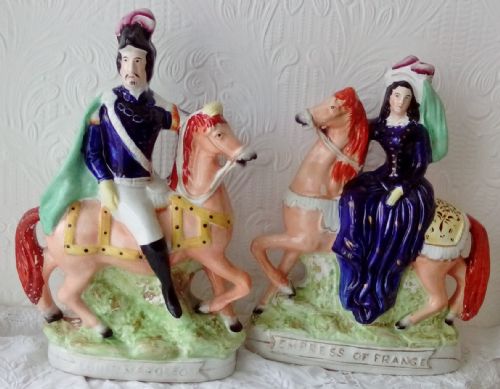
Glazed Pottery Figurines
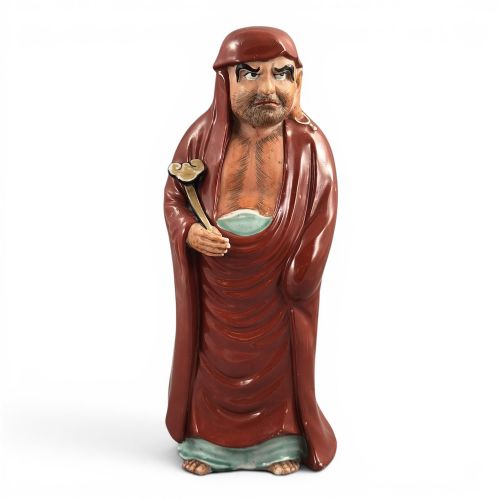
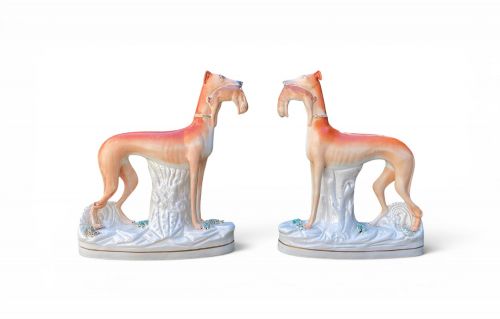
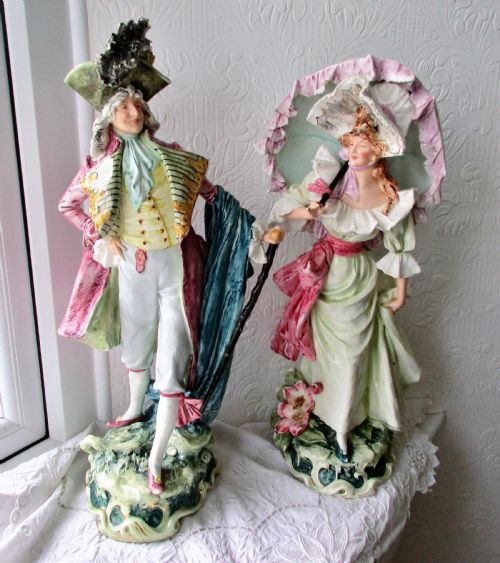
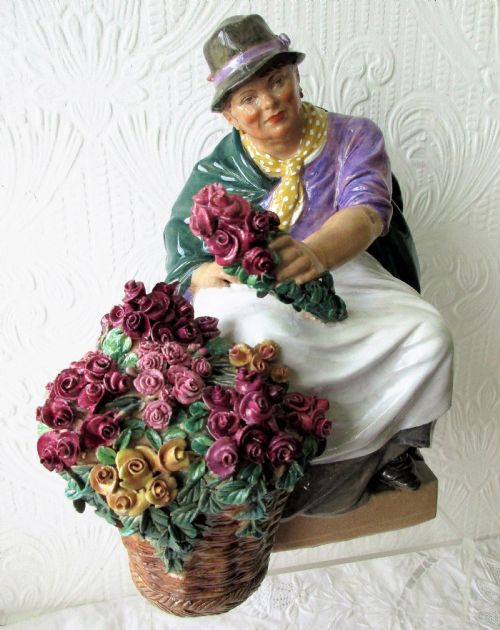
These glazed pottery figurines bring animals, historical portraits and literary characters into the room with robust earthenware and vibrant colour.
Glazed Pottery Figurines
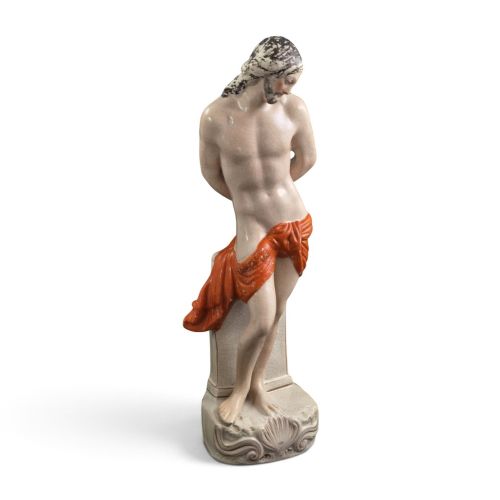
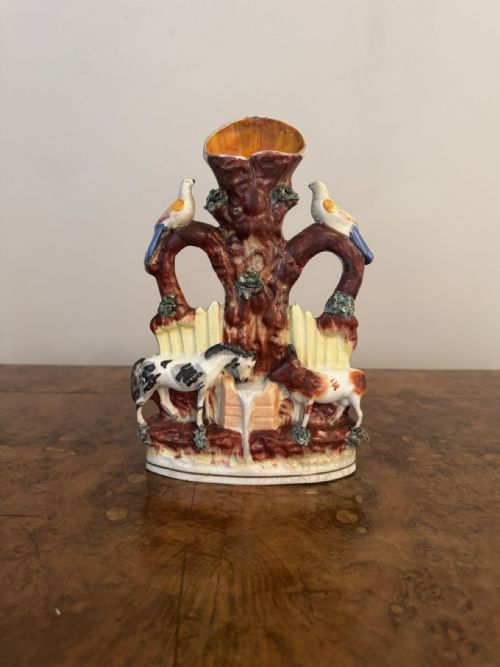
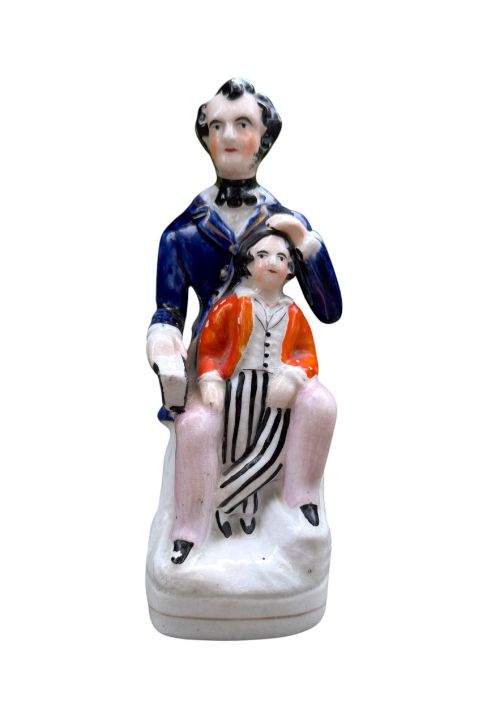
When you search for glazed pottery figurines, you encounter a varied landscape of nineteenth-century Staffordshire earthenware, studio pottery, and continental ceramics. The nineteenth century yields the most familiar examples, notably Victorian flatbacks, spill vases, and portrait figures depicting animals, royalty, and historical scenes.
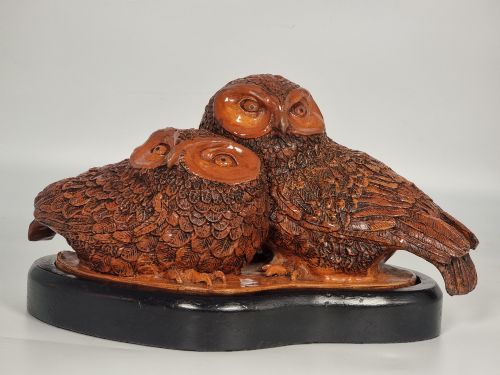
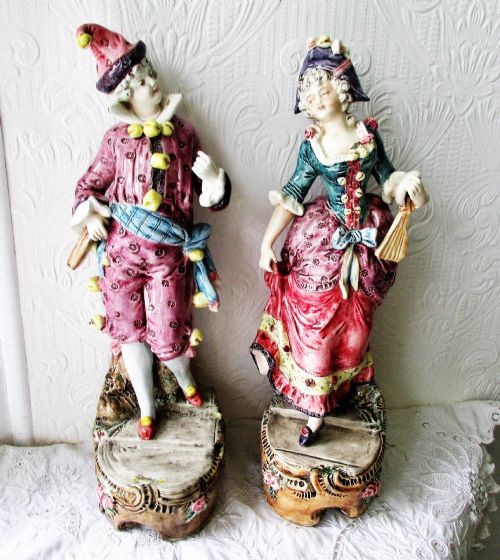
Beyond English earthenware, the selection encompasses French faience, Japanese Satsuma and Kutani okimono, Italian majolica, and Art Deco porcelain. Animal groups predominate, from pugs and greyhounds to owls and cows, alongside human subjects ranging from literary characters to political figures.
The forms extend from simple mantel ornaments and cow creamers to large decorative figures and sculptural spill vases. Most pieces belong to the nineteenth or early twentieth centuries, reflecting the output of Staffordshire potteries alongside European studios and Japanese workshops.
How they were made
Makers shaped these pieces using earthenware, stoneware, or porcelain, often casting them in moulds before finishing the details by hand. Artisans then applied lead glazes, enamel paint, or treacle glaze to achieve the characteristic glossy surface finishes.
Surface decoration frequently involved cobalt blue underglaze, polychrome enamel colours, or rich metallic lustres. Many nineteenth-century figures received their distinctive colouring through a combination of hand-painting and dipping before undergoing a final kiln firing.
Victorian potters captured everything from military heroes to sleepy pugs with identical enthusiasm.
What varies in quality
Artistic authorship also elevates certain works, such as studio pottery figures by named makers or pieces originating from notable factories. The preservation of the original glaze and the depth of the enamel colours contribute significantly to the overall presence of the piece.
Charles Vyse·Berthe Savigny·Thomas Parr·H. Schubert·Royal Doulton
The Glazed Pottery Figurines Glossary
- Flatback
- A figure modelled primarily for display against a wall or mantelpiece, leaving the rear unglazed or simply finished. This technique saved time and material during manufacture.
- Spill vase
- A hollow figural vessel designed to hold taper splints used for lighting candles or fires. These pieces combine practical utility with decorative sculptural subjects.
- Pearlware
- A refined fine earthenware developed in the late eighteenth century, featuring a slight bluish tint in the glaze that imitated Chinese porcelain. It forms the body of many early figures.
- Okimono
- A Japanese decorative carved or modelled figure intended for display in an interior setting. These often depict deities, historical figures, or animals with meticulous detail.
- Majolica
- A type of earthenware coated with an opaque tin-lead glaze and decorated with rich metallic oxides. It produces bright, vibrant surfaces found on continental and revival pieces.
Glazed Pottery Figurines: Frequently Asked Questions
What are Staffordshire flatback figures?
Staffordshire flatbacks are nineteenth-century earthenware ornaments designed to sit on mantelpieces against a wall. They feature detailed fronts with plain or partially glazed backs to save labour during production.
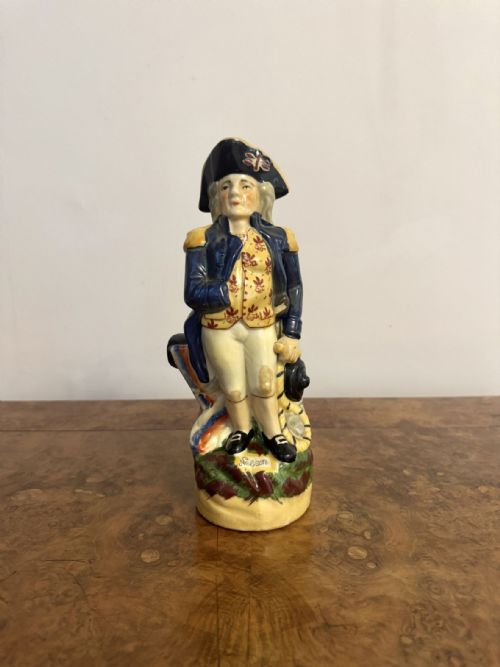
These pieces typically portray contemporary events, royalty, literary characters, or domestic animals. They served as affordable domestic decoration in Victorian homes.
How were pottery cow creamers used?
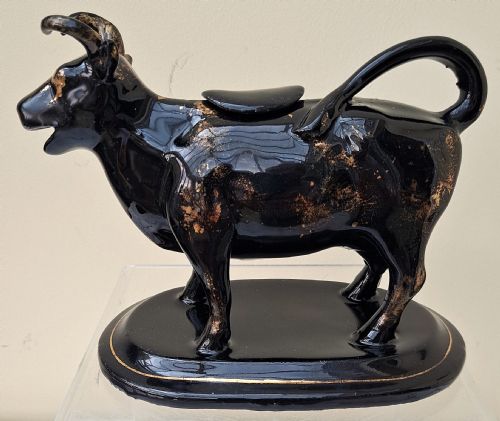
Cow creamers are hollow ceramic jugs shaped like cows, featuring a filling hole on the back and a mouth or snout used for pouring milk or cream. They were placed on tea tables for serving guests.
Most examples date from the nineteenth century and often include hand-painted enamel decoration or rich glazes such as treacle or transfer-printed patterns.
What is a spill vase?
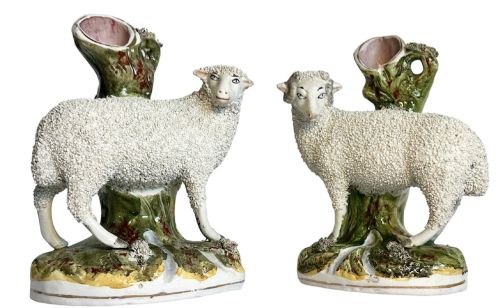
A spill vase is a hollow cylindrical holder attached to a pottery figure, designed to store thin wooden spills used to transfer flames from a hearth to candles or pipes. They combine decorative sculpture with everyday utility.
Animal subjects, particularly sheep and dogs, frequently appear alongside these vases in nineteenth-century Staffordshire ceramics.
How do I date a ceramic figurine?
Dating relies on examining the clay body, glaze characteristics, style of decoration, and any impressed marks or titles on the base. Earthenware bodies, pearlware tints, and flatback construction point toward the nineteenth century.
Studio pottery marks, Art Deco stylisation, and porcelain signatures help distinguish twentieth-century pieces from earlier Victorian and Georgian productions.
What distinguishes studio pottery figures?
Studio pottery figurines represent individual artistic creation rather than mass factory production, often bearing the artist's monogram or signature. They showcase expressive modelling and distinctive glaze effects unique to the maker.
These works frequently date from the early twentieth century onward, reflecting personal aesthetic movements away from traditional industrial manufacture.