



Glazed Majolica Pedestal
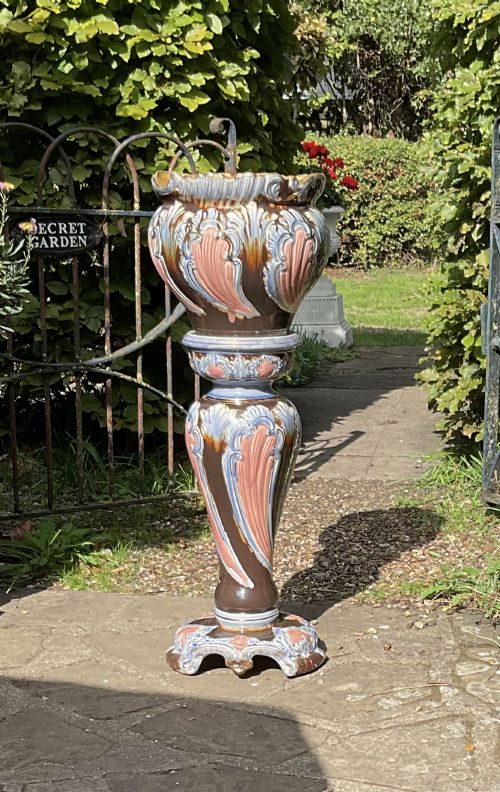
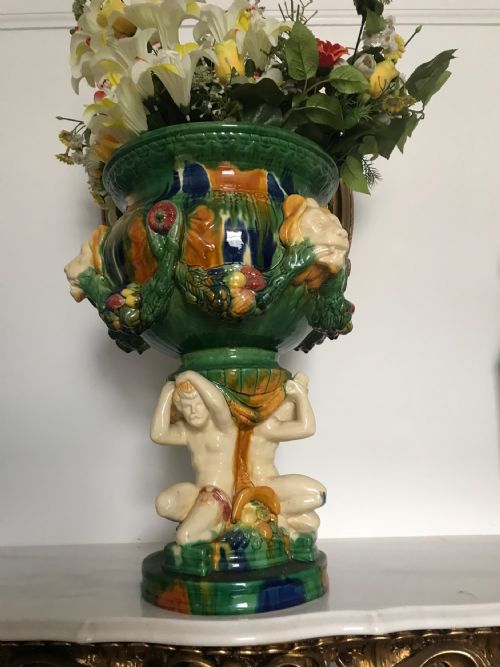
A glazed majolica pedestal brings bold colour and heavy earthenware craft to a Victorian conservatory, offering a sturdy stage for large indoor plants.
Glazed Majolica Pedestal
When you search for a glazed majolica pedestal, you encounter tall earthenware plant stands and matching jardinières dating from the nineteenth and early twentieth centuries. These pieces combine a supportive column with a bowl or urn, often styled in Victorian naturalism or Italian Renaissance revival.
The versions most common on this page span the Victorian and Edwardian eras, with many pieces originating from English factories and continental potteries. They appear as matched pairs or integrated columns designed to elevate heavy foliage in domestic interiors.
Distinguishing quality in majolica stands
Quality rests in the crispness of the moulded relief work and the depth of the glaze application. Finer pieces display sharply defined figural or botanical motifs without blurring in the recessed areas.
The complexity of the palette and the evenness of the gloss finish separate standard production ware from ambitious factory pieces. Well-modelled figural elements and balanced proportions indicate higher workshop standards.
A proud ceramic swan holds court beside a solemn lion head, proving Victorian plants deserved the finest company.
Ulisse Cantagalli·Clement Massier·Minton·Julius Dressler·Woodlesford
The Glazed Majolica Pedestal Glossary
- Majolica
- A type of earthenware pottery decorated with opaque coloured glazes over a tin-opacified ground. It produces vibrant hues and a glossy surface.
- Jardiniere
- An ornamental ceramic pot or stand designed to hold a large indoor plant or floral arrangement. They frequently sit atop matching pedestals.
- Comport
- A raised bowl or dish used for serving fruit or displaying table arrangements. In ceramics, these often feature pedestal feet or elaborate stem supports.
- Faience
- European tin-glazed earthenware originating from traditional Italian and French techniques. It shares stylistic similarities with nineteenth-century majolica production.
- Lustre glaze
- A metallic film applied to pottery to create an iridescent sheen when fired. This finish reflects light across the contours of the ceramic body.
Glazed Majolica Pedestal: Frequently Asked Questions
How do I clean a glazed majolica pedestal?
Wipe the glazed surface gently using a soft, damp cloth without harsh chemical detergents. Avoid soaking the earthenware base, as moisture can penetrate unglazed areas.
Dry the ceramic thoroughly after cleaning to protect the glaze and prevent moisture damage to the underlying clay body.
Were these stands made for indoor use?
Most majolica pedestals and jardinières were designed for Victorian conservatories, drawing rooms, or entrance halls. Their heavy earthenware construction suits stable interior flooring.
Placing them outdoors exposes the porous ceramic body and glaze to frost damage and temperature extremes.
How can I date a majolica pedestal?
Examine the style of the moulding, such as Art Nouveau curves or Victorian naturalistic leaves, alongside any impressed factory marks on the base. Glaze colours and finish textures also provide clues to the manufacturing period.
Nineteenth-century examples often feature registry marks or specific maker ciphers stamped directly into the unglazed underside.
Are pedestal stands and jardinières always sold together?
Many pieces survive as matched sets where the bowl and column share identical glaze tones and decorative motifs. Collectors prize these complete combinations.
Over time, separate items frequently get paired together, so checking the fit and glaze consistency helps determine if they originated as a single set.