


Vintage Ceramic Column
Vintage ceramic column pieces bring structured form and tactile glaze into a room, serving as striking architectural supports for plants, lamps, and lighting.
Vintage Ceramic Column
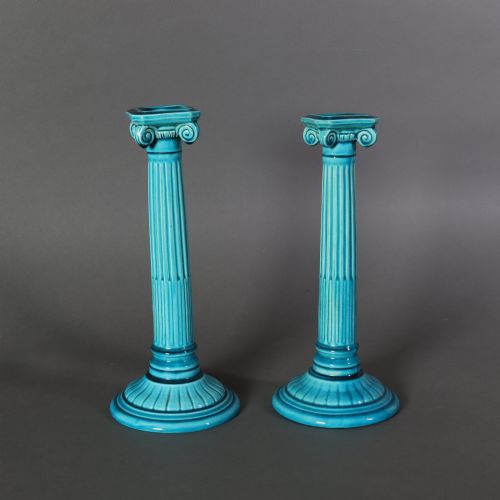
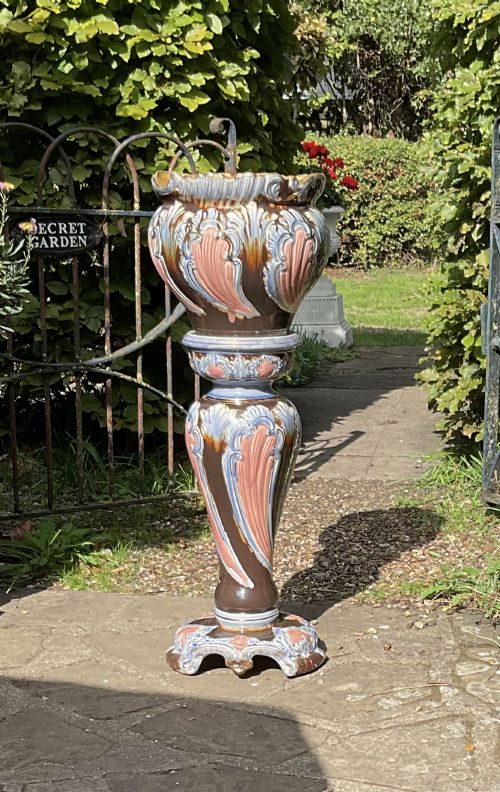
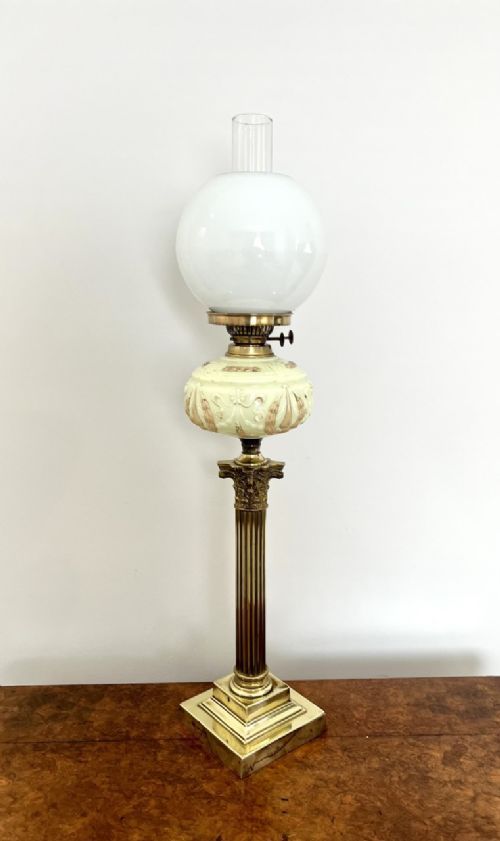
A vintage ceramic column encompasses a variety of functional and decorative forms, including jardinieres, plant stands, pedestals, umbrella stands, candlesticks, and lamps.
Most examples found here date from the Victorian, Edwardian, and late nineteenth-century periods, spanning years such as 1880, 1890, and 1900.
The objects combine structural ceramic bodies with materials like brass, glass, and earthenware to create robust decorative items for domestic interiors.
How they were made
Potters utilised earthenware, stoneware, and specialised clays to form the columnar shapes, often applying rich majolica glazes or faience techniques for colour and texture.
Many designs incorporate glazed earthenware alongside brass mounts, glass fonts, or three-colour jasperware details to build contrasting visual depth.
Some columns double as umbrella stands, ready to catch raindrops after a brisk Victorian stroll.
What varies in quality
The sophistication of the modelling determines the refinement of the piece, distinguishing naturalistic planter designs and multi-colour Wedgwood jasperware from simpler utilitarian forms.
The richness and depth of the glaze application, particularly on majolica and faience surfaces, separate standard production items from more ambitious works.
Wedgwood·Woodlesford Art Pottery
The Vintage Ceramic Column Glossary
- Majolica
- A type of earthenware covered with an opaque tin-glaze and painted with metallic oxide colours. It produces vibrant, glossy surfaces often seen on Victorian jardinieres.
- Jasperware
- A fine-grained, unglazed stoneware developed by Wedgwood, famous for its contrasting coloured reliefs. It appears frequently in multi-colour candlestick pairings.
- Faience
- A term for tin-glazed earthenware pottery, similar to majolica. Woodlesford Art Pottery examples demonstrate this technique on decorative jardinières.
- Jardiniere
- A large ornamental pot or stand for holding plants or flowers. These items often form the upper section of a ceramic column pedestal.
Vintage Ceramic Column: Frequently Asked Questions
What is a vintage ceramic column used for?
These pieces serve primarily as plant stands, pedestals, umbrella holders, and bases for oil or table lamps.
They add vertical line and decorative glaze work to interior spaces while holding everyday household items.
How do I date a ceramic column?
Dating relies on stylistic clues, materials such as brass and earthenware, and period characteristics ranging from Victorian rustic to Edwardian design.
Evidence points towards production dates spanning from the late nineteenth century through to the Edwardian era.
Are these columns waterproof?
Many examples are designed as planters, jardinieres, and umbrella stands, which inherently accommodate moisture from plants and wet items.
Glazed earthenware and majolica surfaces provide a protective barrier against water within the vessel.
How do I style a ceramic column at home?
Place a jardiniere and stand pedestal combination in a corner to create height, or use smaller candlestick pairs on tables.
The rich glazes and naturalistic pottery designs anchor traditional and eclectic interior schemes alike.