
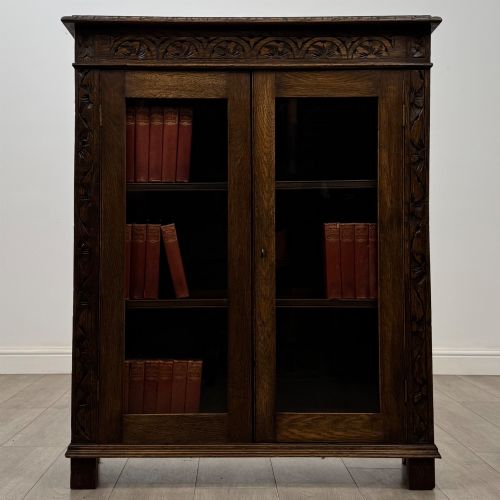
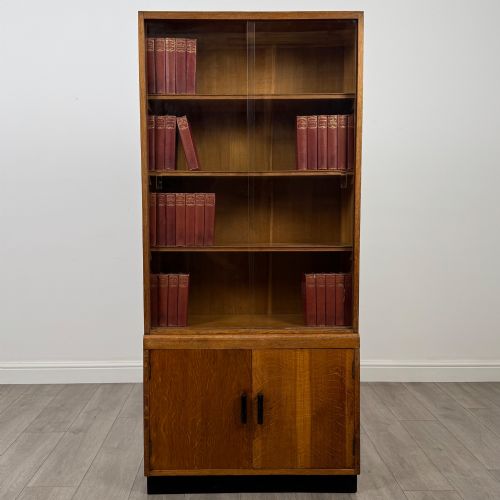
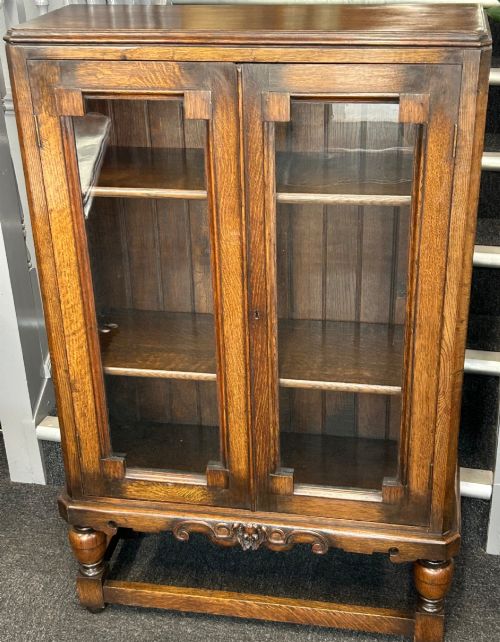
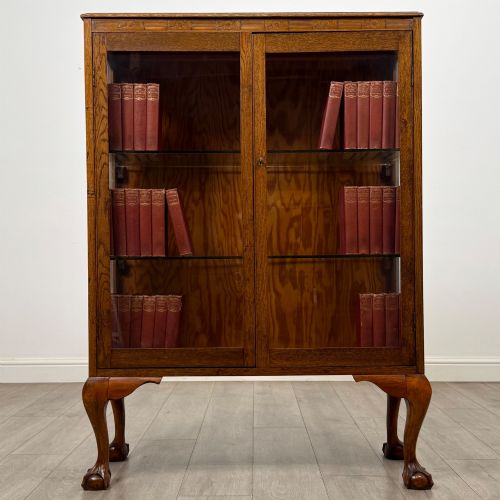


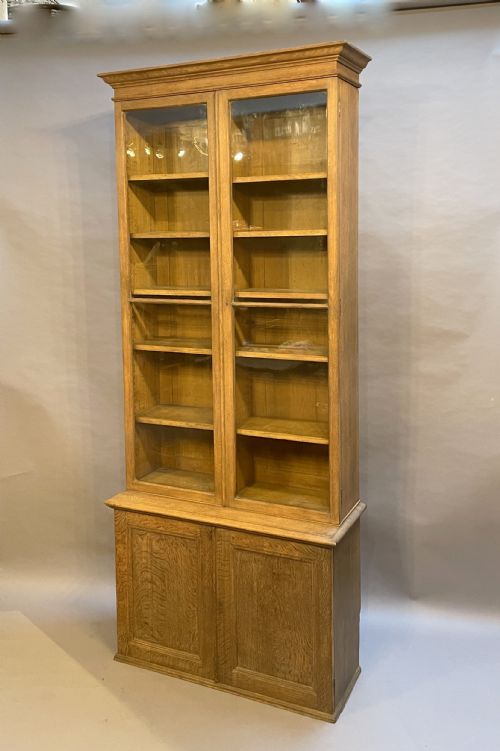

Glazed Door Oak Cupboard
A glazed door oak cupboard brings practical storage and display together, uniting timber framing with clear glass panels.
Glazed Door Oak Cupboard
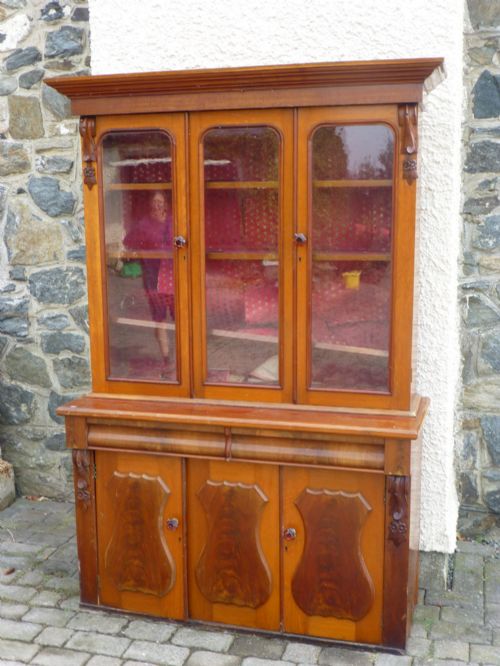
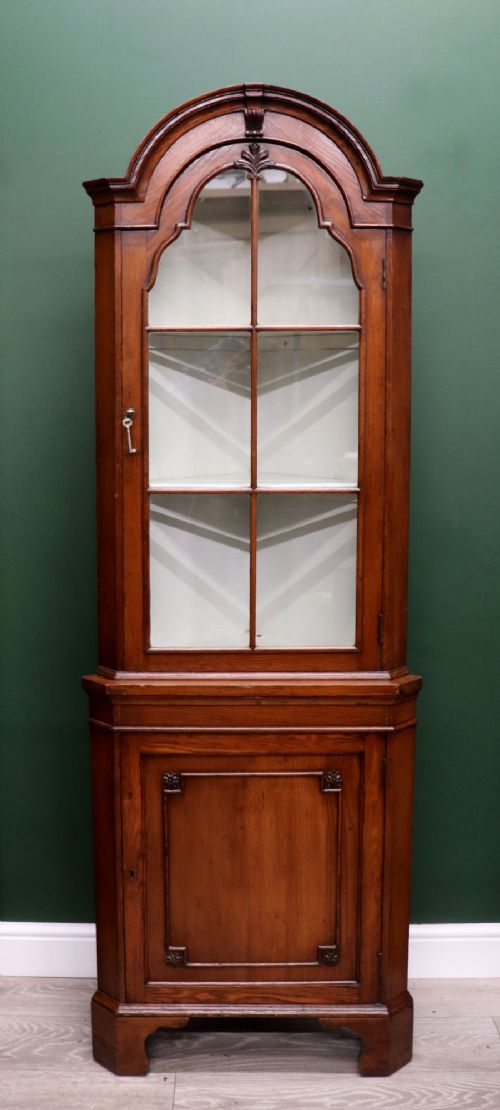
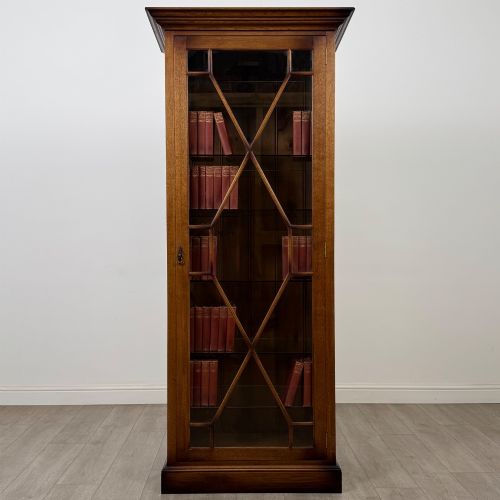
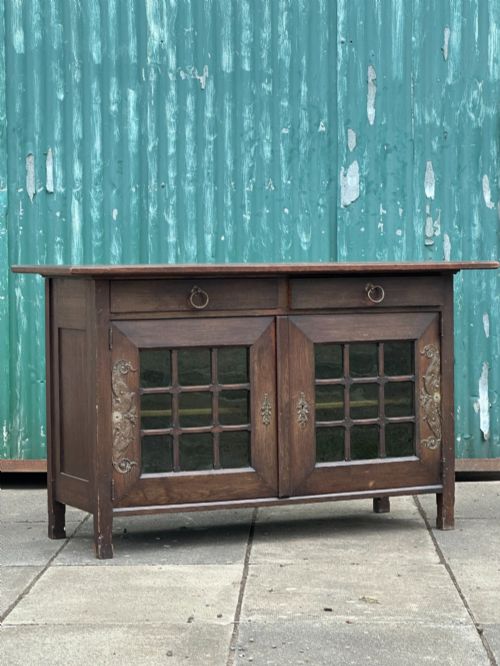
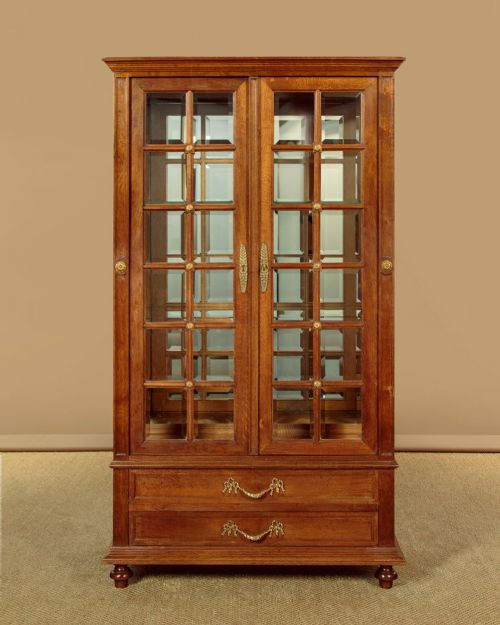
A glazed door oak cupboard provides enclosed storage while keeping contents visible through glass panels set into timber framing. These pieces appear in forms such as floor standing bookcases, corner cabinets, display cabinets, and kitchen dressers originating from the nineteenth and early twentieth centuries.
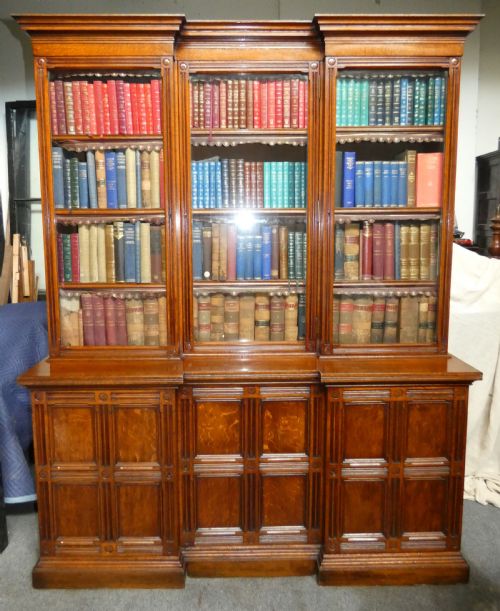
Buyers on this page encounter numerous Edwardian and 1920s examples alongside nineteenth century pieces. The selection ranges from small corner cabinets and smokers cabinets to large school library bookcases and triple kitchen dressers.
Woods and finishes vary from golden oak to dark carved surfaces, sometimes paired with mahogany or accented with gilt brass, lead, or iron hardware. Many pieces function as bookcases, library storage, or general display cabinets for domestic interiors.
Materials and construction
Makers built these pieces primarily using solid oak and oak veneers, occasionally combining them with mahogany for contrast in regional vernacular furniture. Timber selection determined how well panels held their shape over decades of domestic use.
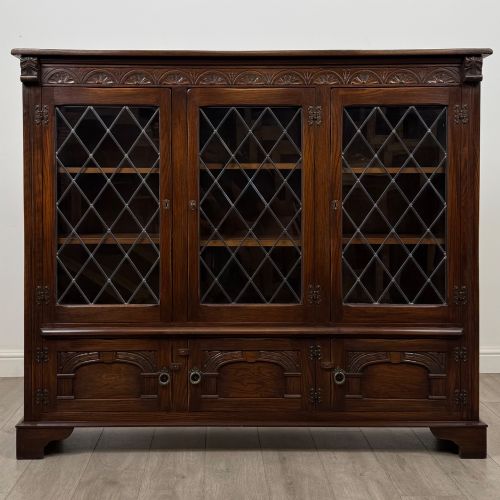
Glass panes were held within timber doors using wooden glazing bars, lead cames, or brass mounts. Iron and brass hinges, locks, and handles secured the doors, while internal shelving was frequently adjustable to accommodate books or display items.
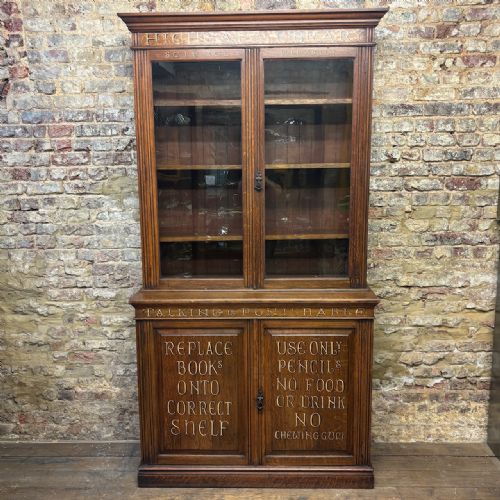
One recorded cupboard bears a hand sign written detail for the British Broadcasting Company.
Variations in quality
Quality rests in the precision of the joinery and the depth of the timber grain. Finer examples display carefully fitted doors, robust corner joints, and well proportioned architectural mouldings rather than plain panel construction.
Surface finish and hardware selection also distinguish the range. Pieces featuring hand carved details, intact leaded glass, or quality brass and gilt mounts represent a higher grade of craftsmanship than standard utility furniture.
Liberty & Co·Howard & Sons·James D Bennet
The Glazed Door Oak Cupboard Glossary
- Glazed door
- A frame holding transparent glass panels that permits viewing of items stored inside. It protects books and collections from dust.
- Corner cabinet
- A storage piece designed to fit directly into the corner of a room. This form maximises floor space in smaller domestic interiors.
- Lead cames
- Slender strips of cast lead used to hold individual pieces of glass together in leaded windows and doors. They create geometric or decorative patterns.
- Collector's cabinet
- A specialised small cabinet fitted with multiple internal drawers or shelves for displaying small objects. These pieces often secure with a key.
- Gallery
- A raised ornamental border surrounding the top surface of a small cabinet or bookcase. It prevents items placed on top from sliding off.
Glazed Door Oak Cupboard: Frequently Asked Questions
What rooms suit a glazed door oak cupboard?
These cabinets work well in studies, living rooms, and kitchens for storing books, ceramics, or glassware. The glass doors keep contents dust free while maintaining visual openness in the room.
Smaller corner versions fit empty wall junctions, whereas larger library bookcases anchor a main wall as statement storage furniture.
How do I date an oak cupboard?
Dating relies on construction methods, hardware types, and stylistic details visible on the frame. Edwardian and 1920s pieces often show lighter golden oak finishes and simpler moulded cornices.
Nineteenth century examples frequently feature heavier carved oak, darker patination, or regional vernacular characteristics like mahogany crossbanding.
Are the shelves adjustable?
Many nineteenth and twentieth century bookcase cabinets feature adjustable internal wooden shelving supported by rackwork or brass shelf studs. This allows the internal height to be altered for different sized books.
Fixed shelves remain common in smaller corner cupboards and older vernacular pieces where structural rigidity took priority.
How should I care for the oak surface?
Oak timber benefits from occasional dusting with a dry, soft cloth and sparing application of traditional beeswax to nourish the grain. Avoid placing cupboards in direct sunlight or near heat sources to prevent timber splitting.
Glass panels clean easily with standard glass cleaner applied to a cloth rather than sprayed directly near the wooden frame.