
Glazed Door Credenza Cabinet
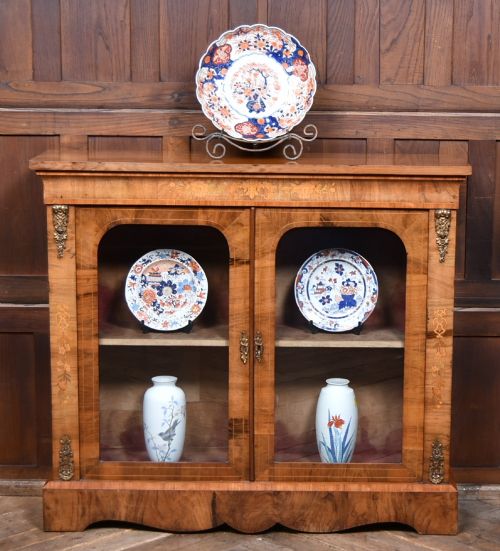
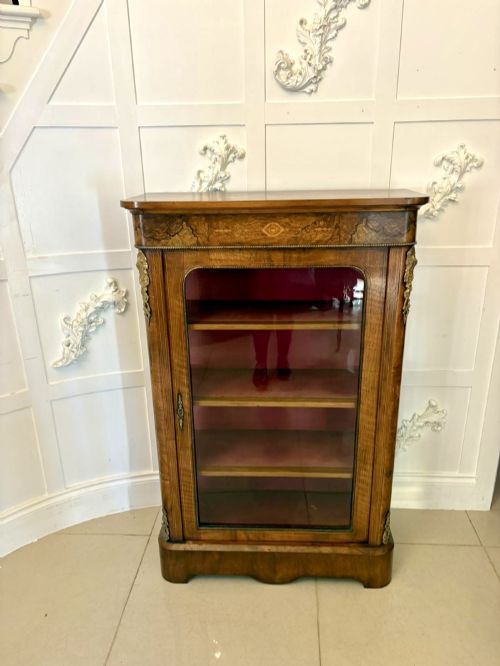
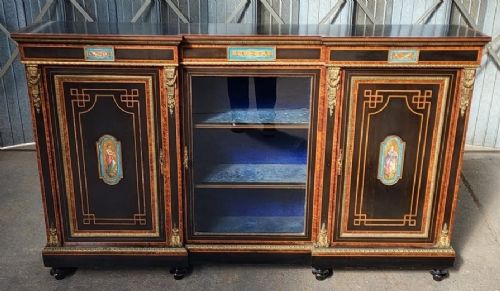
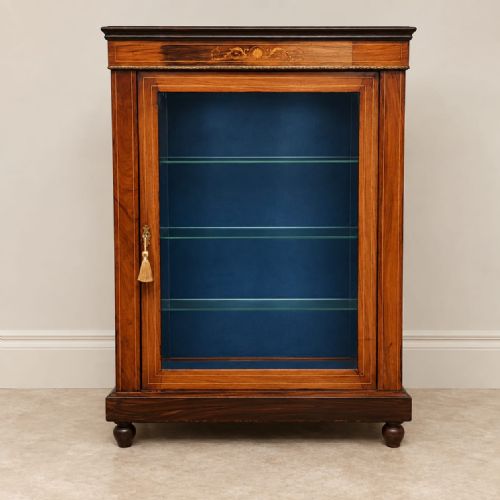
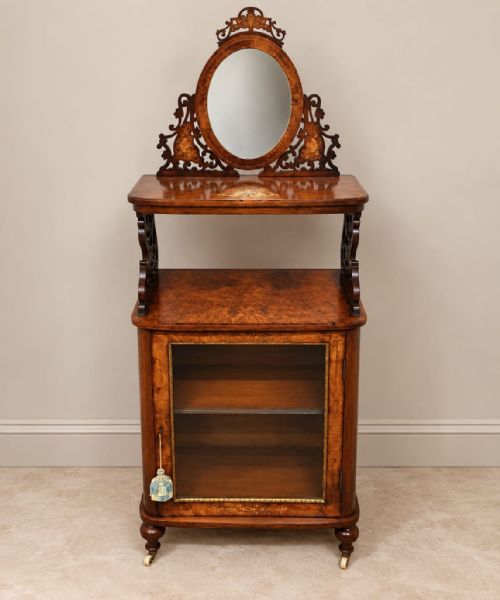
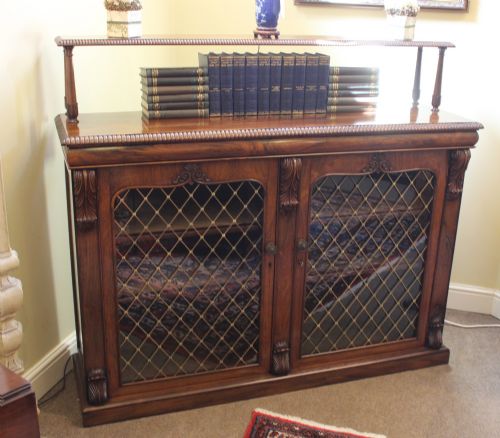
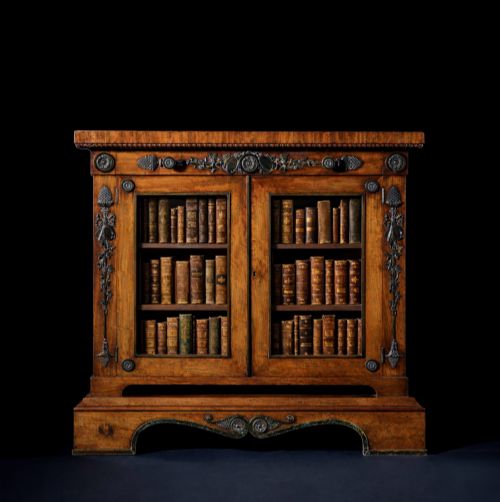
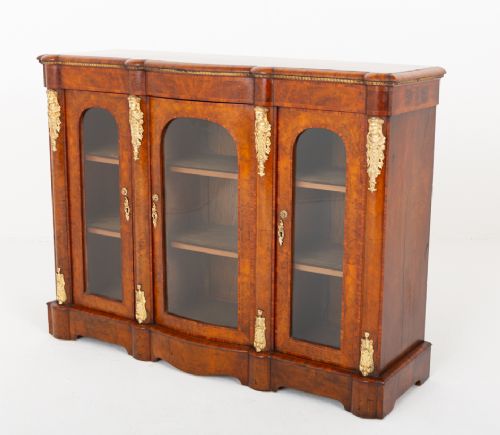
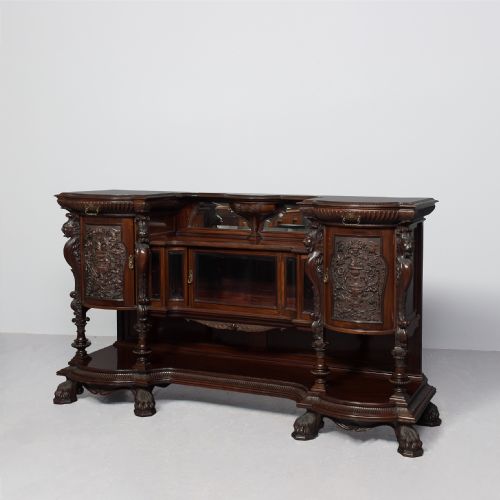
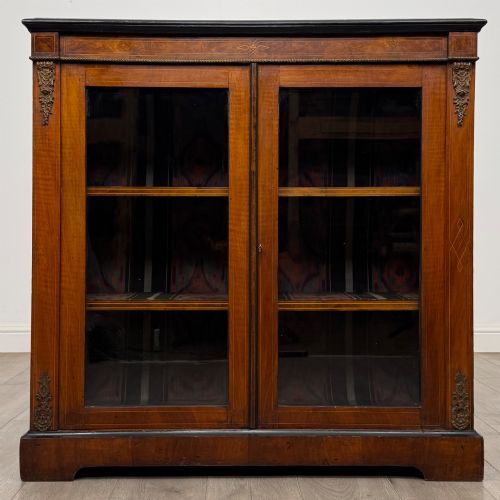
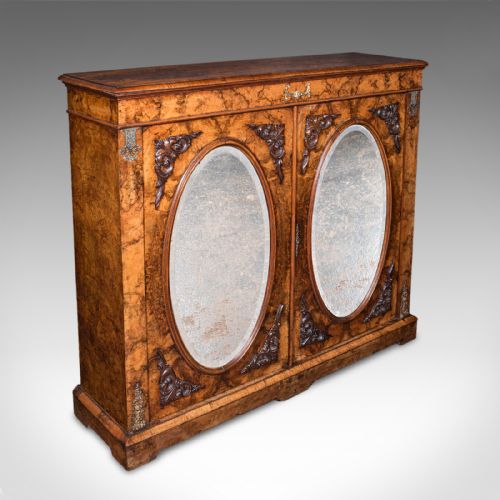
These glazed door credenza cabinet examples combine timber display fronts with interior shelving, offering a practical solution for showcasing books and decorative objects.

Glazed Door Credenza Cabinet
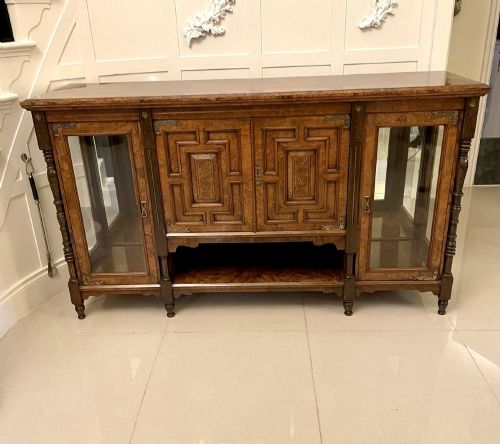
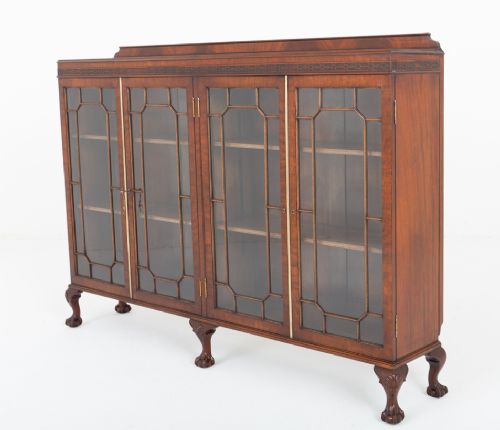
When buyers search for a glazed door credenza cabinet, they look at nineteenth-century and early twentieth-century storage furniture designed for reception rooms and parlours. The pieces on this page span Victorian, Regency, and Edwardian periods, appearing in forms such as pier cabinets, side cabinets, and breakfront bookcases.
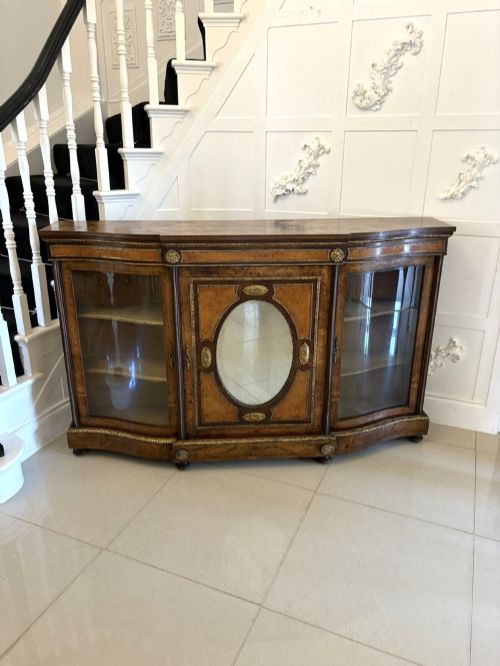
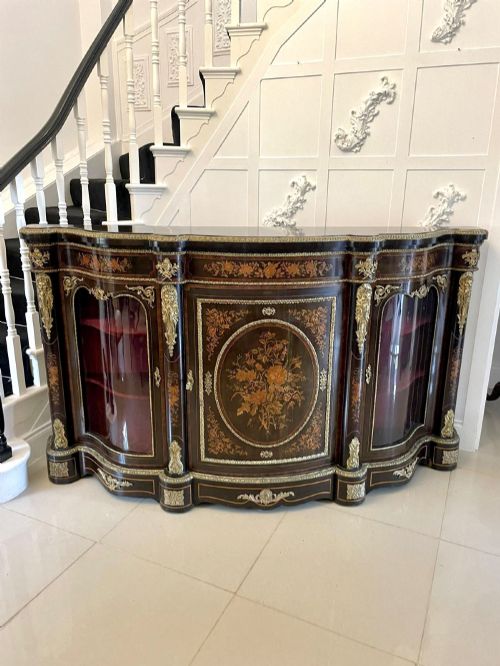
The most common version met here is the Victorian burr walnut credenza or side cabinet, often mounted with ormolu and fitted with glass doors to display contents while protecting them from dust.
How they were made
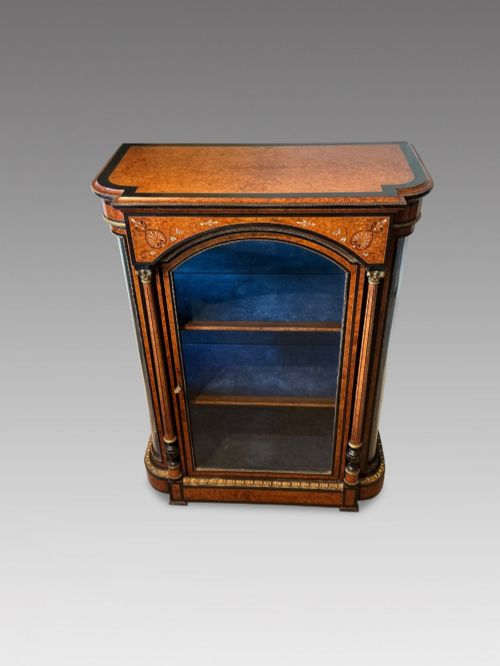
Cabinet makers utilised dense hardwoods such as mahogany, rosewood, and walnut, frequently applying burr walnut or amboyna veneers to create patterned surfaces on the exterior carcase. These timbers were often enriched with contrasting stringing, floral marquetry, or Tunbridgeware inlay.
Metal mounts in brass and ormolu were cast and applied to frame doors, corners, and plinths, while glazed panels were fitted into wooden doors to enclose the shelved interiors.
Some cabinets hide their secrets behind velvet linings and tiny inlaid keys that still turn the brass locks after over a century.
What varies in quality
The distinction between standard and exceptional pieces rests upon the selection of timber veneers, the precision of the inlaid marquetry, and the weight of the cast ormolu mounts. Finer examples display symmetrical burr walnut figures across curved serpentine fronts and heavy bronze or gilt mounts.
Construction methods also set pieces apart, visible in the choice of secondary timbers, the integration of breakfront profiles, and the delicacy of internal shelving arrangements designed to support books or display items.
Liberty & Co
The Glazed Door Credenza Cabinet Glossary
- Ormolu
- Gilded bronze mounts applied to the exterior of furniture. This decorative technique adds metallic contrast to dark timber surfaces.
- Marquetry
- Fitted patterns of wood veneer assembled to create pictorial or floral designs. Artisans cut contrasting timbers to form decorative panels on cabinet doors.
- Pier cabinet
- A narrow display cabinet designed to fit against the wall space between windows. These pieces usually contain a single glazed door and interior shelves.
- Burr walnut
- A highly figured timber harvested from walnut tree growths. Cabinet makers prized it for its swirling grain patterns on primary display surfaces.
Glazed Door Credenza Cabinet: Frequently Asked Questions
What is a glazed door credenza cabinet used for?
These cabinets serve as living room or parlour furniture designed to store and display books, ceramics, and ornaments behind protective glass panels.
The enclosed shelving keeps dust away from delicate items while allowing visibility from the room.
How do I identify a Victorian credenza?
Victorian examples often feature dark woods like burr walnut, mahogany, or ebonised finishes paired with glass doors and gilt metal mounts. They date from the nineteenth century and lean towards ornate marquetry or serpentine shapes.
Earlier Regency pieces display cleaner classical lines and rosewood or mahogany construction.
Where should I place a pier cabinet?
Pier cabinets work best against narrow wall spaces or between windows where wider sideboards cannot fit. Their shallow depth allows them to sit flush against living room walls.
They provide vertical display space without dominating the floor area of a room.
How do I care for burr walnut veneer?
Keep walnut furniture away from direct sunlight and heat sources to prevent the wood veneer from drying out or splitting. Dust regularly with a dry cloth and apply occasional wax polish suited for antique timber.
Avoid using liquid cleaners or silicone sprays that can damage the polished surface.