
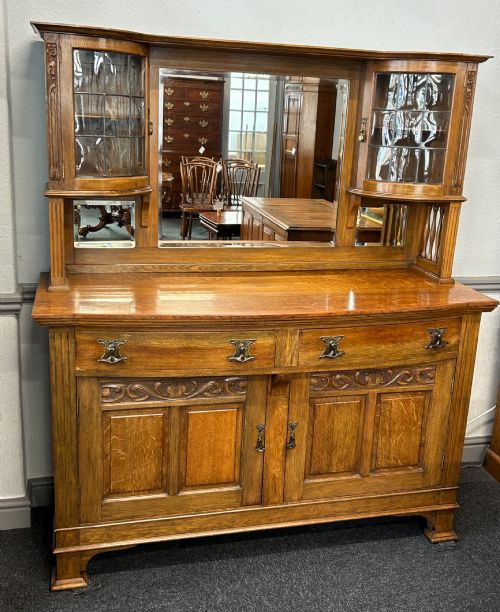
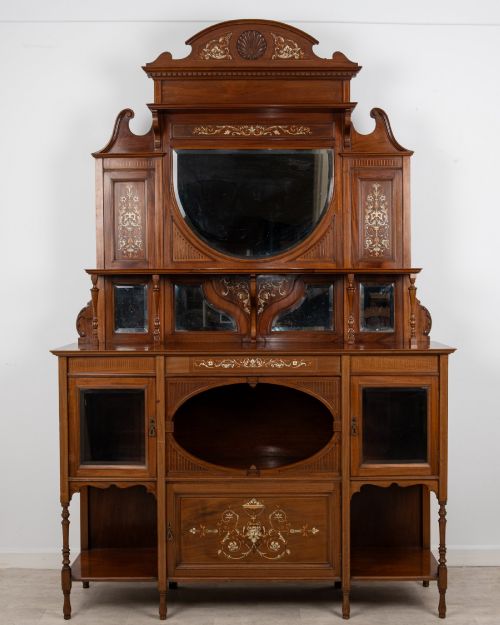
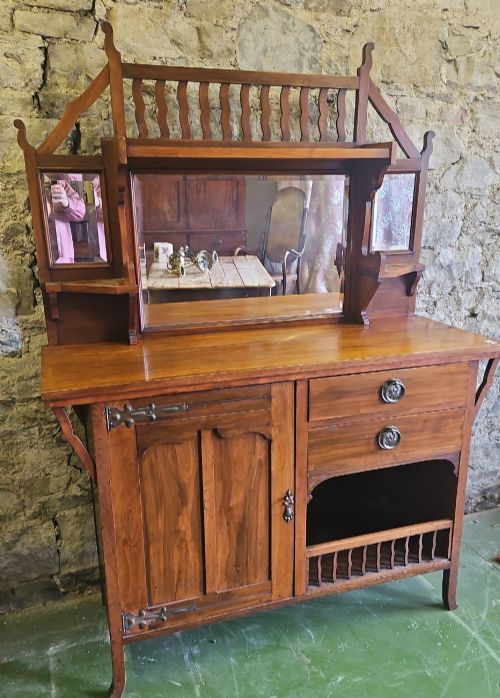


Vintage Mirrored Credenza Sideboard
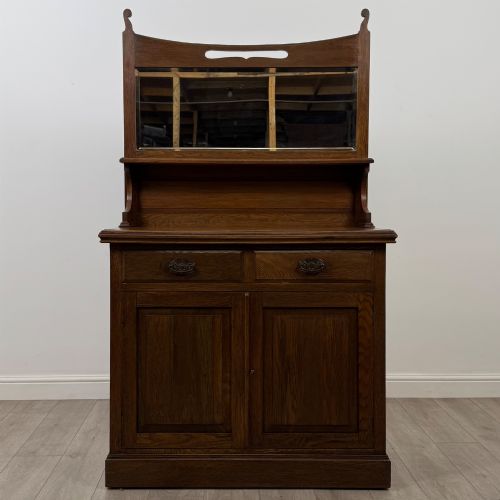
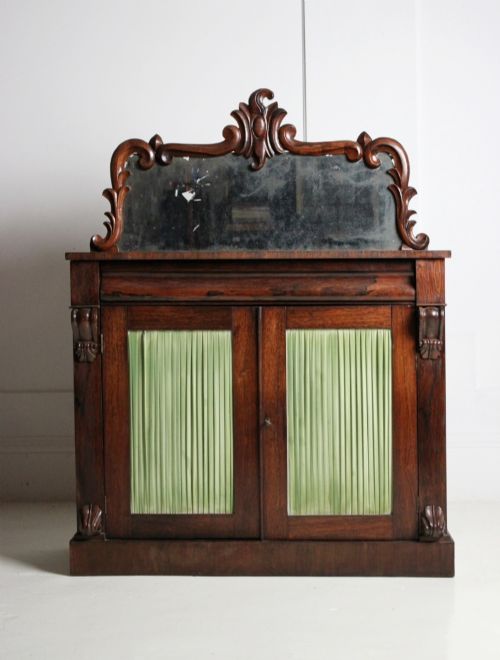
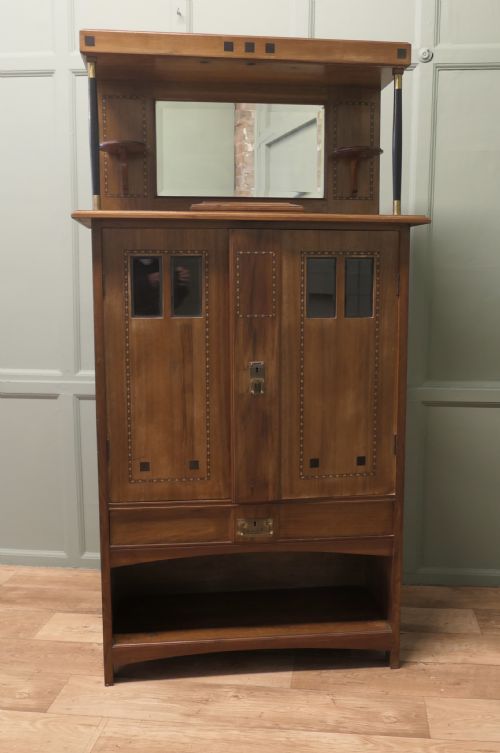
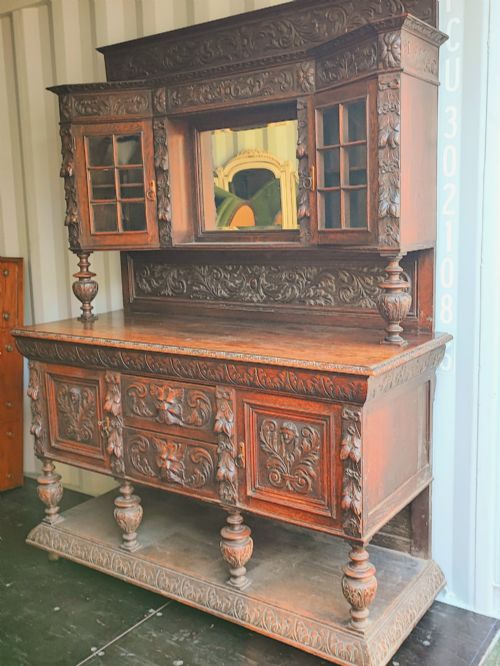
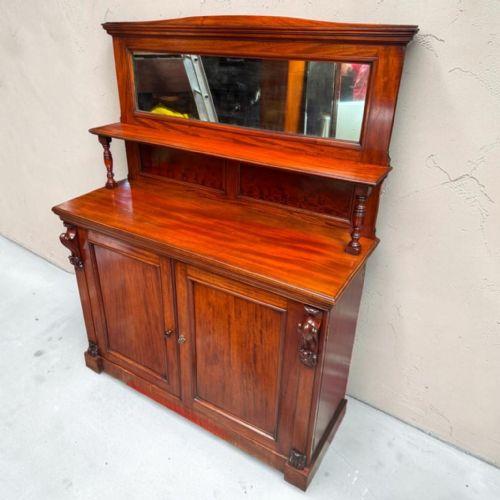
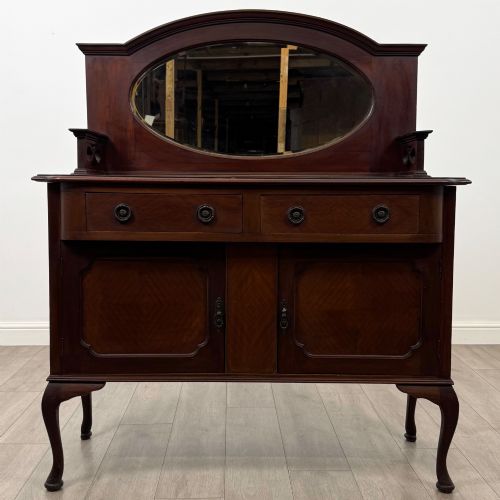
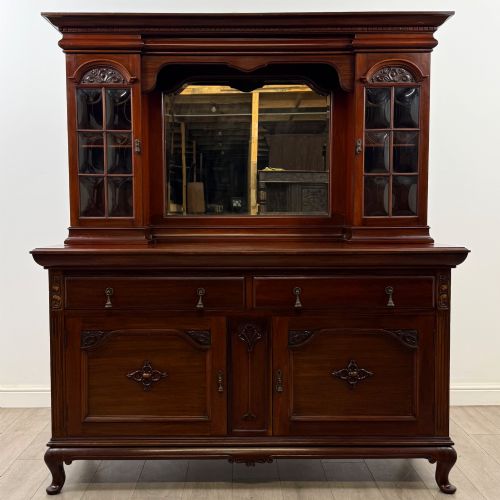
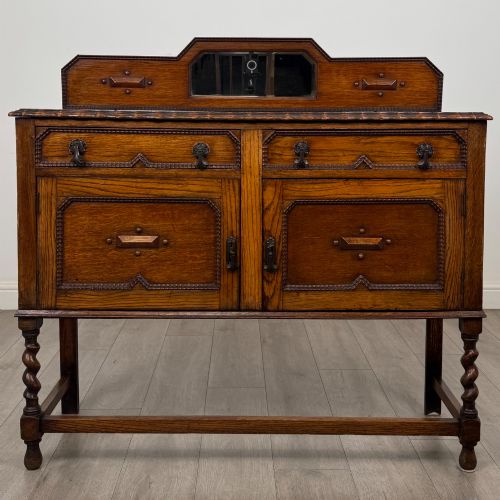
These vintage mirrored credenza sideboard examples combine substantial storage with reflective glass panels, offering a striking focal point for a dining room or living space.

Vintage Mirrored Credenza Sideboard
Buyers seeking a vintage mirrored credenza sideboard encounter substantial storage furniture primarily originating from the Victorian, Edwardian, and early twentieth-century periods. These forms encompass diverse classifications including traditional sideboards, credenzas, chiffoniers, and mirror-backed cabinets designed for display and utility.
The selections available range from heavily carved Victorian walnut and mahogany pieces to lighter Edwardian oak and Arts and Crafts designs. Many incorporate glass mirrors, marble tops, and brass hardware, merging the functions of a serving surface with an ornamental display case.
Materials and construction methods
Cabinet makers utilised dense native and imported timbers, predominantly oak, mahogany, and burr walnut, often selected for rich grain patterns and decorative figuring. These woods were carved, inlaid, or bleached to achieve the aesthetic demands of specific stylistic movements such as Art Nouveau or Jacobean Revival.
Reflective elements form a defining characteristic, utilising silvered mirror glass set into panelled timber frames above the main credenza body. Additional surface details frequently incorporate polished marble tops, majolica ceramic panels, and cast brass handles or hinges.
Judging the quality of construction
Quality separates pieces through the selection of timber veneers and the depth of hand-carved detailing across the framework. Superior examples display carefully matched burr walnut or figured mahogany, whereas simpler iterations rely on plain golden or light oak.
The integrity of the original mirror glass and the precision of joinery in drawers and cabinet doors indicate the maker's initial skill. Pieces carrying designations of exhibition or outstanding quality generally feature more elaborate decorative programmes, including extensive inlay work and specialised hardware.
The Vintage Mirrored Credenza Sideboard Glossary
- Credenza
- A sideboard or cabinet originally designed for holding food or displaying silver, frequently featuring glass doors or a mirror back in later iterations.
- Burr walnut
- Timber harvested from walnut tree growths, valued for its complex, swirling grain patterns used in high-status cabinet veneers.
- Chiffonier
- A compact sideboard or low cabinet equipped with drawers and shelves, popular throughout the nineteenth century.
- Majolica
- Opaque tin-glazed earthenware decorated with brightly coloured metal oxides, often utilised as decorative inset panels in cabinets.
Vintage Mirrored Credenza Sideboard: Frequently Asked Questions
Where should I place a large mirrored sideboard?
These substantial cabinets suit dining rooms, grand hallways, or spacious living areas where their reflective glass panels can amplify natural light.
Ensure the floor surface is level and stable before positioning heavy timber furniture of this scale.
How do I clean the mirror glass safely?
Use a soft, lint-free cloth alongside a mild glass cleaner sprayed onto the cloth rather than directly onto the mirror surface.
Avoid letting moisture seep into the aged silver backing or surrounding wooden frame joints.
What is the difference between a credenza and a sideboard?
While both provide storage and a surface for serving, a credenza traditionally sits lower and often includes enclosed cupboards rather than open shelving.
Victorian and Edwardian makers frequently used the terms interchangeably for multi-purpose dining room furniture.
How do I identify an Arts and Crafts piece?
Look for honest construction methods, exposed tenon joints, and minimal ornamentation that celebrates the natural grain of oak.
These designs reject heavy Victorian revivalism in favour of simpler, functional forms.