
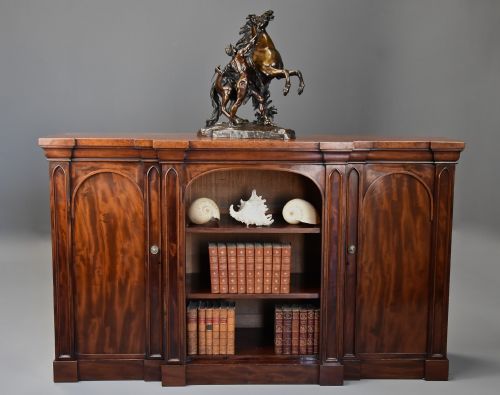


Mid Victorian Credenza Cabinet
Mid victorian credenza cabinet examples combine display and storage, bringing nineteenth-century walnut and mahogany craftsmanship directly into your interior.

Mid Victorian Credenza Cabinet
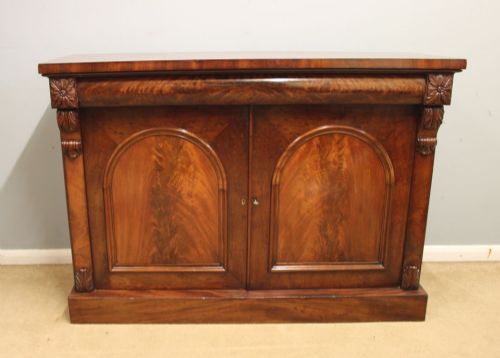
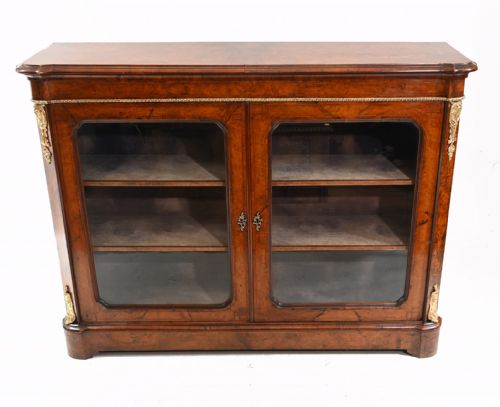
A mid victorian credenza cabinet represents the refined dining and drawing room furniture of the nineteenth century, specifically spanning the Victorian era and the years around 1850 to 1860. These substantial pieces function primarily as display cabinets or low sideboards, often incorporating glazed central doors flanked by curved side cupboards.
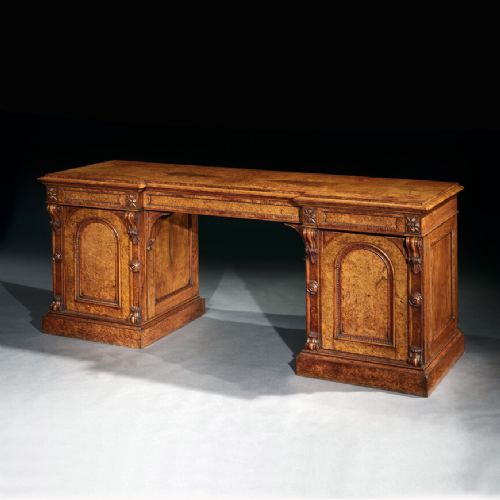
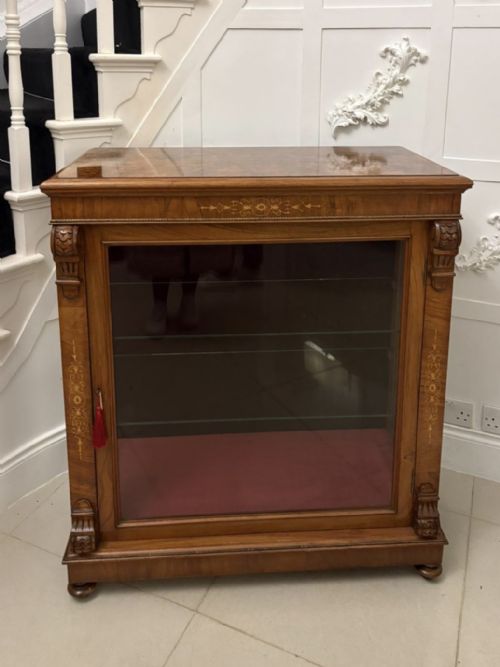
The version you are most likely to encounter here appears in rich burr walnut or mahogany, frequently embellished with intricate marquetry inlay, satinwood banding, and gilded ormolu mounts. Variations on this page also include smaller pier cabinets, rosewood side cabinets, and architectural breakfront bookcases bearing Gothic or Rococo Revival influences.
Materials and construction methods
Cabinet makers built these pieces using solid foundational timbers such as oak and mahogany, applying highly figured decorative veneers including burr walnut, rosewood, and palisander to the visible surfaces. Marquetry inlay utilised lighter woods like satinwood and tulipwood to create contrasting botanical or geometric patterns across the doors and panels.
Structural embellishments relied heavily on cast ormolu mounts, brass banding, and glazed door panels designed to protect and display valuable porcelain or books. Carved serpentine fronts and architectural mouldings required skilled hand-tooling, while specialised interior elements like fitted secretaire drawers demonstrated advanced joinery techniques.
Listings feature pieces constructed from burr walnut, mahogany, rosewood, and oak, dating from the Victorian period around 1850 to 1860.
Distinguishing quality in nineteenth-century cabinetry
The distinction between standard and superior pieces rests upon the choice of timber veneer and the precision of the marquetry. Top-tier examples display richly figured burr walnut or perfectly matched rosewood grain across the entire facade without awkward joins or patched repairs.
Execution of decorative details dictates the tier of craftsmanship, visible in the sharpness of the carved serpentine mouldings and the weight and finish of the ormolu mounts. Superior pieces maintain integrated architectural proportions and original glazed panels, whereas lesser examples rely on simpler mahogany construction with minimal embellishment.
Druce & Co
The Mid Victorian Credenza Cabinet Glossary
- Credenza
- A low cabinet originating as a side table for food, adapted in the nineteenth century as an elaborate display piece with glazed doors and cupboards. These units usually feature a marble top or a finished wooden surface suitable for ornaments.
- Ormolu
- Gilded bronze mounts applied to furniture edges, corners, and panels for decorative effect. This French technique added significant cost and visual splendour to high-end Victorian pieces.
- Marquetry
- Inlaid patterns created by fitting contrasting veneers into a primary wooden background. Craftsmen utilised light woods like satinwood against dark walnut to form floral or geometric motifs.
- Pier Cabinet
- A narrow display cabinet designed specifically to fit the wall space between windows. These upright pieces typically feature a single glazed door enclosing velvet-lined shelves for ornaments.
- Serpentine Front
- A curved furniture front featuring a convex centre flanked by concave curves. This undulating shape requires precise carpentry and adds visual movement to heavy sideboards.
Mid Victorian Credenza Cabinet: Frequently Asked Questions
What is a mid victorian credenza cabinet used for?
These cabinets served primarily to store and display family silver, glassware, and fine porcelain within the formal Victorian dining or drawing room. The flat top surface also provided an ideal space for arranging decorative ornaments and lamps.
Today, they function similarly in modern interiors as statement sideboards or display units. Their internal shelving accommodates books, tableware, or collections while anchoring the room with nineteenth-century character.
How do I distinguish walnut from mahogany pieces?
Walnut timber typically exhibits a lighter, warmer brown tone with intricate, swirling grain patterns known as burr walnut. Cabinets utilising this wood frequently feature extensive marquetry inlay and ormolu mounts.
Mahogany presents a deeper, reddish-brown hue with a straighter, more uniform grain structure. These pieces often lean towards architectural forms like breakfront bookcases or pedestal sideboards rather than heavily inlaid credenzas.
What is the difference between a credenza and a chiffonier?
A credenza is typically a low, symmetrical cabinet featuring central doors flanked by side compartments, often sitting directly on the floor with minimal feet. They prioritize display and decorative marquetry.
A chiffonier is a smaller sideboard that generally incorporates a raised superstructure or mirror back attached to the rear of the top surface. These pieces often served functional storage roles alongside their display capabilities.