
Mirrored Backing Sideboard
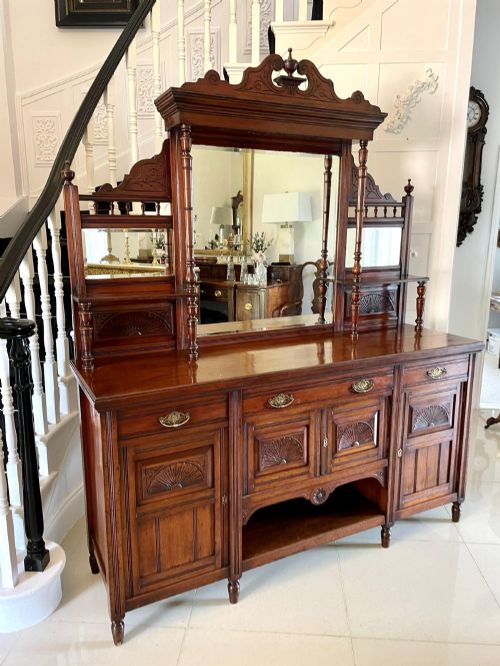
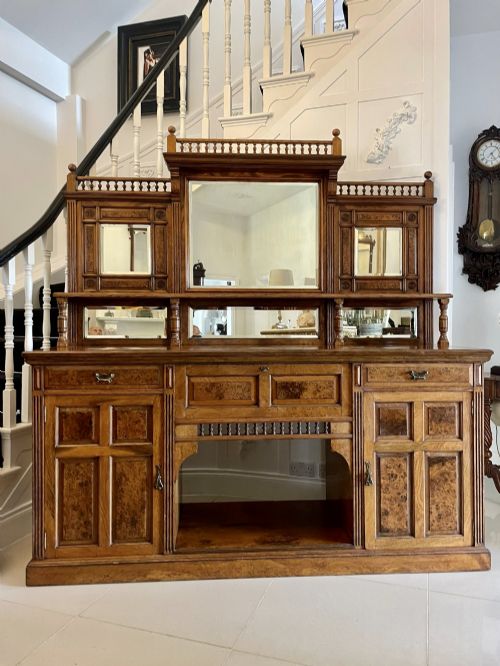
A mirrored backing sideboard brings depth and light to a room through the combination of timber and glass.

Mirrored Backing Sideboard
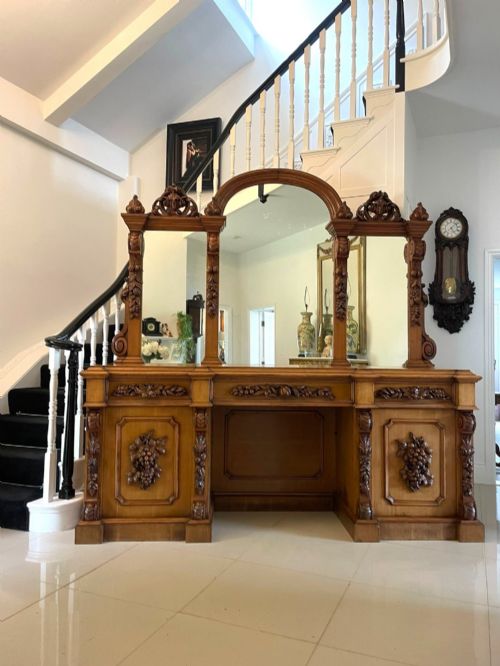
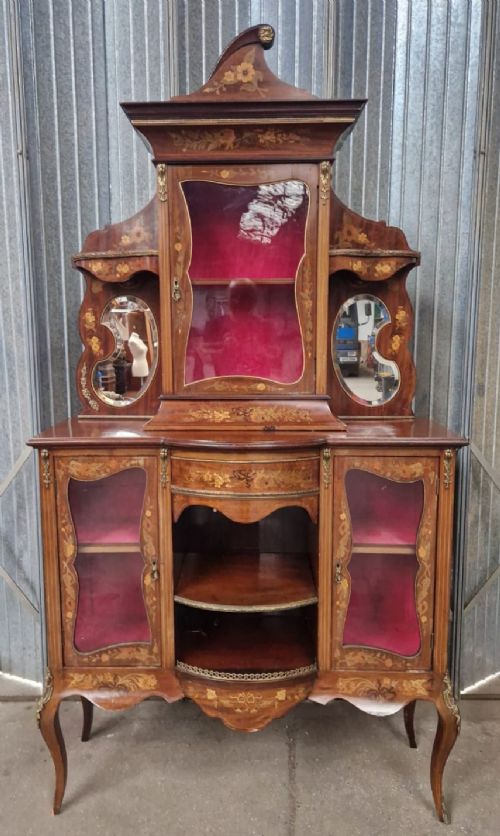
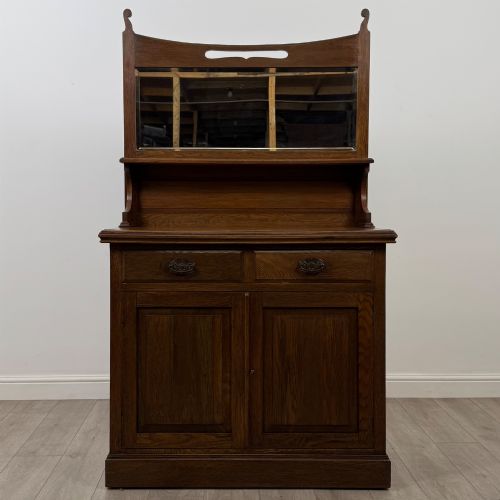
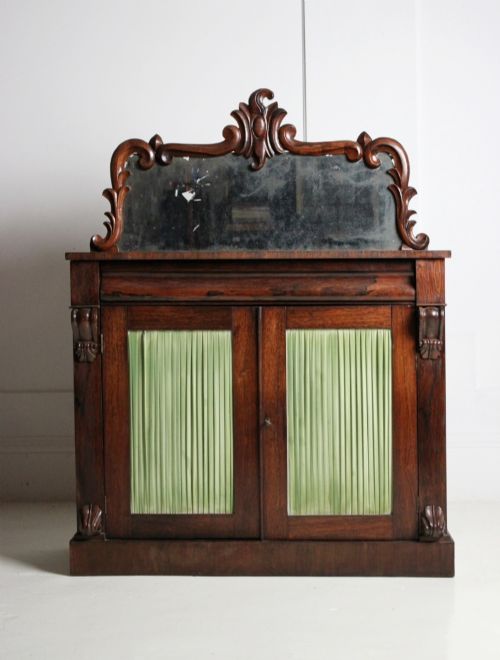
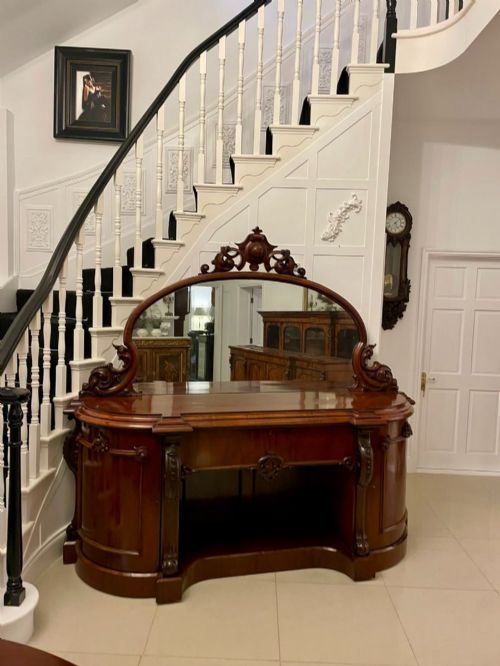
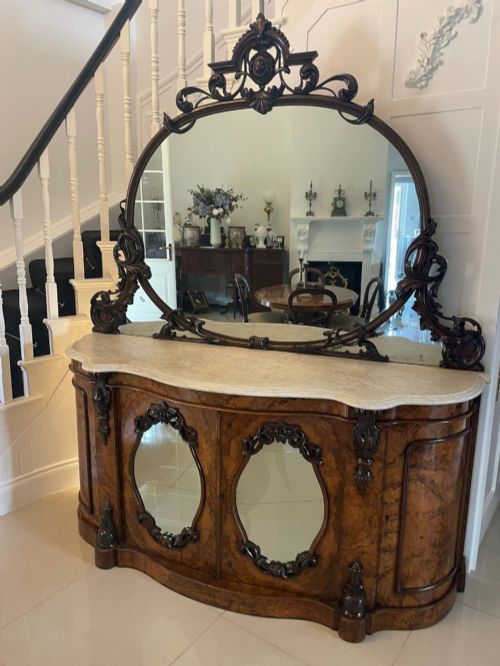
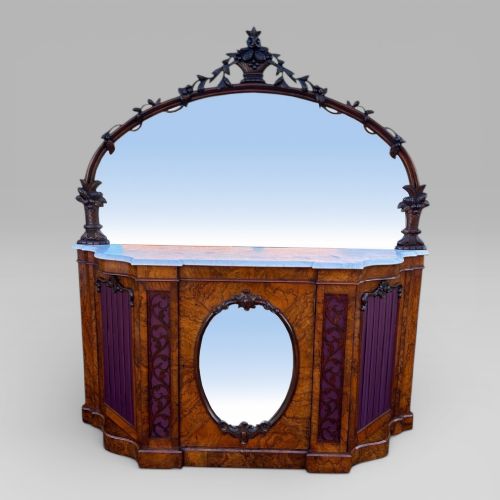
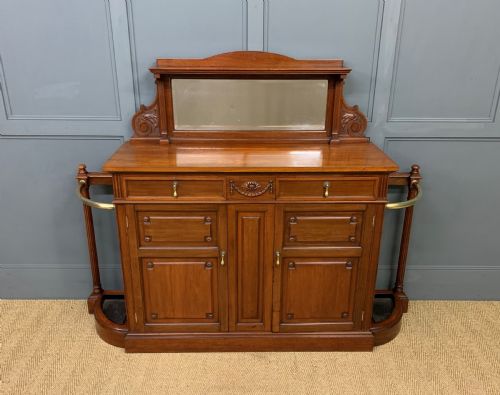
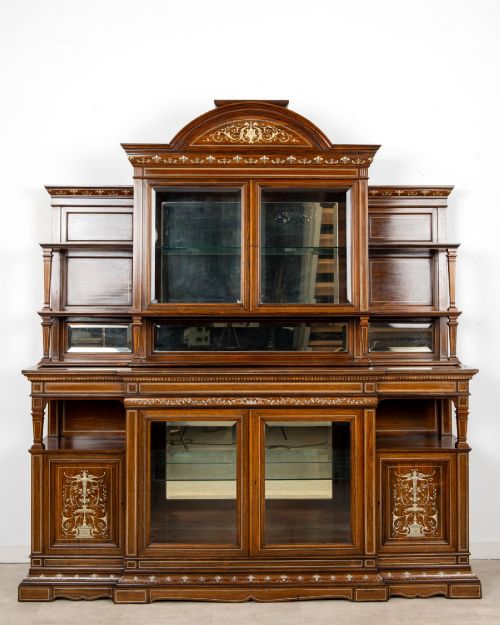
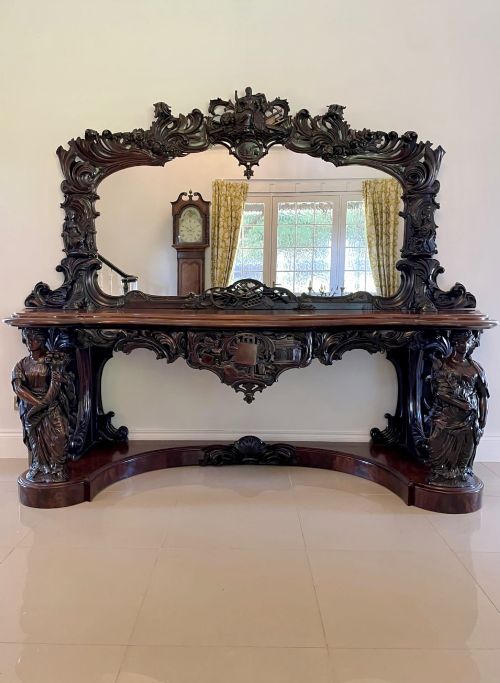
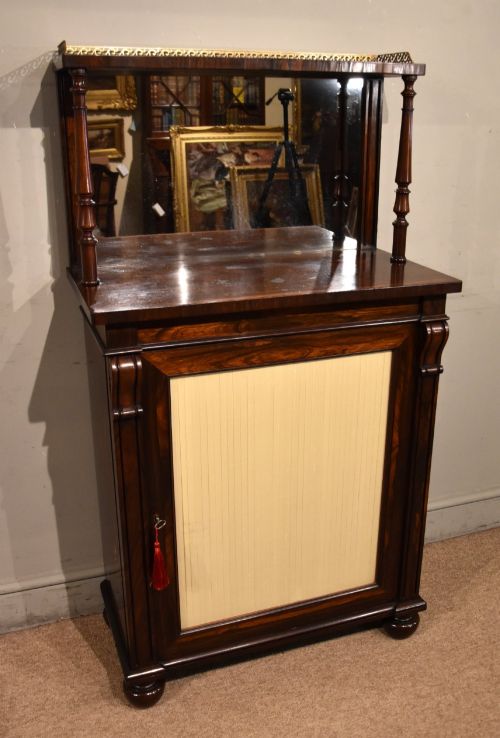
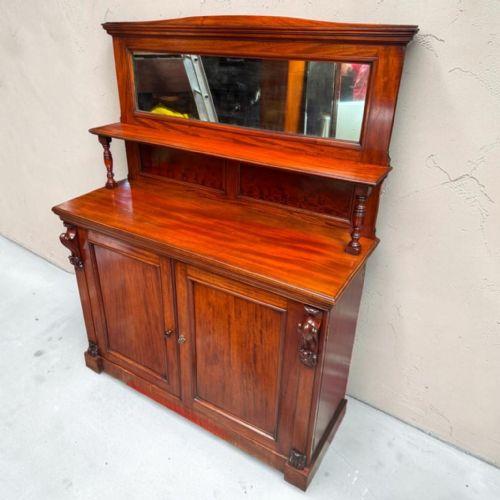
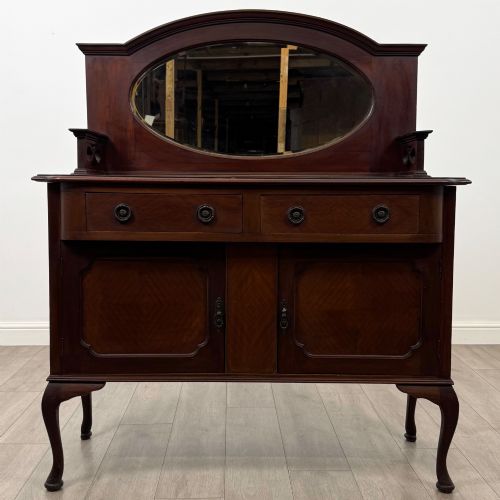
A mirrored backing sideboard combines substantial timber cabinetry with an integrated glass mirror, creating a focal point designed for dining rooms and large reception spaces. The forms range from compact chiffoniers to monumental credenzas and display cabinets that incorporate storage cupboards alongside the reflective back.
The pieces appearing here stem largely from the Victorian and Edwardian eras, spanning the mid-nineteenth century through to the early twentieth century. Walnut, mahogany, and oak dominate the construction, often shaped in Victorian, Edwardian, Arts and Crafts, or Aesthetic Movement styles.
How they were made
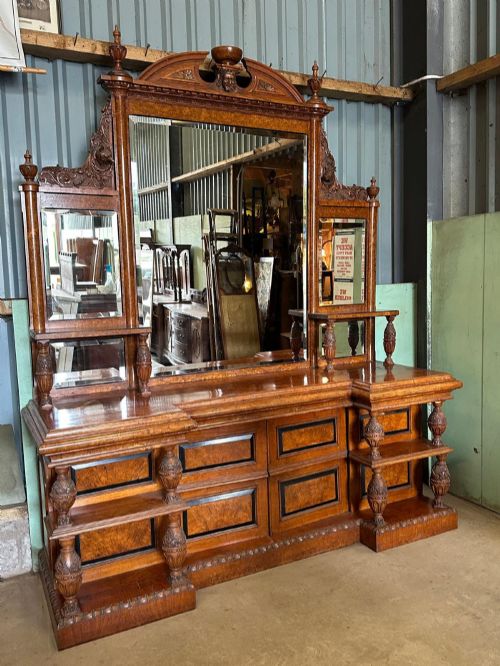
Cabinet makers utilised dense hardwoods such as mahogany, rosewood, burr walnut, and pollard oak for the structural carcass and surface veneers. Timber selection dictated the character of the grain, particularly in exhibition pieces that display highly figured burr surfaces.
Carving, turning, and marquetry embellish the structural framework, while silvered mirror glass is secured within carved wooden frames. Marble tops occasionally appear on credenzas alongside brass hardware and glazed display doors.
Listings feature nineteenth and early twentieth century pieces spanning Victorian, Edwardian, Arts and Crafts, and Aesthetic Movement styles.
What varies in quality
The calibre of a mirrored backing sideboard rests on the depth of the timber carving and the selection of figured veneers. Exhibition grade pieces demonstrate sophisticated joinery, intricate marquetry, and substantial proportions that distinguish them from standard domestic furniture.
Shoolbred and Co·Collinson and Lock·Holland and Sons·Gillows
The Mirrored Backing Sideboard Glossary
- Credenza
- A sideboard or cabinet designed for dining rooms, frequently incorporating display space and mirrored elements. It originates from Renaissance Italy before becoming a staple of nineteenth-century revival furniture.
- Chiffonier
- A low sideboard or cabinet, smaller than a full dining room piece, often fitted with enclosed cupboards and a shelf or mirror above. These pieces served practical storage roles in Victorian drawing rooms.
- Marquetry
- The art of applying pieces of veneer to a structural surface to form decorative patterns or pictures. Craftsmen used contrasting timber tones to create geometric or floral motifs.
- Pollard oak
- Oak timber taken from trees that have been pollarded, producing a heavily knotted and textured grain pattern. This decorative wood was favoured for distinct nineteenth-century cabinet work.
- Aesthetic Movement
- A late nineteenth-century design style that emphasised visual beauty over moral or narrative function in art and furniture. Pieces from this movement often employ clean lines and contrasting materials.
Mirrored Backing Sideboard: Frequently Asked Questions
How do I clean the mirror?
Use a soft cloth and a gentle, ammonia-free glass cleaner applied to the cloth rather than directly onto the glass surface. This prevents moisture from seeping behind the silvered backing or damaging the surrounding timber frame.
Avoid harsh chemical sprays and abrasive pads that can scratch the aged glass or degrade the original wooden joinery securing the mirror in place.
Can I remove the mirror back?
The mirrored back forms an integrated structural component of the sideboard, secured with original screws, brackets, and framing. Disassembling this upper section risks damaging the timber and disrupting the aesthetic balance of the piece.
Most cabinets are constructed to remain as single unified units, and separation is generally not recommended unless required for transportation or professional restoration.
Where should I place my sideboard?
Position the piece against a sturdy interior wall away from direct sunlight and strong heat sources such as radiators. Timber responds poorly to extreme temperature fluctuations, which can cause wood to warp or veneers to lift over time.
The integrated mirror makes these sideboards particularly effective opposite windows, where they reflect natural light and brighten darker reception rooms.
How do I date a mirrored sideboard?
Examine the timber species, construction methods, and stylistic cues such as Victorian carving or Arts and Crafts simplicity. The backing glass and the type of screw heads or fixings can also indicate the manufacturing period.
Maker stamps or paper labels inside drawers provide the most direct evidence of origin, pointing to specific workshops active during the nineteenth or early twentieth centuries.