


Victorian Rococo Revival Sideboard
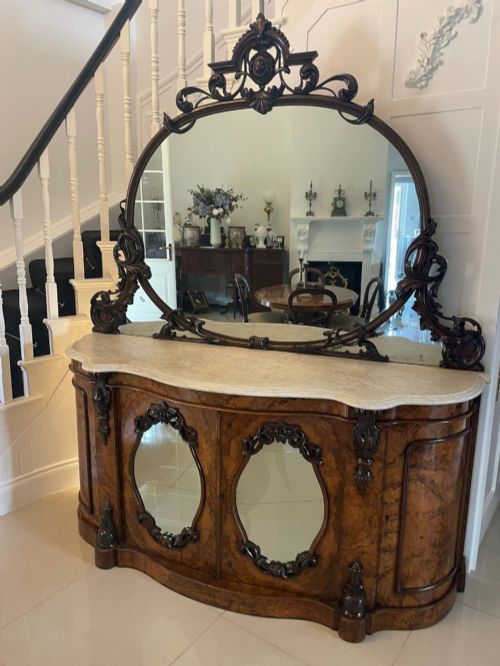
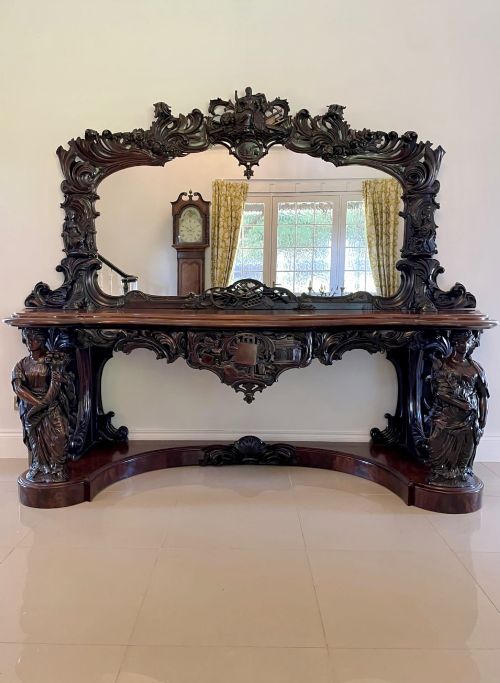
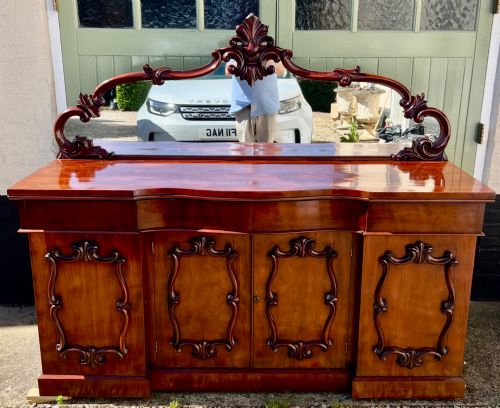
These victorian rococo revival sideboard examples bring theatrical nineteenth-century curves and rich figured timber into a room.

Victorian Rococo Revival Sideboard
A victorian rococo revival sideboard combines heavy nineteenth-century proportions with the sweeping, asymmetric scrollwork of the mid-eighteenth-century French taste. Buyers searching for this phrase seek grand architectural furniture designed to anchor a formal dining room or a reception space.
The pieces appearing on this page span from the mid-nineteenth century up to nineteen hundred, encompassing related forms such as credenzas, mirror-back console tables, and serpentine side cabinets. Burr walnut, flame mahogany, and figured rosewood provide the heavy foundational surfaces for these curvaceous carcases.
Mirror-backed formats and marble tops dominate the selection, often incorporating glazed doors and brass details. These statement items reflect light and display prized porcelain or silver in the principal rooms of large Victorian houses.
Materials and Construction
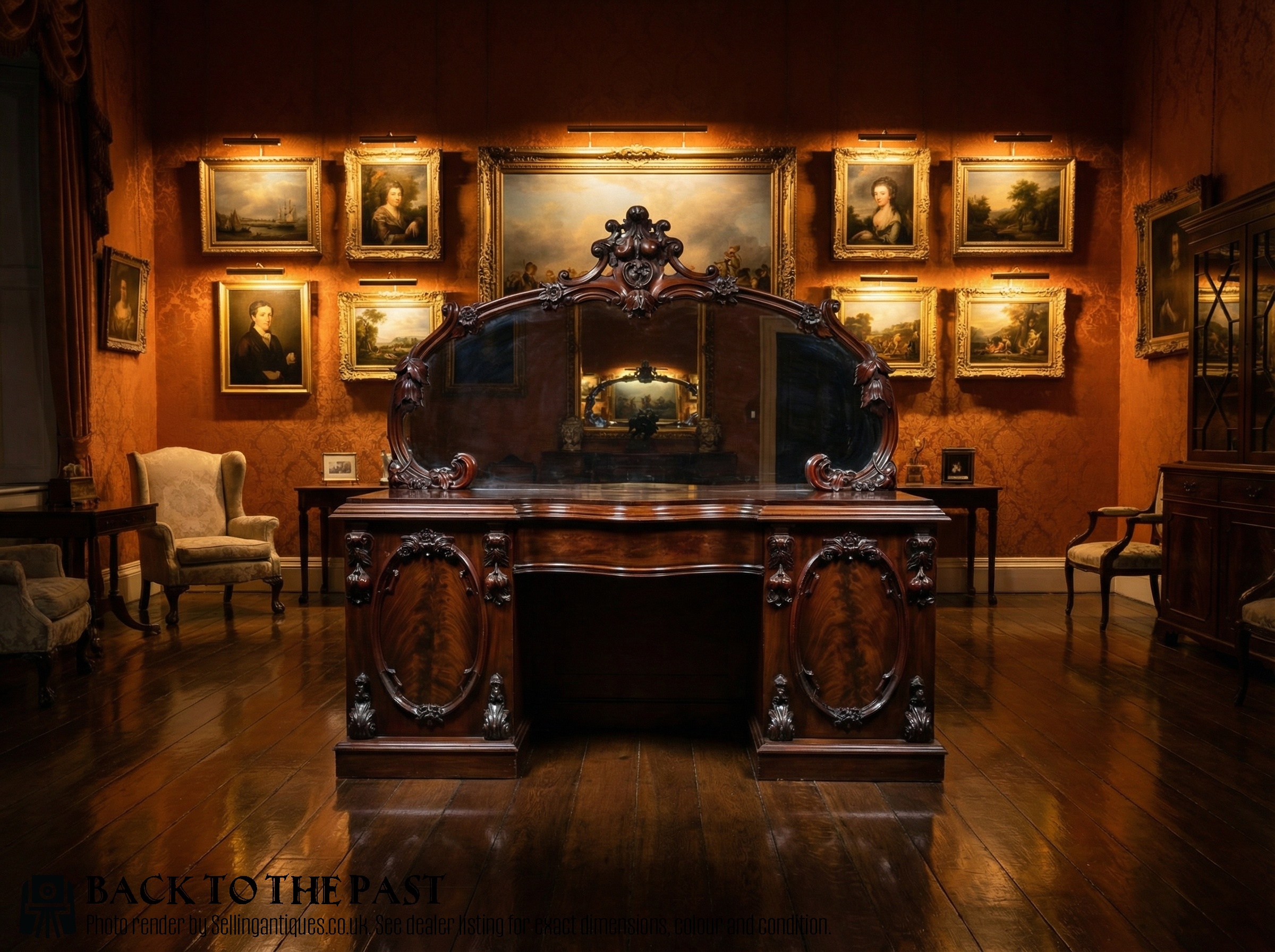
Cabinetmakers built these carcases using solid foundational timbers like mahogany and walnut, applying highly figured veneers such as burr walnut and flame mahogany across the primary display faces. Skilled artisans shaped dense timbers to achieve the characteristic serpentine fronts and deep, flowing curves demanded by the revival style.
Carved wooden ornamentation, mirrored glass plates, and inset white marble slabs define the upper and outer surfaces. Brass mounts and hardware secure the heavy doors and support mirrored superstructures, combining structural mass with decorative lightness.
Victorian cabinetmakers frequently hid small secret compartments behind heavy scrollwork to keep private letters safe from prying housemaids.
Judging the Workmanship
The distinction between standard commercial output and exhibition pieces rests in the depth and crispness of the hand-carved ornamentation and the selection of veneer figures. Elaborate mirror frames and deeply moulded serpentine plinths demand advanced carpentry skills.
The integration of heavy marble tops, bevelled mirror glass, and substantial brass hardware separates robust cabinetwork from simpler constructions. Superior examples maintain structural integrity across complex curved doors and heavy superstructure attachments.
Gillows
The Victorian Rococo Revival Sideboard Glossary
- Serpentine
- A furniture front or edge shaped with a central convex curve flanked by two concave curves. This contour requires precise woodworking to follow the flowing lines of revival pieces.
- Burr Walnut
- A distinctive wood veneer taken from the wart-like growths on walnut trees, prized for its swirling patterns and rich texture. It serves as a primary decorative surface on mid-nineteenth-century cabinets.
- Console Table
- A wall-mounted or freestanding table designed to sit against a flat surface, often paired with a large mirror. Nineteenth-century versions frequently incorporate heavy marble tops and carved wooden frames.
Victorian Rococo Revival Sideboard: Frequently Asked Questions
What is a victorian rococo revival sideboard?
A victorian rococo revival sideboard is a large nineteenth-century storage piece featuring asymmetrical curves, carved scrollwork, and rich wood veneers. These items combine massive Victorian proportions with lighter French eighteenth-century decorative motifs.
They served as focal points in formal dining rooms and parlours, providing surface space for serving food and displaying silver or porcelain.
How were these sideboards used?
Families utilised these large cabinets in dining rooms to store tableware, linens, and serving dishes while displaying decorative objects on the marble or wooden top surfaces. Mirrored backs helped reflect candlelight and brighten dark Victorian interiors.
In drawing rooms and reception spaces, related credenzas and console tables functioned primarily for display rather than heavy dining storage.
How do I care for burr walnut veneer?
Burr walnut requires stable indoor humidity and protection from direct sunlight to prevent the delicate veneer from drying, fading, or lifting over time. Gentle dusting with a dry, soft cloth preserves the polished surface without abrasive cleaners.
Applying occasional appropriate wax feeds the timber and maintains the deep lustre of the figured grain.