
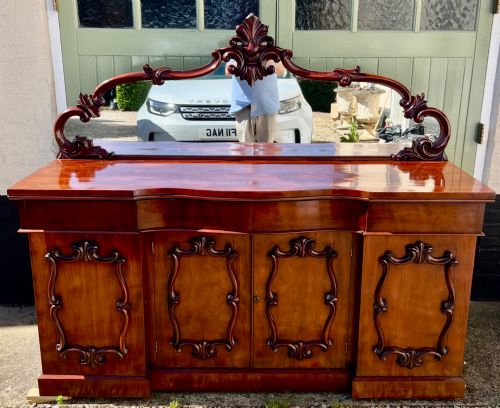
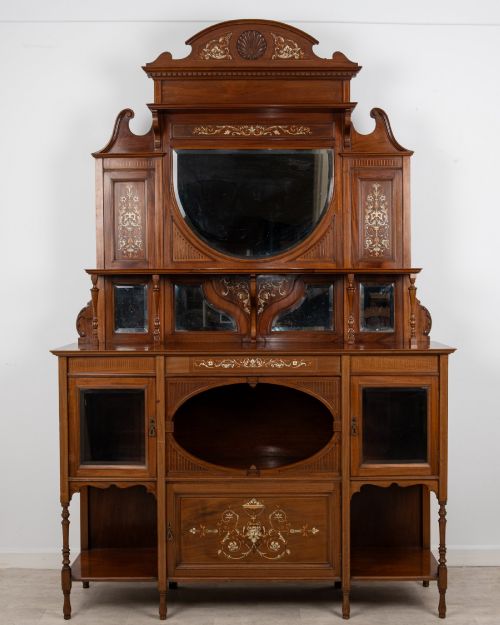
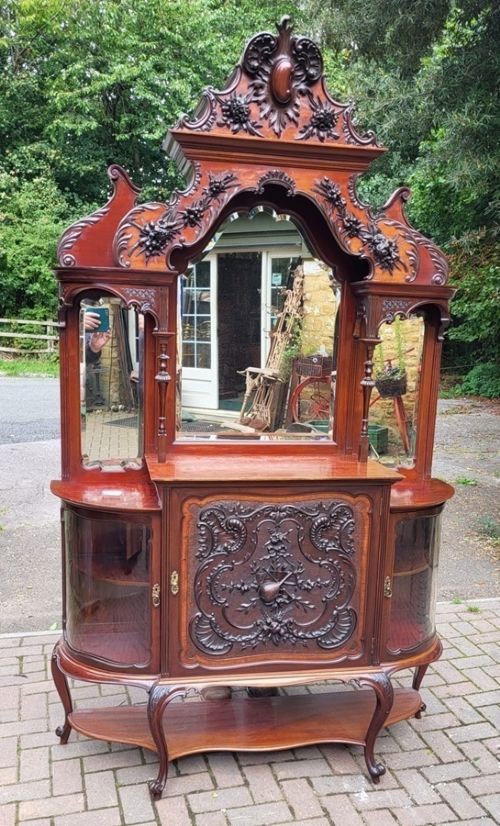


Mahogany Mirrored Sideboard
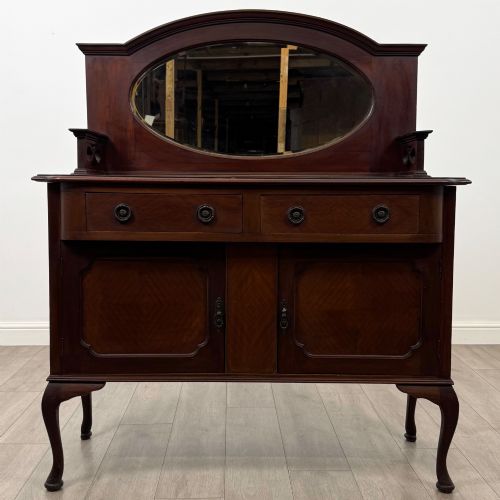
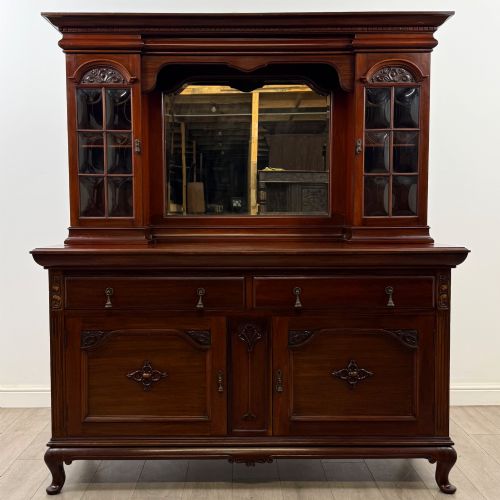
A mahogany mirrored sideboard brings deep timber and reflected light into a room, uniting storage with a tall fitted glass back.
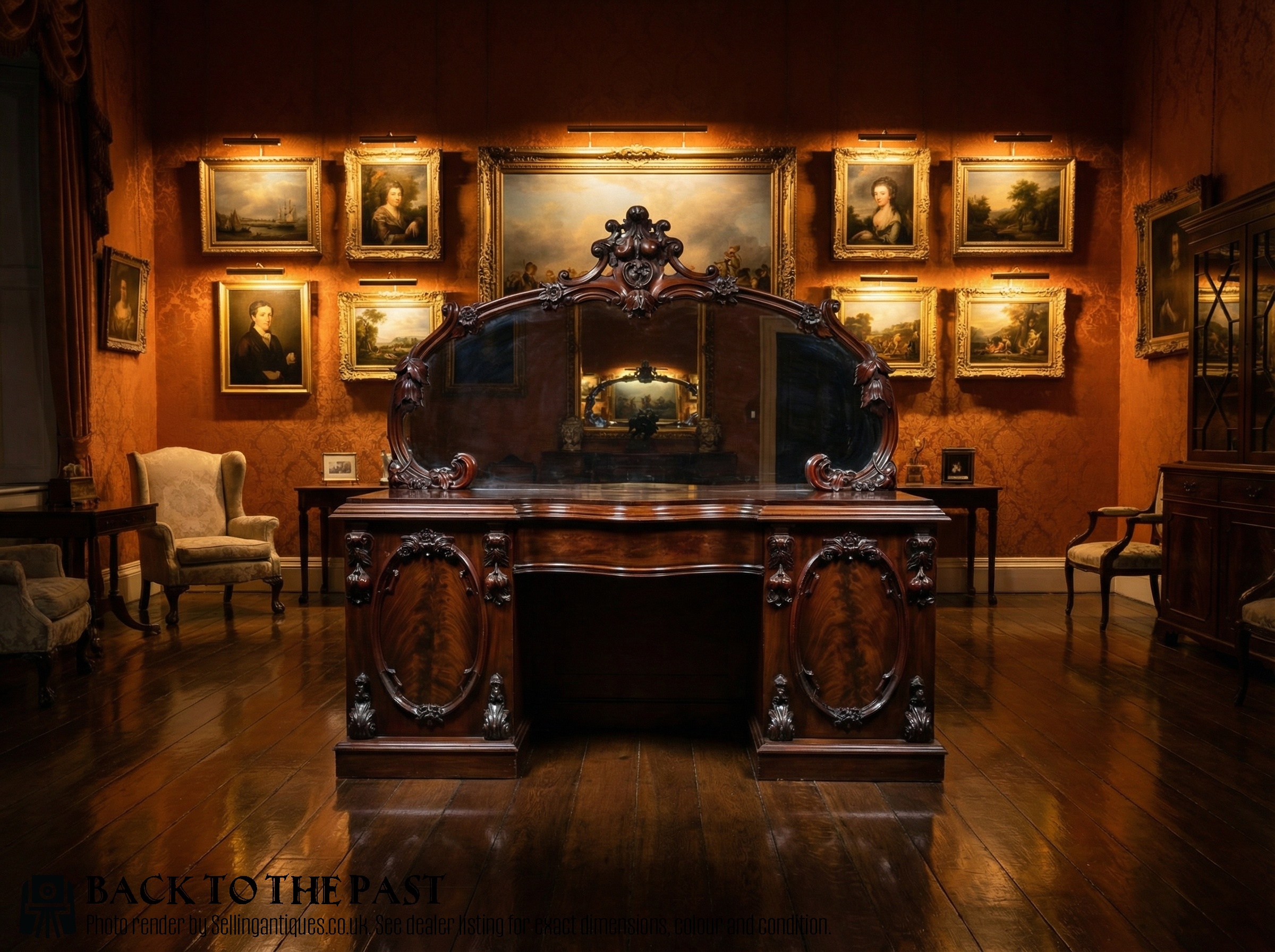
Mahogany Mirrored Sideboard
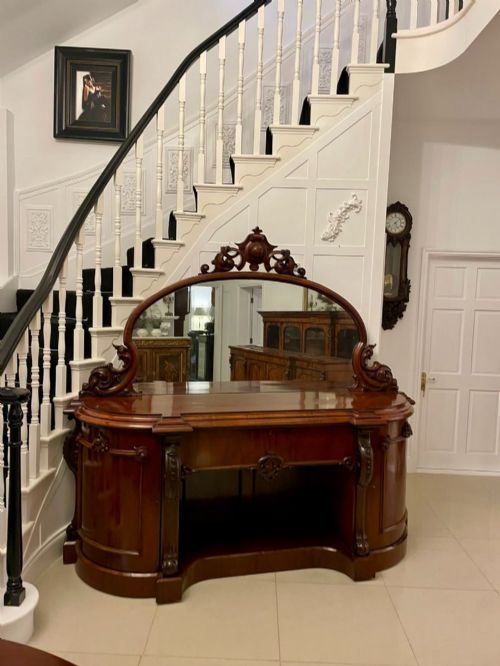
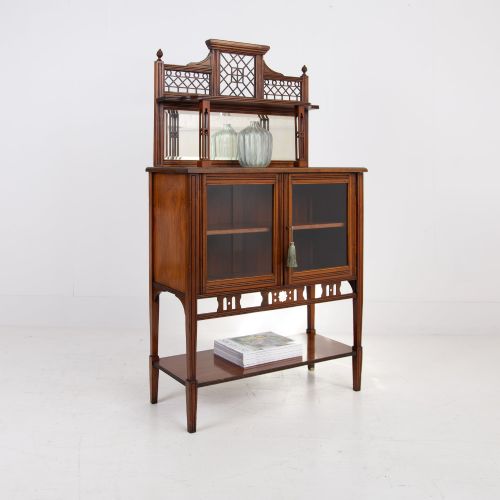
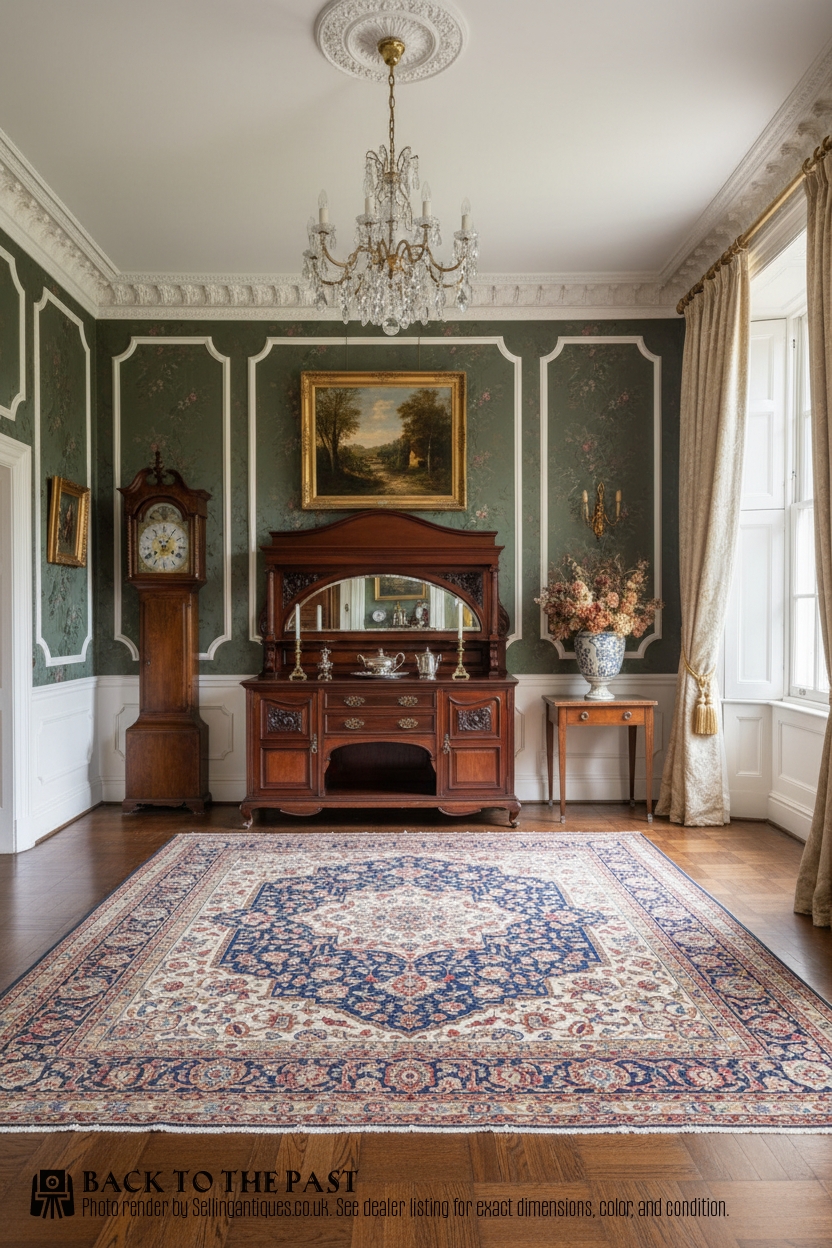
A mahogany mirrored sideboard combines a substantial timber base fitted with cupboards or drawers and an upright superstructure holding a glass mirror plate. These pieces dominate the dining room or hall, anchoring the interior with heavy wood and reflective depth.
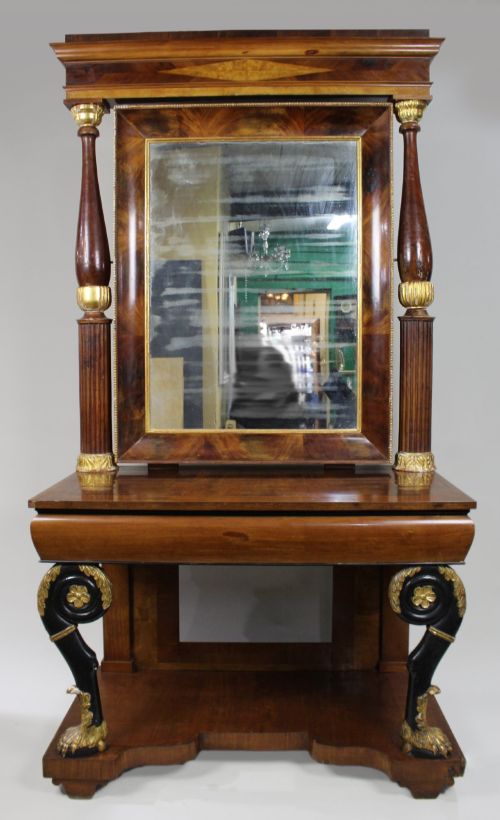
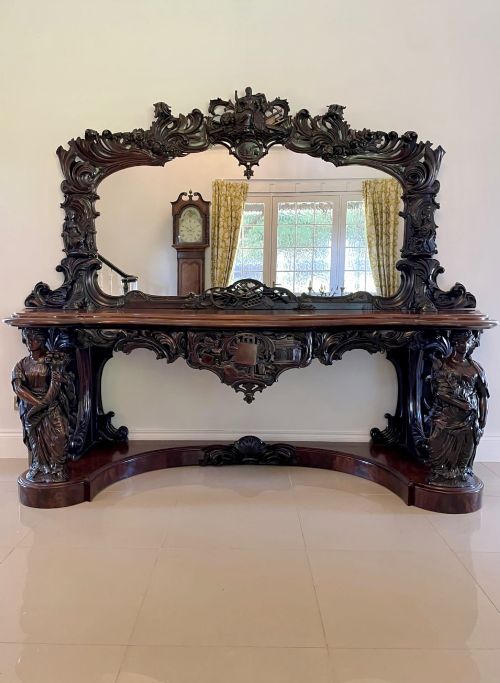
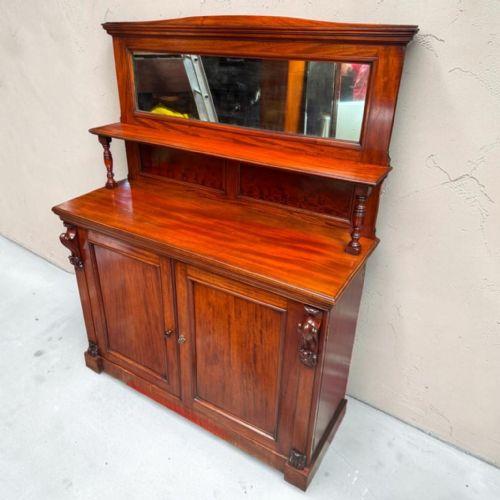
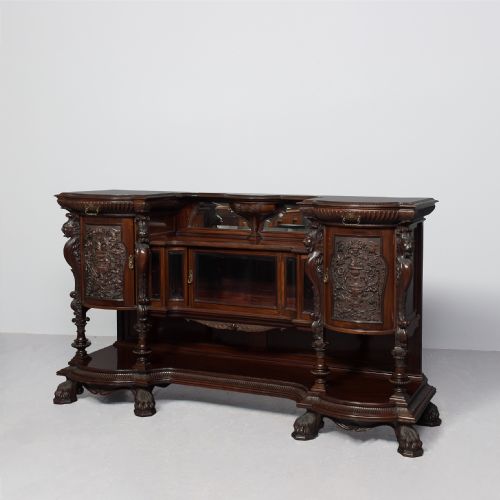
The version most commonly encountered on this page originates in the nineteenth century, spanning Victorian and Edwardian periods. Examples range from carved mirror-back chiffoniers to large breakfront pedestals and console tables with matching pier mirrors.
Makers utilised rich timber grains, incorporating flame mahogany veneer, marquetry inlay, and parcel gilt highlights into the design. Styles shift from ornate Victorian Rococo revival and high Victorian carved work to restrained Arts and Crafts and Chippendale revival pieces.
Materials and Construction Methods
Joiners built these cabinets using solid mahogany alongside flame mahogany veneers applied to carcases of secondary timber. This method allowed craftsmen to display dramatic figuring on the large expanses of drawer fronts and door panels.
Mirror glass of the period was set into carved or moulded wooden frames, often secured above marble tops or integrated directly into tall backboards. Brass hardware, including handles and key escutcheons, completed the assembly alongside detailed hand-carved ornamentation.
Listings feature 19th Century, Victorian, and Edwardian periods, utilising mahogany, flame mahogany veneer, marble, brass, and glass.
Distinctions in Quality and Execution
The distinction between ordinary and exceptional pieces rests upon the depth of the carving and the selection of the timber. Cabinets featuring highly figured flame mahogany and crisp, deep-relief hand carving represent the upper tier of production.
Structural ambition also sets pieces apart, as seen in breakfront silhouettes, complex inlaid marquetry, and exhibition-scale proportions. The integration of the mirror back with the lower cabinet, using sturdy framing and substantial mirror glass, marks the work of superior workshops.
Shapland and Petter·Gillows
The Mahogany Mirrored Sideboard Glossary
- Mirror Back
- A tall wooden superstructure fitted with a mirror plate, attached to the rear of a sideboard or cabinet to reflect light and objects in the room.
- Flame Mahogany
- A wood veneer cut from the fork of the mahogany tree, producing a distinctive rippled, flame-like grain pattern prized by cabinetmakers.
- Chiffonier
- A low sideboard or cabinet, typically featuring enclosed cupboards below and sometimes a small shelf or mirror superstructure above.
- Breakfront
- A piece of furniture whose central section projects forward from the flanking outer sections, creating architectural depth.
- Parcel Gilt
- A decorative technique where specific carved details or mouldings are partially gilded with gold leaf over the dark mahogany surface.
Mahogany Mirrored Sideboard: Frequently Asked Questions
What rooms suit a mahogany mirrored sideboard?
These substantial pieces fit naturally into dining rooms, large hallways, or spacious living areas where they provide both surface display and generous enclosed storage.
The tall mirror plate also serves to bounce natural light around the space, making darker rooms feel deeper and brighter.
How do I distinguish Victorian from Edwardian pieces?
Victorian examples tend to display heavier proportions, deeper hand carvings, and elaborate mirror frames often associated with revival styles.
Edwardian pieces generally shift toward lighter forms, simpler lines, and restrained inlay work reflecting Chippendale revival or Arts and Crafts ideals.
Were these sideboards used for dining?
In nineteenth-century households, dining room sideboards served to store silver, linen, and glassware, while the top surface held dishes during meals.
The mirror back allowed guests and hosts to view the room while seated and amplified the flicker of candlelight during evening dining.
How should I care for the mahogany and mirror?
Maintain the timber by applying a traditional beeswax polish sparingly and buffing with a soft cloth to nourish the grain without buildup.
Clean the mirror glass using a gentle, ammonia-free solution applied to a cloth rather than sprayed directly, protecting the surrounding wood and silvered backing.