
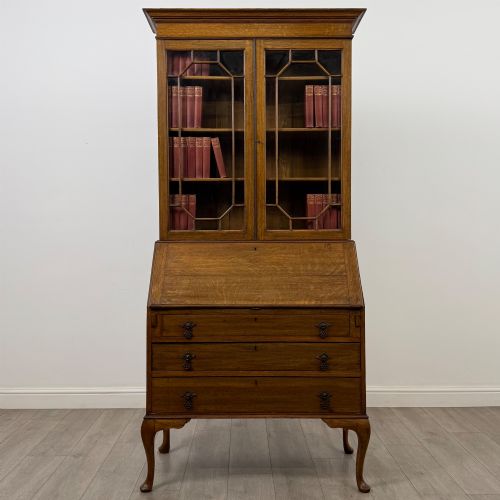
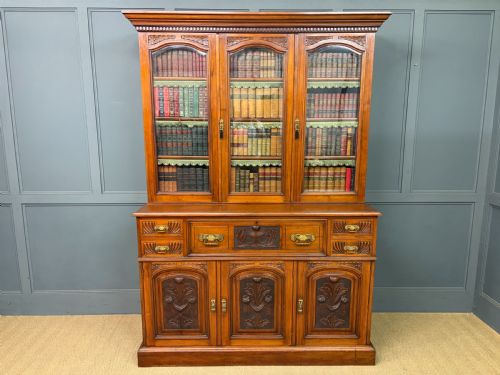
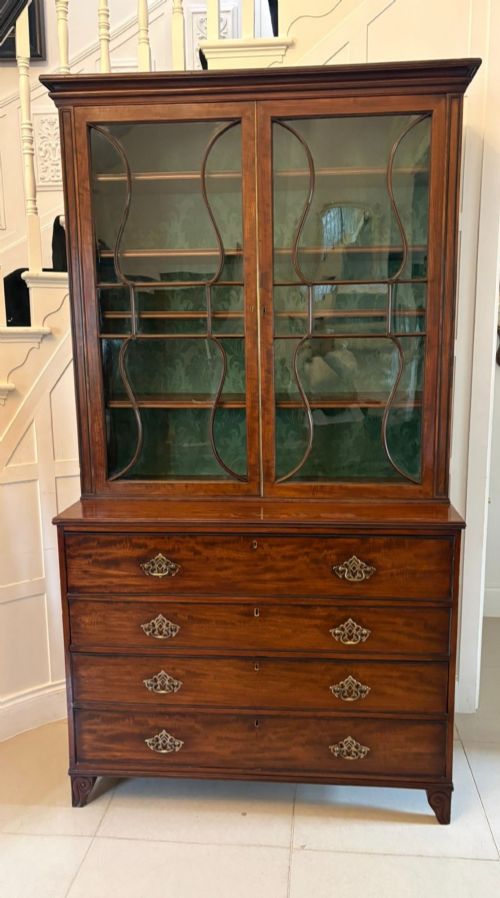
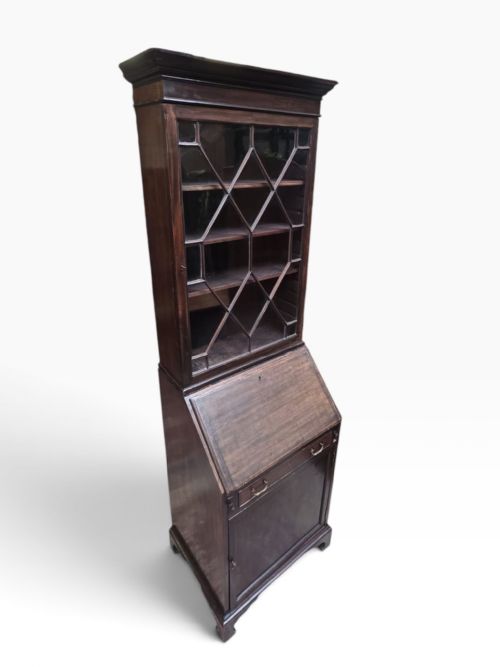
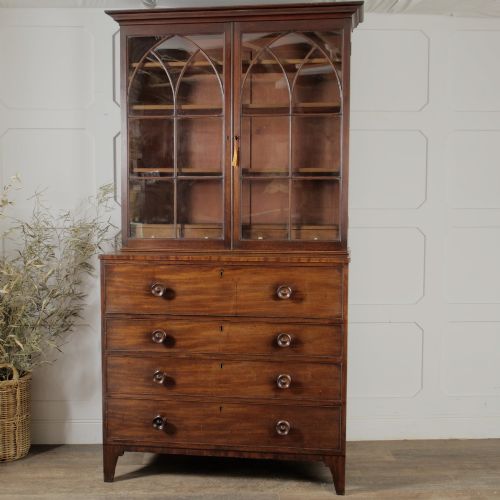
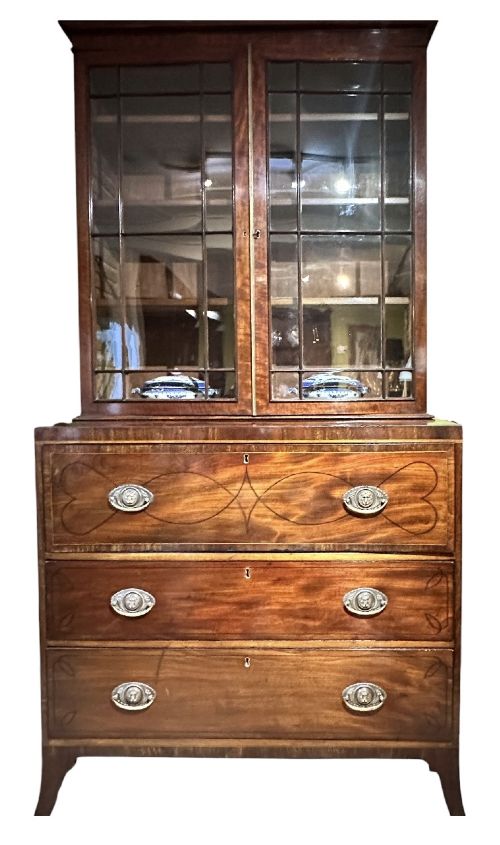
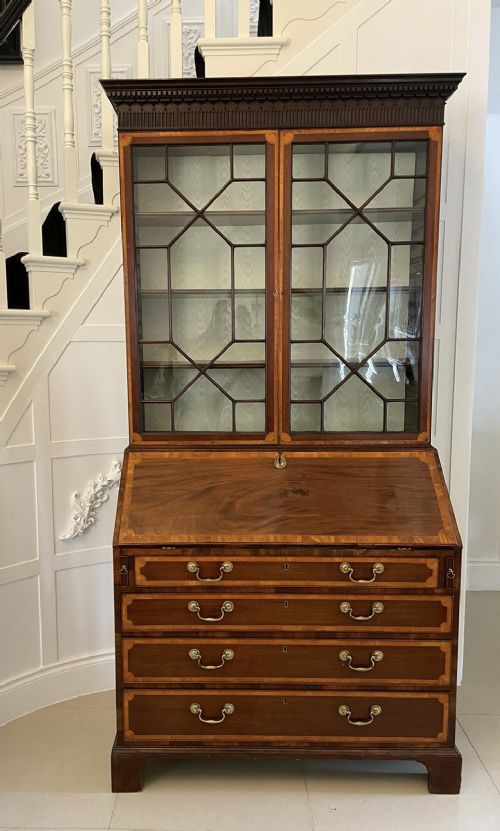
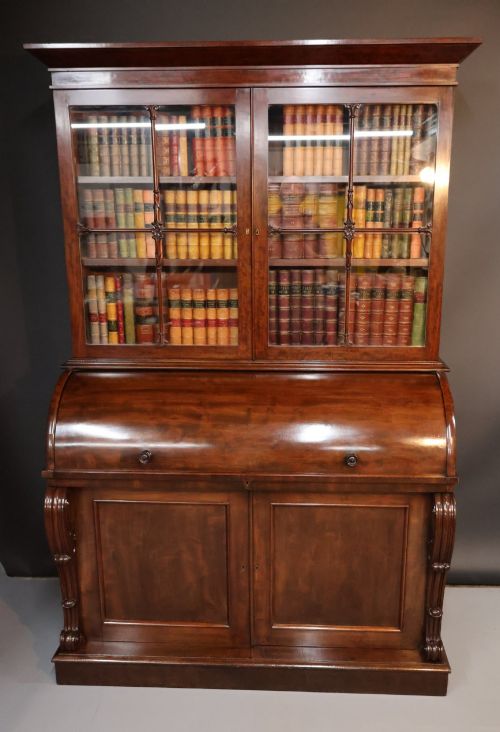

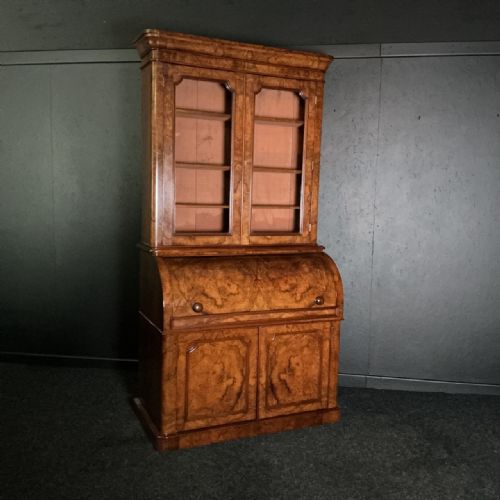
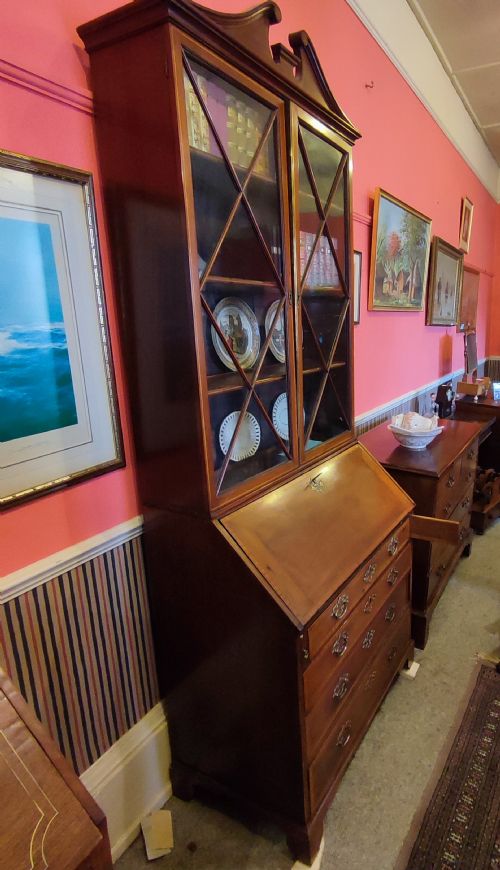

Glazed Door Bookcase Desk
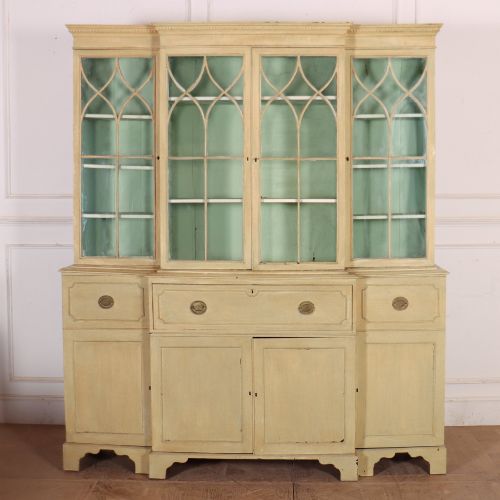
A glazed door bookcase desk combines a bookcase with a fitted writing drawer.
Glazed Door Bookcase Desk
A glazed door bookcase desk combines a display cabinet with a lower section built for writing. These pieces appear across Georgian, Victorian, and Edwardian periods.
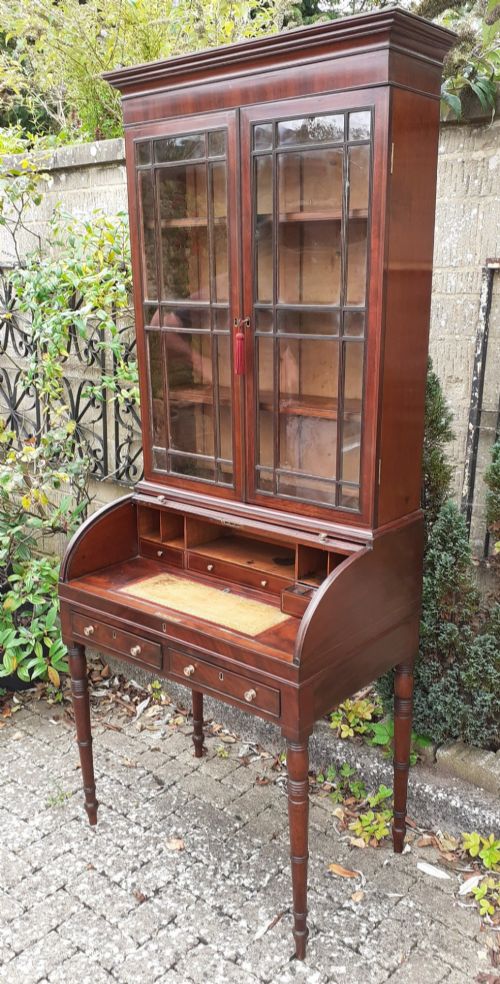
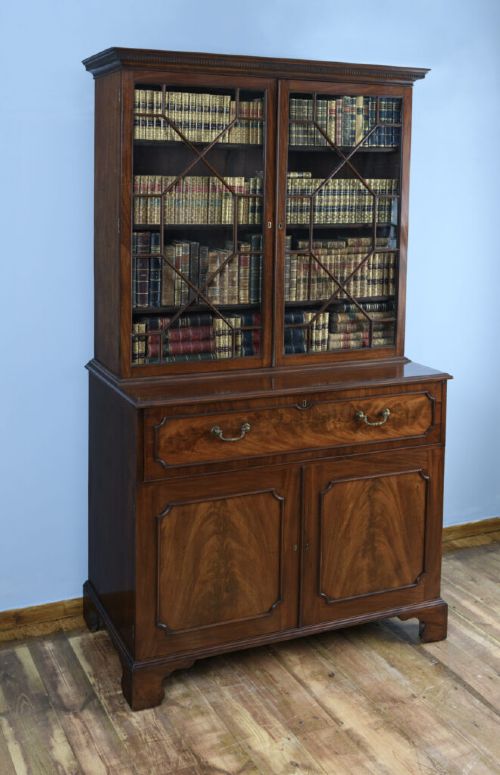
The writing component typically takes the form of a secretaire drawer that drops down to reveal compartments, or a cylinder top enclosing a desk surface.
Mahogany, walnut, and oak dominate the construction, often paired with glass upper doors to showcase books.
Materials and construction methods
Cabinetmakers utilised solid timbers and veneers such as mahogany, walnut, oak, and Cuban mahogany over structural carcases.
Glass panels were fitted into wooden frames for the upper doors, while brass hardware secured drawers and compartments.
Interiors frequently incorporated satinwood and leather writing surfaces within fitted drawers.
Some models feature clever hidden compartments tucked behind the small interior drawers.
Distinctions in craftsmanship
Quality rests in the choice of timber figurations and the precision of the joinery within the fitted writing interior.
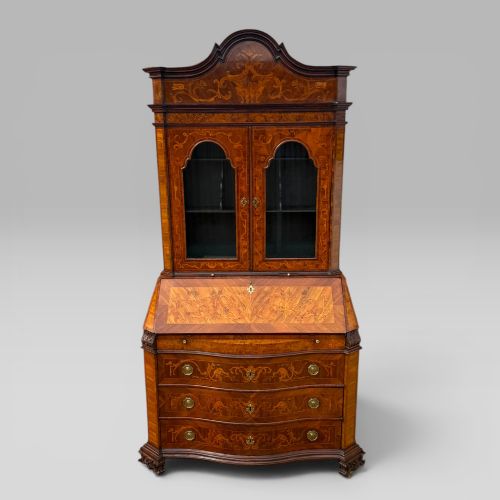
Higher tier examples display intricate inlay work, marquetry, and carved detailing that elevates the cabinet work.
Tudor & Burrey
The Glazed Door Bookcase Desk Glossary
- Secretaire
- A desk drawer featuring a drop-front that conceals small drawers and pigeonholes. This component transforms the upper section of a cabinet into a functional writing surface.
- Cylinder top
- A curved wooden shutter that rolls back to reveal a sliding writing desk. It conceals the interior compartments when closed.
- Marquetry
- Decorative patterns formed from fitted pieces of coloured wood veneer. This technique adorns the exterior surfaces of select cabinets.
- Georgian
- A design period spanning the eighteenth and early nineteenth centuries. Pieces from this era often feature straight lines and mahogany timbers.
Glazed Door Bookcase Desk: Frequently Asked Questions
What is a glazed door bookcase desk?
It is a dual-purpose piece of furniture featuring glass-fronted shelving above a lower section equipped with a desk. The lower section typically uses a drop-front drawer or a cylinder mechanism to provide a writing surface.
These pieces served as functional household libraries and writing stations in period homes, keeping volumes visible while offering a private workspace.
How do I identify a Georgian piece?
Georgian pieces display construction methods typical of the eighteenth and early nineteenth centuries, often utilising solid mahogany and refined proportions.
Look for traditional cabinet-making details such as hand-cut dovetails in the interior drawers and classical proportions associated with the period.
What is a secretaire drawer?
A secretaire drawer is a deep top drawer with a hinged front that pulls down horizontally. It houses small pigeonholes and letter compartments.
This design allows the cabinet to function as a bureau without adding a separate desk structure to the room.
Where should I place this furniture?
These tall cabinets require adequate wall space and a stable environment away from direct heat sources to protect the wood and veneer.
Position them in studies or living rooms where the glass doors can display book collections while the desk remains accessible.