


Vintage Roll Top Cabinet
These vintage roll top cabinet designs bring clever slatted shutters and cylinder lids to everyday workspace storage.
Vintage Roll Top Cabinet
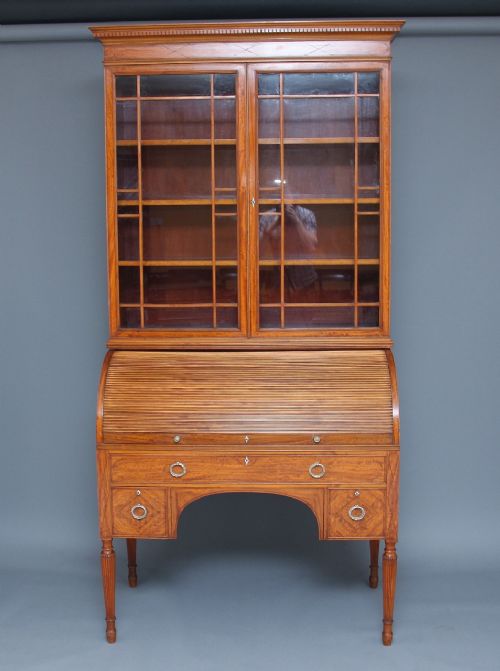
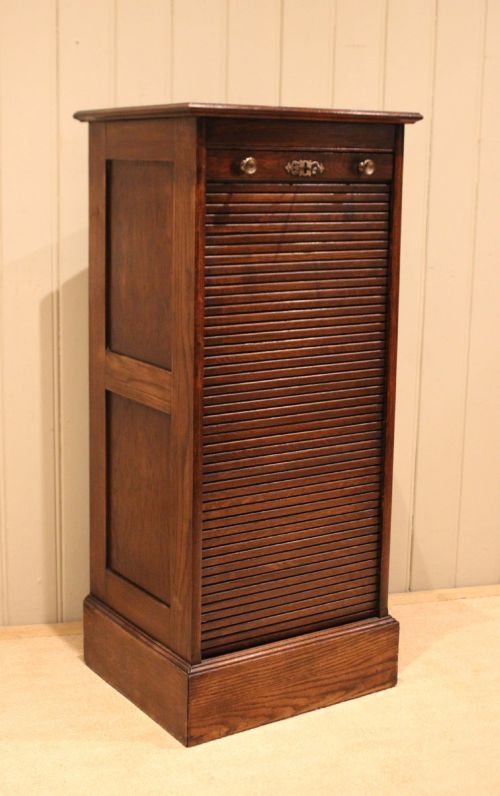
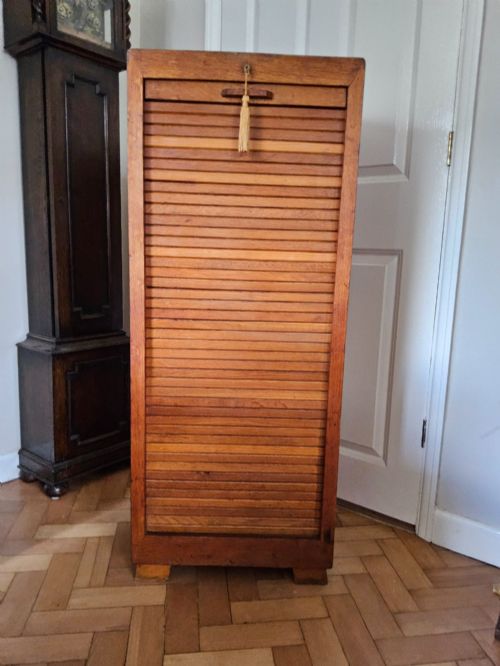
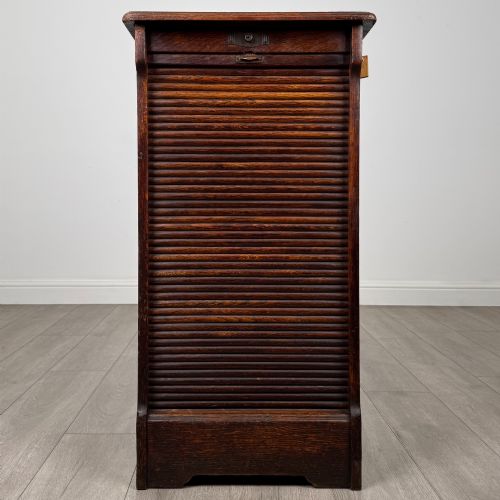
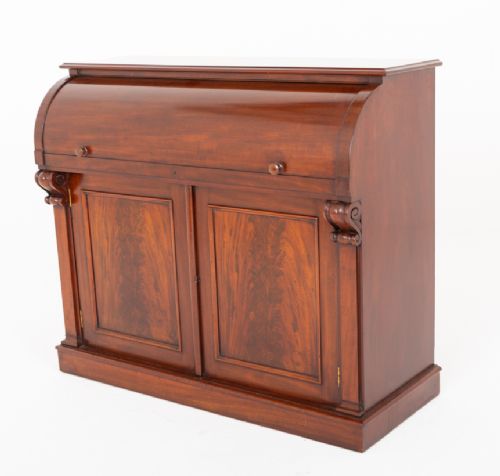
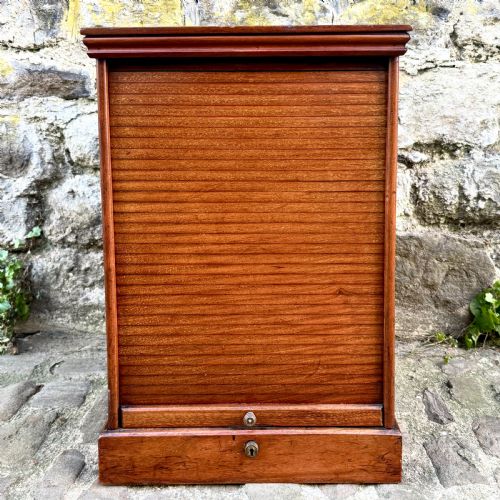
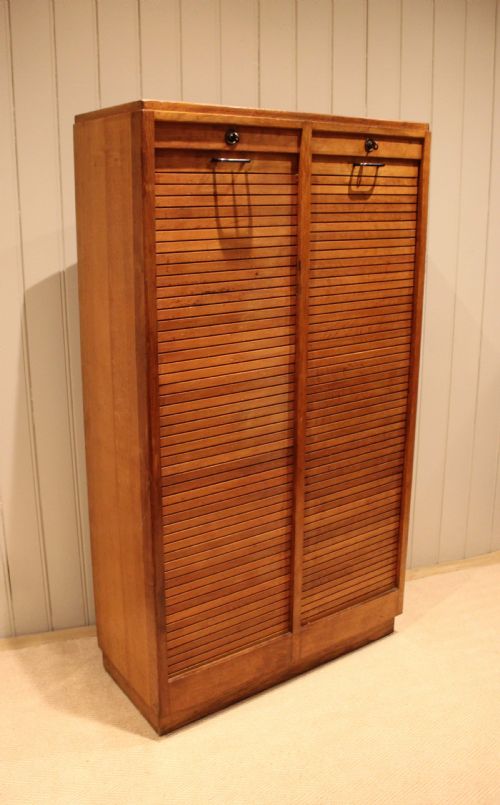
A vintage roll top cabinet is a practical piece designed to conceal papers, stationery, and books behind a flexible tambour shutter or a solid curved cylinder. The selection spans filing cabinets, desks, and bookcases originating from the nineteenth and twentieth centuries.
Makers often utilised oak or mahogany to build these storage units, resulting in substantial pieces ranging from compact filing boxes to large bureau bookcases. Styles trace through the Victorian, Edwardian, and Regency periods, alongside French utility designs from the mid-twentieth century.
Buyers seeking a vintage roll top cabinet will encounter pieces equipped with internal pigeon holes, drawers, and locking mechanisms intended for office or study use. Oak examples from the Edwardian era and the nineteen-thirties appear frequently alongside mahogany cylinders.
Materials and construction
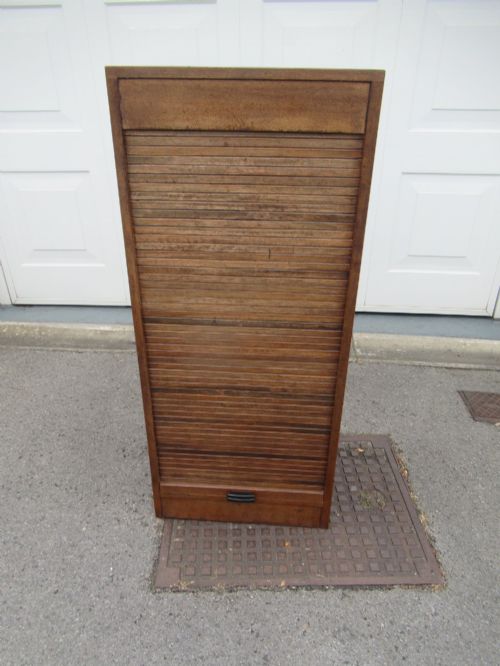
Makers built these cabinets using timber frames fitted with parallel wooden slats glued to canvas or leather backing to form the flexible tambour shutter. This slatted curtain slides smoothly along carved grooves within the side panels of the carcass.
Solid oak and mahogany provide the primary structure for the bodies and drawers, occasionally complemented by brass handles, glass doors, or marble surfaces. Carpenters joined the outer casing using traditional dovetail and mortise techniques to ensure the sliding mechanism stayed aligned.
Several dentist cabinets appear in walnut, proving that professional drills were once housed behind remarkably civilised roll-top shutters.
Distinctions in quality
The smoothness of the tambour action and the precision of the slatted tracks determine the baseline competence of the piece. Superior examples feature perfectly aligned wooden strips that glide without catching along the curved internal channels.
Choice of timber grain and the complexity of the interior fittings separate standard office furniture from finer domestic writing cabinets. Solid oak or figured mahogany carcasses with well-fitted pigeon holes and functioning brass locks represent the upper tier of the range.
The Vintage Roll Top Cabinet Glossary
- Tambour
- A flexible shutter formed of narrow wooden slats attached to a fabric backing. This allows the door to curve around tracks and conceal the interior shelving.
- Cylinder
- A solid curved wooden lid that rotates on a pivot or slides in a circular path to cover a writing surface.
- Bureau bookcase
- A combination unit featuring a writing compartment enclosed by a roll top or flap beneath a glass-fronted shelving section.
- Pigeon hole
- A small compartment within a desk or cabinet interior designed for sorting letters and documents.
Vintage Roll Top Cabinet: Frequently Asked Questions
How do I maintain the wooden roll top mechanism?
Keep the sliding tracks clean of dust and debris to ensure the slatted shutter moves freely without binding.
Apply a minimal amount of appropriate wax or lubricant to the wooden grooves only if the movement becomes stiff over time.
What rooms suit a vintage roll top cabinet?
These pieces function well in home offices and studies where concealed document storage keeps surfaces clear.
Smaller examples also fit into living rooms or hallways as characterful display and storage units.
How do I date an oak tambour cabinet?
Examine the construction methods, handle styles, and timber types to align the piece with Victorian, Edwardian, or later twentieth-century manufacturing norms.
Edwardian and nineteen-thirties pieces often display lighter golden oak tones, whereas nineteenth-century versions use denser timbers.
Are tambour and cylinder mechanisms different?
Tambour shutters consist of many individual slats joined together to bend around a curved track.
A cylinder uses a single solid piece of curved wood that rotates upwards into the cabinet body.