





Mahogany Cylinder Bookcase
A mahogany cylinder bookcase combines a curving roll-top desk with upper shelving, offering a handsome piece of furniture for serious writing and display.
Mahogany Cylinder Bookcase
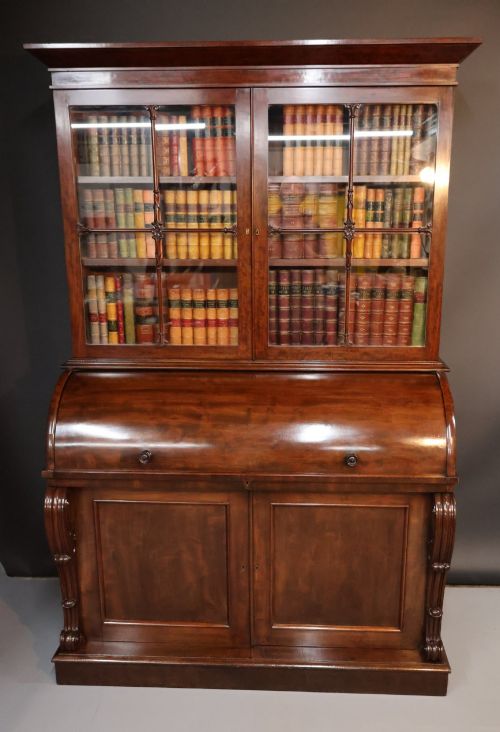
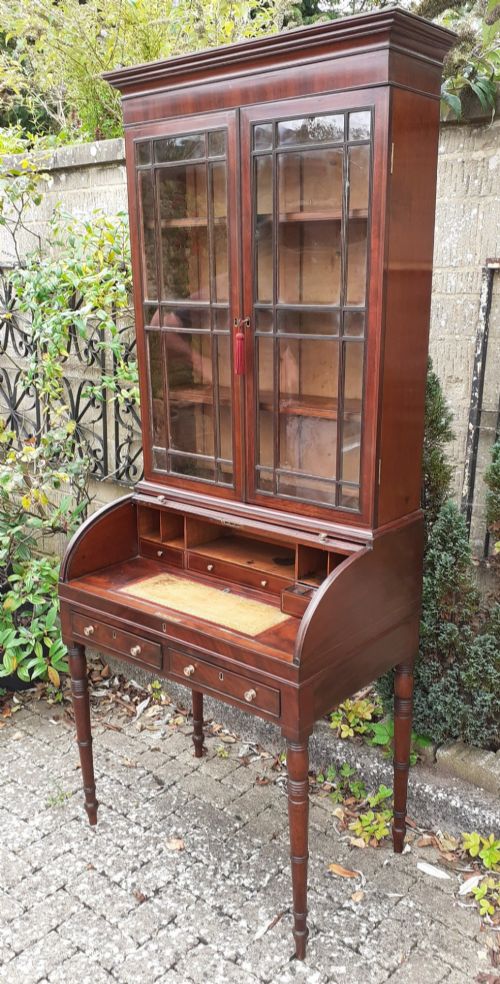
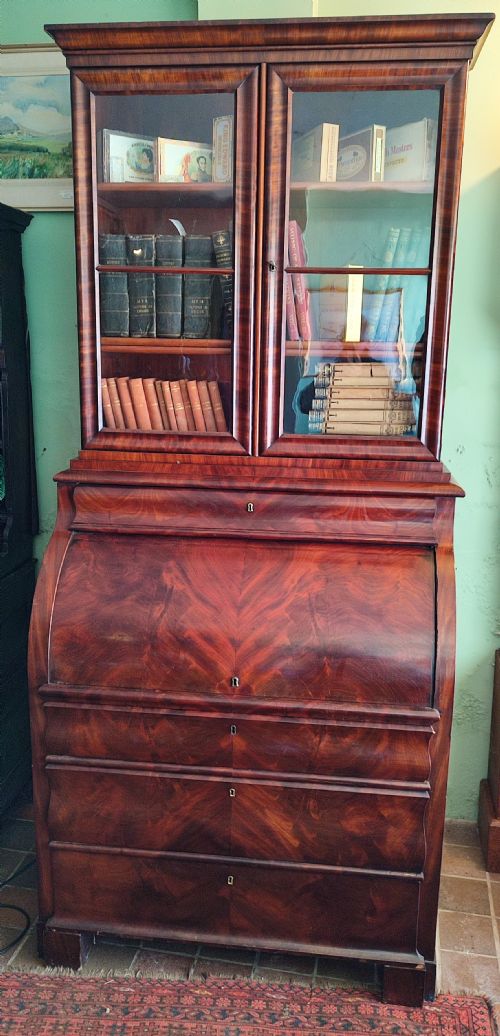
A mahogany cylinder bookcase is a substantial piece of furniture designed for both study and storage, featuring a curved roll-top enclosure that conceals a fitted writing surface. These pieces appear primarily from the Georgian, Regency, William IV, and Victorian periods, alongside Edwardian examples.
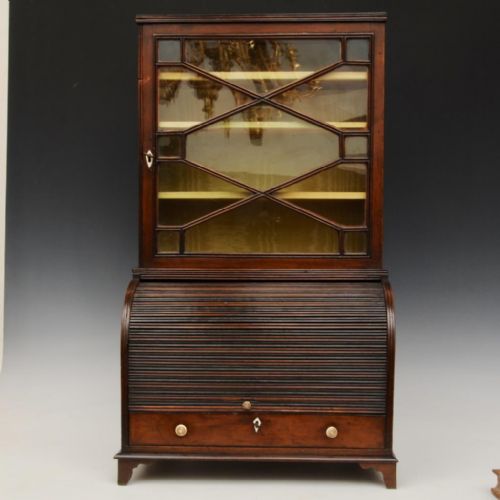
The lower section typically houses the cylinder mechanism above drawers or a cupboard, while the upper portion consists of a glazed bookcase with wooden framing. Collectors encounter forms ranging from full-sized library pieces down to miniature furniture and related bureau bookcases.
Makers such as Tudor and Burrey in Shrewsbury contributed to this heritage, working within styles that span from clean geometric Biedermeier lines to heavily carved Victorian expressions.
How They Were Made
Cabinet makers constructed these pieces primarily using solid and veneered mahogany, frequently incorporating secondary woods like walnut and satinwood for interior contrast and detail. Glass panels formed the upper bookcase doors, protected by wooden glazing bars.
Brass handles, locks, and hinges provided functional hardware, while leather inserts often lined the pull-out writing desks. Delicate bone inlay and fine stringing decorated the facades of later Victorian and Edwardian iterations.
The archive and active listings show mahogany cylinder bookcases spanning the Georgian, Regency, William IV, Victorian, and Edwardian periods.
What Varies in Quality
The smoothness of the mechanical cylinder action distinguishes superior examples, requiring precise timber seasoning and joinery so the curved shutter glides without binding. Finely figured mahogany grain selection across the main facade elevates the visual impact.
Intricate internal fittings, such as small drawers, pigeonholes, and secret compartments, reveal the care expended by the original cabinet maker. The crispness of carved mouldings and the finesse of inlaid stringing further separate standard workshop output from exceptional commissions.
Tudor and Burrey
The Mahogany Cylinder Bookcase Glossary
- Cylinder
- A quarter-circle wooden shutter that rolls back into the desk body to reveal the writing surface. This mechanism replaced the folding slant-front flap of earlier bureau designs.
- Glazed bookcase
- The upper section enclosed by glass doors used for displaying leather-bound volumes. These doors often feature geometric wooden lattices known as astragals.
- Biedermeier
- A Central European style from the first half of the nineteenth century prioritising utilitarian comfort and clean lines over excessive ornamentation. It frequently employs native fruitwoods alongside mahogany.
- Stringing
- Thin lines of contrasting wood or bone inlaid into shallow channels on the furniture surface. This technique creates delicate borders around drawer fronts and cabinet doors.
Mahogany Cylinder Bookcase: Frequently Asked Questions
How does the cylinder mechanism work?
The curved wooden shutter runs in grooved tracks cut into the desk sides, sliding backward to disappear into the interior when opened. Pulling the writing slide forward often activates the roll automatically through a connected link.
Maintaining the tracks with proper wax ensures the timber moves smoothly across seasons without jamming.
Where should I place a cylinder bookcase?
These pieces require adequate floor space and clearance in front so the writing slide can pull out fully without obstruction. Placing them away from direct sunlight and heat sources protects the mahogany veneer and leather writing surface.
Allowing room to stand comfortably at the desk makes the piece functional for daily writing tasks.
How do I identify a Georgian piece?
Georgian examples display restrained proportions, rich timber patination, and often simpler bracket feet rather than heavy Victorian carving. The internal stationery fittings tend to use traditional dovetail construction and secondary woods like oak.
Looking closely at the timber grain and hardware fixings helps confirm the eighteenth or early nineteenth century origin.
Can the upper bookcase be separated?
Most large examples are built in two distinct sections, with the bookcase resting upon the desk base for ease of transport. Lifting the upper carcase requires at least two people to avoid damaging the joining mouldings.
Checking the internal corners reveals the brackets or pins securing the two halves together.