


Glazed Chart Barometer
These glazed chart barometers record atmospheric pressure over time behind protective glass.
Glazed Chart Barometer
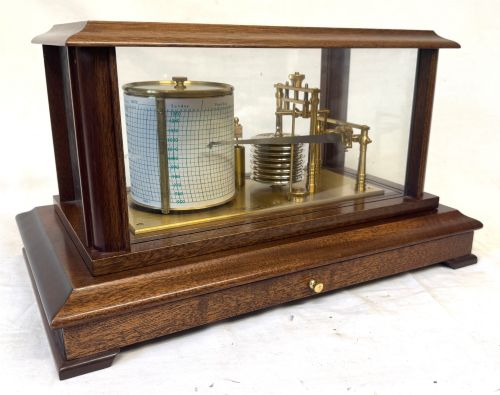
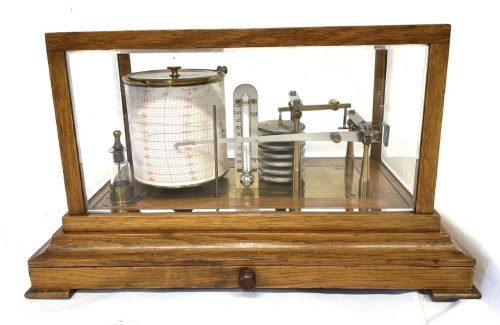
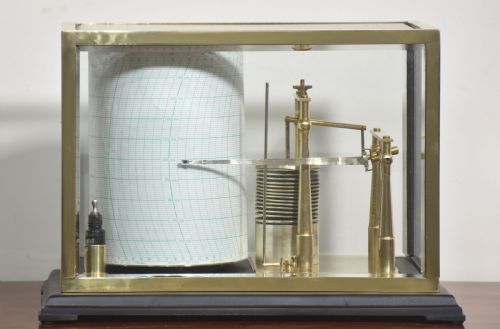
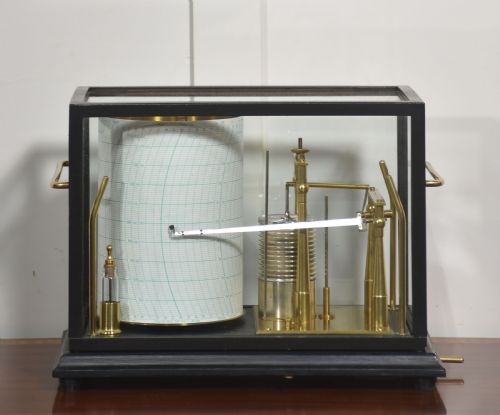
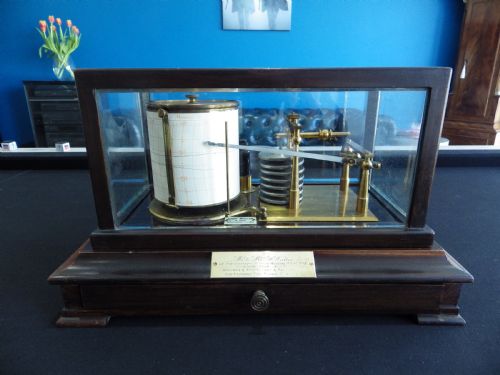
A glazed chart barometer, frequently designated simply as a barograph, records continuous barometric pressure changes onto paper charts. These scientific instruments combine mechanical movement with cabinetry, typically housed beneath bevelled glass covers that protect the delicate arms and rotating drums inside.
The versions most commonly met on this page span the Victorian, Edwardian, and interwar periods up to the nineteen-sixties. You will encounter them styled across several eras, including Art Nouveau and Edwardian Scientific, reflecting the design tastes of their respective decades.
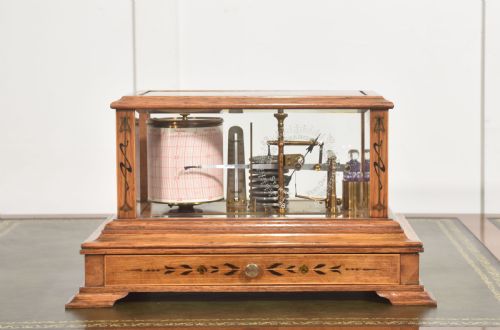
Most examples sit within wooden table cases made of mahogany or oak, often incorporating useful lower drawers for storing spare paper charts. Some models also integrate supplementary weather indicators such as thermometers or standard aneroid barometer dials into their wooden surrounds.
How they were made
Cabinet makers constructed the outer cases using hardwoods like mahogany and oak, frequently adding bevelled glass panels to the upper housings so the internal mechanisms remained visible. Metal components, including brass and steel, formed the mechanical linkages, recording arms, and clockwork drums.
Paper charts supplied the recording surface for the ink-tipped arms, while specialised movements from makers such as Gluck drove the rotating cylinders. Detail work ranged from plain timber finishes to inlaid Art Nouveau motifs on the wood surfaces.
One miniature model exists to prove that weather recording could travel in miniature pockets of scientific precision.
What varies in quality
The standard of cabinet making distinguishes different tiers of these instruments, from simple solid timber boxes to finely inlaid cases with bevelled glass. The presence of integrated components like chart drawers, supplementary thermometers, or additional barometer dials alters the overall complexity of the piece.
Mechanical refinement also sets examples apart, depending on whether the movement came from a renowned workshop like Short & Mason or Negretti & Zambra. Original paperwork and retained details contribute to the historical completeness of the instrument.
Russell Norwich·Hezzanith·Short Mason·Negretti Zambra·Casella London·R Fuess·Robson of Newcastle·Jules Richard·Richard Freres·Dobbie Son And Hutton
The Glazed Chart Barometer Glossary
- Barograph
- A self-recording aneroid barometer that plots atmospheric pressure onto a graduated paper chart over a set period. It uses a series of stacked metal vacuum chambers to detect pressure shifts.
- Aneroid barometer
- An instrument for measuring atmospheric pressure without liquid, using a flexible metal box that expands or contracts as pressure changes. This movement transfers directly to a dial or recording arm.
- Bevelled glass
- Glass panes with edges ground and polished at an angle, fitted into the housing of the instrument. This adds structural rigidity and decorative depth to the viewing windows.
- Chart drawer
- A small storage compartment built beneath the main recording mechanism to hold spare paper charts and spare ink. It sits flush within the wooden base of the case.
Glazed Chart Barometer: Frequently Asked Questions
What is a glazed chart barometer used for?
These instruments record continuous atmospheric pressure variations onto paper charts secured to a rotating drum. They provide a visual history of weather patterns over the course of a week.
Historically, observers relied on them to forecast meteorological changes by tracking whether pressure rose or fell. Today, they function as decorative scientific antiques that still demonstrate mechanical recording principles.
How do I wind the movement?
The rotating drum usually contains a spring-driven clockwork mechanism that requires careful winding via an attached key. Care must be taken not to overwind the mainspring.
Some models feature different movement durations, so checking the specific drum mechanism helps determine the appropriate winding interval. The recording arm itself is balanced separately and does not require winding.
How do I date these instruments?
Dating relies on a combination of case styles, maker signatures, and construction materials seen across Victorian, Edwardian, and later twentieth-century periods. Art Nouveau inlay or specific brass plaque details often point to the nineteen-tens.
Makers frequently inscribed their names and sometimes patent dates onto the metal beds or paper drums. Comparing these signatures with known operational eras helps narrow down the year of manufacture.
Where should I place a barograph?
These instruments require a stable, level surface away from direct sunlight, major heat sources, and heavy vibrations. Placed on a desk or shelf, they remain visible beneath their glass covers.
Because changes in temperature can affect mechanical performance, stable indoor environments suit them best. Access to the side or top also makes changing the paper charts easier.