


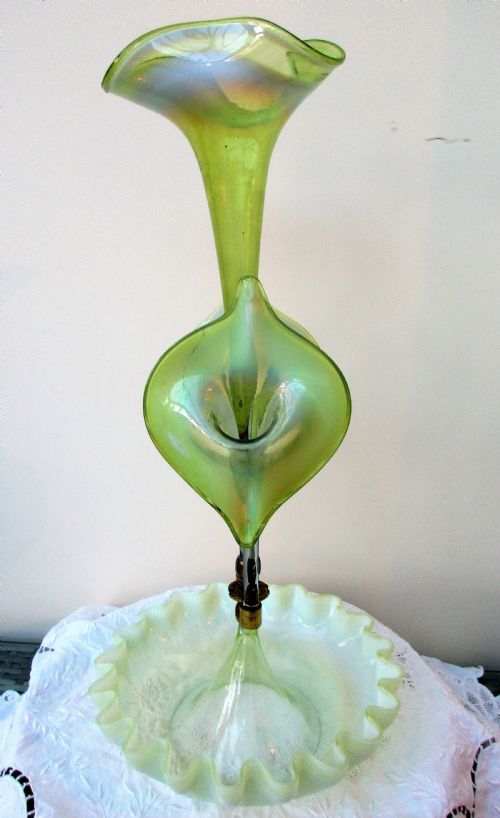


Glass Trumpet Centrepiece
A glass trumpet centrepiece brings striking height and vibrant colour to a dining table.
Glass Trumpet Centrepiece
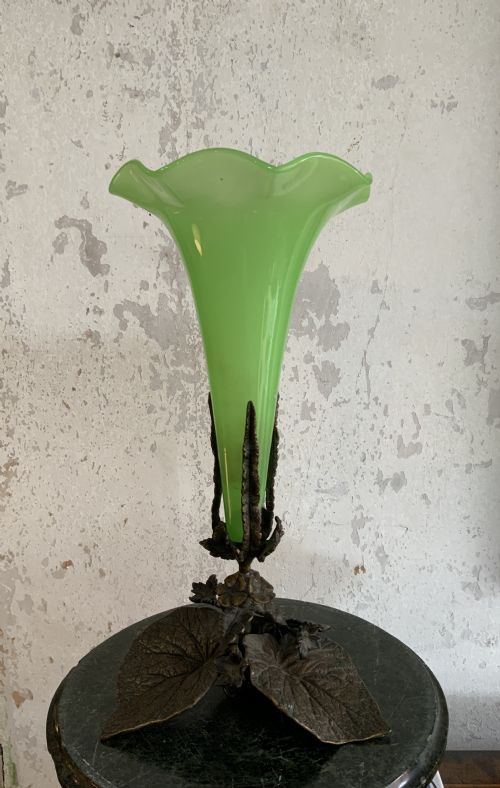
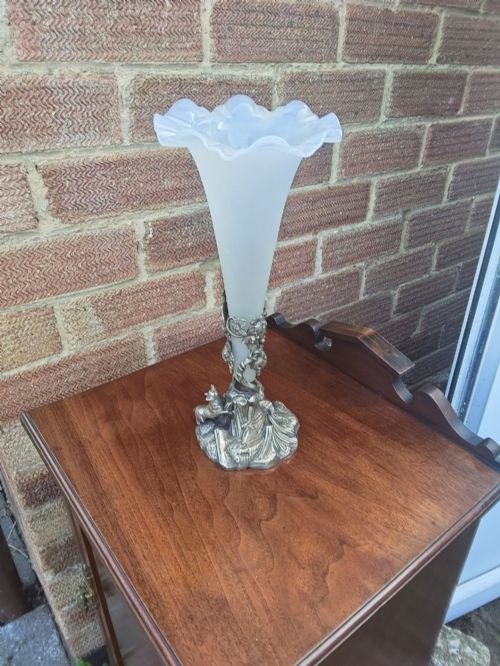
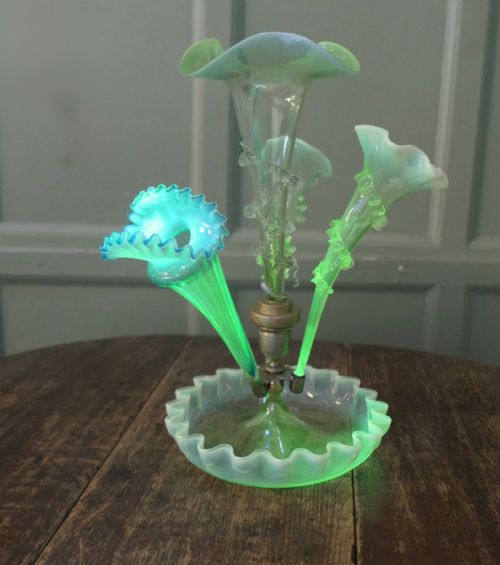
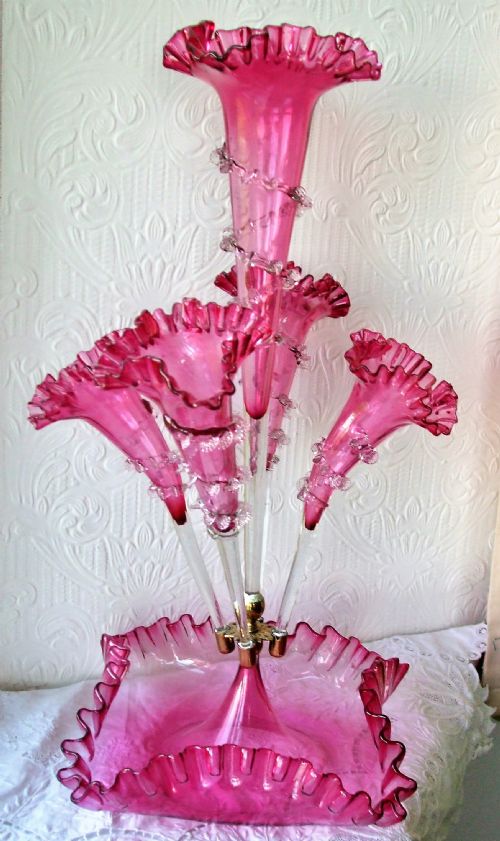
A glass trumpet centrepiece stands as a dramatic focal point on a dining table or sideboard, elevating floral displays on slender stems. The form frequently appears as a multi-trumpeted epergne or a single trumpet vase mounted in metal.
Most examples found here date from the Victorian period through to the early twentieth century, reflecting the tastes of the nineteenth century and Edwardian eras. Makers utilised diverse palettes, ranging from deep cranberry and uranium glass to opalescent and clear crystal.
The style spans ornate Victorian flourishes, Art Nouveau curves, and geometric Art Deco lines. These table centrepieces combine blown glass components with brass, silver plate, or carved wooden mounts.
How they were made
Makers blew glass by hand to create the delicate trumpet forms, often incorporating chemical colourants like uranium or gold to achieve vibrant green and cranberry hues. Engraving, gilding, and moulding added surface texture and decorative detail to the glass bodies.
Metalwork mounts in brass, white metal, and silver plate were cast and shaped to securely hold the slender glass trumpets. Carved wooden bases, such as those in the Black Forest style, provided sturdy foundations for heavy crystal bowls and vases.
Listings feature Victorian, Edwardian, and Art Deco periods, with materials spanning cranberry glass, uranium glass, and carved wood.
What varies in quality
The sophistication of the glassblowing and the depth of the colour determine the standing of an individual piece. Hand-blown trumpets with crisp mouldings, fine engraving, or rich layered colours represent higher execution.
The complexity and material of the mount equally influence the piece. Finely cast bronze, pierced silver work, or intricate wood carving paired with quality crystal or Baccarat components set certain examples apart from simpler productions.
The Glass Trumpet Centrepiece Glossary
- Epergne
- A large table centrepiece featuring multiple branching holders for fruit, sweetmeats, or flowers. These multi-trumpet structures dominate nineteenth-century dining tables.
- Cranberry Glass
- Transparent red glass coloured with gold chloride during production. It remains a defining material of Victorian decorative arts.
- Uranium Glass
- Glass containing trace amounts of uranium oxide that glows bright green under ultraviolet light. It enjoyed immense popularity in the nineteenth century.
- Opalescent Glass
- Glass that displays a milky, translucent quality with iridescent edges where the light catches. This technique creates a soft, pearlescent visual effect.
- Baccarat Crystal
- Fine French crystal known for its exceptional clarity and weight. Pieces bearing this association often feature precise cutting and heavy substance.
Glass Trumpet Centrepiece: Frequently Asked Questions
What is a glass trumpet centrepiece?
A glass trumpet centrepiece is a decorative table ornament designed to hold flowers or fruit, featuring one or more slender, flared glass trumpets.
These pieces served as grand focal points on dining tables during formal meals in the nineteenth and early twentieth centuries.
How do I clean an epergne?
Cleaning requires warm soapy water and a soft cloth, taking care with delicate hand-blown glass trumpets and metal mounts.
Harsh abrasives and prolonged soaking should be avoided to protect gilding, silver plating, and fragile coloured glass surfaces.
How do I date a glass centrepiece?
Dating relies on examining the manufacturing techniques, glass colour, and style of the metal or wooden mounts.
Victorian pieces often feature vibrant cranberry or uranium glass with ornate brass or silver-plated bases, while Edwardian and later examples show shifts towards pearlescent finishes and simpler lines.
Where were these pieces used?
These centrepieces sat prominently in the middle of dining tables or upon sideboards during the Victorian and Edwardian periods.
They displayed cut flowers or sweetmeats, adding height, colour, and formal elegance to interior settings.