

Antique Dining Centerpiece
An antique dining centerpiece anchors a table with silver, glass and presence, bringing period light and structure to the room.
Antique Dining Centerpiece
An antique dining centerpiece encompasses substantial dining table arrangements, drawing primarily from nineteenth-century Victorian and Edwardian periods as well as earlier Georgian and Regency roots. Buyers search for these pieces to anchor large dining tables with formal stature and period elegance.
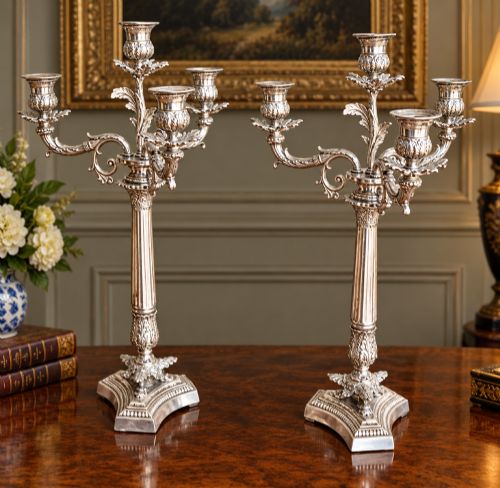
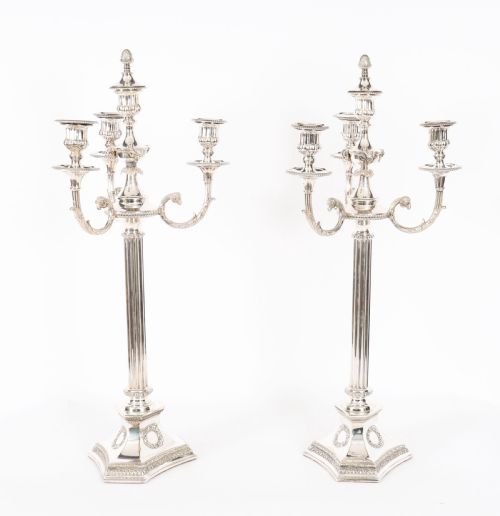
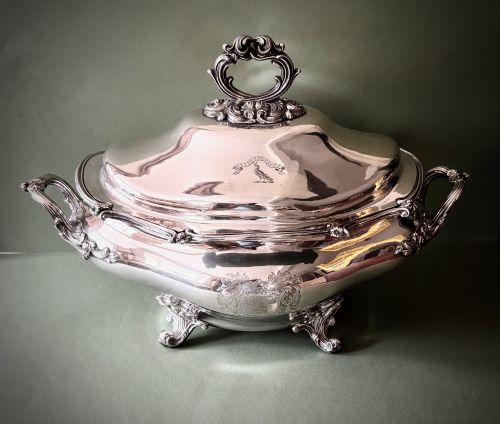
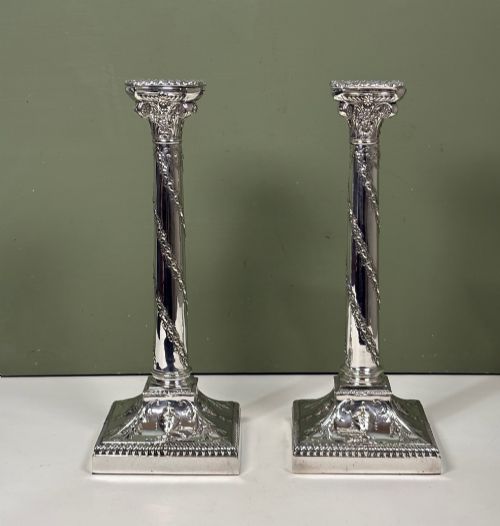
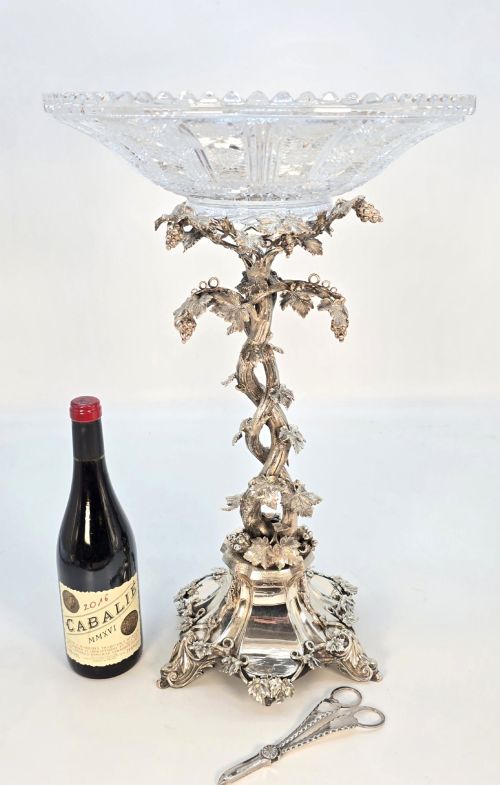
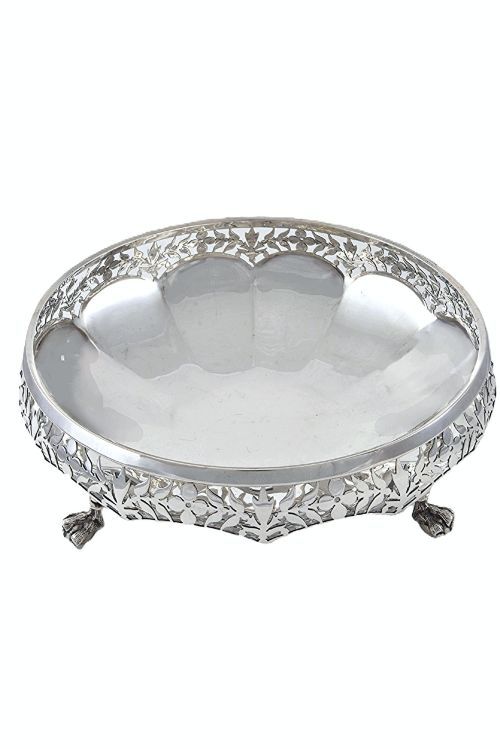
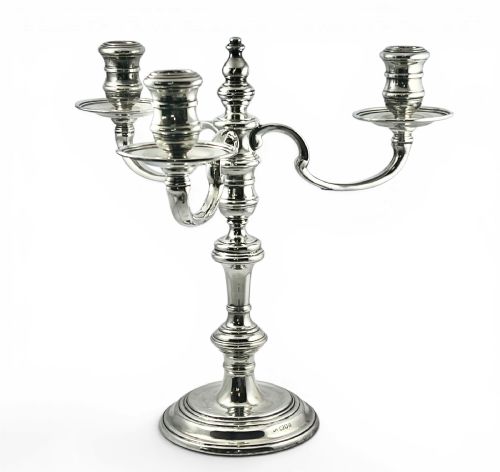
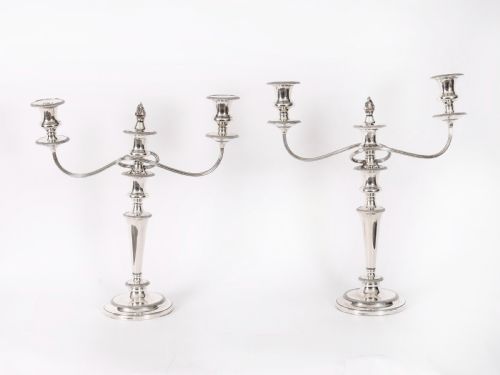
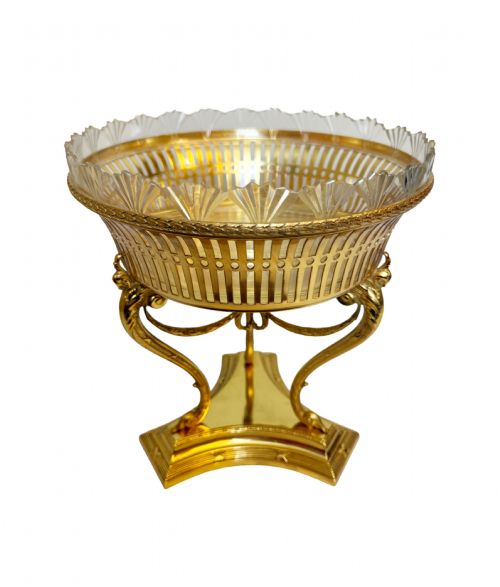
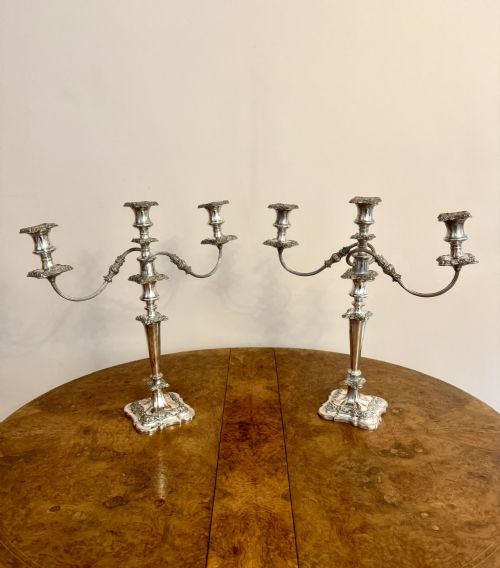
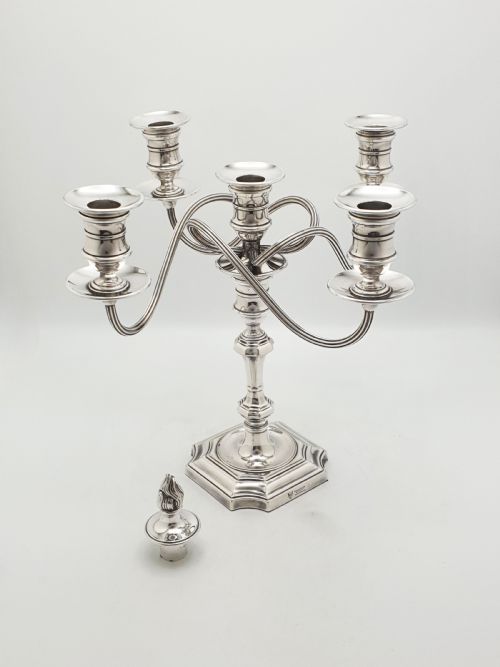
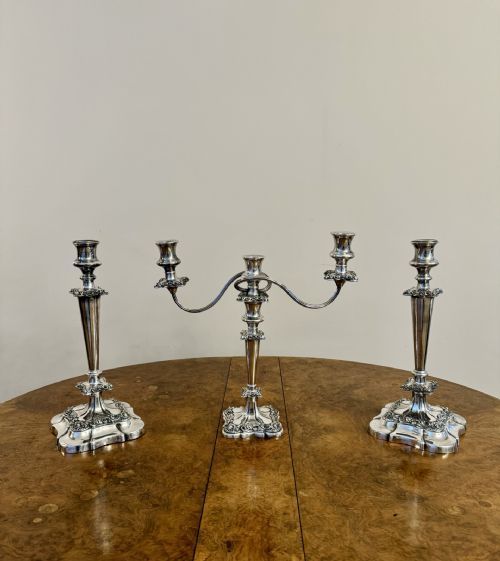
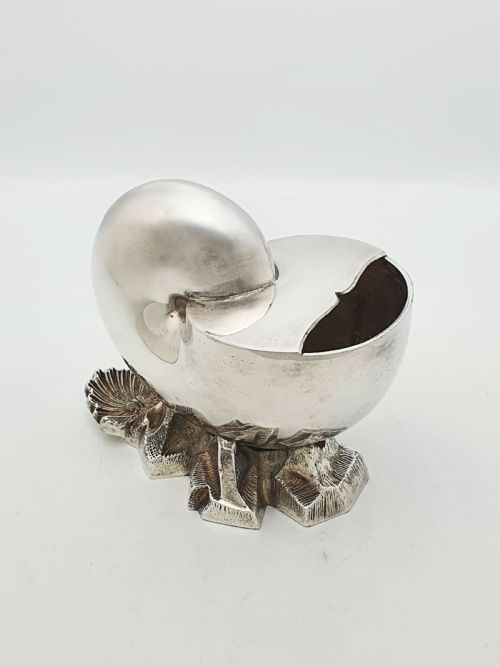
The most common formats met on this page include multi-light silver plated candelabras, tall cut glass table centrepieces, centrepiece bowls with glass inserts, and specialised serving vessels like spoon warmers and cruet sets. These objects originate from English, French, and Continental workshops spanning the eighteenth, nineteenth, and early twentieth centuries.
Beyond standard candelabras and bowls, the category extends to rotating lazy susans, silver fruit baskets, and epergnes adorned with cranberry glass. Each variant served a distinct ritual of formal dining, transforming the centre of the table into a visual focal point.
Materials and Technique
Makers utilised heavy silver plating over base metal, sterling silver, and solid mahogany alongside cast bronze and gilded brass. Cut and etched glass inserts provided contrasting texture and transparency against reflective metal surfaces.
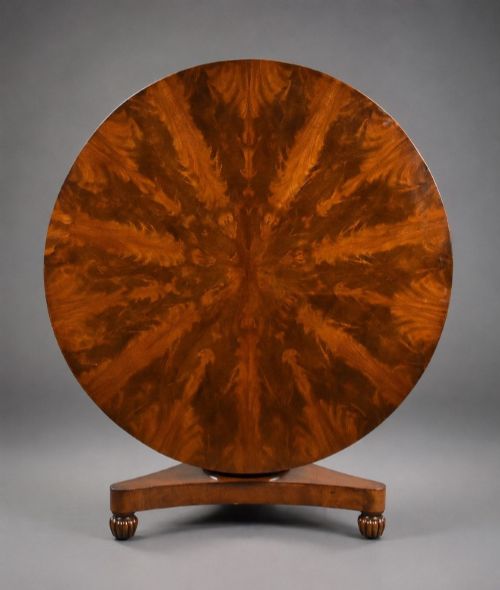
Construction techniques combined silversmithing, heavy casting for multi-branch candelabras, and precision woodturning for mahogany dining furniture and lazy susans. Detachable sconces, screw-fit branches, and fitted glass bowls required exact mechanical tolerances.
Surface ornamentation relied on hand-chasing, piercing, and engraving to achieve classical Revival, Neoclassical, and Rococo motifs. Gilt highlights and silvered bronze finishes added layered richness to figurative centrepieces and bowls.
Listings feature silver plate, sterling silver, mahogany, cut glass, and bronze across Victorian, Edwardian, and Regency periods.
Craftsmanship and Proportion
Quality rests in the crispness of chased ornament and the weight of the metal used in branches and bases. Superior examples maintain strict symmetry and secure joints without wobble in multi-branch candelabras.
The integration of glass components dictates overall refinement, where hand-cut or etched glass inserts fit their metal frames precisely. Thickly plated silver or solid sterling silver supports longevity through repeated polishing.
Proportion and architectural balance separate standard items from superior works. A well-designed centrepiece commands the table through harmonious scaling rather than mere bulk.
Garrard & Co·Walker & Hall·William Hutton & Sons·Martin Hall·Gioielleria Agliardi Cassino
The Antique Dining Centerpiece Glossary
- Candelabra
- A branched candlestick holding multiple lights. These often feature detachable sconces and ornate arms.
- Épergne
- A large table centrepiece featuring a central bowl surrounded by smaller hanging baskets or arms. They frequently incorporate coloured or cranberry glass.
- Old Sheffield Plate
- An early fusing technique where a thin sheet of sterling silver is fused to a copper core. This method produces a distinct edge where the copper base metal shows through wear.
- Spoon Warmer
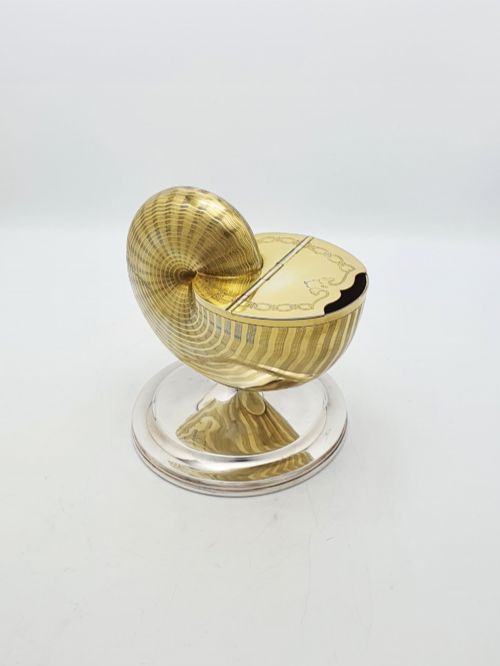
- A Victorian vessel designed to hold hot water for warming spoons before serving. They frequently took whimsical forms such as nautilus shells or birds.
- Cruet Set
- A matched collection of glass bottles for condiments mounted in a silver or silver plated stand. They sat at the table for self-service during meals.
Antique Dining Centerpiece: Frequently Asked Questions
How were candelabras used at dinner?
Candelabras provided ambient lighting down the middle of long dining tables during evening meals. Their height allowed guests to converse underneath the flame level.
They also served purely as decorative centrepieces when unlit during daytime banquets, displaying the silversmith's art.
How do I care for silver plated centrepieces?
Gentle cleaning with a dedicated silver cloth prevents the loss of thin plating over centuries of use. Avoid abrasive commercial dips that strip remaining highlights.
Glass inserts lift out easily for washing in warm soapy water away from the metal frames.
How do I date a Victorian centrepiece?
Hallmarks on sterling silver pieces provide exact assay office marks and date letters down to the specific year. Silver plated items rely on maker marks, patent dates, and stylistic clues.
Heavy rococo revival scrolling typically points to the mid-nineteenth century, while cleaner art nouveau lines indicate the early twentieth century.