


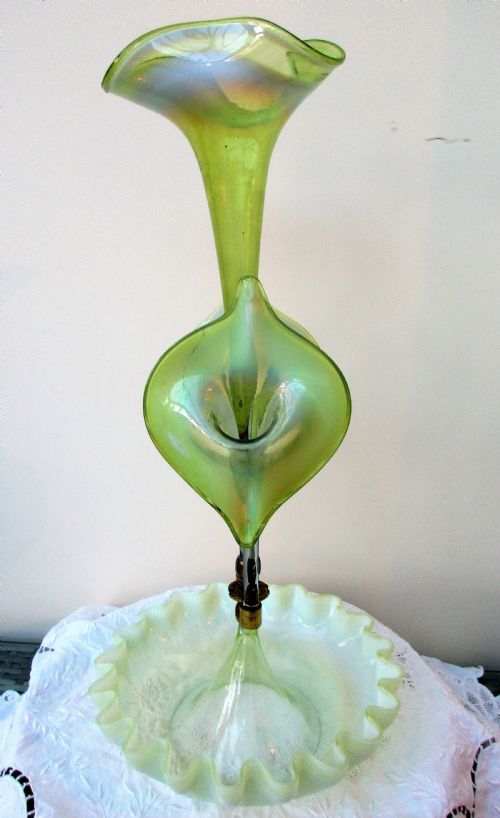
Glass Table Centrepiece Vase
A glass table centrepiece vase serves as the striking focal point of a dining table, combining decorative bowls, trumpets, and holders to display flowers with height and colour.
Glass Table Centrepiece Vase
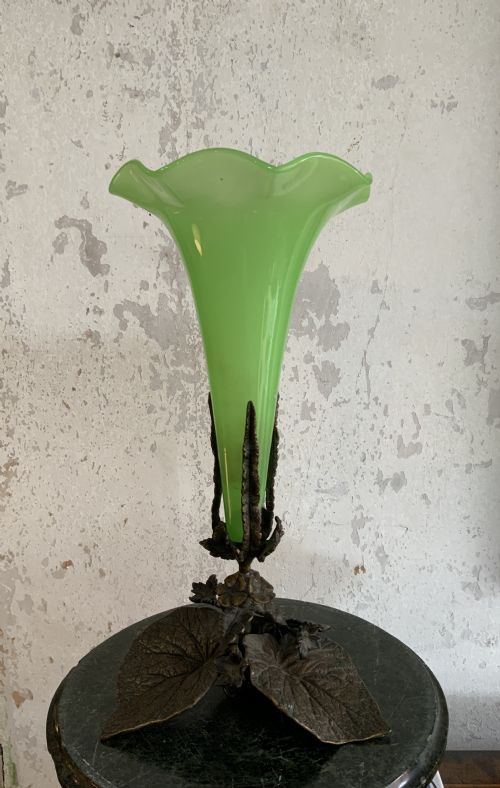
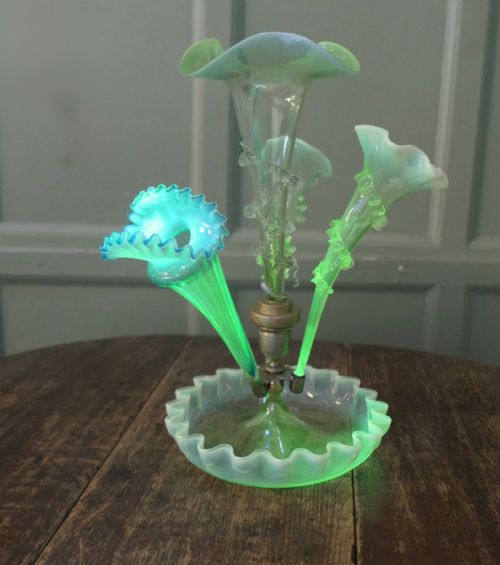
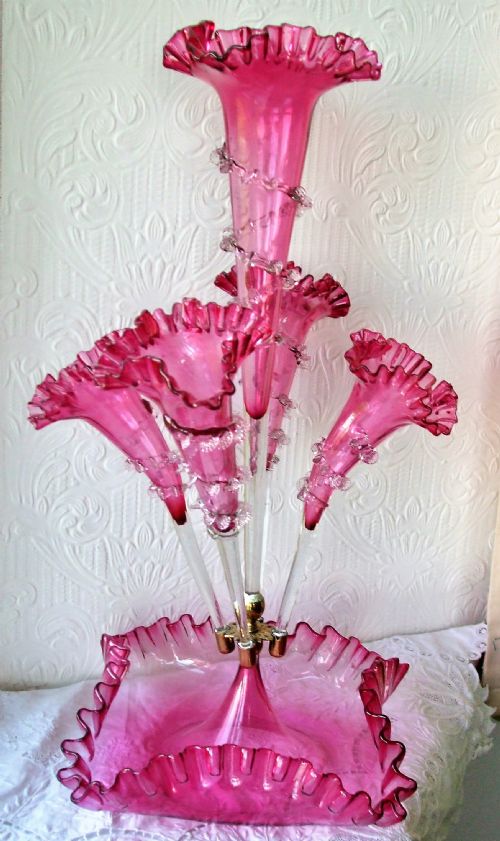
A glass table centrepiece vase is typically encountered on this page as a multi-trumpeted epergne or a decorative bowl fitted with a glass liner, spanning the Victorian, Edwardian, and Art Deco periods.
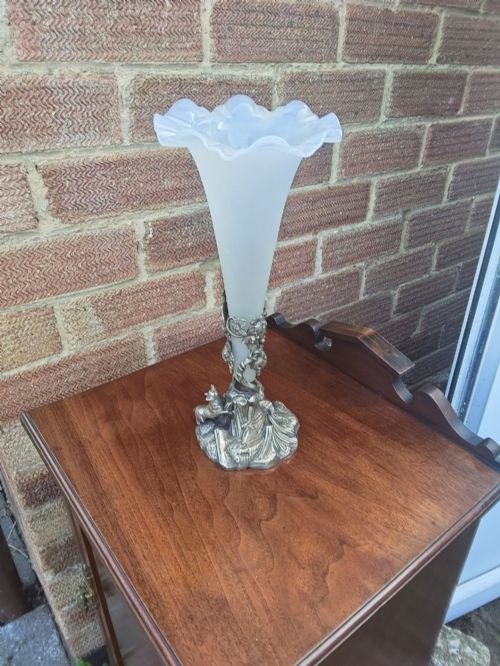
These grand table centrepieces frequently combine moulded or hand-blown glass with mounts of brass, silver plate, white metal, gilt bronze, or carved wood.
Originating largely from nineteenth-century English and French workshops, these pieces bring dramatic vertical presence and distinctive colour to a surface.
Materials and construction methods
Vessels and trumpets are fashioned from coloured or clear glass, including cranberry glass, uranium glass, opalescent glass, and crystal, often shaped by hand blowing or engraving.
Metal frames utilise silver plate, brass, bronze, and white metal to support the glass components securely.
Foxes and grapes peer out from opaque glass, adding a rustic woodland charm to grand Victorian dining tables.
Distinctions in craftsmanship
Quality rests on the depth of the glass colour, the clarity of the crystal, and the complexity of hand-applied details like gold enamel decoration or etched motifs.
The sophistication of the supporting framework, from pierced silver plate to finely carved wood figures, dictates the tier of the piece.
St Louis glassworks·Julien Glass France·Walker & Hall·Goldsmiths & Silversmiths·Josiah Williams & Co
The Glass Table Centrepiece Vase Glossary
- Epergne
- An ornamental centrepiece for a table, typically featuring multiple branched trumpets or baskets for holding fruit, flowers, or sweetmeats. These multi-horn structures define many nineteenth-century glass centrepieces.
- Cranberry glass
- A rich red-pink transparent glass coloured with gold chloride during production. It is a hallmark of Victorian decorative tableware.
- Uranium glass
- Glass containing trace amounts of uranium to impart a vibrant green or yellow hue that glows under ultraviolet light. It appears frequently in nineteenth-century and Victorian pieces.
- Silver plate
- A base metal coated with a thin layer of silver. Many Victorian centrepiece stands and mounts utilise this technique for decorative sheen.
- Opalescent glass
- Glass showing a milky or iridescent appearance with milky-blue highlights. This effect adds soft tonal variation to table centrepiece trumpets.
Glass Table Centrepiece Vase: Frequently Asked Questions
What is an epergne?
An epergne is a large ornamental centrepiece designed for the centre of a dining table, featuring a central bowl with several detachable trumpets or hanging baskets.
These structures were traditionally used to hold fruit, flowers, or sweetmeats during formal Victorian and Edwardian dining.
How do I care for glass centrepieces?
Glass centrepieces require gentle hand washing in lukewarm water with mild soap, avoiding harsh abrasives that could damage delicate enamel or gold details.
Separate any metal mounts or carved wood bases from the glass components before cleaning to prevent moisture damage.
What periods do these pieces come from?
The pieces span the nineteenth and early twentieth centuries, encompassing Victorian, Edwardian, Art Nouveau, and Art Deco eras.
Most examples date from the Victorian period through to the nineteen thirties.
How are glass inserts fitted?
Glass liners and trumpets usually rest inside tailored metal frameworks, silver pierced mounts, or carved wooden bowls.
They rely on precise shaping and rims to hold their position securely within the stand.