


Glass Shop Counter
A glass shop counter holds goods behind transparent panes, turning everyday retail into a quiet display of craftsmanship.

Glass Shop Counter
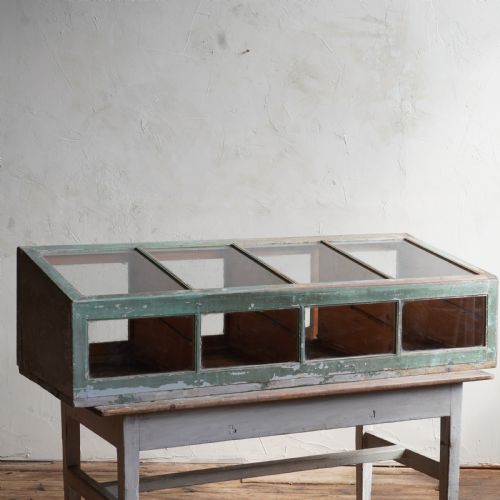
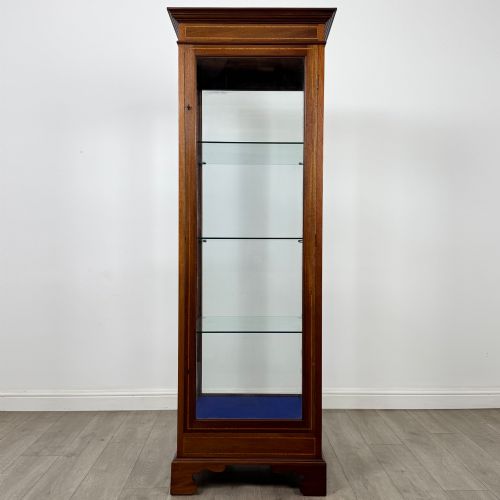
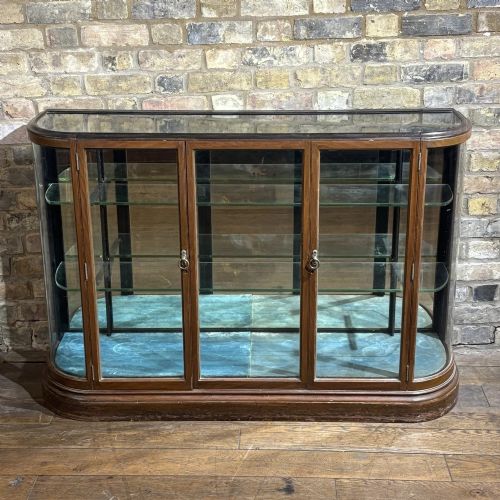
When you search for a glass shop counter, you encounter functional furniture built to serve commercial spaces from the Victorian era through the 1930s. These pieces range from large freestanding display counters and haberdashery cabinets to compact tabletop cases and specialised confectionary units.
The versions most commonly met on this page date from the Edwardian period and the 1920s, reflecting the expansion of retail trade in timber and glass. Makers constructed these units as practical storefront furniture intended to protect merchandise while keeping items visible to customers.
The selection includes architectural pieces from firms like F. Sage & Co. alongside utilitarian counters designed for pharmacies, grocers, and drapers. Buyers look to these items for authentic commercial character and substantial display capacity in modern interiors.
Quality and Proportion
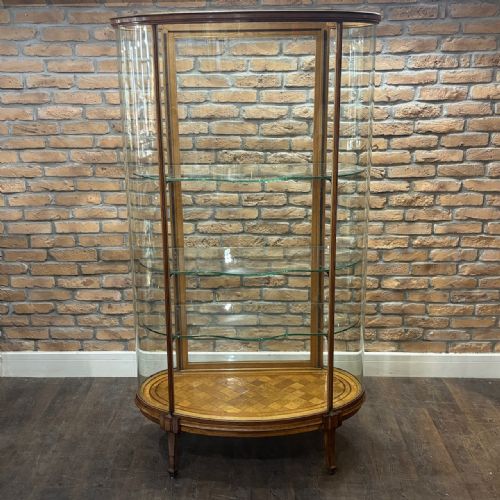
The distinction between standard commercial joinery and high-tier retail furniture rests in the complexity of the timberwork and the integration of specialised glass. Counters featuring bow-front glass panels, finely inlaid mahogany, or structural framing by known shopfitters occupy the upper echelon of the market.
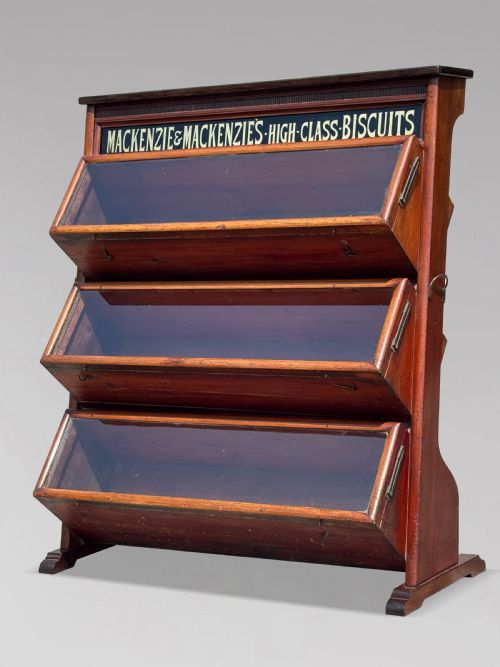
Proportion and scale dictate the visual weight of a piece, where generous dimensions and thoughtful internal layout separate bespoke commission work from mass-produced mercantile fittings. The integrity of the original glazing and the retention of maker plaques or branded advertising facades elevate the standing of individual examples.
Several counters retain original chocolate and sewing cotton branding, reminding us that early shops used display furniture as silent sales representatives.
F. Sage & Co.·Dudley & Co·John Stow Ltd of Bradford·Saml. Elliott & Sons
The Glass Shop Counter Glossary
- Bow glass
- Curved glass panels used in display counters to offer an uninterrupted view of merchandise from multiple angles. This technique required skilled glass bending during production.
- Haberdashery cabinet
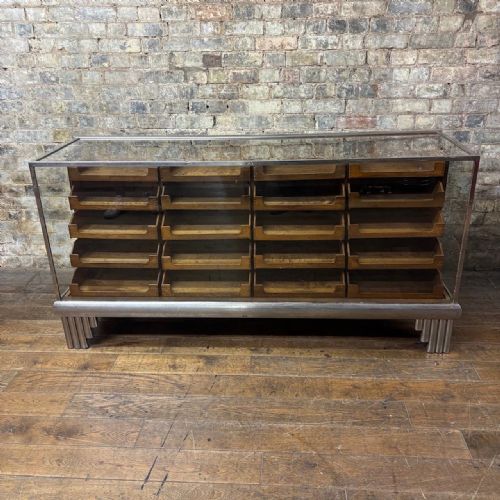
- A compartmentalised storage and display unit originally designed for sewing notions, textiles, and small garments. These pieces often feature numerous shallow drawers with glass fronts.
- Countertop display case
- A smaller tabletop cabinet positioned on top of existing shop fittings to showcase high-value items within arm's reach of the server.
- Apothecary jar
- Glass storage vessels designed for chemical ingredients or confectionery, frequently associated with pharmacy shop counters of the late nineteenth and early twentieth centuries.
- Shopfitter
- A specialist firm responsible for the interior architecture, cabinetry, and display furniture of retail premises.
Glass Shop Counter: Frequently Asked Questions
How were glass shop counters used?
Merchants utilised these counters to protect delicate merchandise from dust and handling while allowing customers a clear view of the stock. Staff served patrons across the top surface while high-value items remained secure inside the glazed enclosure.
Interior shelving and mirrored backs helped direct light onto goods such as confectionery, tobacco, and sewing supplies, encouraging impulse purchases in busy retail environments.
How do I fit a shop counter at home?
These counters function well as kitchen islands, sideboards, or central display furniture in living spaces. Their generous proportions provide substantial storage capacity while the glass panels permit the display of collections.
Placing a counter away from direct sunlight helps protect interior timber and any original fabric linings from fading over time.
How do I tell Victorian from Edwardian counters?
Victorian examples typically display deeper, darker mahogany tones with heavier architectural cornices and traditional joinery methods. The proportions tend to be robust, reflecting mid-to-late nineteenth-century commercial design.
Edwardian pieces often introduce lighter oak framing, more expansive glass areas, and refined hardware, aligning with a shift toward brighter, cleaner retail interiors.
What is 1920s commercial style?
The 1920s commercial style embraces streamlined forms, geometric Art Deco influences, and the integration of new industrial materials like aluminium and chrome. Cabinetmakers combined traditional hardwoods with modern metal framing to create lighter, more contemporary display units.
Branded advertising panels for chocolates and tobacco frequently appeared on units from this decade, reflecting mass-market retail branding.