


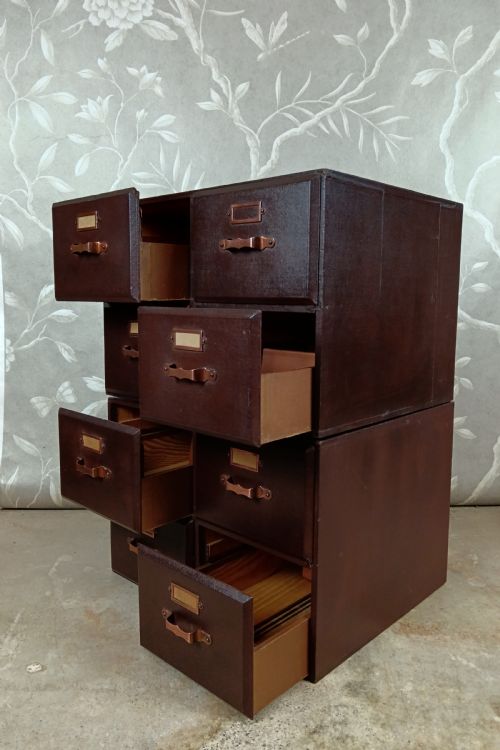


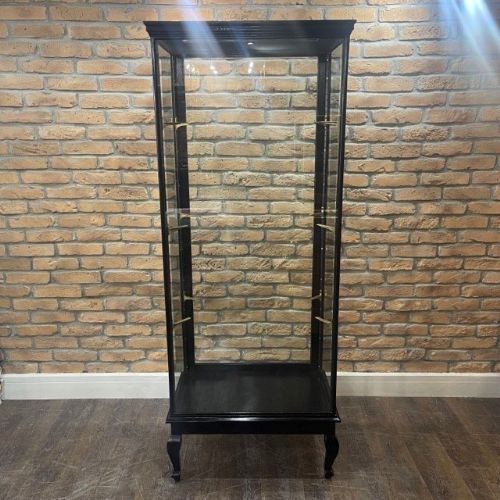


1920s Haberdashery Cabinet
A 1920s haberdashery cabinet brings sturdy commercial presence into a modern interior with deep banks of drawers and glazed display.
1920s Haberdashery Cabinet
A 1920s haberdashery cabinet forms part of a wider group of commercial and retail furniture designed for trade display and storage. When you search for this phrase, you encounter pieces built for shops, surgeries, and offices, including drapers' counters, shop display cabinets, apothecary units, and filing sets.
The pieces on this page span the Edwardian era and the 1920s, reflecting styles from early twentieth-century commercial work to Art Deco and industrial design. You will frequently find oak and mahogany constructions featuring glass panels, brass fittings, and banks of small drawers intended to sort ribbons, shirts, and sundries.
What varies in quality
Quality in these commercial pieces rests on the integrity of the timber framing and the scale of the drawer banks. Finer examples exhibit sophisticated cabinet-making, such as pentagonal counters, integrated brass hardware, and specialised maker attribution.
The proportion of glass to timber and the complexity of the internal configuration alter the character of each piece. Simpler workshop storage chests sit at a different level of refinement compared to bespoke retail counters designed by notable shopfitters.
The listings on this site include oak, mahogany, ebonised wood, and brass materials spanning Edwardian and 1920s commercial periods.
F. Sage & Co.·Pollards·Siegel·Anderson Bros
The 1920s Haberdashery Cabinet Glossary
- Haberdashery cabinet
- A multi-drawer retail unit traditionally used for storing small sewing goods, ribbons, and shirts. These cabinets typically feature banks of shallow drawers, sometimes with glass fronts.
- Draper's counter
- A long shop counter designed for cutting and selling fabrics. They often incorporate display glazing or deep banks of drawers facing the shop assistant.
- Ebonised wood
- Timber treated with a dark stain or finish to imitate ebony. This technique was popular for achieving a formal, contrasting aesthetic in commercial furniture.
- Shop counter
- A heavy retail fixture built to withstand customer interaction and serve as a workspace. Examples from this era frequently combine display glass with timber storage.
- Art Deco style
- A design movement characterised by sleek geometric lines and stylised motifs. In these listings, it manifests in specific leg forms and decorative framing.
1920s Haberdashery Cabinet: Frequently Asked Questions
What were haberdashery cabinets used for?
These cabinets served in retail shops to store and display small items of sewing equipment, ribbons, and garments. Shop assistants used the shallow drawers to keep stock organised and clean while presenting items to customers.
Over time, many of these units transitioned from active trade environments into domestic settings for general storage and display.
How do I identify a 1920s piece?
Look for construction traits typical of the interwar period, such as solid oak and mahogany frames combined with brass hardware and period glass. Stylistic clues include early twentieth-century commercial design elements and occasional Art Deco touches on legs and framing.
Peculiarities like library card filing sets, medical cabinet layouts, and specific shopfitter labels help confirm the era.
Are all these cabinets made of oak?
Oak is common, but these listings also feature mahogany, ebonised wood, and metal frames. Timber choice often depended on the intended use within the shop or office.
Glass and brass frequently accompany the wooden structures to form display surfaces and drawer pulls.
How can I use one at home?
A haberdashery cabinet provides versatile storage through its numerous small drawers and display tops. They function well in living spaces for collections, in kitchens for dry goods, or in studies for stationery.
The glazed countertops and cabinets also allow you to exhibit decorative objects while keeping them protected.