


Glass Front Side Cabinet
A glass front side cabinet brings warmth and tailored display space to a room, drawing the eye with polished wood and clear panels.
Glass Front Side Cabinet
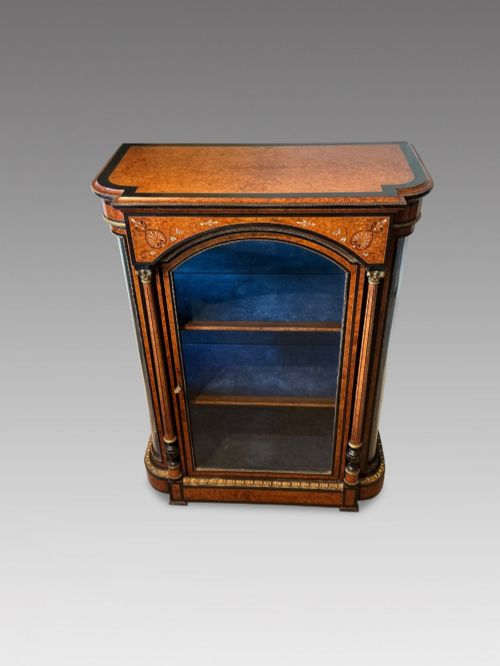
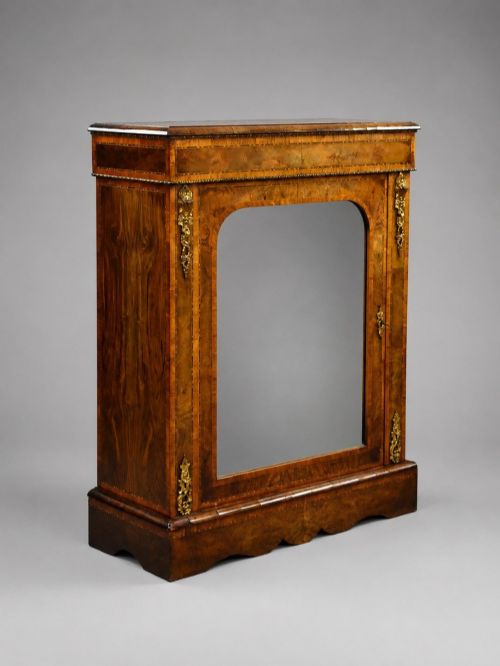
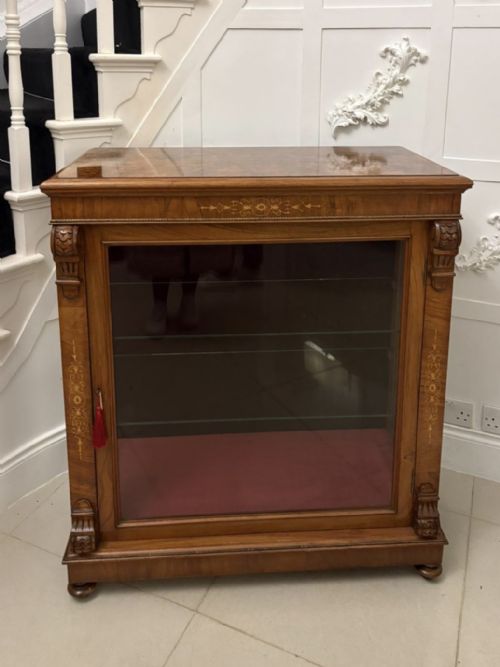
When you search for a glass front side cabinet, you encounter refined display furniture built to house treasured items in the principal rooms of a home. The pieces found here span the Victorian, Edwardian, and Regency eras, with a strong representation of mid to late nineteenth-century examples. You will frequently meet walnut pier cabinets and glazed credenzas designed to stand neatly against a wall.
The selection encompasses diverse stylistic revivals, including Sheraton, Regency, Aesthetic Movement, and French influences. Formats range from single-door pier cupboards and music cabinets to large breakfront bookcases and serpentine credenzas. Walnut and burr walnut dominate the selection, often enriched with marquetry inlay and Ormolu mounts.
Materials and Construction
Cabinet makers utilised choice timbers such as walnut, burr walnut, rosewood, mahogany, and satinwood, applying figured veneers to create striking surface patterns. Many examples feature delicate boxwood or brass marquetry inlay set directly into the primary wood body. Ormolu mounts, cast brass galleries, and barley twist columns appear as decorative accents.
Glazing takes the form of fitted glass doors designed to protect delicate contents while offering an unobstructed view. Velvet or fabric linings frequently furnish the internal shelving of display cabinets and credenzas. Ebonised finishes and gilt highlights also feature on specific nineteenth-century iterations.
The listings here feature walnut as the most prevalent primary timber, spanning the Victorian and Edwardian periods.
Markers of Superior Workmanship
Quality rests upon the selection of timber and the precision of the marquetry and brass inlay work. Superior examples display deeply figured burr walnut or rich rosewood grains carefully matched across the visible surfaces. The fineness of the Ormolu mounts and the complexity of the internal configuration elevate an ordinary piece to a higher tier.
Structural integrity, original glass panes, and well-executed joinery separate standard production from master workshop output. Subtle details such as finely turned columns, crisp floral marquetry, and balanced proportions reveal the hand of skilled cabinet makers.
Edwards and Roberts·Gillow and Co
The Glass Front Side Cabinet Glossary
- Pier cabinet
- A narrow display cabinet originally built to stand against the wall space between two windows. These pieces typically feature a single glazed door and flat top.
- Credenza
- A low sideboard or cabinet, frequently fitted with multiple doors and glass panels. Victorian versions often include curved ends and rich marquetry.
- Marquetry
- Decorative veneer patterns formed by fitting together small pieces of wood, shell, or metal. Makers use this technique to create floral and geometric motifs on cabinet doors.
- Ormolu
- Gilded bronze used for decorative mounts and framing on furniture. This material provides metallic contrast against dark woods like walnut and rosewood.
- Burr walnut
- Timber taken from a tree growth that produces swirling, highly figured grain patterns. Cabinet makers prize this wood for its decorative surface appeal.
Glass Front Side Cabinet: Frequently Asked Questions
What is a glass front side cabinet used for?
These cabinets serve to display porcelain, glassware, and collections while keeping dust at bay behind glazed doors.
They function as focal points in reception rooms, combining surface display space with enclosed storage.
How do I date a Victorian cabinet?
Examine the secondary woods, screw types, and construction methods used inside the carcass and drawers.
Stylistic cues such as Aesthetic Movement ebonising or heavy marquetry also point towards specific decades within the nineteenth century.
Where should I place a side cabinet?
Position the piece against a principal wall in a dining room, hallway, or drawing room where light catches the glass.
Ensure adequate clearance for doors to swing open without striking surrounding furniture.
What is the difference between a pier cabinet and a credenza?
A pier cabinet is typically tall and narrow, designed for tight wall spaces with a single glazed door.
A credenza is lower and wider, frequently featuring multiple doors and curved end compartments.