

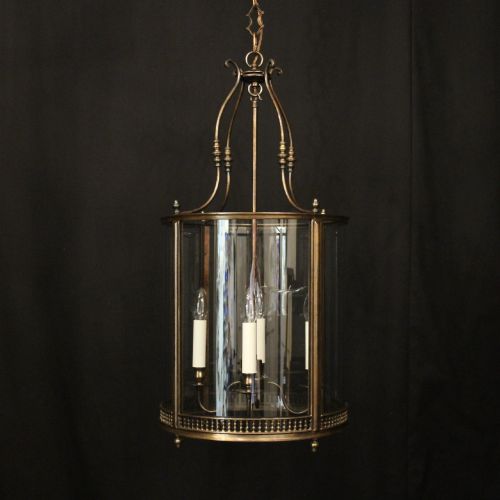
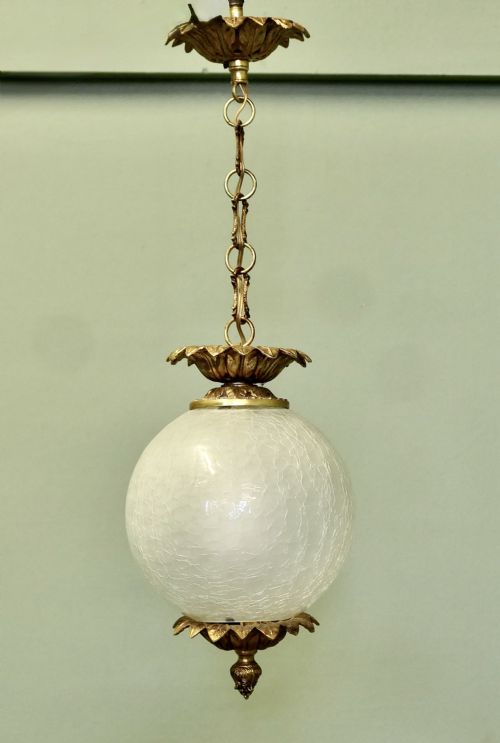
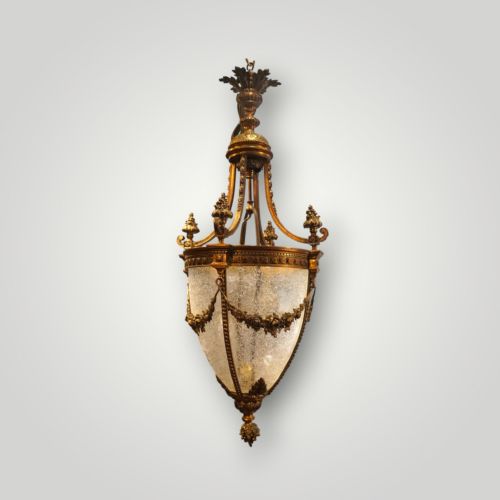
Glass Ceiling Lantern
A glass ceiling lantern brings focused downward illumination and period character to a hallway or entrance.
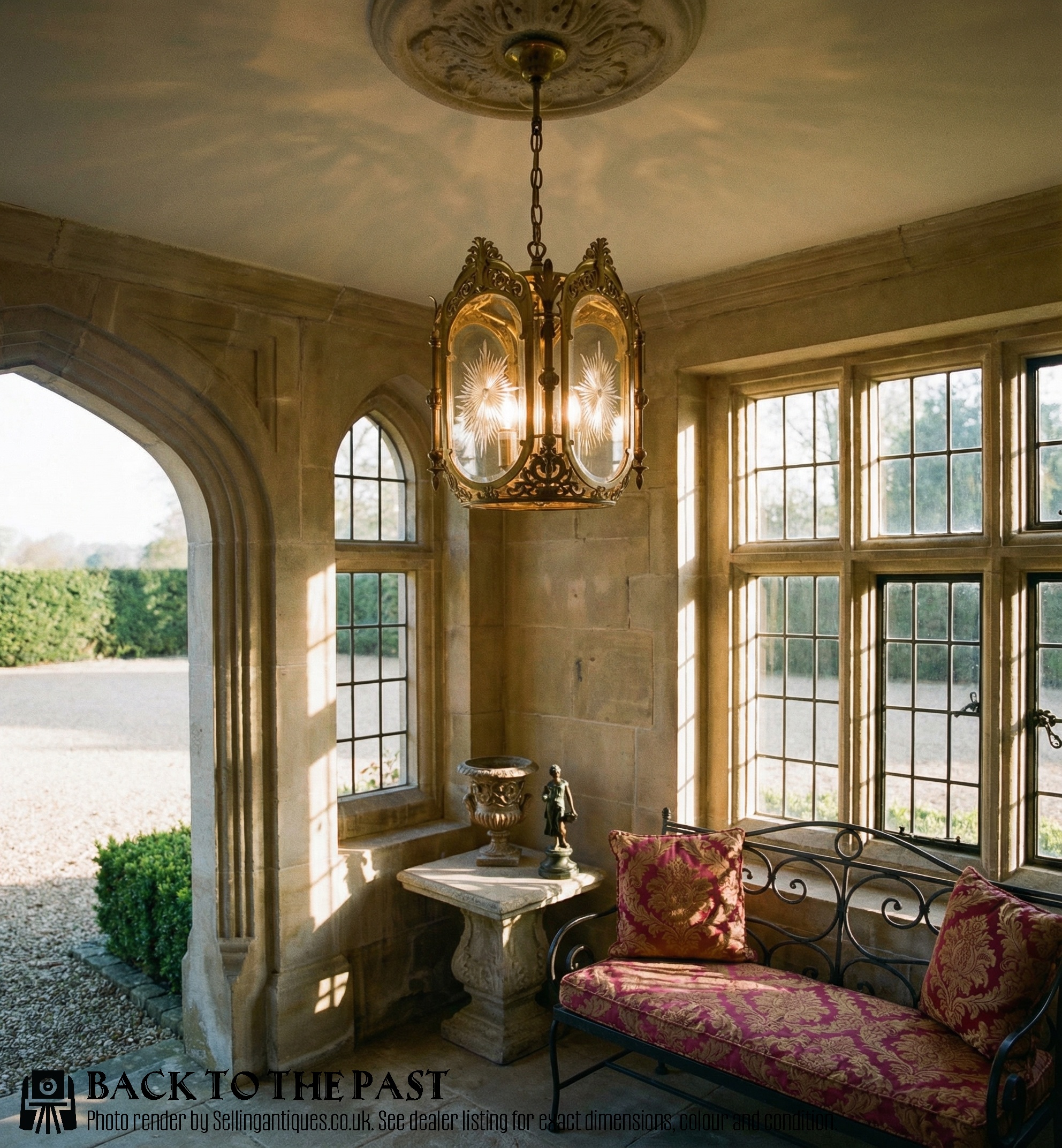
Glass Ceiling Lantern
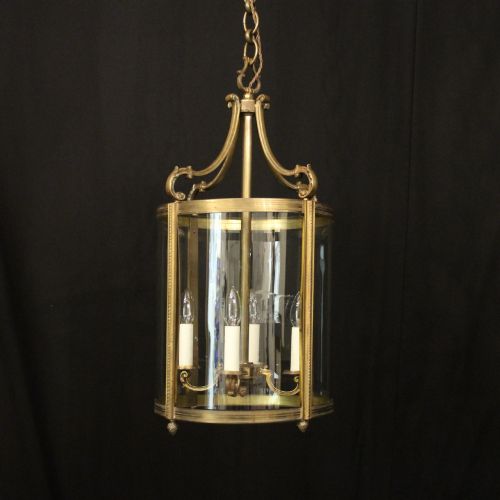
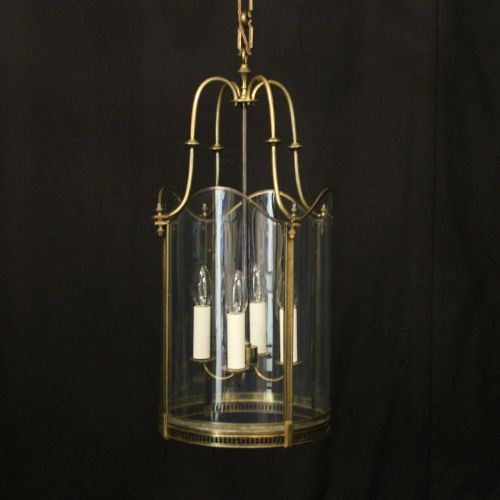
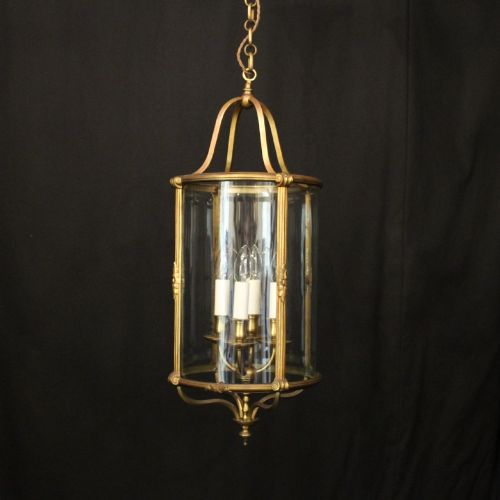
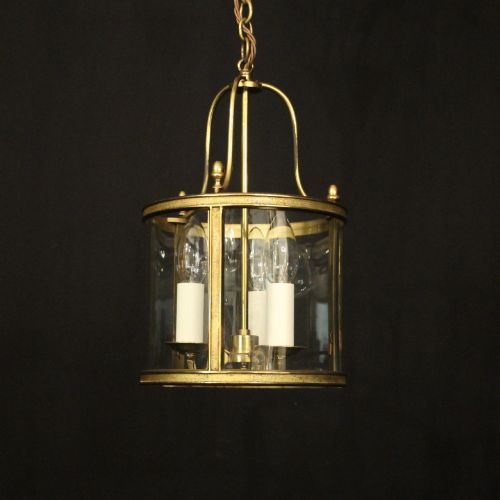
A glass ceiling lantern is an overhead hanging light designed primarily for hallways, vestibules and entrance spaces. These fixtures combine structural metal frameworks with glazed panels to diffuse light evenly across a room.
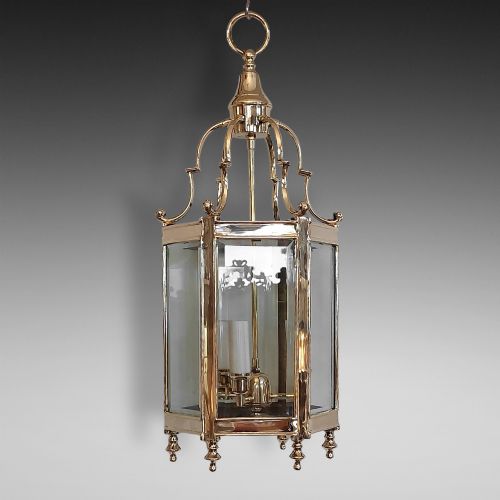
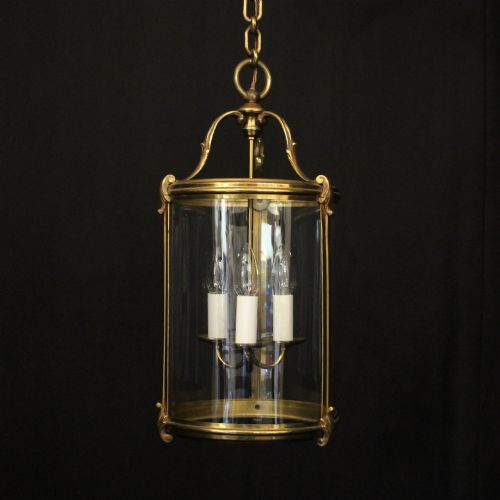
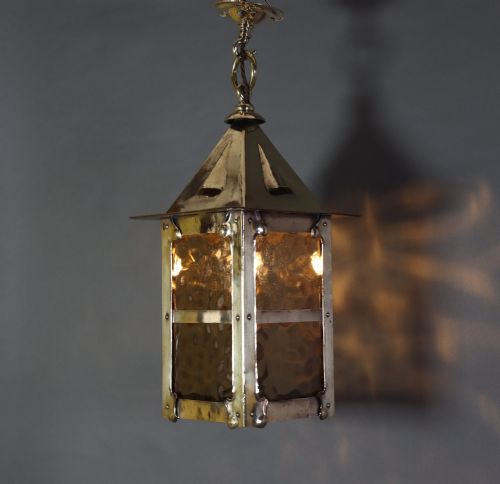
The versions most commonly met on this page span from the Victorian and Edwardian eras into the 1920s and 1930s. They range from simple hexagonal brass frames to elaborate French gilded bronze designs with multiple interior lights.
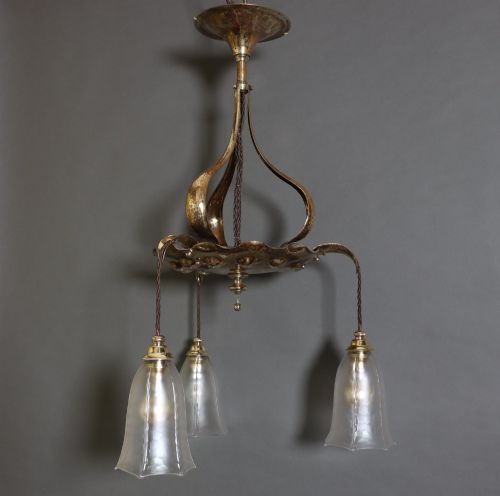
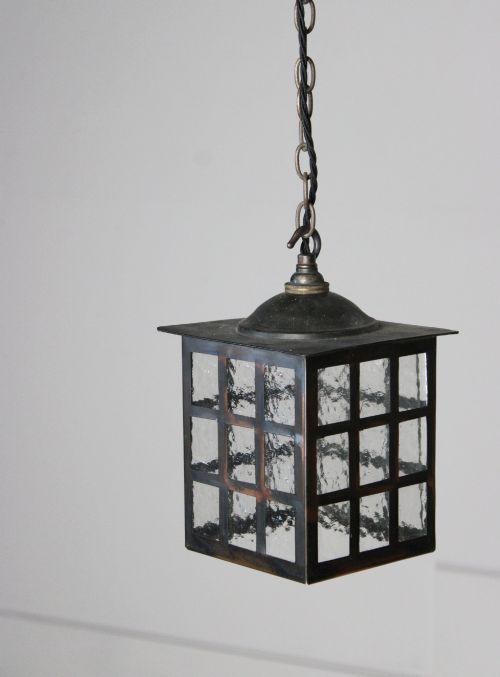
Formats include flush-fitting ceiling lights, pendant lanterns suspended by chains, and specialised shapes such as star lanterns or spherical globes. Origin points recorded in the evidence encompass English, French and American workshops.
Materials and construction
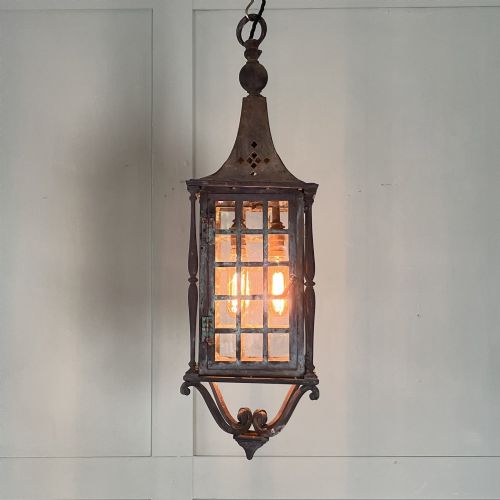
Frames are constructed predominantly from brass, gilt brass, bronze and copper, joined by soldered or cast structural elements. Metal components often receive gilt finishes or polished treatments to enhance their reflective properties.
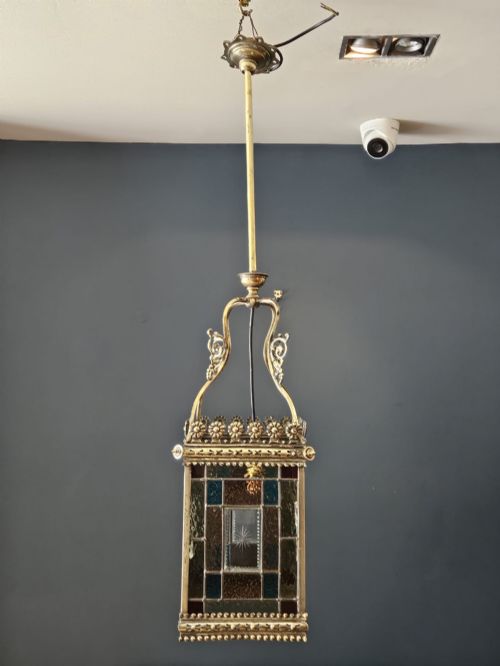
Glazing varies from clear bevelled and leaded panes to stained glass, etched panels and hand-blown bullseye or moonstone glass. These glass elements are held securely within the metal armature, sometimes accessed via a small hinged door.
The selection spans from nineteenth-century Victorian and Gothic Revival styles to Art Deco and 1930s French designs.
Assessing quality and execution
Quality reveals itself in the weight and rigidity of the metal frame, alongside the precision of the casting work and joinery. Finer examples display crisp botanical or classical detailing on the bronze and brass mounts rather than soft, mass-produced moulding.
The glass selection dictates much of the character, with heavy bevelled edges, thick stained panels or genuine hand-blown bullseye panes representing superior craftsmanship. Original patination on the metal surfaces also contributes significantly to the integrity of an antique piece.
The Glass Ceiling Lantern Glossary
- Convex glass
- Curved glass panes that project outward from the metal frame, frequently seen on French hall lanterns from the early twentieth century.
- Lead glass
- Glass panels held together by thin strips of lead cames, characteristic of Arts and Crafts, Gothic Revival and Victorian designs.
- Gilt bronze
- Bronze metal treated with a thin layer of gold or gold-coloured wash, known in French pieces as gilt bronze or bronze gilty.
- Bevelled glass
- Glass panes featuring angled, polished edges that catch and refract the light passing through the lantern.
- Moonstone light
- Opaque, milky white glass used to soften the glare of internal bulbs while distributing a warm ambient glow.
Glass Ceiling Lantern: Frequently Asked Questions
Where should I hang a ceiling lantern?
These fixtures suit entrance halls, vestibules, landings and stairwells where overhead illumination is required in a compact space.
Because they hang down from the ceiling, ensure you check the drop height against your ceiling clearance before installation.
How do I date an antique lantern?
Dating relies on stylistic clues, such as the flowing organic lines of Art Nouveau or the strict symmetry of French Neoclassical designs.
Materials and construction methods also provide clues, with heavy cast brass and leaded panels pointing toward Victorian or Edwardian origins.
Are these lanterns electrically wired?
Many surviving lanterns have been adapted for modern electricity over the years, while others retain older wiring configurations that require updating.
It is standard practice to have antique light fixtures professionally checked, rewired and tested before domestic installation.
What is a Moravian star lantern?
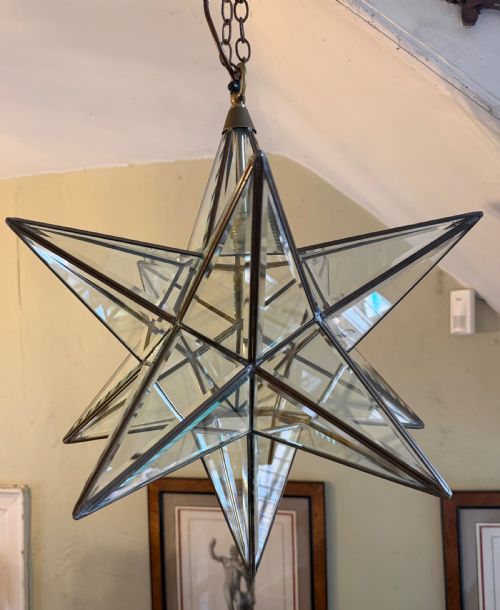
This is a multi-pointed geometric hanging lantern constructed with bevelled glass panes fitted into a brass framework.
Originating as decorative lighting, the star shape creates intricate shadow patterns on surrounding walls when illuminated.