
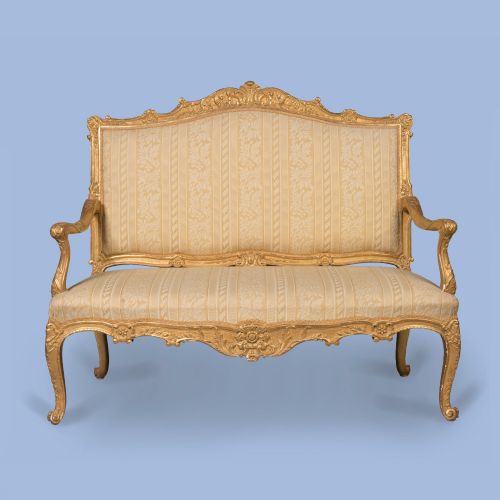


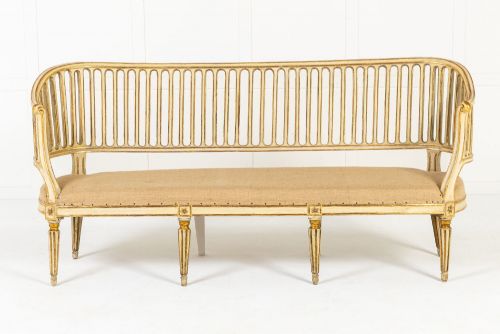
Giltwood Upholstered Sofa
A giltwood upholstered sofa brings gilded luxury and historical presence into a room, spanning French, English, and Italian design.
Giltwood Upholstered Sofa
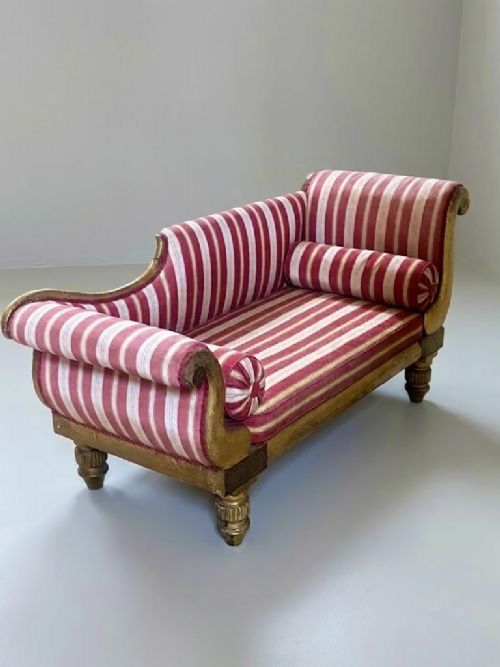
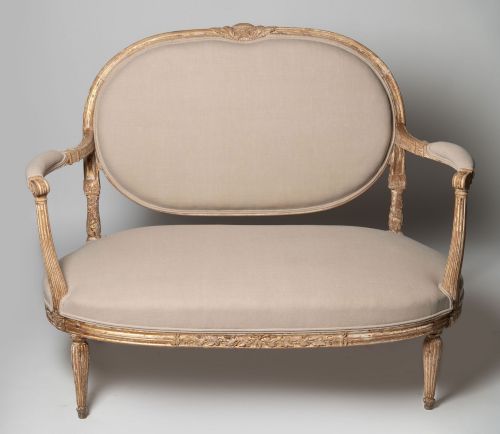
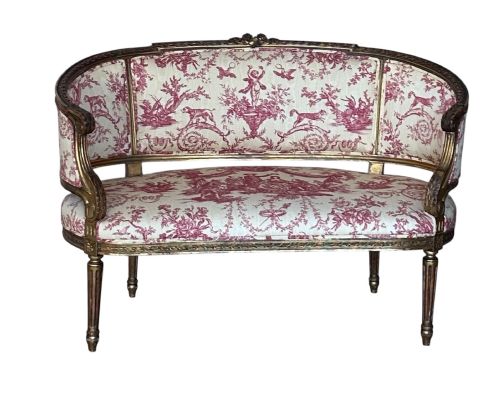
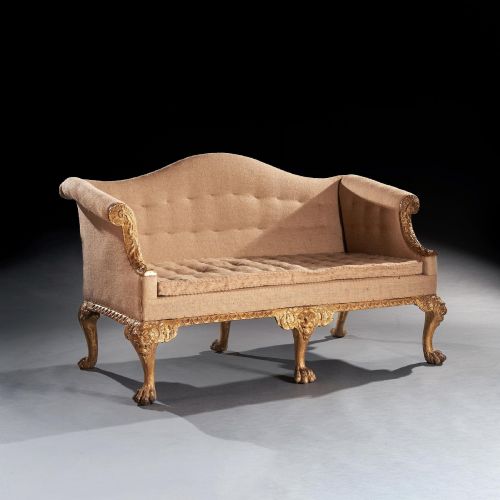
A giltwood upholstered sofa combines a carved wooden frame finished with gold leaf or paint with soft textile coverings, appearing across the eighteenth and nineteenth centuries. These seating pieces range from English country house settees to French Louis XV and Louis XVI style canapés, alongside Regency and Italian neoclassical variations.
Most examples found here date from the nineteenth century, often following earlier continental styles like the Rococo or Neoclassical taste. Forms include two-seater settees, larger salon sofas, and daybeds, frequently upholstered in silk, velvet, linen, or patterned fabric.
How they were made
Makers shaped the structural frames primarily from hardwoods such as beech and other timbers, carving intricate decorative motifs directly into the wood before applying a gold finish. This gilding process involved applying thin gold leaf or metallic paint over a prepared ground layer.
The frames were then upholstered using traditional textiles including silk, velvet, and linen, secured over padding to create comfortable seating designed for formal reception rooms and boudoirs.
Listings feature pieces spanning the 18th, 19th, and 20th centuries, with styles ranging from George II and Louis XV to Regency and Neoclassical.
What varies in quality
The finesse of the hand-carved woodwork dictates much of the distinction, separating crisply detailed foliage and moulding from softer, more generalized execution. The depth and integrity of the original gilt finish also separate standard pieces from finer examples.
Proportion and structural balance define the presence of the sofa, with superior pieces maintaining harmonious lines across the backrest, arms, and legs. The quality and appropriateness of the textile upholstery further complete the character of the seating.
Giles Grendey
The Giltwood Upholstered Sofa Glossary
- Giltwood
- Wood that has been decorated with gold leaf or gold paint. This technique provides a luminous metallic surface characteristic of formal antique furniture.
- Canapé
- A traditional French term for an upholstered sofa or settee. These pieces typically feature exposed carved wooden frames and open arms.
- Louis XVI Style
- A neoclassical design aesthetic defined by straight lines, symmetry, and classical motifs. It succeeded the more curving forms of the Louis XV period.
- Neoclassical
- A style drawing inspiration from classical antiquity, featuring restrained ornamentation and balanced proportions. It appears frequently in eighteenth and nineteenth-century seating.
- Regency
- A British design period spanning the early nineteenth century. Furniture from this era often incorporates classical English and continental influences.
Giltwood Upholstered Sofa: Frequently Asked Questions
Where were these sofas used?
These seating pieces served primarily in formal spaces such as drawing rooms, salons, and boudoirs within country houses and town residences. They were designed for entertaining guests and displaying the status of the household.
Over time, owners have placed them in grand hallways, large living rooms, and private sitting spaces to add a distinct historical focal point to the interior.
How do I identify French versus English styles?
French styles like Louis XV and Louis XVI emphasise flowing cabriole legs or straight fluted legs, paired with ornate carved frames and upholstered backs. English equivalents from the Georgian and Regency periods often show heavier proportions and distinct regional carving traditions.
Examining the underlying timber, such as beech on continental frames, helps confirm the likely origin of the piece alongside stylistic cues.
How do I care for giltwood frames?
Giltwood requires gentle dusting with a soft, dry cloth to prevent accumulation without disturbing the delicate gold leaf or painted surface. Moisture and chemical cleaners should be strictly avoided to protect the metallic finish.
Keeping the sofa away from direct sunlight and heat sources also helps preserve both the fragile wooden frame and the textile upholstery.
Can these sofas be used daily?
While structurally robust, antique giltwood settees function best with mindful use rather than heavy everyday lounging. Their carved frames and delicate finishes warrant careful placement to avoid knocks and structural strain.
They remain highly functional as statement seating for reception areas and quieter rooms where their decorative and historical qualities can be appreciated.