
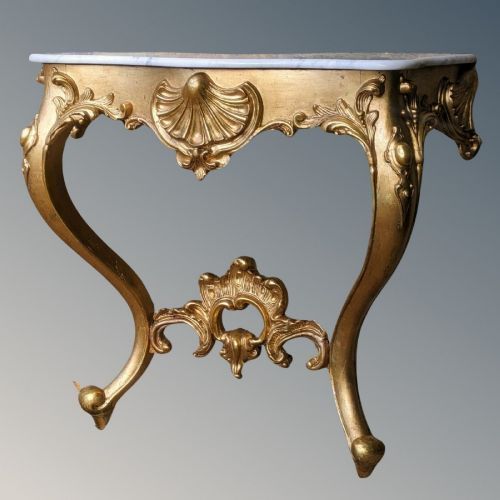
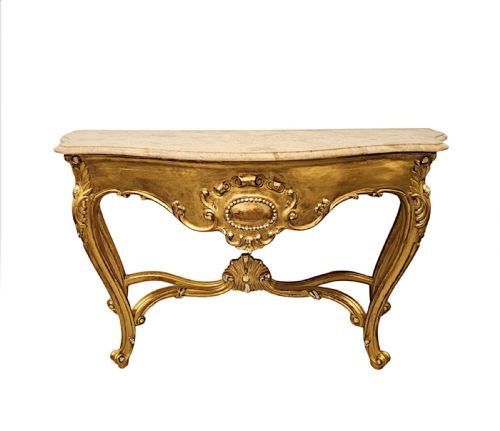
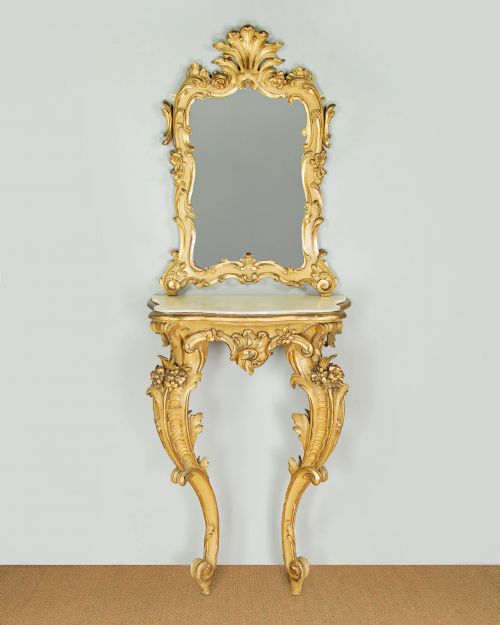
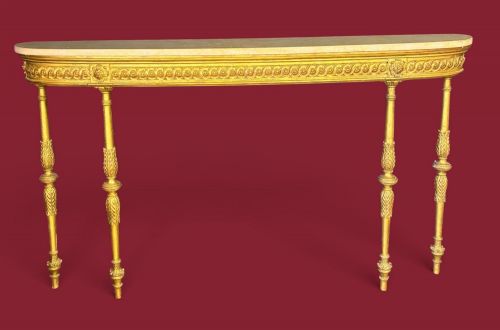
Giltwood Hall Table
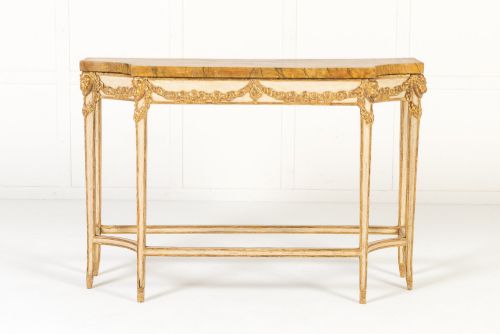
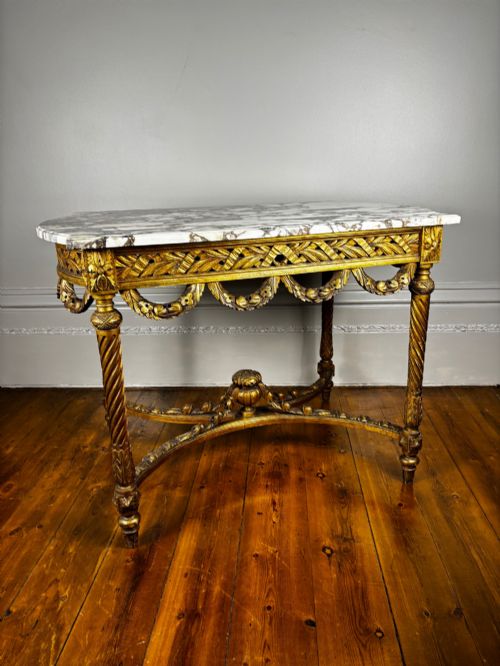
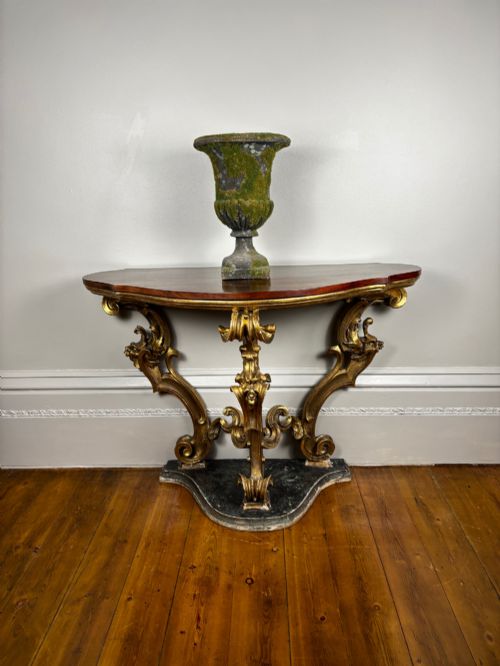
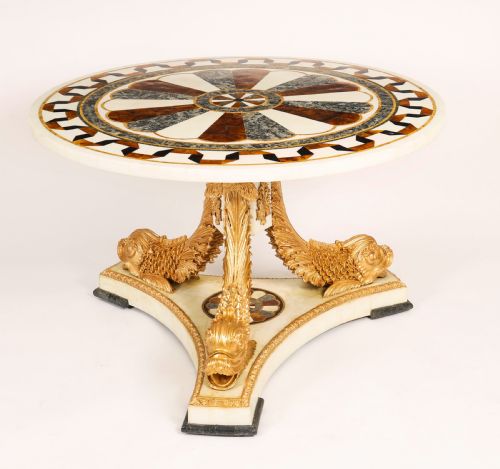
A giltwood hall table brings instant architectural gravity to an entrance, combining gilded surface and substantial timber.
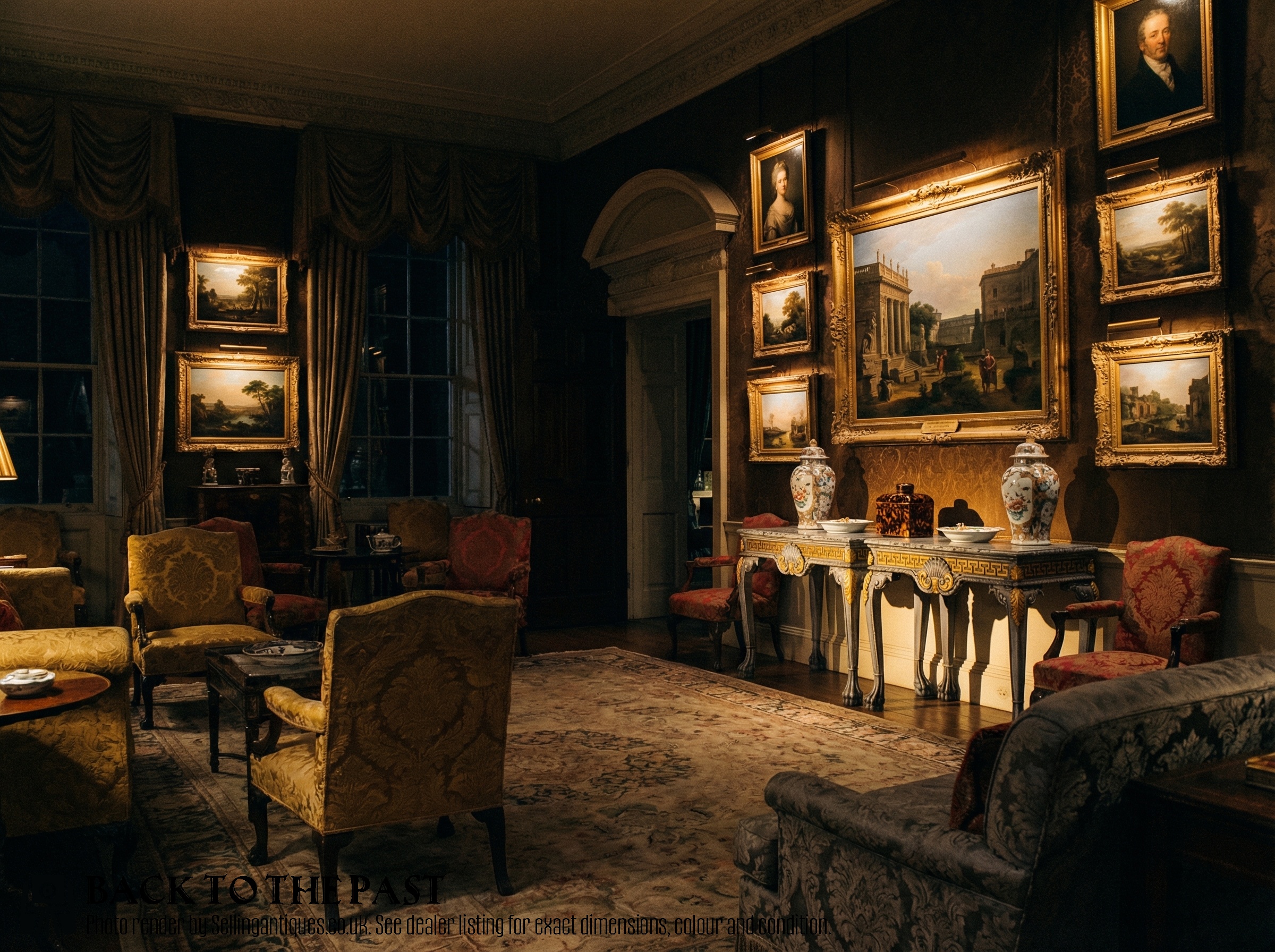
What these pieces are
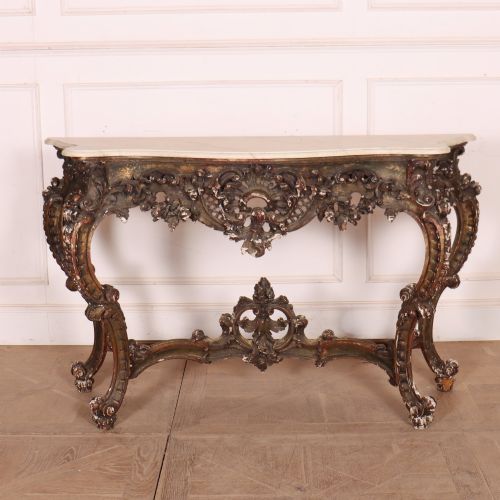
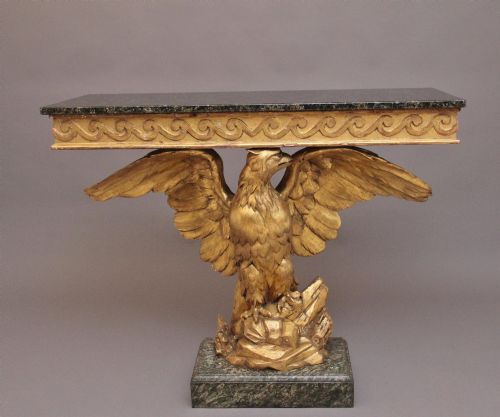
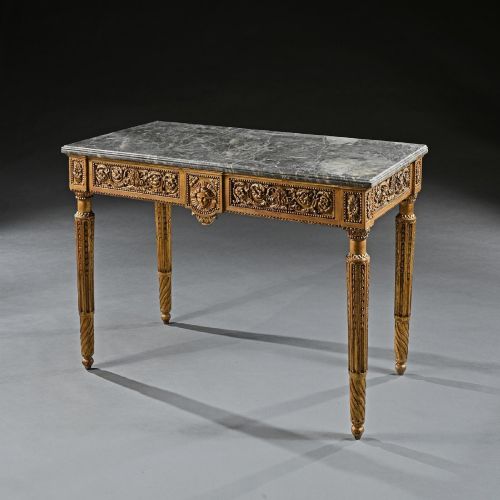
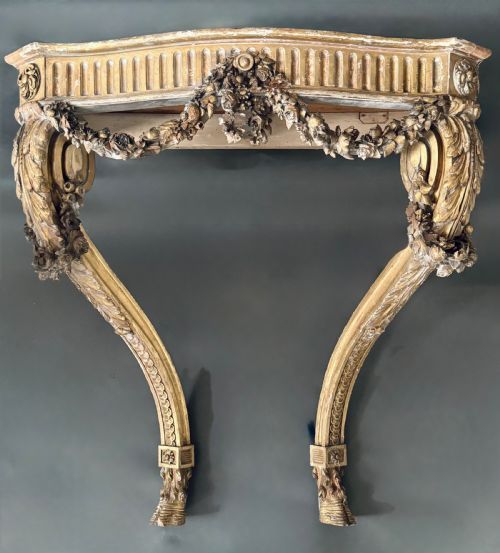
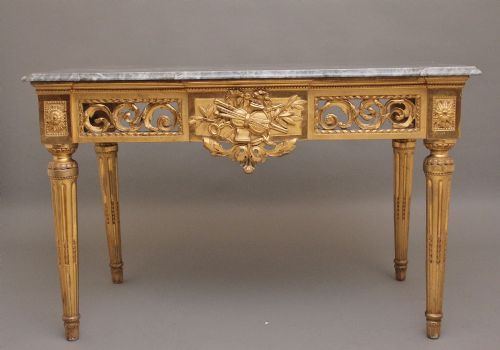
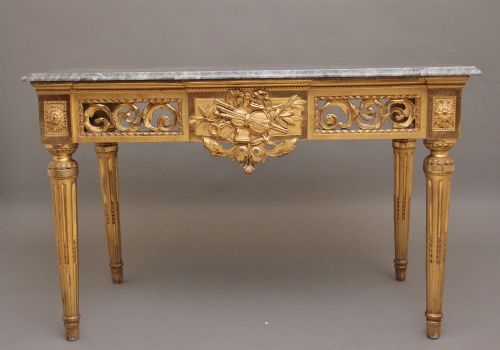
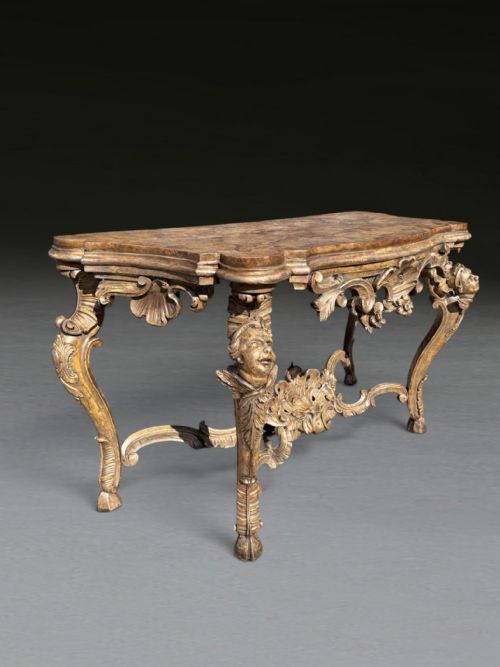
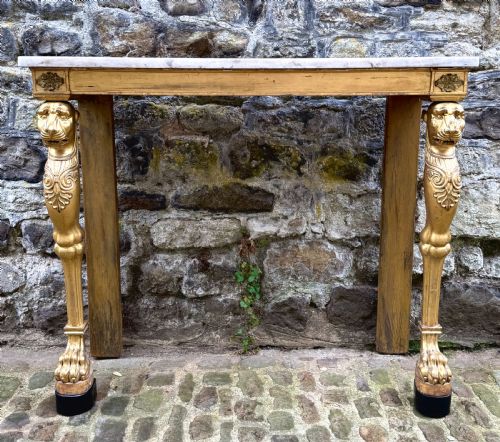
A giltwood hall table is a statement piece designed primarily for entranceways and reception rooms, frequently appearing as wall-fixed console tables or freestanding centre tables.
The selections span the eighteenth century through to the early twentieth century, incorporating styles such as Venetian Rococo, Neoclassical, Louis XVI, Regency, and French Napoleon III.
Most examples found here take the form of console tables, often paired with marble tops and occasionally accompanied by matching mirrors.
How they were made
Craftsmen built these tables using foundational timbers like wood and pollard oak, applying gesso as a smooth preparatory ground before layering gold leaf or paint.
Surfaces feature meticulous gilding and parcel-gilt techniques, while heavy tops utilise polished marble to create a durable and formal architectural surface.
Retail Price Guide 2026
Typical UK retail prices for giltwood hall table, calculated from the Sellingantiques database of over a million retail prices indexed since 2003. This retail price guide relies exclusively on Sellingantiques data; no external sources or auction records are used, so the figures do not describe the wider market.
The listings on this site encompass pieces spanning the eighteenth, nineteenth, and early twentieth centuries in various regional European styles.
What varies in quality
The distinction between ordinary and exceptional work lies in the crispness of the carved ornament and the depth of the gesso preparation beneath the gold leaf.
Material integration also dictates merit, separating tables that combine substantial timber and genuine marble tops from simpler painted alternatives.
The Giltwood Hall Table Glossary
- Giltwood
- Timber treated with gold leaf or gold paint to simulate solid gold. This finish defines the reflective surface characteristic of these tables.
- Console table
- A table designed to stand against a wall, traditionally secured with brackets or console legs. They often support heavy marble slabs.
- Gesso
- A plaster mix applied to wood to create a smooth surface for gilding. It allows carvers to achieve sharp decorative details.
- Parcel-gilt
- Partially gilded woodwork where gold leaf highlights specific carved motifs against a painted or ebonised background.
- Pollard oak
- Timber taken from trees pollarded at a height to encourage dense branching, producing distinctive swirling grain patterns.
Frequently Asked Questions
Where should a giltwood hall table go?
These tables belong in prominent entrance halls, grand corridors, or formal reception rooms where their architectural presence can be appreciated. They require wall support if they are console tables.
Because many examples feature delicate gesso and gold leaf, avoid placing them in damp areas or direct sunlight that might degrade the finish.
How do I care for giltwood?
Dust gently with a soft, dry brush or cloth, avoiding any moisture, wax, or modern chemical polishes that can lift the gold leaf. Gilt surfaces are exceptionally fragile.
Keep the room at a stable humidity to protect the underlying timber and gesso from expanding or contracting.
Are marble tops original?
Many eighteenth and nineteenth century tables were paired with marble slabs from creation, offering a durable surface for heavy objects in a hallway.
Examining the underside of the stone and the timber frame reveals whether the top has been matched or replaced during the life of the piece.
How do I identify Regency style?
Regency pieces often draw inspiration from classical antiquity, featuring restrained lines, dark timbers like pollard oak, and restrained use of giltwood highlights.
Proportions tend to be substantial and architectural, reflecting early nineteenth century British taste.