
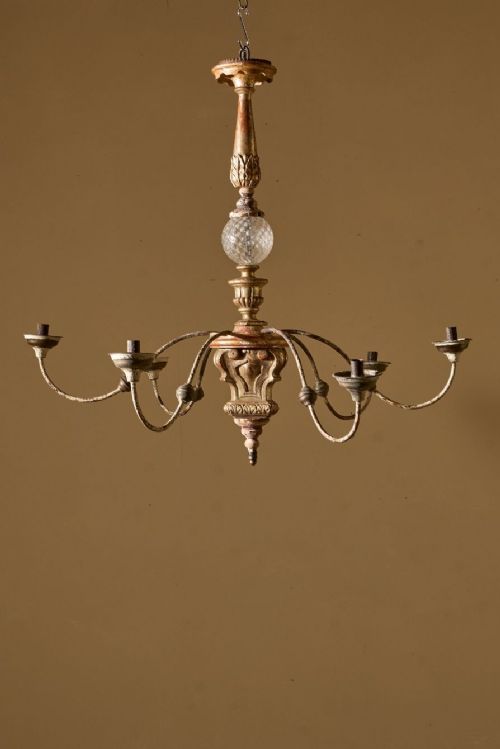
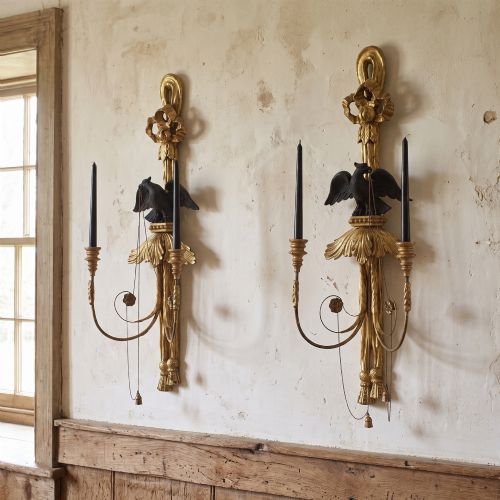
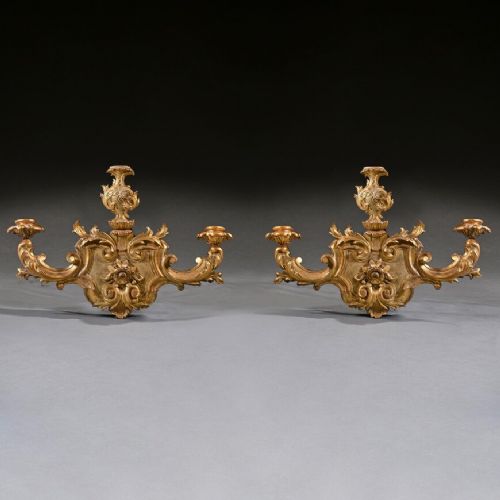
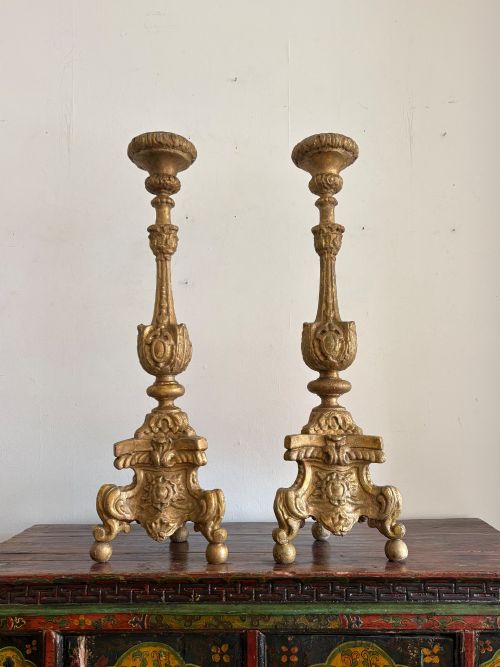
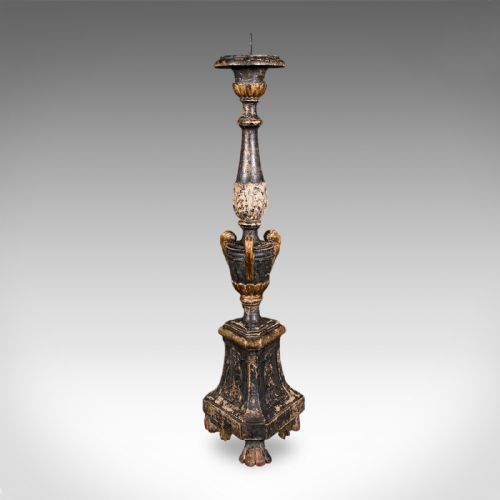


Giltwood Candle Holders
These giltwood candle holders bring carved warmth and gilded texture to a room, catching the light in a way few other antique accessories manage.
Giltwood Candle Holders
When you search for giltwood candle holders, you find a selection spanning the seventeenth to the twentieth centuries, featuring forms such as altar candlesticks, wall sconces, girandole mirrors, and pricket sticks. Eighteenth-century examples often display Italian Baroque or Venetian Rococo influence, while nineteenth-century pieces range from French styles to George III interpretations.
The objects take many shapes, including single sticks, multi-branch candelabra, and carved figures adapted to hold candles or lamps. Pairs dominate the selection, offering symmetry for a mantelpiece, console, or wall installation.
Origins vary across England, France, and Italy, reflecting distinct regional tastes in carving depth and surface finish. Some pieces retain their original function as pricket sticks or altar lights, while others show later conversions to table lamps.
How they were made
Makers shaped these items primarily from carved wood, applying layers of gesso to build up intricate details such as acanthus leaves, cherubs, or architectural mouldings before gilding. Gold leaf provided the luminous finish, though some pieces combine the gilt surface with polychrome paint, ebonised sections, or iron components.
The carved wood foundation required skilled hand labour, with carvers working in soft or hardwoods depending on the intended detail and regional workshop tradition. Gesso was smoothed over the wood to create a crisp base for the gold leaf, ensuring the metallic surface caught candle flames effectively.
Giltwood Candle Holders Retail Price Guide 2026
Typical asking prices for giltwood candle holders among the pieces listed under this phrase on Sellingantiques today, from the lower quarter to the upper quarter. They describe what is for sale here now, not the wider market.
Several pairs feature carved Blackamoor figures holding the lights, capturing a dramatic theatricality popular in historic interior design.
What varies in quality
Quality rests on the depth and crispness of the hand-carving, particularly where wooden foliage, figures, or architectural motifs define the silhouette. Finer pieces show spirited movement in scrolls and figures, whereas simpler items rely on heavier, more static moulding.
The integrity of the gilded surface also distinguishes pieces, with superior examples retaining rich gold leaf that reflects light evenly across the gesso ground. Alterations, such as adaptations into lamp bases or losses to the delicate carved elements, alter the character of the object.
The Giltwood Candle Holders Glossary
- Giltwood
- Wood that has been coated with gold leaf over a prepared gesso ground. This technique creates a luminous, reflective surface characteristic of decorative items from the seventeenth century onwards.
- Pricket
- A sharp metal spike on a candlestick designed to secure a candle in place. This form is frequently found on altar sticks and ecclesiastical pieces.
- Girandole
- An ornamental wall sconce featuring a mirror that reflects the light of the candles. These pieces combine carved frames with reflective glass.
- Gesso
- A plaster-like mixture applied to carved wood to create a smooth surface for gilding. It allows carvers to achieve fine detail before the gold leaf is laid down.
- Altar candlestick
- A tall, substantial candle holder originally designed for use on a church altar. Eighteenth-century versions often display impressive proportions and baroque motifs.
Giltwood Candle Holders: Frequently Asked Questions
How do I clean giltwood candle holders?
Dust gently with a dry, soft brush to protect the delicate gold leaf and gesso layers.
Avoid using water, chemical sprays, or abrasive cloths, as moisture can lift the historic gilding from the wood beneath.
Were these pieces used in churches?
Many examples, particularly the taller pricket sticks and altar-type candle holders, originated in ecclesiastical settings.
Others were made for domestic use in grand European salons, drawing rooms, and chateaux.
Can I still burn candles on them?
While original pricket sticks and candle holders were built for wax lighting, modern use requires caution to protect the antique wood and gilding from heat and dripping wax.
Many collectors prefer to use them unlit or fitted with secure modern candles to preserve the fragile surfaces.
How do I distinguish eighteenth-century pieces?
Eighteenth-century examples often display deeper, hand-chiselled carving in styles such as Venetian Rococo or Italian Baroque.
The weight of the timber and the composition of the gesso ground also help indicate age when compared to later nineteenth-century interpretations.
What is the difference between a sconce and a candlestick?
A candlestick is a freestanding object designed to sit on a table, mantel, or altar.
A wall sconce is built to be mounted directly onto a wall surface, frequently incorporating a backplate or mirror to project light into the room.