


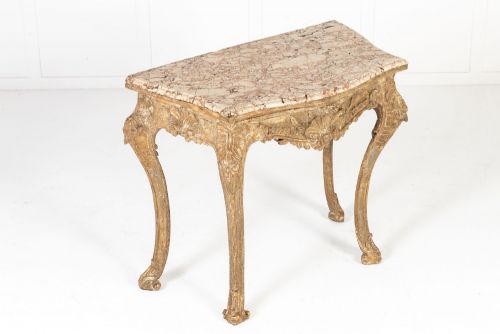
Gilt Wood Hall Table
A gilt wood hall table brings weight and reflection to an entrance, uniting carved timber, gold leaf, and stone in a single commanding presence.
Gilt Wood Hall Table
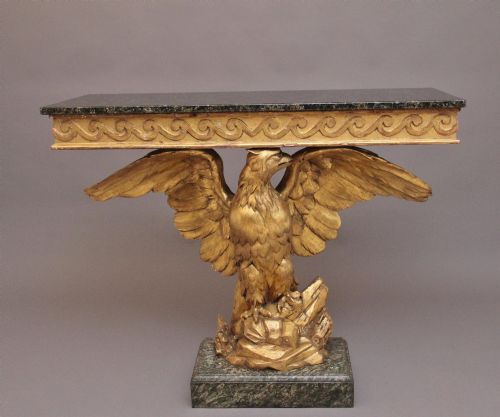
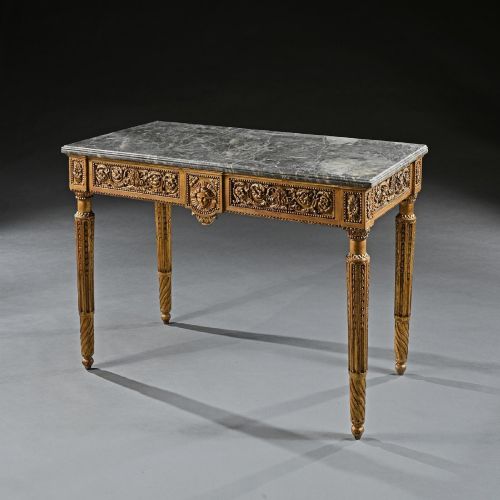
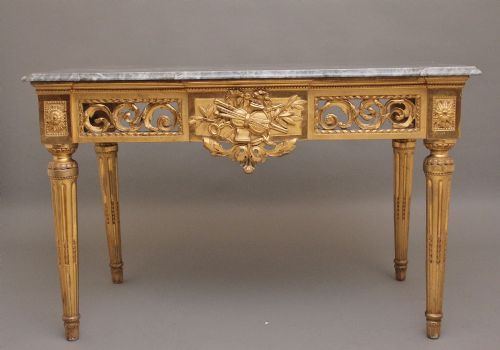
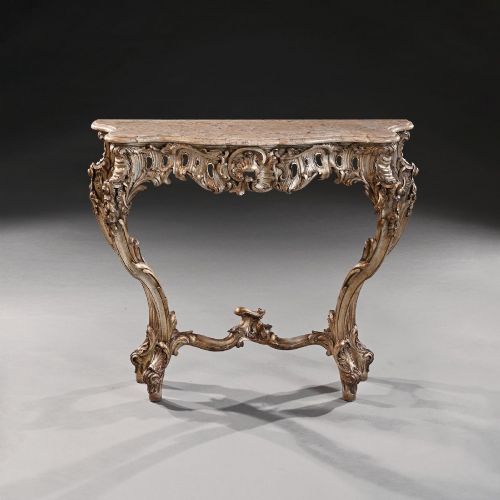
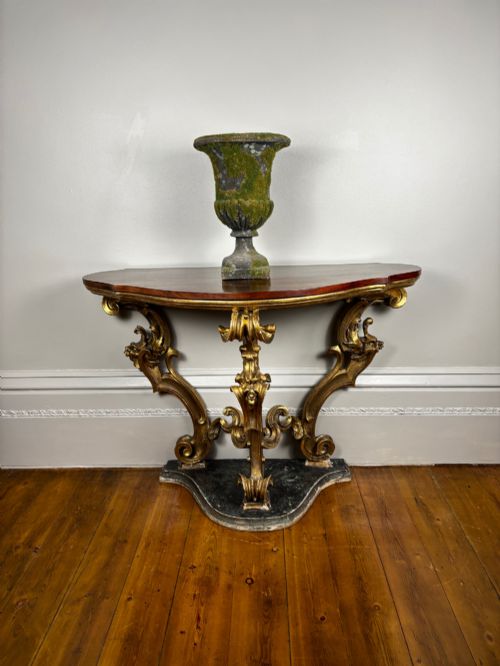
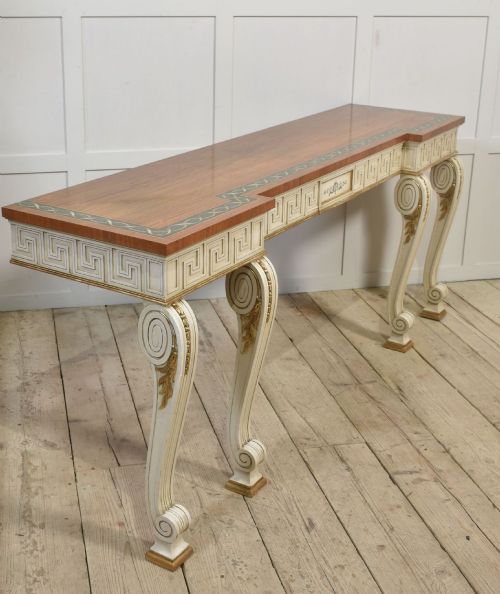
A gilt wood hall table is a wall-anchored console or freestanding centre table designed to sit in a grand hallway or reception room. These pieces appear most frequently as console tables, often paired with marble tops and shaped timbers.
The selection spans the eighteenth and nineteenth centuries, taking in Regency, Victorian, and revival periods with distinct regional flavours from Italy, France, and England. Buyers encounter console tables, side tables, and occasional centre tables that utilise traditional forms.
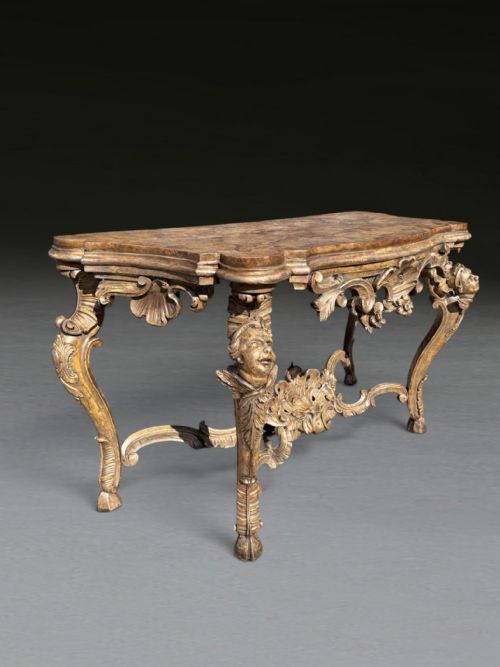
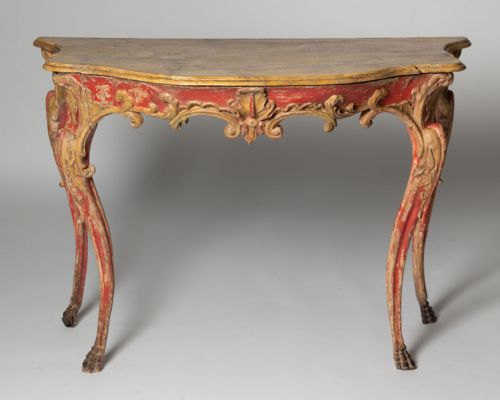
Italian and French influences dominate the surviving items, showing heavy reliance on Rococo and Neoclassical styling. Many pieces demonstrate deep carving in wood, finished with gold leaf or painted surfaces alongside marble.
How They Were Made
Makers shaped structural elements from timber such as mahogany, walnut, or pine, applying gesso as a smooth bed for subsequent gilding with gold leaf. Marble tops, including Carrara and breccia varieties, rested upon these carved wooden frames.
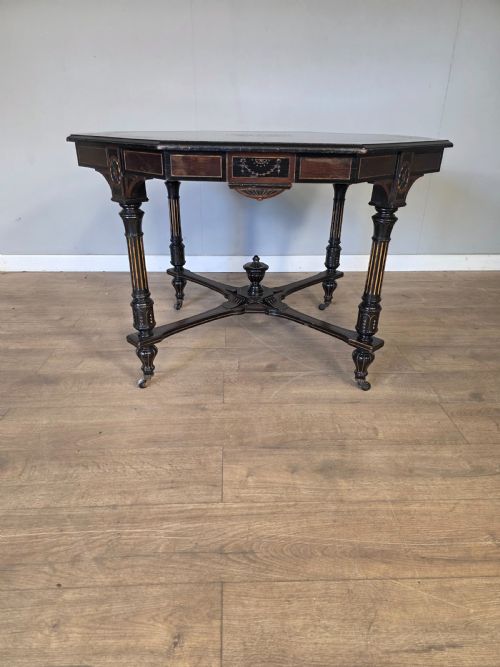
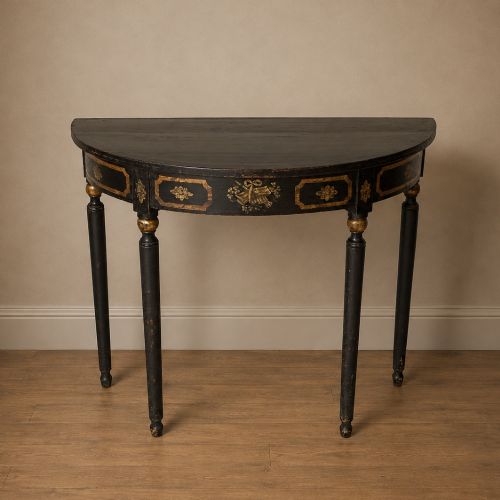
Surface decoration frequently combined carved giltwood with painted or ebonised details, brass accents, and silver gilt. Craftsmen employed carving and parcel gilt techniques to highlight specific architectural details across the frame.
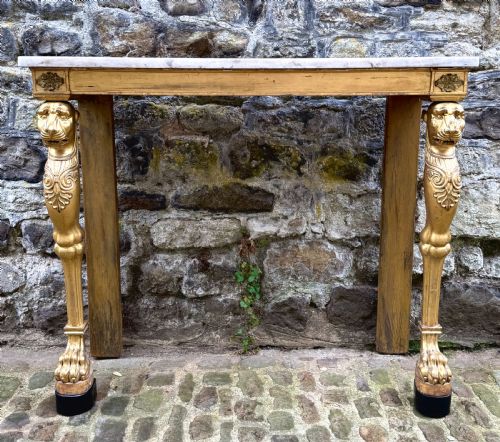
Several tables proudly retain their original lion's paw feet, ready to stand guard in the hallway forever.
What Varies in Quality
Depth and crispness of the wood carving separate superior tables from simpler production, particularly where acanthus leaves, scrolls, or lion's paw supports are formed. The integration between the heavy stone top and the supporting wooden chassis defines structural integrity.
The quality of the gilding and the preservation of the original gold leaf or gesso layers dictate historical authenticity. Finer examples retain their original marble slabs and undisturbed hand-carved surfaces without heavy modern intervention.
The Gilt Wood Hall Table Glossary
- Giltwood
- Timber coated with gold leaf over a prepared gesso ground. This finish provides the characteristic metallic brilliance seen on period frames.
- Console Table
- A table designed to stand against a wall, frequently secured with brackets or sporting two front legs. These items form the majority of surviving entrance furniture.
- Gesso
- A plaster mixture applied to wood surfaces as a smooth base for gilding or painting. It allows intricate relief work to hold crisp edges.
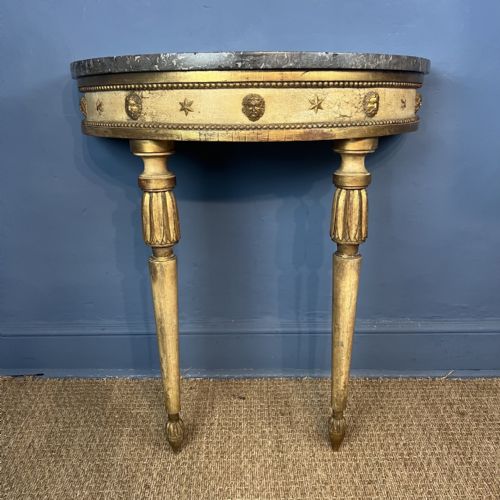
- Demilune
- A half-moon shape characteristic of many entrance tables designed to sit flush against a wall. This silhouette saves floor space in narrow hallways.
- Breccia Marble
- A multicoloured stone composed of angular fragments cemented together, commonly found on nineteenth-century Italian consoles. It adds distinct geological patterning to the tabletop.
Gilt Wood Hall Table: Frequently Asked Questions
How do I style a gilt wood hall table?
Place the table against a primary hallway wall, often beneath a matching pier mirror or painting to anchor the vertical space. Keep the surface uncluttered to let the carved timber and stone top remain the focal point.
Allow enough clearance around the piece for movement, as these tables project significantly into narrow entrance halls. Balance the reflective gold surface with simple architectural surroundings.
Were these tables used in dining rooms?
Most examples function primarily as hall tables, pier tables, or side tables designed for grand reception spaces and entrance halls rather than dining areas. Their wall-mounted console format required the stability of a structural anchor.
Freestanding centre tables served different duties in the middle of a room, while demi-lune versions specifically hugged hallway walls.
How do I identify an eighteenth-century piece?
Examine the construction methods, tool marks on the timber frame, and the composition of the gesso beneath the gold leaf. Eighteenth-century examples often display deeper, hand-carved reliefs associated with Italian or French workshops.
Revival pieces from the nineteenth century frequently mimic these earlier styles but betray their later origin through machine milling or standardised joinery.
What is the difference between console and centre tables?
Console tables require support from a wall, utilising two front legs and relying on brackets or wall attachment for complete stability. They feature finished fronts and sides while the back remains plain.
Centre tables stand entirely on their own with four or more finished sides, designed to occupy the middle of a room rather than hugging a perimeter wall.