
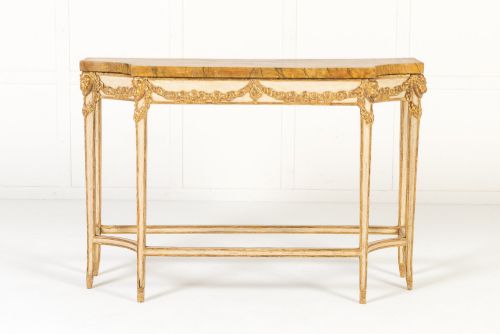
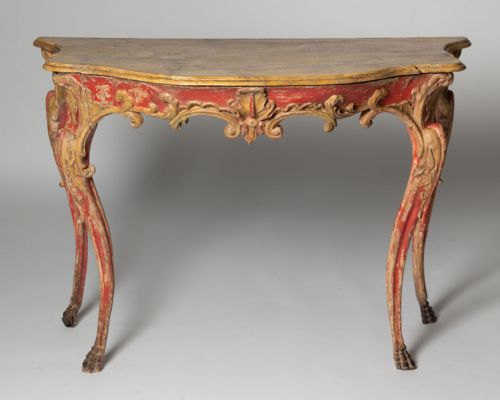
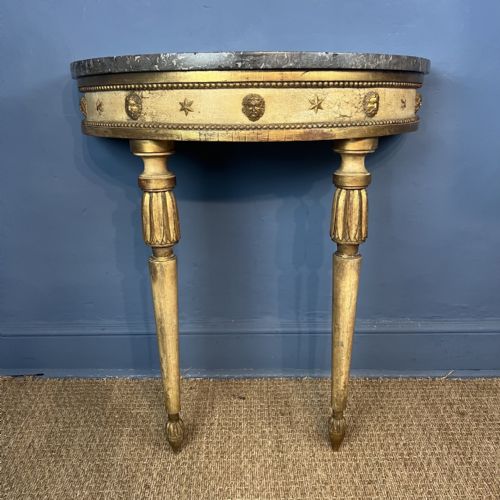


Italian Painted Pier Table
An italian painted pier table brings grand continental style into a room, offering striking hand-painted decoration and classical proportions.
Italian Painted Pier Table
When you search for an italian painted pier table, you are looking at console tables designed to sit flat against a wall, often beneath a mirror. These pieces span the eighteenth century, the nineteenth century, and the early twentieth century, showing regional tastes from Venice and Genoa alongside broader neoclassical and rococo movements.
The most common examples you will meet on this page date from the eighteenth and nineteenth centuries, finished in painted wood, polychrome paint, and cream paint with parcel gilt highlights. Forms include serpentine fronts and standard console shapes, frequently topped with marble or specimen marble surfaces.
How they were made
Carved wood provides the structural framework for these console tables, shaped into ornamental legs and aprons that reflect Italian rococo and neoclassical design. Gesso is applied beneath the surface decoration to build up crisp relief details before finishing.
Painters and artisans applied polychrome paint, cream paint, and gold leaf by hand to achieve decorative surfaces. Faux finishes such as faux porphyry appear alongside genuine marble and specimen marble tops, fixed firmly to the wooden bases.
Some tables pretend to be expensive rocks, wearing clever coats of faux porphyry paint.
What varies in quality
The refinement of the hand-painted decoration separates standard examples from exceptional ones, with finer tables displaying delicate polychrome work and crisp parcel gilding. The execution of the carved wood and gesso detailing dictates how sharp the architectural and organic motifs appear.
The choice of top alters the character of the piece, with solid marble and multi-coloured specimen marble slabs representing a more substantial build than simpler painted wooden surfaces. Age and regional origin, such as eighteenth-century Genoese or Venetian pieces, influence the historical weight of the table.
The Italian Painted Pier Table Glossary
- Console table
- A table designed to be fixed against a wall, typically supported by two front legs and secured to the wallwork. These pieces served decorative and functional roles in grand interiors.
- Parcel gilt
- Partially gilded with gold leaf, highlighting specific carved details against a painted ground. This technique adds depth and contrast to the wooden structure.
- Polychrome paint
- Painted in several different colours, creating pictorial or decorative surface patterns. It is characteristic of decorative Italian furniture from the eighteenth and nineteenth centuries.
- Specimen marble
- A tabletop composed of various coloured marbles fitted together in geometric or decorative arrangements. This technique showcases mineral variety and stonemasonry skill.
- Faux porphyry
- A painted or treated surface designed to imitate the rich purple-red igneous rock used in antiquity. Artisans employed this technique to achieve grand decorative effects without heavy stone.
Italian Painted Pier Table: Frequently Asked Questions
Where should I place an italian painted pier table?
These tables fit naturally against a flat wall in an entrance hallway, living room, or dining room. They are traditionally positioned beneath a wall mirror or painting to create a balanced focal point.
Because their backs are often plain or flat for wall stability, they do not function well as freestanding centre tables. Ensure the wall space matches the proportions of the console before placement.
How do I care for the painted and gilded surfaces?
Dust the carved wood and painted areas gently with a soft, dry cloth to prevent dirt accumulation. Avoid harsh chemical cleaners or excessive moisture, which can damage old paint and delicate gold leaf.
Marble tops require simple wiping with a damp cloth and mild soap. Protect the stone from acidic liquids like wine or citrus juice to prevent permanent staining.
How can I tell an eighteenth century table from a later one?
Eighteenth-century examples often display deep Italian rococo or early neoclassical carving combined with aged patination on the painted surfaces. Construction methods, tool marks on the timber, and the natural wear of the gesso help indicate genuine age.
Nineteenth-century and later interpretations may feature revival styles like Italian neo-classical, showing different ageing patterns and standardised construction details.
What is the difference between a console table and a pier table?
The terms are often used interchangeably in the antiques trade to describe tables meant to stand against a wall. Historically, a pier table specifically stood against the wall space between two windows.
Both types share the same wall-anchored design and decorative focus, featuring ornate carved wood and marble tops.