



Distressed Painted Wall Table
These distressed painted wall table examples bring sculptural console forms and worn painted surfaces into a hallway or living room.
Distressed Painted Wall Table
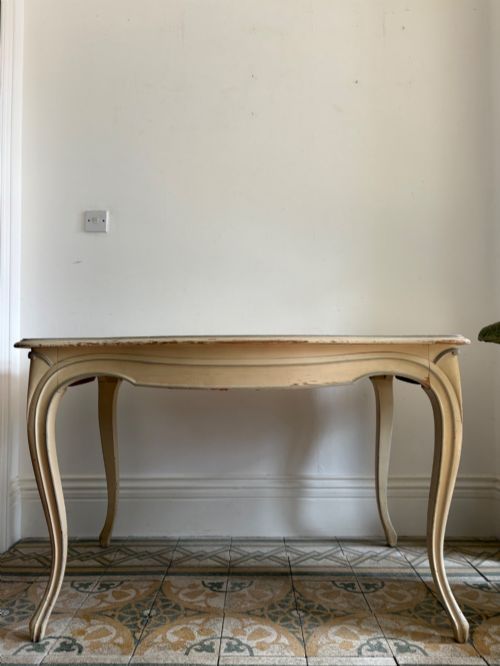
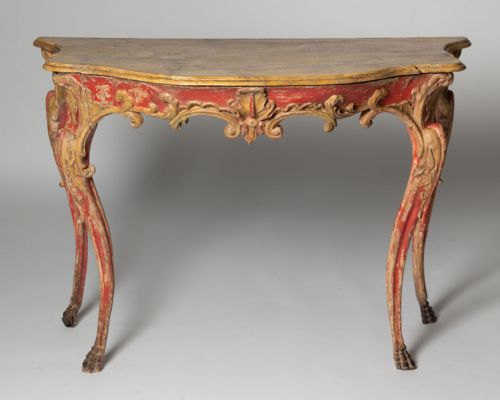
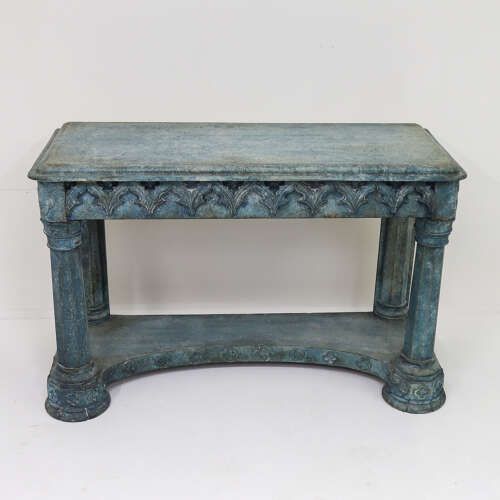
When you search for a distressed painted wall table, you are looking at console tables designed to stand flush against a wall, frequently taking demi-lune, serpentine, or rectangular shapes. The pieces on this page span the eighteenth and nineteenth centuries into the early twentieth century, originating from workshops across France, Italy, Sweden, Spain, England, Ireland, Holland, and China.
The most common forms you will meet here are French and Italian console tables featuring painted wooden structures, often paired with marble tops. Many display regional stylistic influences such as Louis XVI, Gustavian, Rococo, and neoclassical designs.
These tables function primarily as decorative surface furniture for entrance halls and living spaces, offering narrow footprints that suit tight architectural spaces while providing substantial visual weight through carved wood and aged paint finishes.
What separates examples
Quality rests in the depth of the carving and the integrity of the structural timber. Tables featuring detailed gesso work, substantial marble inserts, and well-proportioned cabriole legs stand apart from simpler utility pieces.
The authenticity and depth of the painted surface dictate the visual success of the piece. Original paint layers that show genuine historic wear carry distinct character compared to later surface alterations.
Listings span the eighteenth, nineteenth, and early twentieth centuries, featuring painted wood, marble, and gesso across several European styles.
The Distressed Painted Wall Table Glossary
- Console table
- A table designed to be fixed against a wall, frequently supported by two front legs and relying on the wall for balance. They often feature narrow depths suited to hallways.
- Demi-lune
- A half-moon shape used for table tops and frames. This curved profile allows the furniture to sit snugly against flat walls.
- Serpentine
- A curved line that bends outward at the centre and inward at the sides, or vice versa. This contour adds movement to the front apron of a table.
- Gesso
- A plaster-like mixture applied to wood surfaces as a base for painting or gilding. It provides a smooth ground for decorative details.
- Cabriole leg
- A furniture leg that curves outward and then tapers inward, mirroring animal limb shapes. It appears frequently on eighteenth-century and later console designs.
Distressed Painted Wall Table: Frequently Asked Questions
Where should I place a wall table?
These tables suit narrow entrance halls, corridors, or living room walls where floor space is limited. Because they are designed to stand against vertical surfaces, they fit well behind sofas or beneath mirrors.
Their shallow depths allow them to occupy tight circulation areas without blocking pathways while providing a surface for lamps or decorative objects.
Are marble topped tables heavy?
Marble inserts add considerable weight to the upper section of a console table. This weight helps anchor the piece against the wall.
When positioning the table, account for this upper mass, especially if the design relies partly on wall fixings for stability.
What does a serpentine front mean?
A serpentine front describes a table edge that curves in a wave-like motion, typically swelling outward in the middle and curving inward toward the corners. This shaping requires precise carpentry and joinery.
It introduces dynamic visual movement to formal console designs from the eighteenth and nineteenth centuries.
How do I care for painted wood?
Painted and gessoed surfaces require gentle cleaning with a dry or barely damp cloth to preserve the historic finish. Avoid harsh chemical cleaners that can strip aged paint layers.
Keep the tables away from direct heat sources and extreme humidity fluctuations to protect the underlying timber and gesso from cracking.