
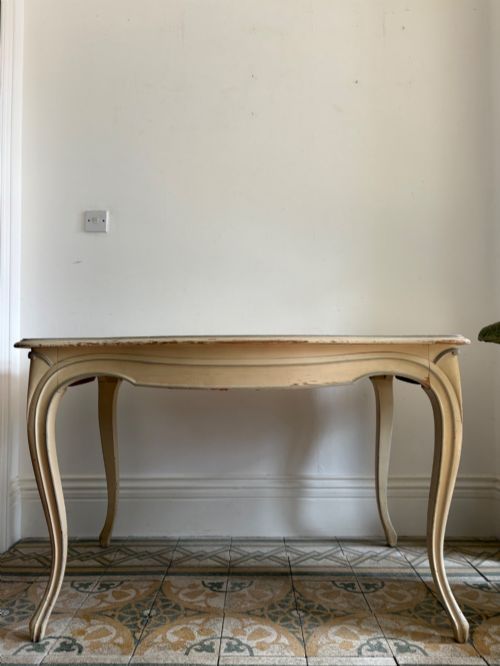
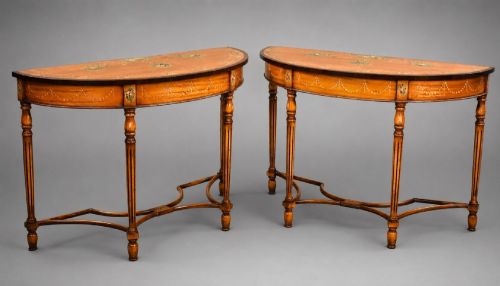
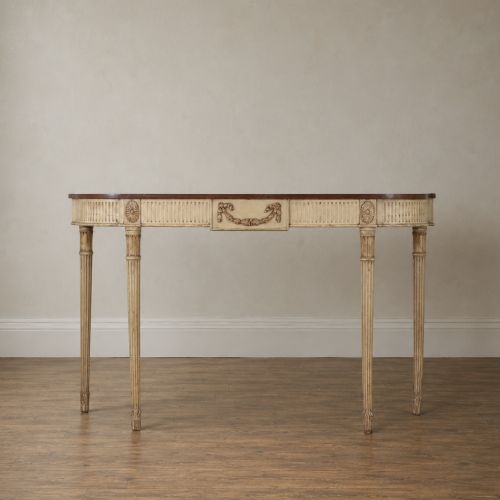
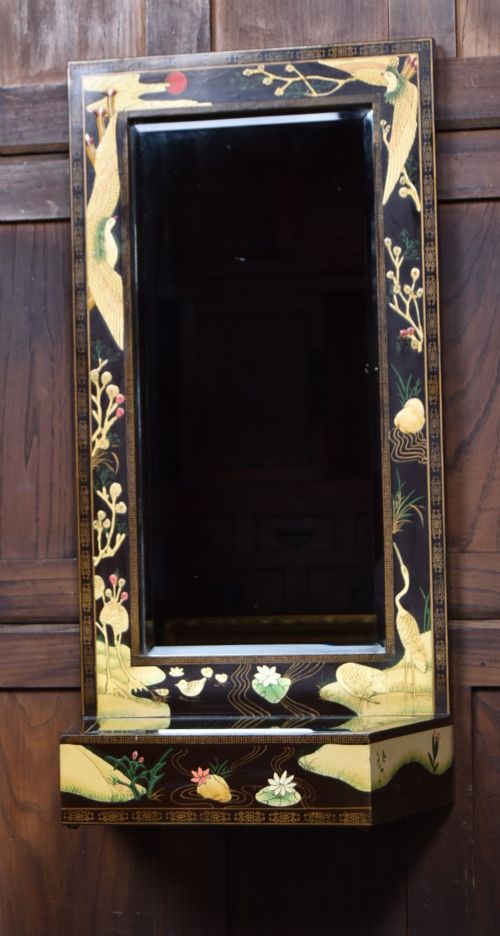
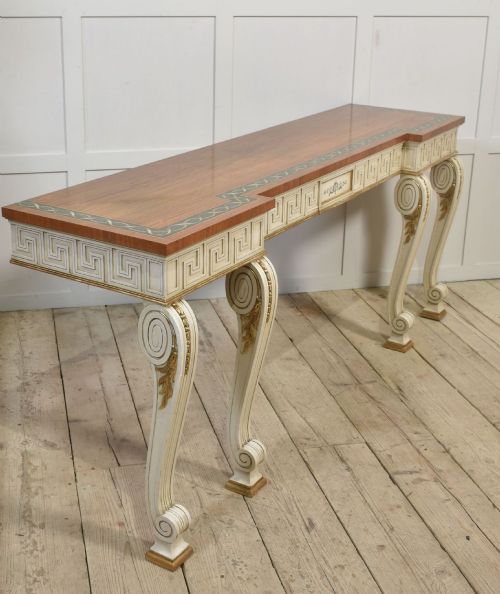
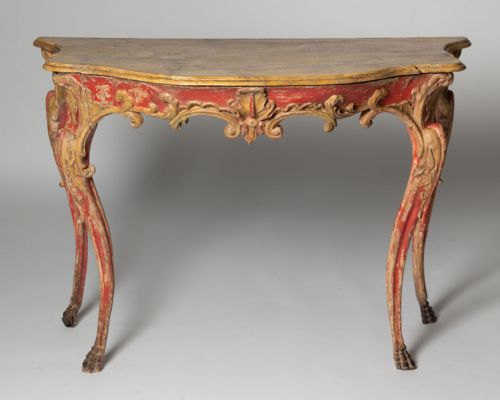
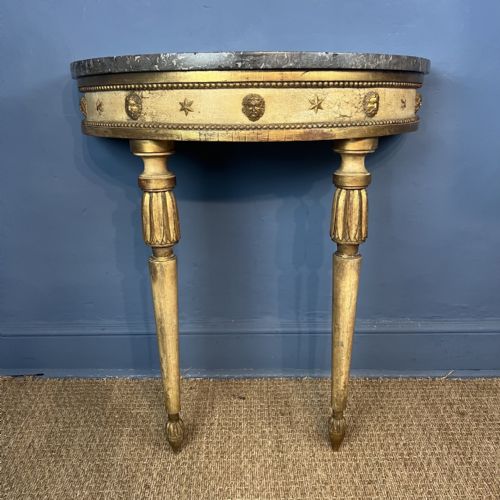
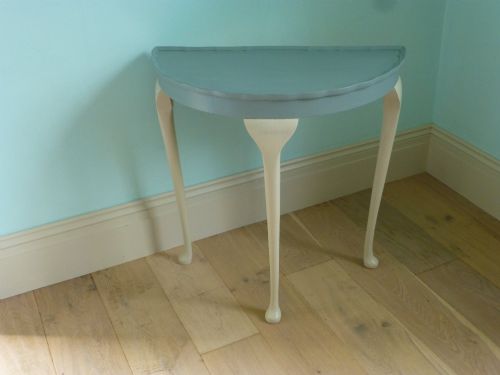


Painted Wall Console
A painted wall console brings architectural presence to a room, offering a surface that mounts directly or stands flush against a wall.
Painted Wall Console
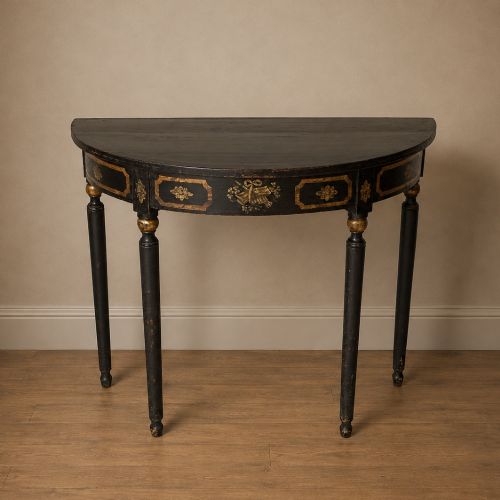
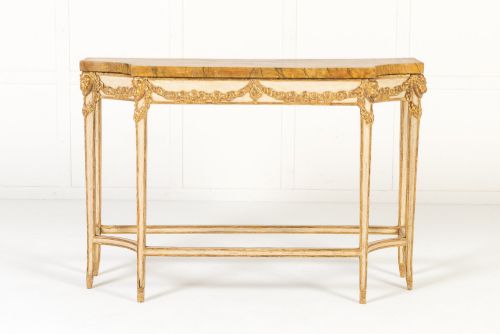
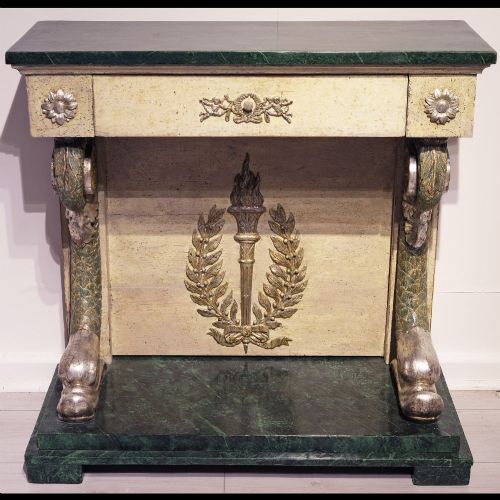
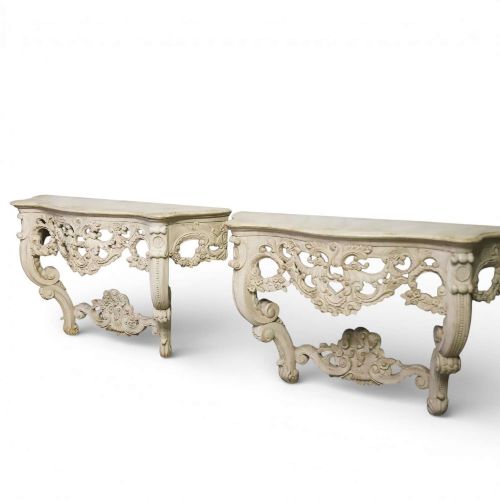
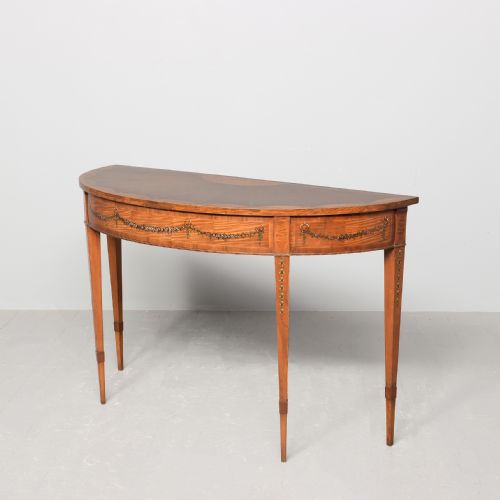
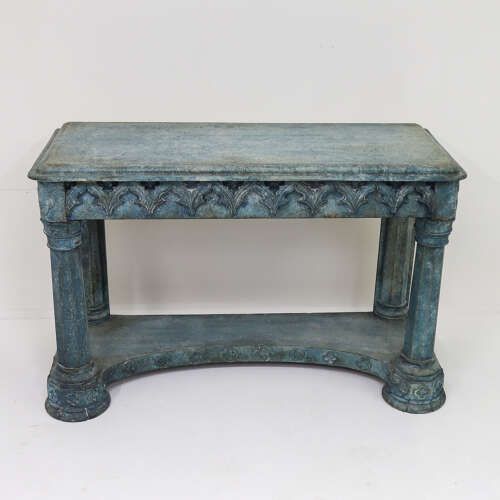
When you search for a painted wall console, you find half-round demi-lune tables, rectangular pier tables, and supporting wall brackets designed to sit flat against interior surfaces. These pieces emerge in styles ranging from Neoclassical and Gustavian to Italian Rococo and French Chateau, spanning the eighteenth, nineteenth, and early twentieth centuries.
The version you are most likely to meet on this page is a demi-lune or rectangular console table featuring a painted wooden base, frequently accented with parcel gilding, and topped with marble, inset suede, or polished wood. They appear singly or in matched pairs, originating from workshops across England, France, Italy, and Sweden.
How they were made
Cabinet makers built these consoles from wood, employing hand-carving techniques on structural elements like cabriole legs and aprons. Applied gesso provided a smooth base for subsequent layers of paint and gold leaf.
Surfaces received paint finishes in antique white, cream, black, and faux porphyry, often paired with parcel gilding to highlight carved details. Tops incorporated fitted marble slabs, specimen marble, or inlaid satinwood and suede.
Swedish folk makers interpreted grand continental court styles with charmingly sturdy proportions and cheerful cream paint.
What varies in quality
The distinction between standard and exceptional pieces rests in the depth of the hand-carving and the handling of the painted surface. Crisp detailing on wooden acanthus leaves or fluted legs indicates superior workshop output.
Original painted finishes that show honest patination hold greater appeal than heavy modern repainting. The quality of the fitted marble top or the precision of parcel gilding further separates standard production from finer examples.
The Painted Wall Console Glossary
- Demi-lune
- Half-moon shape. This term describes console tables with a flat back designed to stand directly against a wall.
- Gesso
- Plaster-based preparation mixture. Applied to wood, it creates a smooth surface for painting and gilding.
- Parcel gilt
- Partially gilded. Gold leaf highlights specific carved details while the main body remains painted.
- Pier console
- A table made for the wall space between windows. These often coordinate with matching pier mirrors.
- Faux porphyry
- Imitation purple-red igneous rock. Painters simulate this stone effect on wooden furniture surfaces.
Painted Wall Console: Frequently Asked Questions
Where should I place a painted wall console?
These tables suit entrance halls, narrow corridors, and reception rooms where floor space is limited. Their shallow depth allows them to sit neatly against walls without obstructing pathways.
Pairing a console with a matching wall mirror or bracket creates a balanced focal point above a fireplace or between windows.
How do I care for marble and painted surfaces?
Dust painted wooden surfaces regularly with a soft, dry cloth to prevent dirt accumulation. Avoid harsh chemical cleaners that can damage historic paint and gesso layers.
Marble tops require prompt wiping of spills, particularly acidic liquids like wine or lemon juice, to prevent staining the stone.
Are these consoles attached to the wall?
Some wall consoles and brackets require direct wall mounting for stability due to their shallow footprints. Freestanding console tables lean flush against the vertical surface for support.
Checking the framework reveals whether a piece needs fixing brackets to ensure safe placement in a room.
What is the difference between Gustavian and Italian styles?
Gustavian pieces from Sweden favour restrained Neoclassical lines with pale cream or grey paint finishes. They emphasise functional elegance and simpler carved motifs.
Italian consoles often display bolder Rococo or Neoclassical curves, incorporating richer gilding, faux stone finishes, and elaborate parcel gilt highlights.