


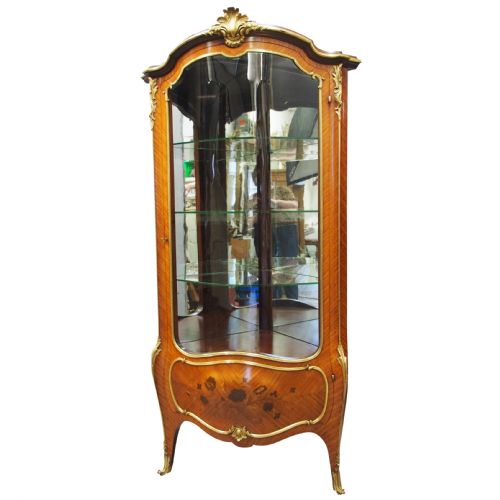


Gilt Wood Display Case
A gilt wood display case brings a polished, golden warmth to small treasures, combining glass panels with carved or gilded frames.
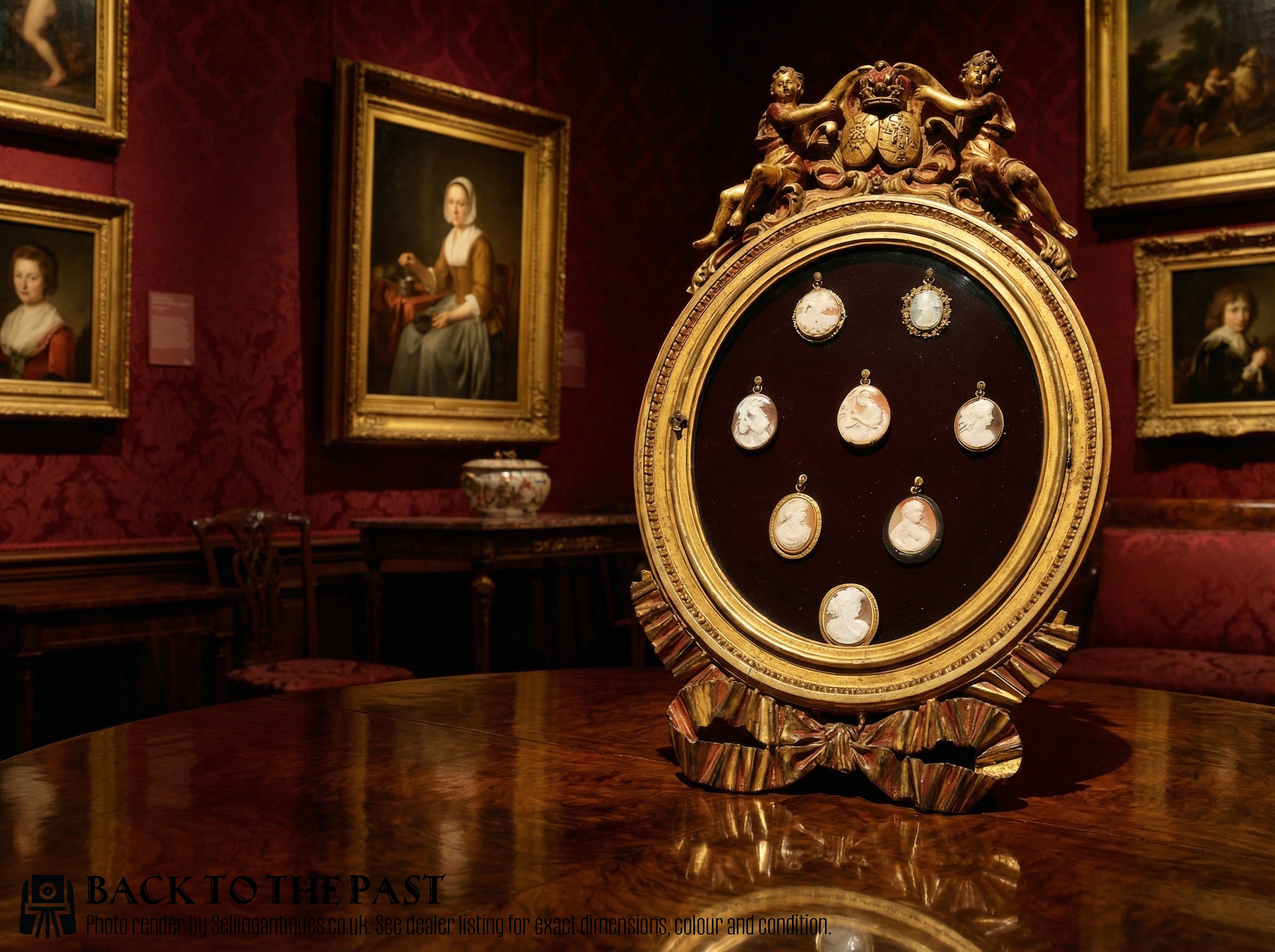
Gilt Wood Display Case
When you search for a gilt wood display case, you encounter an array of vitrines, wall-hanging cabinets, and freestanding pieces designed to showcase objects under glass. The selection spans the nineteenth and twentieth centuries, drawing heavily on French Rococo Revival, Louis XVI style, and Edwardian tastes.
The most common formats on this page include tabletop or wall-mounted frames, alongside larger floor-standing vitrines and corner cabinets. These pieces often incorporate glazed sides and doors to maximise visibility from multiple angles.
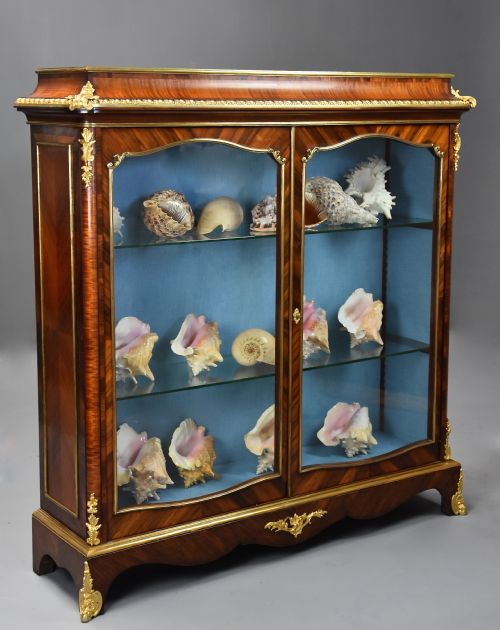
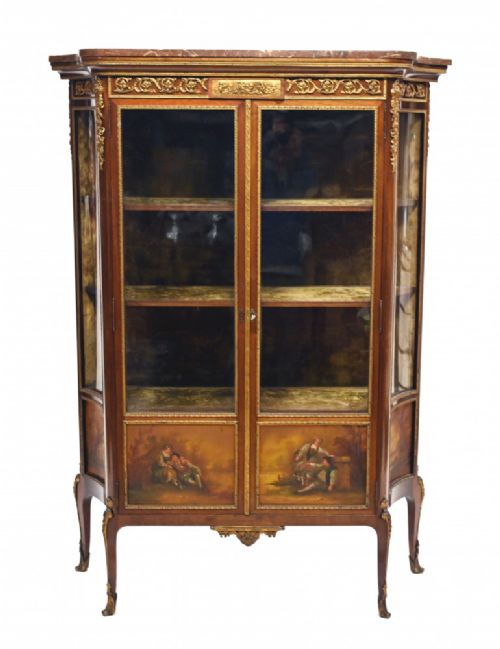
Materials range from solid giltwood and gold leaf to kingwood and mahogany carcasses enhanced with ormolu mounts and painted panels. Each object balances structural timberwork with transparent display space.
How they were made
Cabinetmakers constructed the foundational carcasses from hardwoods such as mahogany and kingwood, frequently applying veneers in geometric or marquetry patterns. Carved wooden elements received applications of gold leaf or gilt finishes to achieve a brilliant metallic sheen.
Metal mounts in ormolu or gilt bronze were cast and chased to embellish corners, feet, and friezes. Glass panes were fitted into rebated frames, sometimes accompanied by silk-lined interiors or mirrored backs to reflect light through the displayed items.
Materials appearing across the inventory include ormolu, kingwood, mahogany, and gold leaf applied to carved wood structures.
What varies in quality
The caliber of a piece rests upon the crispness of the wood carving and the precision of the gilding. Hand-chiseled ormolu mounts with deep relief distinguish finer examples from simpler stamped metal fittings.
Joinery execution dictates longevity, visible in the tightness of mitred corners and the smoothness of door alignment. Secondary woods and the quality of the glass panes further separate standard production from exceptional craftsmanship.
William Bazeley & Sons
The Gilt Wood Display Case Glossary
- Ormolu
- Gilded bronze mounts applied to furniture and cabinetwork. This decorative technique became prominent in French furniture design.
- Vitrine
- A glass-fronted cabinet used for displaying fine objects or porcelain. These cases protect contents from dust while offering full visibility.
- Kingwood
- A dense, richly figured exotic timber utilised for high-end cabinet veneers. It provides a dark, contrasting background for gilt mounts.
- Marquetry
- Inlaid wood pieces arranged to form decorative patterns on furniture surfaces. Craftsmen use various contrasting veneers to create pictorial or geometric designs.
- Giltwood
- Timber treated with gold leaf or metallic paint to imitate solid gold. This finish catches candlelight and natural illumination in a room.
Gilt Wood Display Case: Frequently Asked Questions
What fits inside a wall hanging case?
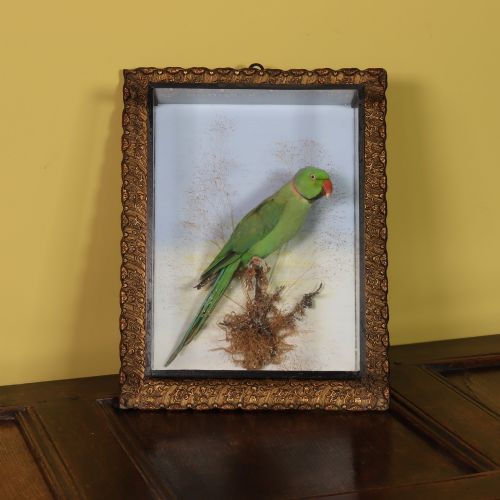
Wall-hanging cabinets suit shallow items such as fans, medals, taxidermy specimens, and small decorative objects.
The enclosed glass protects delicate materials from airborne dust while keeping them visible on the wall.
How do I clean a gilt wood frame?
Dust gilt surfaces gently with a soft dry brush to avoid disturbing the fragile gold leaf.
Moisture and harsh cleaning agents can strip the metallic finish from the carved timber beneath.
Are these cabinets secure for valuable items?
Most antique display cases feature simple latches or turn-buttons rather than robust security locks.
They function primarily to display collections safely within a room rather than provide vault-level protection.
How do I distinguish Louis XV Revival style?
Louis XV Revival pieces display asymmetrical curves, flowing naturalistic motifs, and bombe contours.
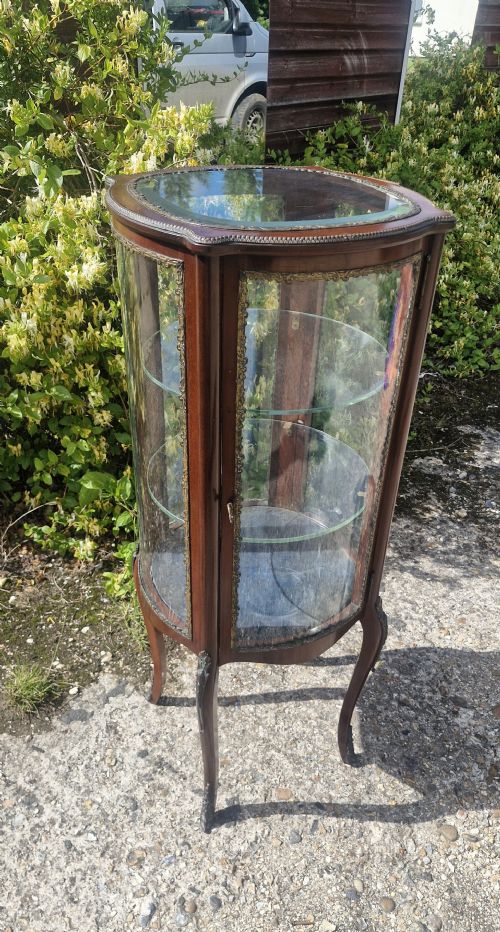
Cabinetmakers working in this style favored elaborate ormolu mounts and serpentine glass doors.
Can I place these cabinets on the floor?
Freestanding vitrines, corner cabinets, and side cabinets stand directly on the floor with dedicated legs or plinths.
Smaller vitreen boxes and picture frame cases require placement on tables, desks, or walls.