



Wall Hanging Vitrine
A wall hanging vitrine brings small treasures to eye level, framing precious porcelain and curios against panelled walls.
Wall Hanging Vitrine
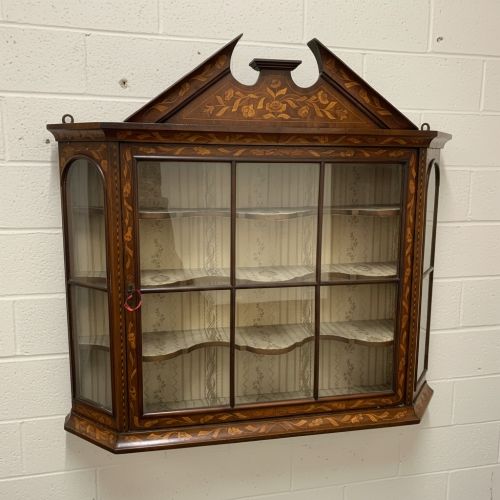
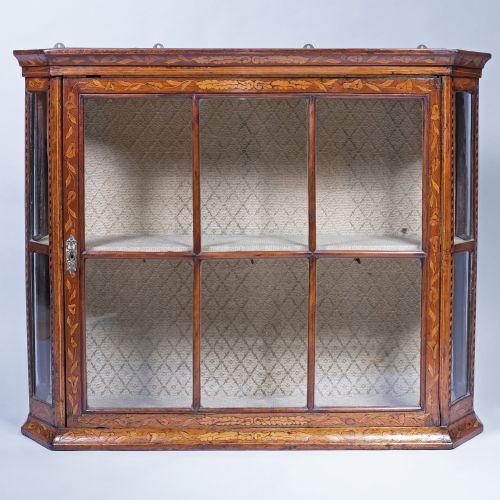
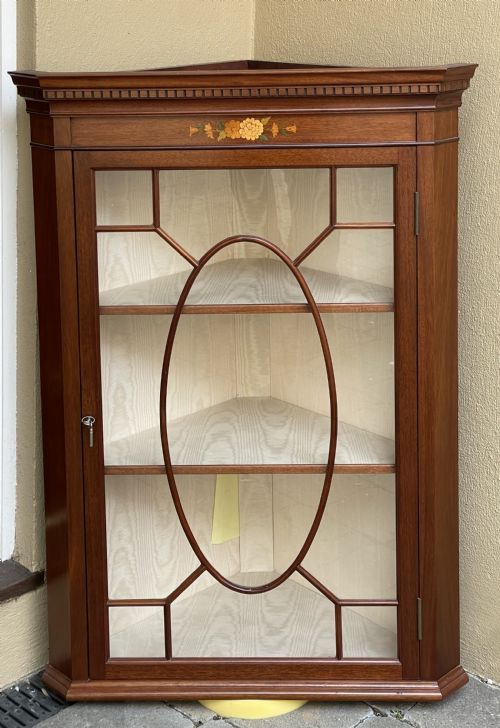
A wall hanging vitrine serves as a compact display case designed to mount securely onto a room's wall rather than resting upon the floor. These pieces emerge in periods ranging from the 18th century through to the 20th century, encompassing Georgian, Victorian, and Edwardian interpretations.
How wall hanging vitrine examples were made
Cabinet makers constructed these glazed display cases primarily from timbers such as mahogany, walnut, and satinwood, frequently embellishing the surfaces with marquetry inlay. Glass panels protect the contents while brass fittings secure the doors and hanging mechanisms.
One jubilant 1880 example proudly describes itself as a painted wall hanging vitreen, adding a cheerful phonetic twist to traditional spelling.
What varies in quality
The standard of a wall hanging vitrine rests upon the precision of its timber selection and the complexity of its inlay work. Finer examples display meticulous marquetry and careful grain matching across the front doors and curved panels.
Construction methods dictate durability, distinguishing between simple utilitarian boxes and sophisticated glazed cabinets featuring detailed mouldings and hand-carved ornamentation. The integration of original glass and sturdy internal shelving further elevates the merit of an individual piece.
The Wall Hanging Vitrine Glossary
- Vitrine
- A glass-fronted cabinet designed specifically for displaying fine objects or curiosities. These pieces place the contents on view from multiple angles.
- Marquetry
- The art of applying decorative pieces of veneer to a structure to form intricate patterns or pictures. This technique often employs contrasting timbers.
- Bow front
- A convex curved front section on a cabinet that softens the rectangular geometry of a room. This shape requires advanced woodworking skill to construct accurately.
- Barley twist
- A spiral turning technique resembling a twisted rope, used to decorate wooden supports and columns. It appears frequently on furniture from the seventeenth century onwards.
- Gilding
- The application of a very thin layer of gold leaf or powder to a surface. This process adds a lustrous metallic finish to carved wooden details.
Wall Hanging Vitrine: Frequently Asked Questions
Where should a wall hanging vitrine be placed?
These cabinets mount best on sturdy walls in reception rooms, hallways, or studies where visitors can easily inspect the contents at eye level.
Corner versions fit neatly into unused angles of a room, making efficient use of compact spaces while drawing the eye upward.
How were these cabinets originally used?
Households utilised these hanging cases to exhibit prized porcelain, miniatures, and delicate curiosities away from everyday traffic and dust.
The glazed doors kept valuable collections secure while allowing natural light to illuminate the interior display.
How do I distinguish between Georgian and Edwardian pieces?
Georgian examples often display restrained mahogany construction with clean classical lines and simple glazing bars reflecting 18th-century proportions.
Edwardian interpretations frequently revive earlier styles with lighter satinwood, delicate inlaid motifs, and more elaborate decorative elements.
Can these antique cabinets hold heavy items?
These display cases suit lightweight porcelain, glass, and small collectibles rather than heavy books or dense metal objects.
The internal shelves and wall fixings are engineered for delicate ornamental contents rather than substantial weight.