
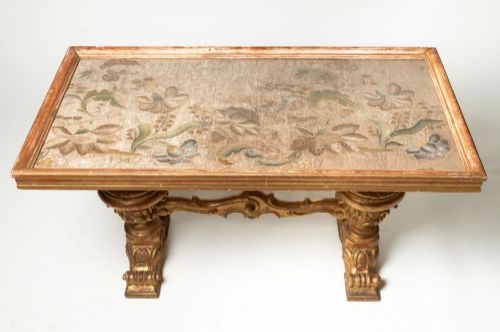
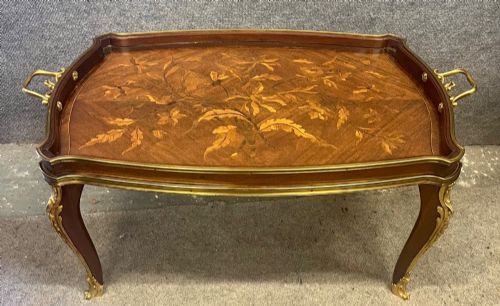
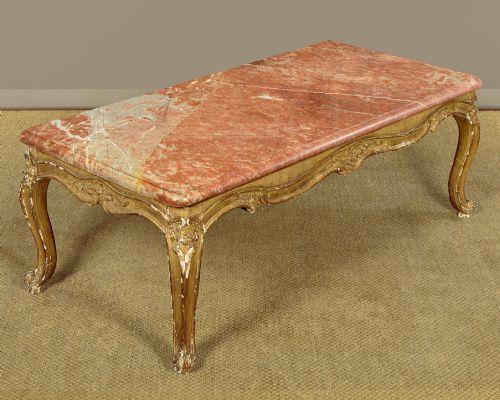
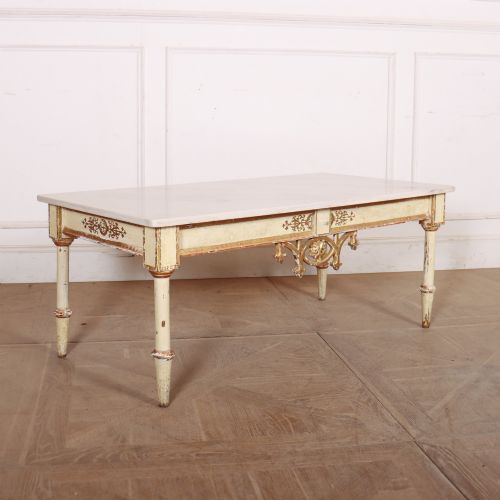
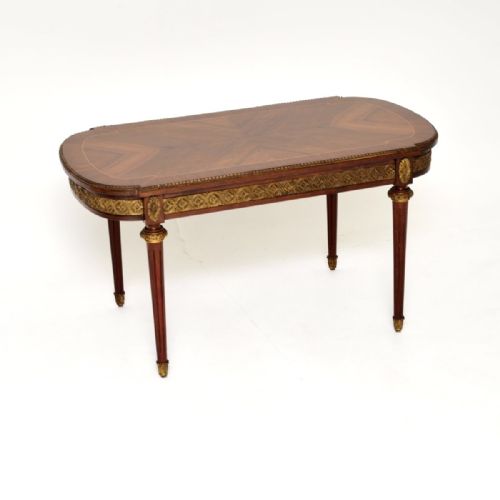
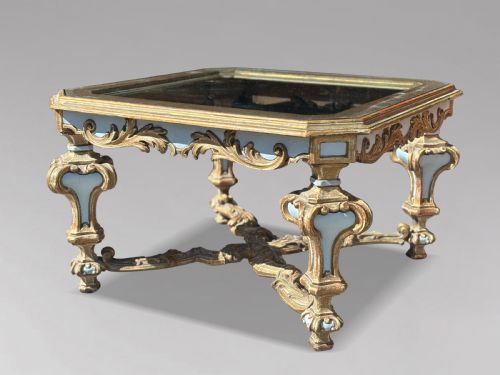


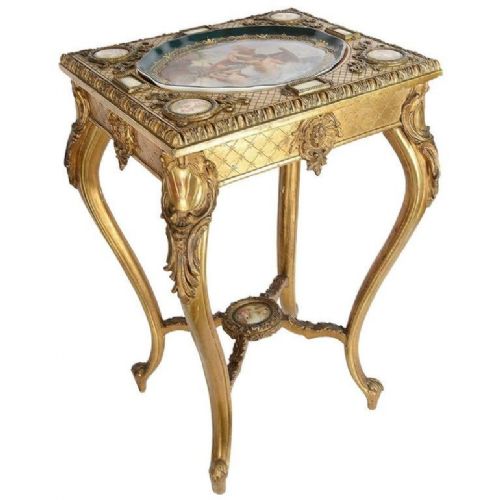

Gilt Wood Coffee Table
A gilt wood coffee table brings warmth and golden reflection into a room, offering a functional surface rooted in centuries of European design.
Gilt Wood Coffee Table
A gilt wood coffee table sits low in a room, combining a carved wooden frame with a gilded surface that catches the light. These pieces draw on historical European design traditions, adapting earlier forms for modern living spaces.
The selections available here range from nineteenth-century examples to pieces from the early decades of the twentieth century. Forms extend beyond standard coffee tables to include tray tops, nests of tables, and side tables.
French and Italian influences dominate the selection, manifesting in revival styles such as Rococo and Louis XVI. Buyers frequently encounter surfaces paired with marble or wood rather than plain timber alone.
Materials and construction methods
The construction of a gilt wood coffee table relies on carved wooden frames finished with gold leaf, paint, or gilding. Hardwoods like walnut provide the structural base for many tables, ensuring stability beneath decorative surfaces.
Marble inserts feature prominently on top surfaces, offering a smooth, cool contrast to the ornate wooden frames below. Ormolu, brass, and parquetry details frequently complement the primary materials, adding texture and metallic contrast.
Object forms range from traditional coffee tables to nests of tables and low occasional pieces.
Assessing quality in execution
Quality in a gilt wood coffee table rests upon the crispness of the carving and the application of the gilding. Superior examples display depth and precision in the decorative motifs rather than flat or uniform surfaces.
The choice of inset material, such as heavy marble or detailed parquetry, dictates the substance of the piece. Finer tables integrate secondary metals like ormolu cleanly into the wooden structure, reflecting careful craftsmanship.
E.Daligny
The Gilt Wood Coffee Table Glossary
- Giltwood
- Timber treated with gold leaf or a gold-coloured finish. This material defines the bright, reflective surfaces characteristic of these tables.
- Ormolu
- Gilded bronze used for decorative mounts and accents. It appears frequently on French tables of the nineteenth and twentieth centuries.
- Parquetry
- Geometric patterns formed from inlaid wood veneers. This technique creates patterned tabletops on select walnut pieces.
- Rococo Revival
- A nineteenth-century style drawing on eighteenth-century asymmetric curves and natural motifs. It heavily influences the carved frames seen in this category.
- Tray top
- A tabletop designed with a raised lip or edge, often removable. These tables frequently appear in painted or gilded finishes.
Gilt Wood Coffee Table: Frequently Asked Questions
What periods do these tables come from?
The pieces span from the late nineteenth century through the early decades of the twentieth century. They include Victorian and Edwardian examples alongside interwar creations.
Design influences stretch back further into historical European periods, reflecting revival movements popular across France and Italy.
How do I maintain a marble top?
Marble surfaces require gentle cleaning with mild soap and water to preserve the stone. Avoid acidic cleaners that can etch the polished finish.
Using coasters helps prevent liquid rings from forming on vulnerable marble or wood surfaces over time.
Are these tables purely decorative?
While visually striking, these tables function as practical furniture for living spaces and sitting rooms. They hold books, drinks, and decorative objects safely on solid frames.
Nesting variants offer flexible surface space that can expand or contract depending on daily needs.
How do French and Italian styles differ?
French designs often lean towards refined curves, ormolu mounts, and classical motifs inspired by royal courts. Italian pieces frequently display bolder baroque carving and painted finishes.
Both regional traditions utilise gilding to create a sense of light and opulence within domestic interiors.