
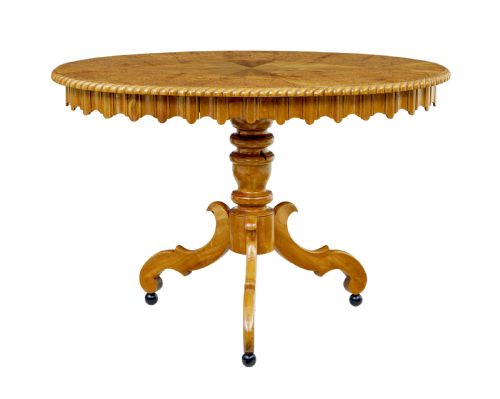
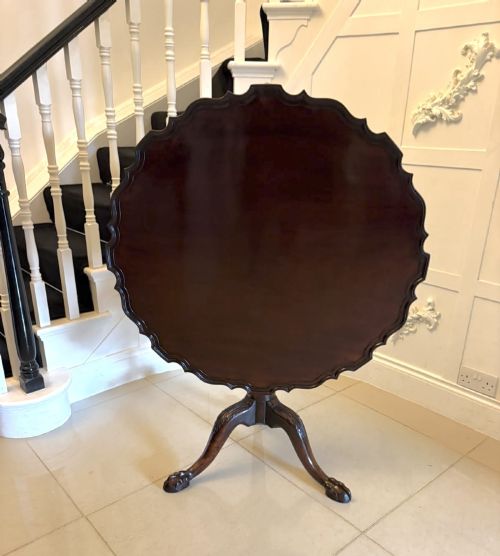
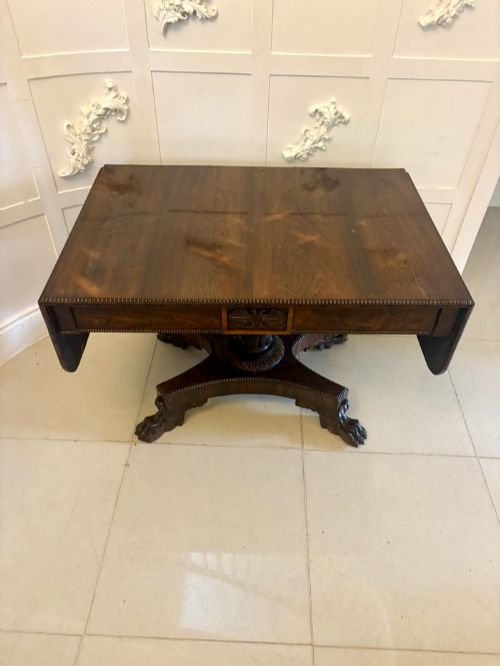
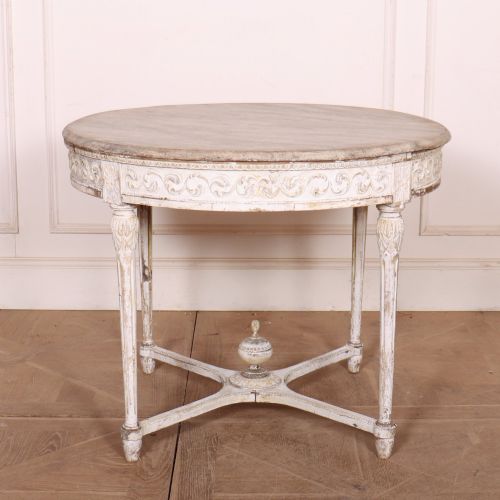


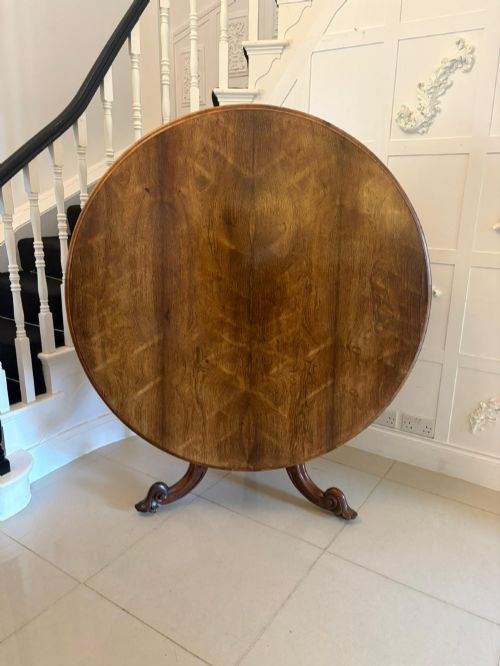
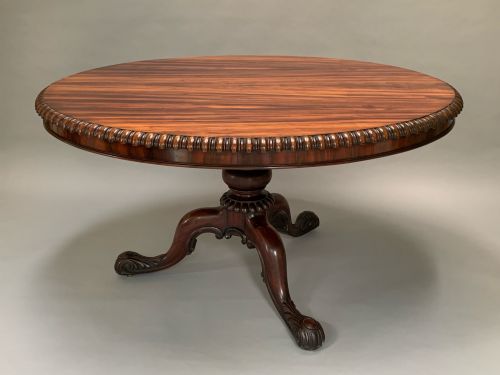
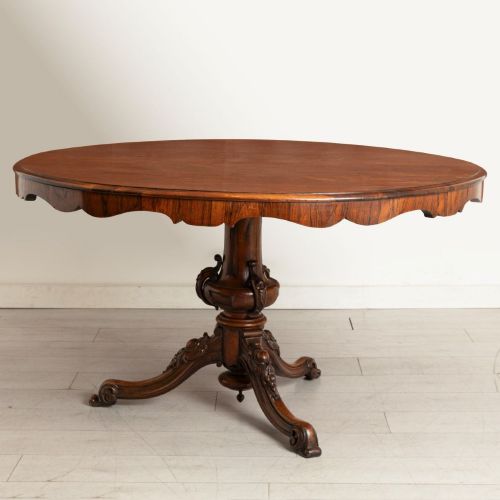
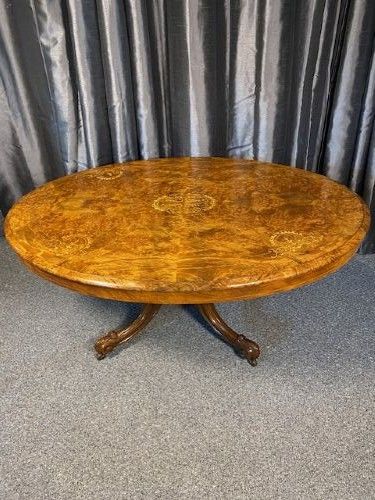
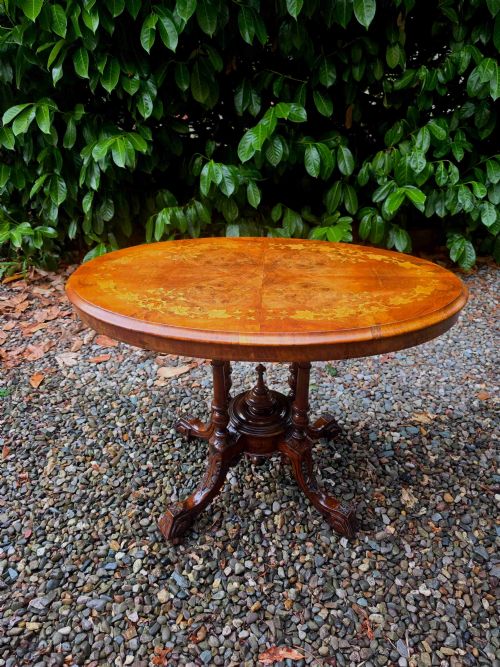
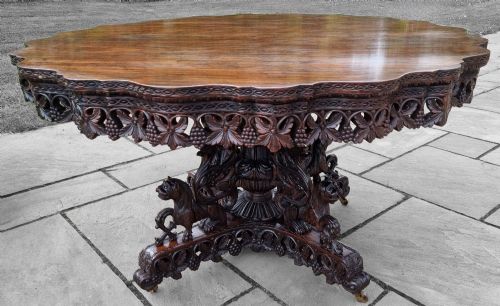
Carved Wood Center Table
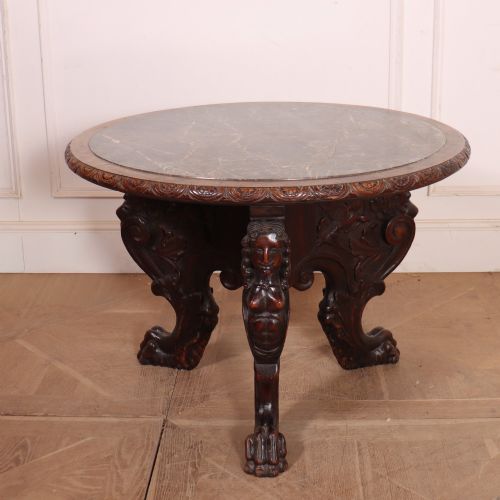
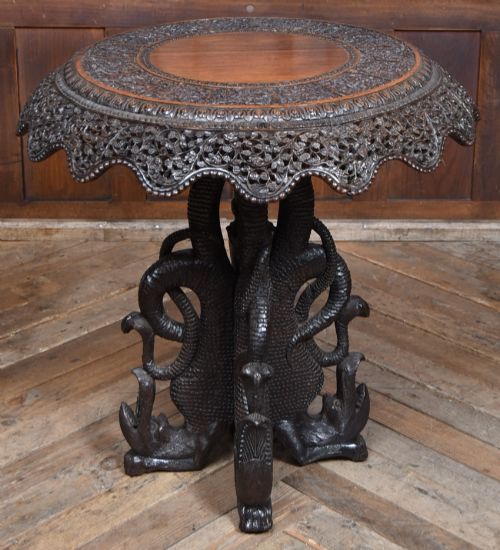
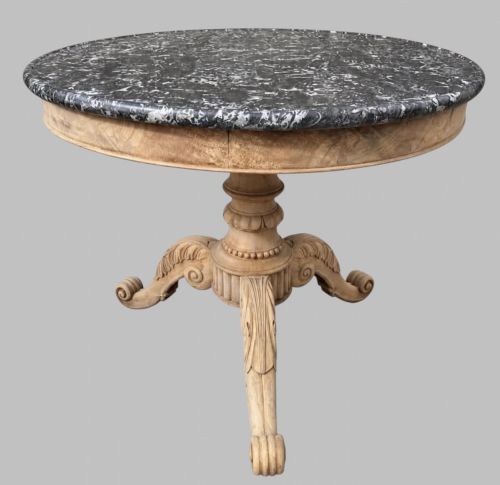
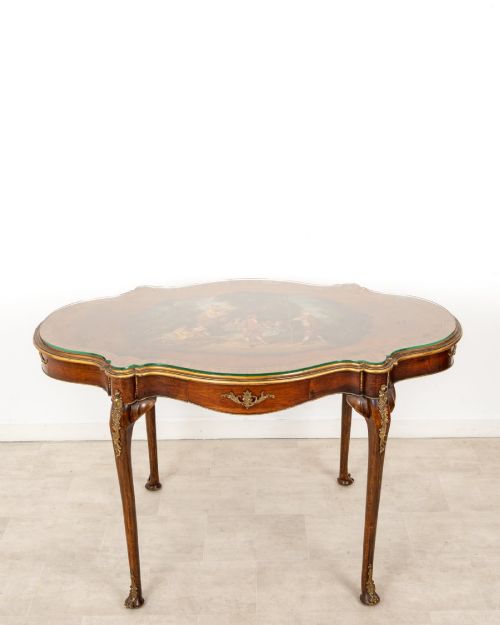
A carved wood centre table anchors a room with presence, offering a functional surface shaped by nineteenth-century craftsmanship.
Materials and Construction
Cabinetmakers utilised dense hardwoods such as rosewood, walnut, and mahogany, allowing for deep relief carving and structural stability. Burr walnut veneers provided figured surfaces on table tops, while secondary timbers formed the internal framing.
Specialist techniques involved hand-carving solid timber bases, integrating tilt-top mechanisms, and setting marble or onyx inserts directly into wooden frames. Brass accents and inlaid details completed the construction of finer pieces.
Distinguishing Quality
Quality rests in the crispness of the hand-carving and the selection of timber veneers. Superior examples display deep, undercut relief work on solid timber bases rather than shallow machine milling.
The integration of secondary materials, such as matched burr walnut grain patterns or heavy inset marble and onyx tops, separates standard production from exceptional cabinetmaking.
Period origins span the Georgian, Regency, William IV, Victorian, Edwardian, and early twentieth-century eras.
Gillows·Mein of Kelso·Amleto Bertoni
The Carved Wood Center Table Glossary
- Gueridon
- A small French table, often circular, designed to hold a light or decorative object. These tables frequently feature decorative wood veneers or gilt bronze mounts.
- Tilt-top
- A tabletop hinged to a central pillar, allowing the surface to fold vertically when not in use. This mechanism appeared frequently on nineteenth-century breakfast and dining tables to save space.
- Triform base
- A three-sided pedestal support beneath a central column. It provided stability for heavy circular tabletops during the Regency and Victorian eras.
- Book-matching
- A veneer technique where adjacent slices of wood are mirrored to create symmetrical patterns. Cabinetmakers utilised this method on burr walnut table tops.
- Padauk
- A dense tropical hardwood with reddish tones, favoured in Anglo-Indian and colonial furniture making. It accepted intricate carving without splitting.
Carved Wood Center Table: Frequently Asked Questions
How do I use a centre table?
A centre table stands independently in the middle of a room rather than against a wall. It provides a display surface for lamps, books, or decorative objects.
In larger spaces, these tables anchor seating arrangements or serve as breakfast and library tables depending on their height and top construction.
How do I identify a Victorian table?
Victorian tables typically feature dark hardwoods like rosewood or burr walnut, accompanied by heavy carved pedestal bases. Look for circular or oval tops, often with tilt mechanisms or inlaid chess boards.
Construction details include solid timber framing combined with rich veneer work characteristic of nineteenth-century British and European production.
What is the difference between a centre table and a coffee table?
Traditional centre tables stand at standard table height, designed for general display and occasional dining or reading. Many period pieces were originally breakfast or library tables.
Modern usage often redefines nineteenth-century examples as coffee tables, though authentic period coffee tables generally reflect later nineteenth and twentieth-century height adjustments.
How do I care for antique wood surfaces?
Protect wood surfaces from direct sunlight and extreme humidity fluctuations to prevent veneer cracking and timber shrinkage. Dust regularly with a soft, dry cloth.
Apply a quality microcrystalline wax periodically to nourish the polish, avoiding silicone-based sprays that damage historic finishes.