


Gilt Tall Light Standard
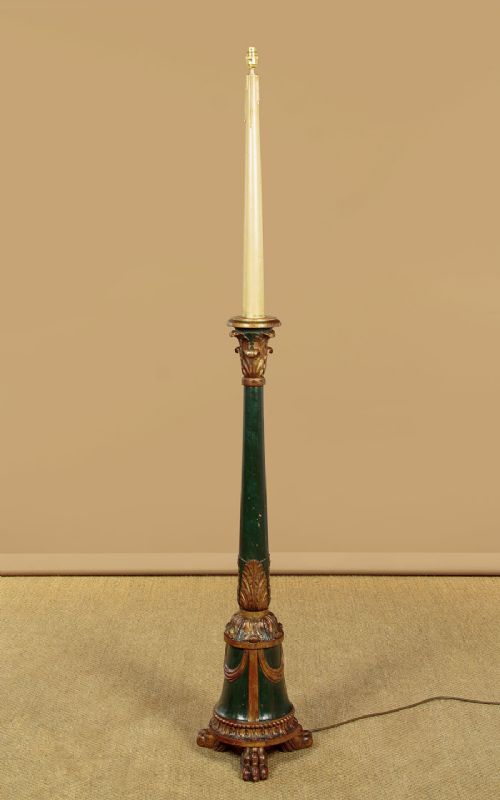
These gilt tall light standard pieces bring height and warm illumination to a room, drawing the eye upwards with their gilded surfaces.
Gilt Tall Light Standard
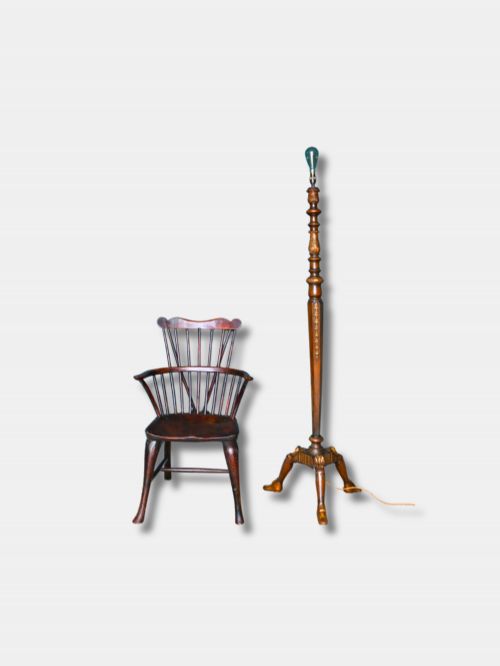
When you search for a gilt tall light standard, you encounter tall vertical lighting fixtures designed to stand directly on the floor. These pieces frequently appear as standard lamps, floor lamps, and floor candlesticks.
The selection ranges from Victorian and Edwardian examples to items from the 1850s, 1890s, 1910s, 1920s, and 1930s. Styles span Chinoiserie, Italian Florentine, Italian Baroque, and Neoclassical Revival.
How they were made
Maker workshops utilised solid timber, gesso, and cast metals to build the upright shafts and weighted bases of these tall lamps. Carved wood and giltwood received layers of applied gold leaf or metallic paint to achieve a brilliant surface reflection.
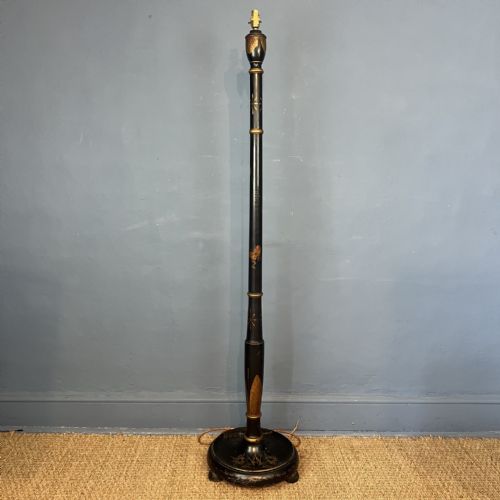
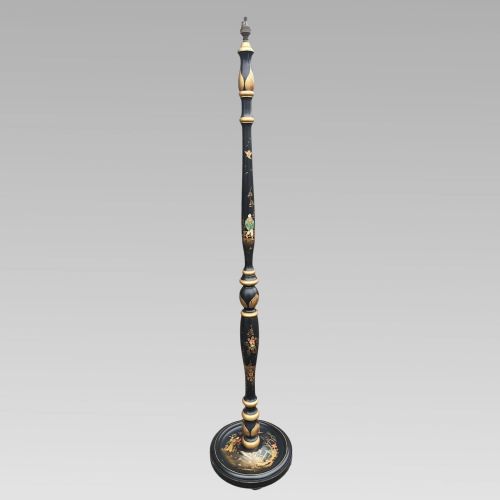
Chinoiserie and lacquered variants required intricate hand-painting and varnishing over dark grounds to build up oriental motifs. Structural modifications on conversions integrated wiring through hollowed timber shafts and metal pole screen conversions.
Materials recorded on this page include giltwood, gesso, carved wood, walnut, brass, lacquer, and fabric.
What varies in quality
Depth and crispness of hand-carved detail on the wooden and gesso ornament separate finely sculpted Italian and English standards from simpler turnings. The application and retention of the original gilt finish dictate the visual richness of the surface.
Stability and proportion in the base construction, whether tripod or heavy circular plinth, determine the structural integrity of a tall vertical floor standard.
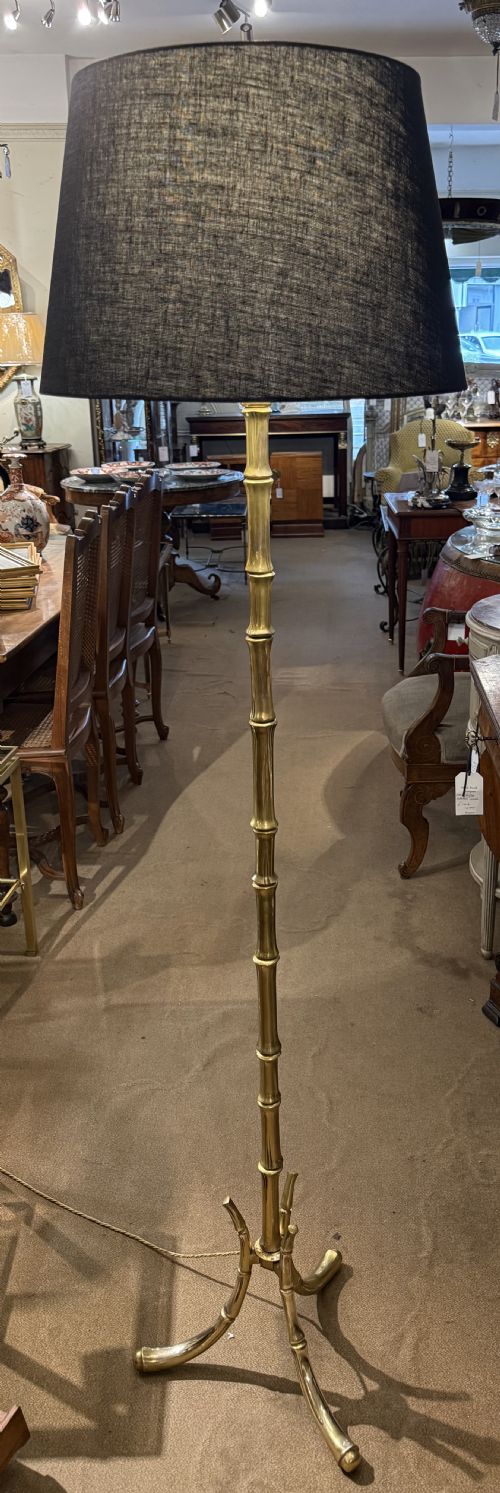
Maison Bagues
The Gilt Tall Light Standard Glossary
- Giltwood
- Wood that has been treated with gesso and covered with thin gold leaf or metal leaf. This surface treatment provides the bright metallic finish seen across many standard lamps.
- Gesso
- A plaster mixture spread over wood as a base for carving and gilding. It allows craftsmen to model sharp decorative reliefs before applying gold leaf.
- Chinoiserie
- European artistic style reflecting Chinese motifs and decorative techniques. It appears on lacquered standard lamps featuring painted oriental scenes.
- Pole screen
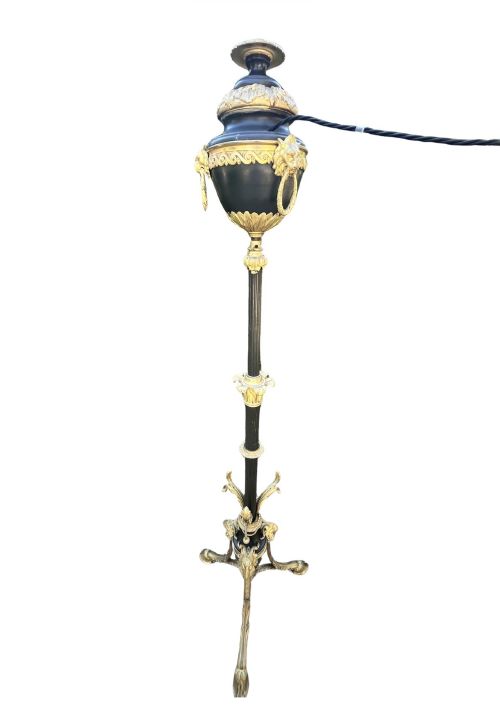
- A screen mounted on a vertical pole designed to shield a person's face from a fireplace. Some nineteenth-century examples underwent conversion into lamps.
- Neoclassical Revival
- A style reviving classical architectural forms and ornamentation. Pieces in this manner display restrained symmetry, fluted columns, and classical motifs.
Gilt Tall Light Standard: Frequently Asked Questions
How do I distinguish an Edwardian standard lamp from a Victorian one?
Victorian examples often display heavier proportions, deeper carving, and darker patination reflecting mid-nineteenth-century taste. Edwardian pieces tend toward lighter, more refined interpretations including chinoiserie lacquer and neoclassical revival motifs.
Examine the construction methods of the joints and the composition of the base to understand the manufacturing period.
What materials make up these tall lamps?
Construction relies primarily on wood, giltwood, gesso, and brass, occasionally paired with marbleised elements or fabric shades. Surface treatments include applied gold leaf, dark lacquer, and painted finishes.
Each material responds to its respective period aesthetic, ranging from Italian baroque giltwood to mid-century painted standards.
Can these antique standard lamps support modern wiring?
Many examples arrive with updated electrical fittings or have undergone professional rewiring to meet contemporary safety standards. Converted pole screens and older standards are typically adapted to accept standard bulb holders while retaining their historic upright shafts.
Consult a qualified electrician to inspect vintage or converted pieces before regular domestic use.