


Carved Gilt Standard Lamp
A carved gilt standard lamp brings vertical presence and warm illumination to a room, drawing the eye with gilded surface detail and carved form.
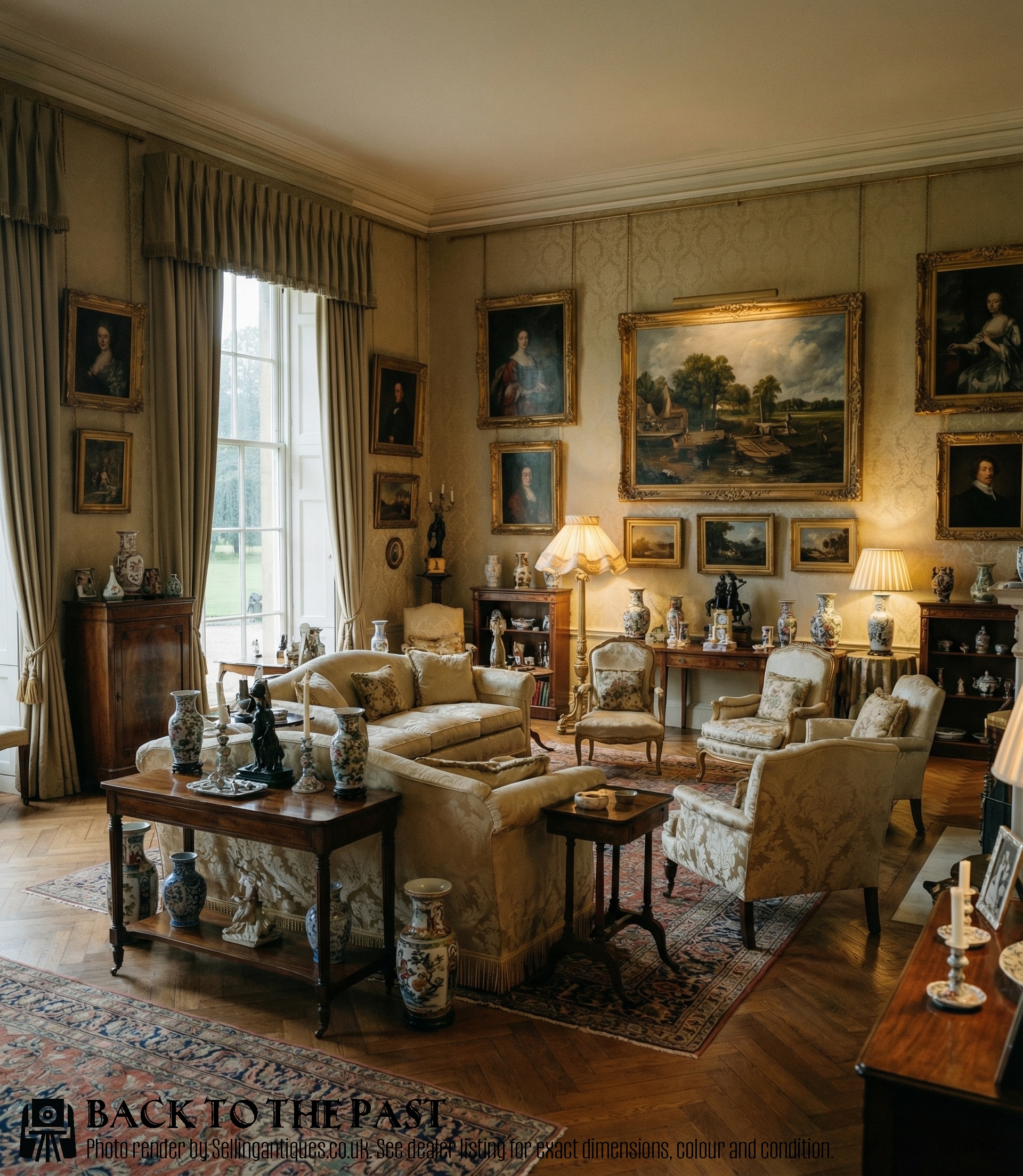
Carved Gilt Standard Lamp
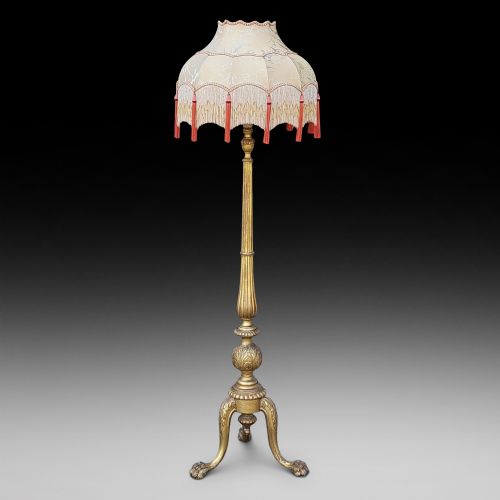
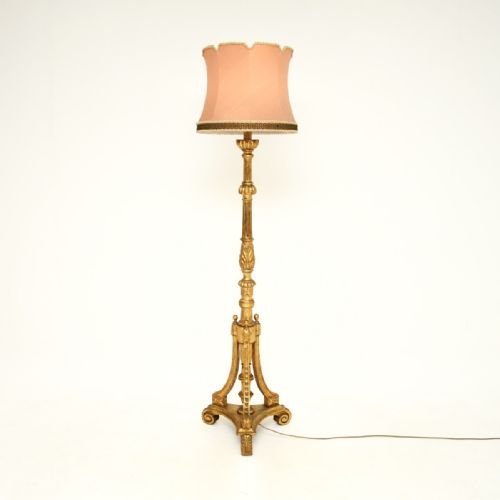
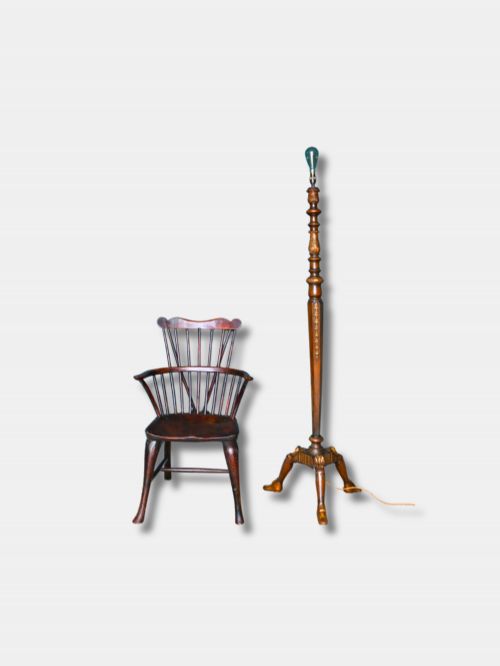
A carved gilt standard lamp provides tall floor-standing illumination, taking the form of a vertical timber post or column raised on a sturdy base. The examples found here span from the nineteenth century through the Edwardian era and into the nineteen-thirties, reflecting diverse revivals and regional workshops.
Italian, French, and English influences shape the selection, with Venetian and Florentine baroque interpretations appearing alongside neoclassical designs. Pieces range from slender fluted columns to baluster shapes and figural standards, often paired with fabric shades.
How they were made
Craftsmen built these pieces from wood, applying layers of gesso to smooth the surface before carving intricate decorative motifs. Gold leaf or liquid gilt was then laid over the preparation to create the characteristic metallic sheen.
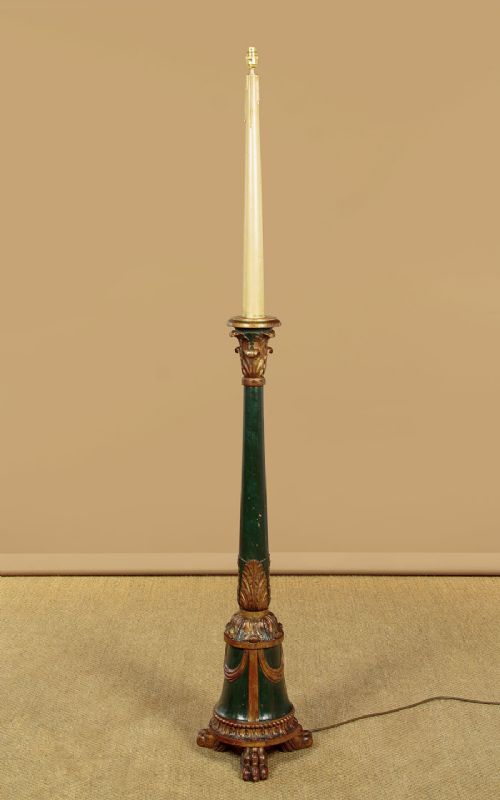
Selected pieces incorporate painted or polychrome details alongside the gilding, while internal brass components and wiring accommodate electrical fittings.
Materials across these listings include solid wood, gesso, fabric, and brass, finished with gold leaf or paint.
What varies in quality
Depth and crispness of the hand carving distinguish superior examples from simpler production, particularly where acanthus leaves, fluting, or figural elements are rendered with anatomical and botanical precision. The handling of the gesso ground beneath the gilding determines how sharply light catches the edges of the ornament.
The integrity of the timber base and the weight distribution affect stability across different heights. Survivals retain more of their original leaf and patination, showing natural wear over decades rather than heavy restoration.
The Carved Gilt Standard Lamp Glossary
- Giltwood
- Timber that has been coated with gold leaf or metallic powder over a prepared gesso base. This finish provides the bright reflective surface seen across these standards.
- Gesso
- A mixture of plaster, chalk, and glue binder applied to wood before gilding. It creates a smooth white surface that can be carved and stamped with fine detail.
- Baluster
- A moulded shaft with a swelling central profile resembling a classical stair baluster. This sturdy form appears frequently in Italian baroque floor lamps.
- Neoclassical
- A style drawing on classical Greek and Roman motifs such as urns, husks, and fluted columns. It gained popularity during revival periods in the nineteenth and early twentieth centuries.
- Polychrome
- Decoration employing multiple colours, often found on Venetian figures and painted lamp standards. It adds pictorial depth beneath or alongside the gilding.
Carved Gilt Standard Lamp: Frequently Asked Questions
How do I choose the right shade?
Select a fabric shade that complements the height and proportions of the carved timber base. Traditional pairings include pleated silk or cord-trimmed designs that diffuse light softly downward.
Consider the colour palette of the room alongside any painted or gilded details on the standard when picking fabric tones.
How do I identify Italian styles?
Italian pieces often display baroque or Florentine influences, featuring rich carved foliage, baluster turnings, and figural elements. Venetian examples may incorporate polychrome paint alongside parcel gilding.
English and French equivalents tend to favour neoclassical restraint, utilising slender fluted columns and symmetrical Adam or Louis XVI motifs.
Are these lamps recently wired?
Antiques frequently arrive with updated electrical components suitable for modern domestic use while retaining their historic aesthetic. It remains prudent to have a qualified professional inspect any vintage wiring before regular operation.
Check the lampholder type and switch placement to ensure compatibility with your preferred bulbs.