


Gilt Putti Table Lighting
Gilt putti table lighting brings classical winged figures and golden warmth to a room through converted candelabra and figural lamps.
Gilt Putti Table Lighting
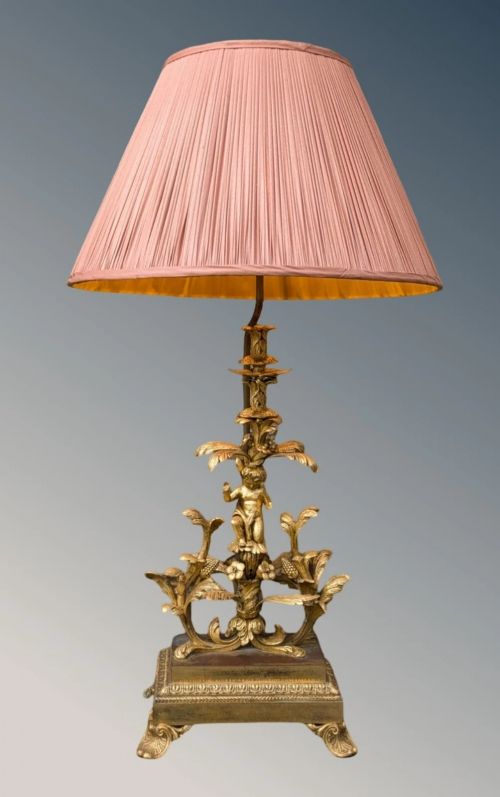
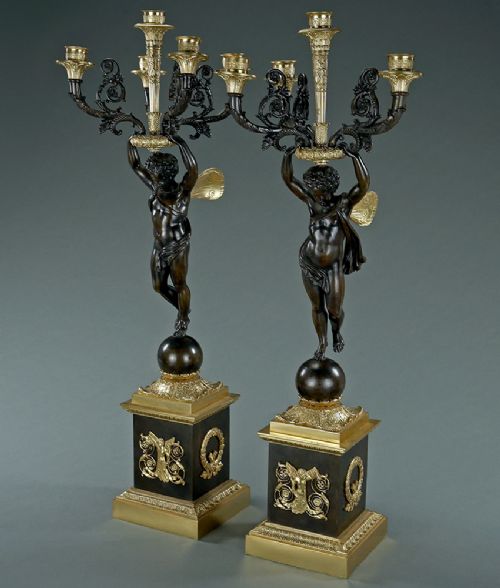
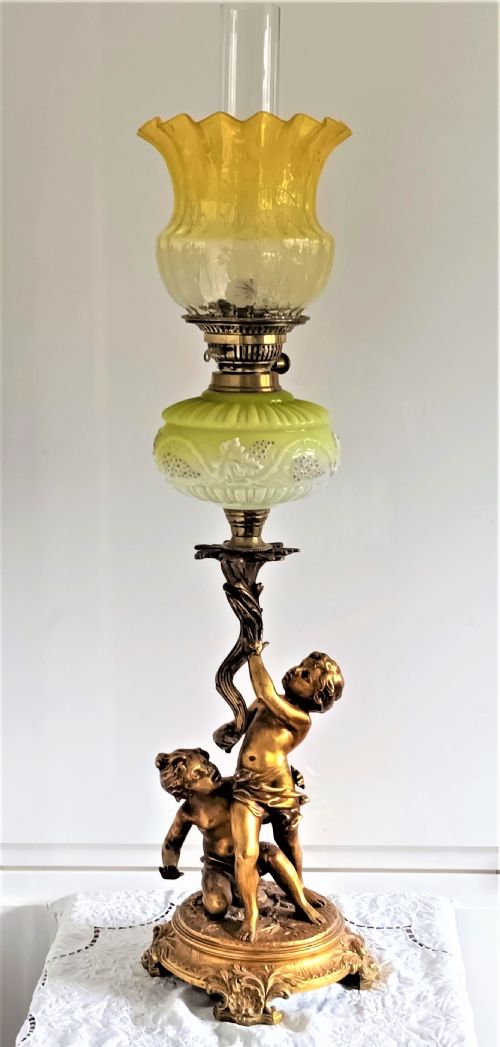
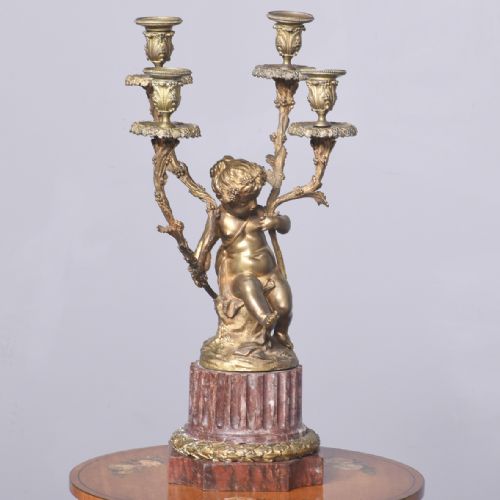
These pieces combine figurative sculpture with functional illumination, taking the form of table lamps, candelabra, candlesticks, and oil lamps populated by cherubs and putti. When exploring gilt putti table lighting, buyers encounter French and English examples that range from single statuette bases to monumental multi-light candelabra.
The selections span the nineteenth century into the early twentieth century, drawing heavily on French Rococo Revival, Louis XVI, and Empire styles. Many items originate as nineteenth-century bronze or ormolu figures or candelabra later adapted for electrical lighting, while others retain their original candle sockets or oil reservoirs.
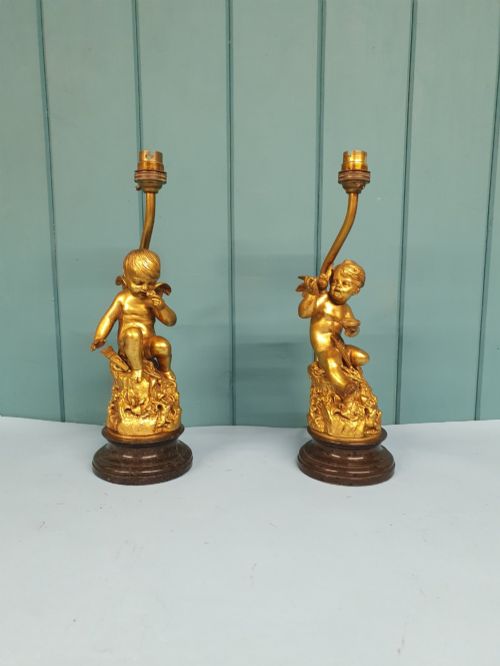
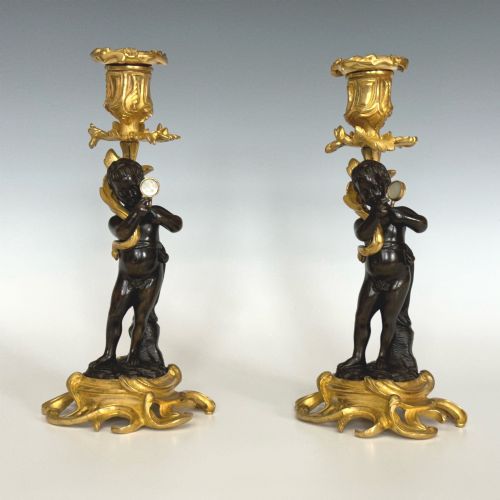
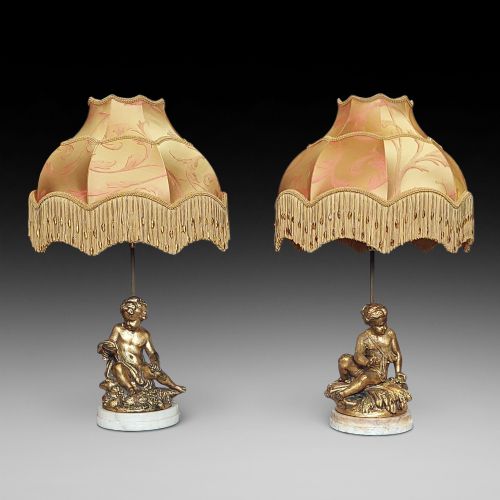
Pairs dominate the selection, offering symmetrical options for mantelpieces and sideboards. Single table lamps often feature converted bronze or porcelain statuettes mounted on marble bases.
Materials and construction
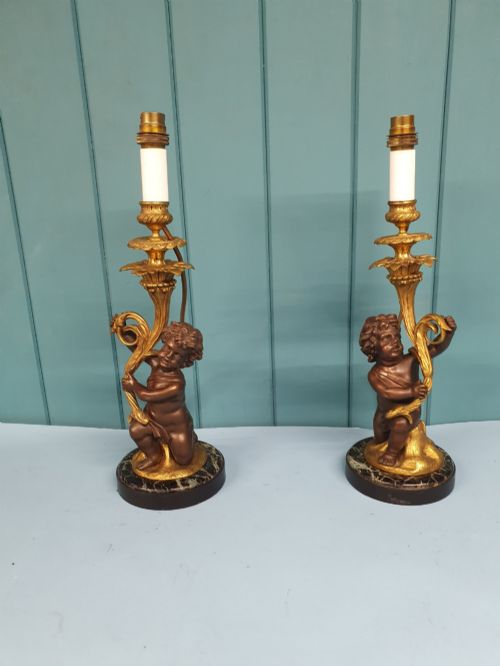
Foundry work relies on bronze, brass, and gilt metal, often finished with fire-gilding or ormolu to achieve a bright golden surface. Patinated bronze frequently contrasts with the brilliant gilt elements, highlighting the detailed modeling of the putti.
Stoneware and minerals provide substantial foundations for these metal figures. Marble and alabaster serve as weighty bases, while porcelain components appear in lamps and candelabra alongside gilt toleware and fabric shades.
French Rococo Revival and Louis XVI styles dominate the designs, alongside Victorian English interpretations.
Factors determining quality
The crispness of the chasing and the depth of the gilding set the visual standard for these pieces. Superior examples display finely rendered facial expressions and feathered wings on the putti, whereas weaker castings lose detail in the hair and drapery.
The choice of secondary materials marks distinct tiers of craftsmanship. Heavy marble plinths, patinated bronze contrasts, and complete matching pairs indicate higher workshop standards than simpler brass or single-light conversions.
The Gilt Putti Table Lighting Glossary
- Ormolu
- Finely ground high-carat gold applied to a bronze base using a mercury amalgamation technique, common in French metalwork. This process yields a warm, lasting lustre that distinguishes it from simpler modern paints.
- Putto
- A plump, often winged infant figure derived from classical art, frequently depicted dancing or resting among lighting branches. They appear widely across nineteenth-century decorative metalwork and porcelain.
- Tazza
- A shallow cup or basin mounted on a stem and foot, occasionally adapted for ornamental lighting or decorative display. These pieces often feature cast bronze or ormolu mounts.
- Toleware
- Painted sheet metal used for decorative objects and lamp shades, typically finished in dark tones with gilt highlights. It provides a durable complement to bronze and porcelain bases.
- Patinated bronze
- Metal treated with chemical solutions to produce a controlled surface colour, usually dark brown or green. This finish creates visual contrast against bright ormolu and gilt elements.
Gilt Putti Table Lighting: Frequently Asked Questions
What is a putto?
A putto is a plump infant motif borrowed from classical mythology, often shown with wings. In lighting pieces, these figures support sconces, hold candle nozzles, or recline against lamp bases.
They became especially popular during the nineteenth-century revivals of Rococo and Louis XVI styles.
Are these lamps converted?
Many nineteenth-century lighting pieces began as oil lamps, candlesticks, or candelabra. Workshops later adapted them for electricity by running wiring through the central column or adding lampholders.
Original proportions are typically maintained during this process to preserve the sculptural integrity of the piece.
How do I date these pieces?
Dating relies on stylistic markers, casting techniques, and material combinations. Pieces associated with Napoleon III or Victorian production often combine patinated bronze with fire-gilded ormolu mounts.
Later twentieth-century examples tend to feature simplified fixings and lighter metal alloys.
Where should I place them?
Pairs of candelabra and lamps suit mantelpieces, console tables, and large sideboards where symmetry matters. Their reflective gilt surfaces catch natural and artificial light effectively in principal rooms.
Larger monumental pieces require sturdy furniture to support their considerable weight.