


Pair Cherub Table Lamps
Pair cherub table lamps bring sculptural grace and warm light to a room, combining classical figures with functional illumination.
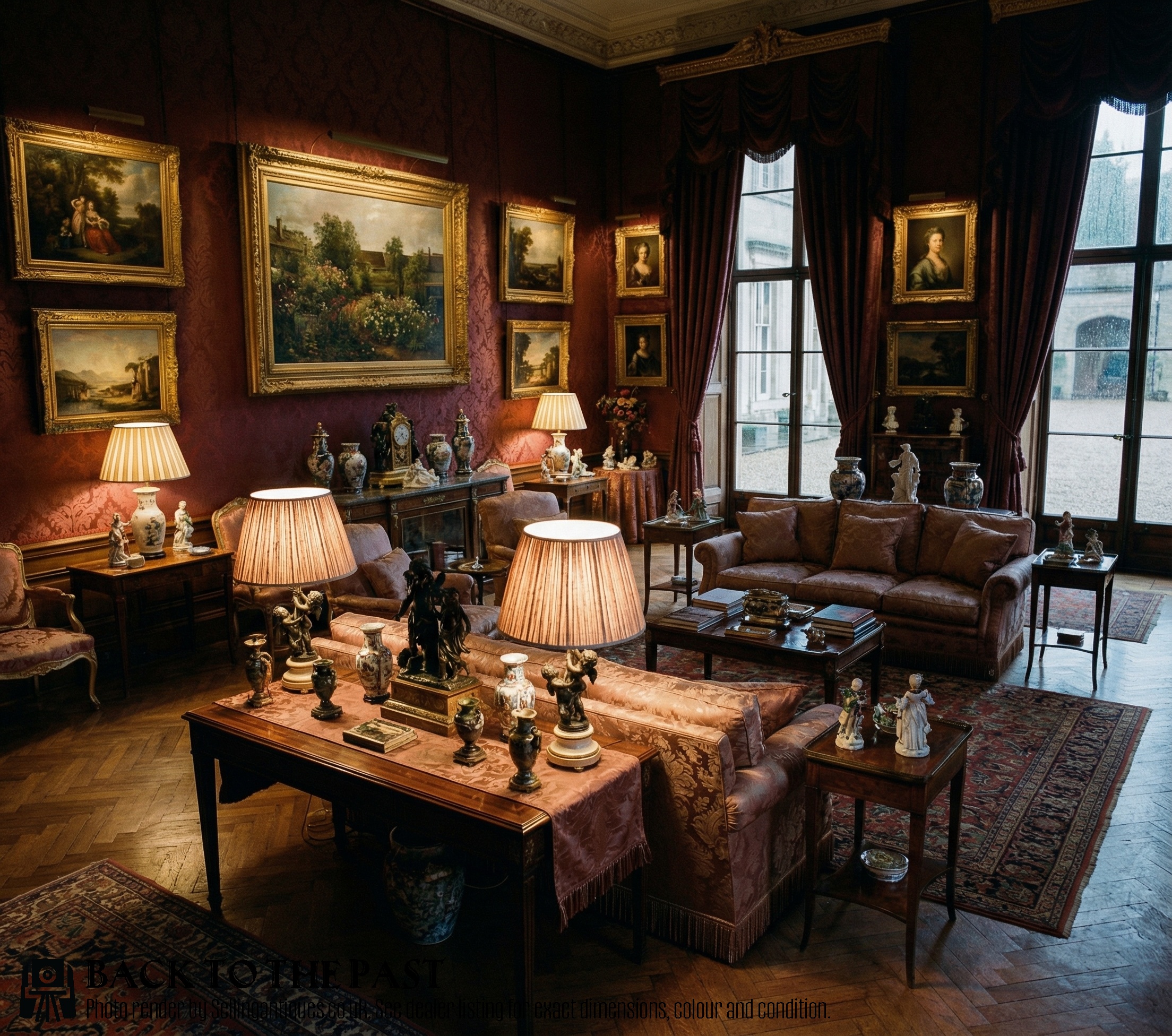
Pair Cherub Table Lamps
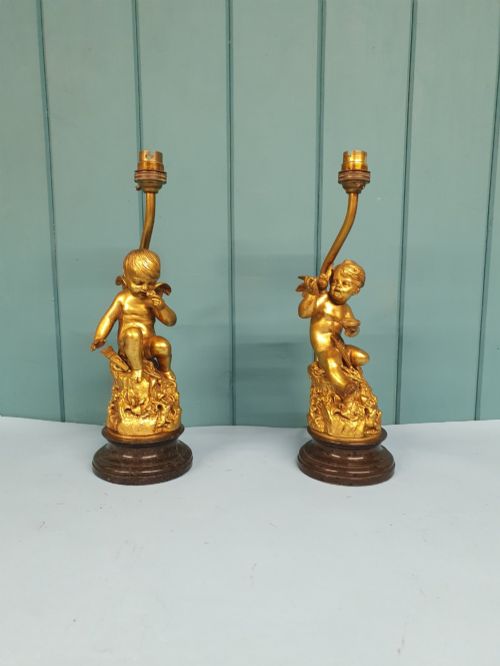
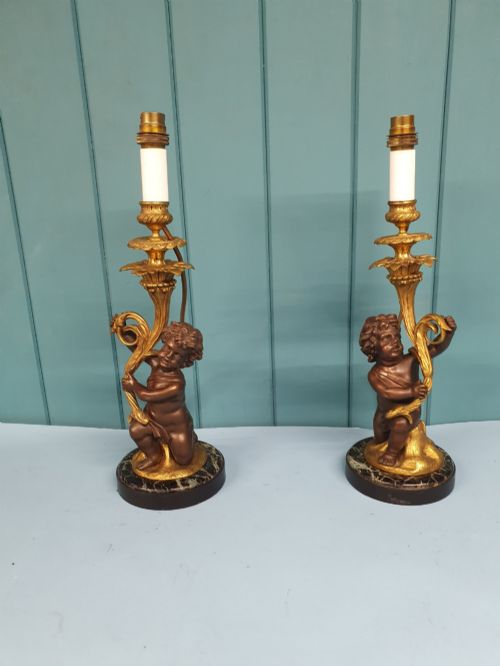
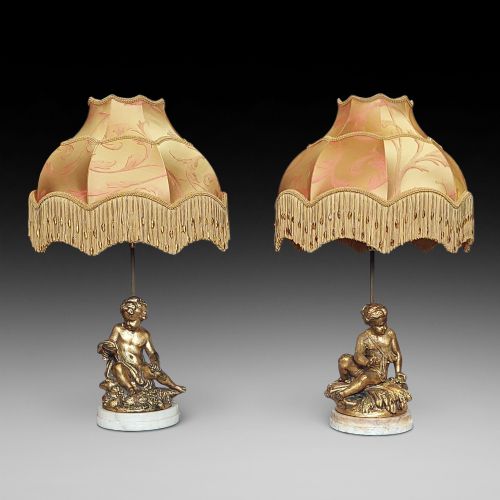
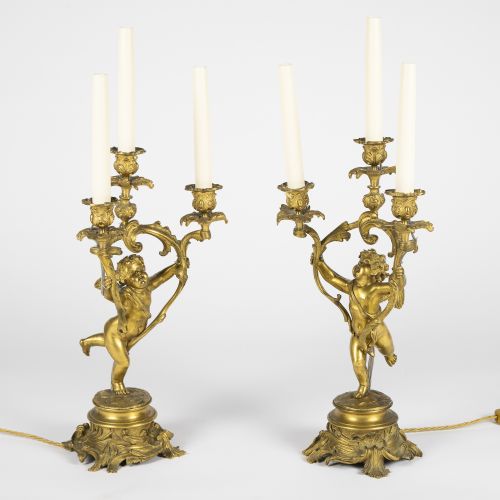
When you search for pair cherub table lamps, you encounter matching pairs of domestic light fittings featuring winged figures in various poses. The selection on this page spans the Victorian era through the early twentieth century, taking the form of table lamps, torchères, and candelabra.
Most examples hail from French or Italian workshops, embracing Rococo Revival and Neoclassical styles. You meet figures cast in bronze, brass, or gilt metal, alongside porcelain models from celebrated European factories.
Some pieces began life as oil lamps or candelabra before conversion to electricity, while others were made specifically as lamps. Bases frequently incorporate marble, alabaster, or mounted wood to anchor the weight of the metalwork.
Materials and construction methods
Foundry work dominates the category, utilising bronze, brass, copper, and ormolu cast in detailed moulds before receiving hand-chasing and gilding. Giltwood and moulded plaster also appear among the twentieth-century offerings, providing lighter alternatives to solid metal.
Ceramic models rely on porcelain bodies shaped and hand-painted by European factories, often paired with fabric shades and brass fittings. Marble and alabaster components are turned and polished to form stable pedestals for the figures.
Several cherubs hold aloft torches that once burned oil before trading flame for a lightbulb.
Assessing quality and craftsmanship
The choice of base materials and the preservation of original gilding or patination indicate the workshop standard. Heavy mounts in marble or finely chased ormolu elevate a piece, while older porcelain examples depend on the fineness of the painting and the intact nature of the glaze.
Sitzendorf porcelain·Meissen porcelain
The Pair Cherub Table Lamps Glossary
- Ormolu
- Gilded bronze, where a mercury-gilding technique creates a rich gold-coloured surface on bronze castings. This finish defines many French pieces from the nineteenth century.
- Putto
- A plump, naked male child figure frequently depicted in classical art, often winged and synonymous with cherubs in decorative lighting. These figures form the central sculptural element of the lamps.
- Torchère
- A stand or lamp modelled on a torch-bearer or classical column designed to hold a light source. Several pieces adopt this vertical format.
- Candelabra
- A branched candlestick holder adapted to take electrical fittings in later conversions. They offer multiple light points per base.
Pair Cherub Table Lamps: Frequently Asked Questions
How do I style pair cherub table lamps?
Place them on a heavy sideboard, a console table, or matching bedside chests where symmetry creates a formal focal point. Their sculptural presence works well against dark walls or traditional wood panelling.
Keep surrounding objects restrained so the figures remain visible. Pairing them with simple fabric shades helps balance the ornate metal or porcelain bases.
Were these lamps originally electric?
Many nineteenth-century examples began life as oil lamps, candelabra, or decorative torchères before conversion to electricity in the twentieth century. Wiring is typically updated to meet modern safety standards while retaining the original body.
Converted pieces often show evidence of past burners or fuel reservoirs inside the upper mounts. Purpose-built electric models emerge more frequently from the twentieth-century listings.
How do I tell periods apart?
Victorian and mid-nineteenth-century examples tend to feature heavy cast ormolu, patinated bronze, and elaborate Rococo Revival scrolling. They rely on traditional foundry methods with hand-chased details.
Twentieth-century pieces from the 1920s and 1930s often incorporate cleaner Neoclassical lines, silver giltwood, moulded plaster, or simpler brass and copper constructions. Porcelain models display factory marks specific to their German origins.
How do I clean and care for them?
Dust metal and porcelain components gently with a dry, soft cloth to prevent grime accumulation in the recesses of the casting. Avoid chemical polishes that strip original gilding or damage patinated bronze surfaces.
Check the electrical wiring periodically and ensure shades are securely fitted to the brass mounts. Marble and alabaster bases require a dry cloth and protection from moisture.