


Rococo Cherub Table Lamp
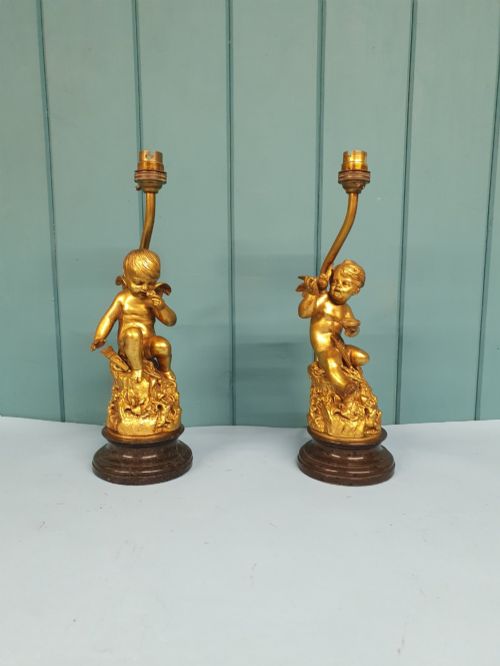
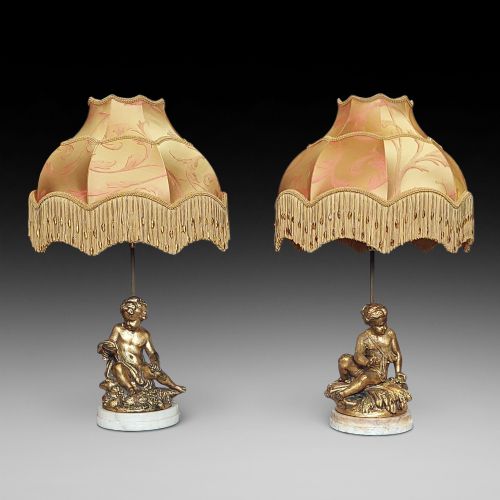
These rococo cherub table lamp pieces combine playful putti figures with ornate scrollwork, offering dramatic decorative lighting.
Rococo Cherub Table Lamp
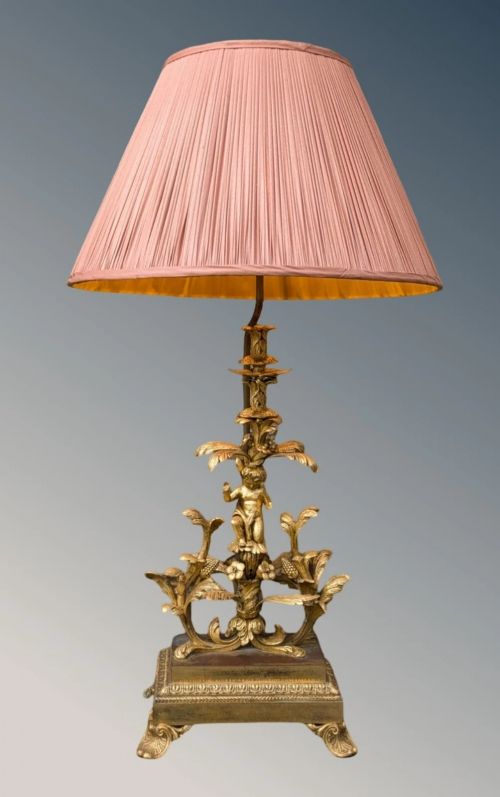
A rococo cherub table lamp centres on sculptural figures of winged cherubs or putti combined with elaborate scrollwork and asymmetrical plant motifs. Buyers encounter table lamps, oil lamps, and candelabra adapted for electrical illumination from periods spanning the Victorian era through the early twentieth century.
The materials documented in these pieces range from gilt bronze and ormolu to porcelain, brass, and marble bases. Many surviving examples originate from French workshops or German porcelain factories like Sitzendorf and Meissen, frequently appearing in pairs or as monumental single statuettes.
Earlier nineteenth century items often utilise cast bronze or mercury-gilt ormolu, while later 1920 pieces incorporate fabric shades, alabaster mountings, and gilt toleware. Converted items, such as nineteenth century bronze statuettes adapted into lamps, also appear within the selection.
Materials and construction methods
Metal components utilise traditional lost-wax or sand casting methods in brass, bronze, and gilt metal, finished with applied gilding or ormolu. Porcelain figures undergo high-temperature kiln firing before detailed hand-painting and glazing, often paired with cast metal mounts.
Stonework elements like marble and alabaster undergo precision cutting and polishing to form stable architectural plinths for the heavier metal and porcelain bodies. Fabric elements and beaded shades complement the metalwork structures on later adapted lighting.
Every cherub sports a distinct expression, ranging from solemn contemplation to remarkably cheerful mischief beneath the candleholder.
Assessing quality in rococo revival lighting
Quality rests upon the crispness of the chased detail in the metalwork and the hand-painted execution of the porcelain figures. Finer castings display sharp facial expressions and deeply undercut foliage, whereas lesser examples show softer, smoothed details from worn moulds.
The integrity of the material combination dictates overall refinement, particularly the seamless integration of marble bases with cast bronze mounts. Original gilding condition and the structural stability of porcelain bodies also differentiate standard production items from exceptional workshop pieces.
Sitzendorf·Meissen
The Rococo Cherub Table Lamp Glossary
- Ormolu
- A technique of applying finely ground high-carat gold to a bronze base using a mercury amalgam. This process creates a rich, durable golden finish characteristic of nineteenth-century French metalwork.
- Putti
- Depictions of chubby, winged male infants derived from classical art and heavily utilised in Renaissance and Rococo decorative schemes. They form the central figurative element in these lighting designs.
- Torchère
- An ornamental stand or decorative lamp modelled after a torch-bearer. These pieces often feature a cherub holding a light source aloft.
- Toleware
- Painted or lacquered sheet metal items popular in domestic decoration. They appear on specific lamp shades and decorative components within the evidence.
- Rococo Revival
- A nineteenth-century design movement that revived the ornate, asymmetrical scrolling curves and naturalistic motifs of the eighteenth-century French style.
Rococo Cherub Table Lamp: Frequently Asked Questions
Are these lamps originally electric?
Most pieces originate from the nineteenth or early twentieth centuries as oil lamps, candelabra, or bronze statuettes before undergoing later conversion to electricity. These adaptations allow historical lighting fixtures to function safely in modern domestic settings.
Wiring methods vary, so buyers should inspect the internal electrical components to ensure compliance with current safety standards while preserving the antique body.
How do I identify the period?
Dating relies on material combinations, casting sharpness, and manufacturing stamps where porcelain factories are involved. Nineteenth-century examples often feature heavier ormolu and hand-chased bronze, whereas 1920 pieces incorporate different base mountings.
Comparing the style of the cherub faces and the complexity of the rococo scrollwork helps distinguish Victorian production from later twentieth-century interpretations.
Where should I place these lamps?
These dramatic lighting pieces suit prominent surfaces such as sideboards, console tables, or large mantelpieces where their sculptural details remain visible. Their height and ornate decoration make them effective focal points in traditional rooms.
Because many examples are heavy, ensure the supporting furniture offers adequate stability for marble and bronze bases.
Why do some lamps come in pairs?
Many lighting fixtures were manufactured as symmetrical pairs for placement on either side of a fireplace, mirror, or grand piece of furniture. Surviving pairs command distinct interest from collectors seeking balanced interior displays.
Single lamps often originate as converted statuettes or surviving components from larger candelabra sets.