
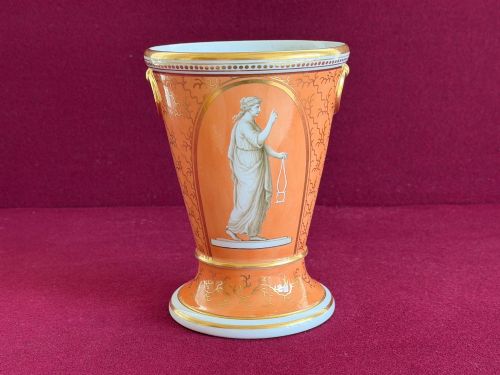
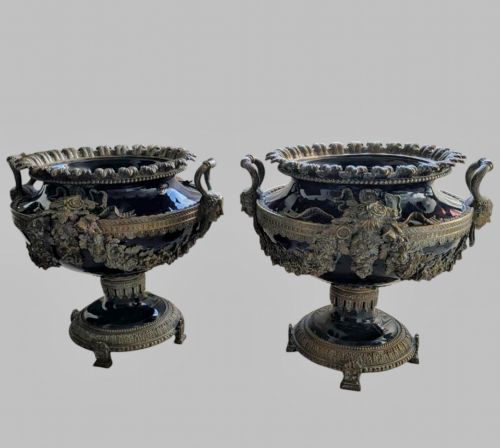
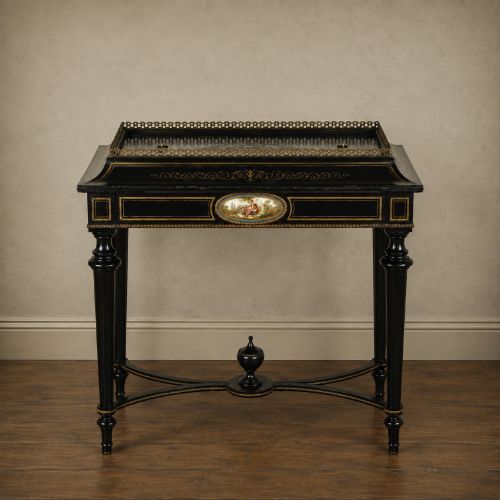


Gilt Porcelain Planter
These gilt porcelain planter vessels bring botanical display indoors with gilded mounts and painted ceramic bodies.
Gilt Porcelain Planter
A gilt porcelain planter combines ceramic manufacture with metallic ornamentation, forming vessels designed to hold indoor plants or floral arrangements. They appear most frequently as nineteenth-century French and English jardinieres, often incorporating mounts in ormolu or gilt bronze alongside hand-painted ceramic bodies.
Forms range from table-standing cachepots to free-standing jardiniere stands and side tables with integrated plant holders. Many examples utilise porcelain plaques, ceramic panels, or majolica bowls supported by ebonised wood or kingwood framing.
Origins stretch across Georgian, Victorian, Edwardian, and Napoleon III periods, encompassing both English factories and continental workshops. Buyers encounter everything from Worcester and Coalport productions to French porcelain pieces decorated in revival styles.
How they were made
Makers shaped porcelain bodies by throwing clay on a wheel or pressing it into moulds before firing at high temperatures. Artisans then applied enamel paints and gilding by hand, often returning the pieces to the kiln to fix the metallic leaf and colours.
Metalworkers fabricated mounts in ormolu, gilt bronze, or brass to frame and reinforce the ceramic bowls. Joinery technicians constructed supporting stands and tables using cabinet timbers such as kingwood and ebonised wood, frequently adding marquetry inlay.
The selection includes Japanese Satsuma and Imari ceramic styles alongside traditional European porcelain from French and English factories.
What varies in quality
The refinement of the hand-painted ceramic decoration distinguishes superior examples from standard production. Finely brushed floral panels or hand-applied enamel details demonstrate greater skill than transfer-printed patterns.
The precision of the metal mounts dictates the overall standard of the piece. Crisp chasing in the gilt bronze or ormolu and secure integration with the porcelain body mark out superior workshop output.
Flight And Barr Worcester·Royal Worcester Hadley Ware·Royal Dux Porcelain·Meissen Marcolini·Staffordshire Adams
The Gilt Porcelain Planter Glossary
- Jardiniere
- An ornamental pot or stand designed to hold growing plants or flowers. These vessels sit on tables or stand independently on floor supports.
- Cachepot
- A decorative outer pot placed over a plain plant pot to conceal it. They typically feature flat bases to protect furniture surfaces from moisture.
- Ormolu
- Gilding technique applying finely ground high-carat gold to a bronze object. The finish provides a bright golden surface to metallic mounts.
- Kingwood
- A dense, richly figured timber native to Brazil used in cabinet-making. It frequently appears as a veneer on nineteenth-century stands and tables.
Gilt Porcelain Planter: Frequently Asked Questions
Where should I place a gilt porcelain planter?
Position these vessels on sturdy side tables, console surfaces, or dedicated plant stands away from direct foot traffic. Their decorative mounts and painted ceramic bodies reward careful placement in well-lit rooms.
Ensure interior pots have adequate drainage protection to prevent moisture from contacting the porcelain and metal surfaces over time.
How do I clean a gilt porcelain planter?
Dust the porcelain and metal mounts regularly using a soft, dry cloth. Avoid abrasive cleaners and liquid solvents that might damage the delicate gilding or hand-painted enamel.
Take care around ormolu mounts and gilt bronze details, as harsh scrubbing can wear away the metallic surface finish permanently.
Can I plant directly into the ceramic bowl?
Most antique pieces function best as cachepots rather than direct planting vessels. Using an inner plastic or terracotta pot protects the historic ceramic interior from moisture damage and soil staining.
Lifting the plant out for watering also prevents standing water from accumulating inside the antique container.
How do I identify the period of a planter?
Examine the style of the mounts, the timber used in any supporting stand, and the characteristics of the ceramic body. Victorian and Napoleon III pieces often feature ornate ormolu mounts combined with kingwood.
Maker marks, factory stamps, and glaze types provide further clues for dating pieces produced by factories like Worcester or Meissen.