



Gilt Metal Timepiece
A gilt metal timepiece brings bright metallic warmth to a room, offering both decorative presence and dependable timekeeping.

Gilt Metal Timepiece
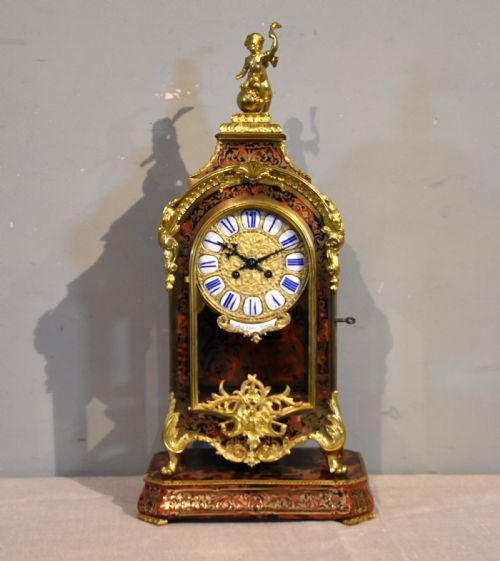
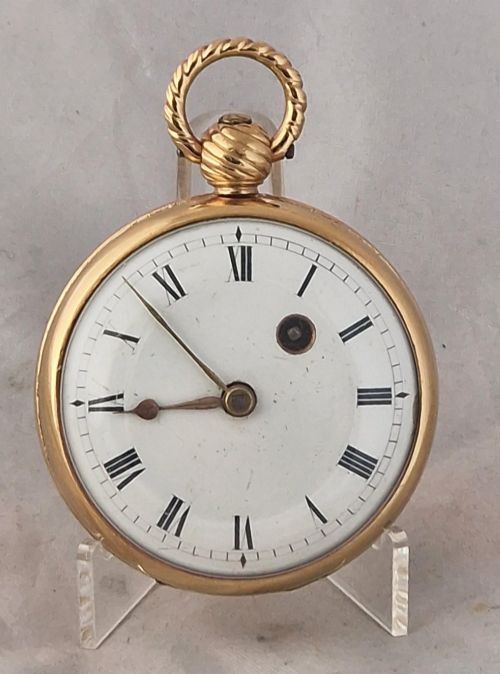
A gilt metal timepiece is a portable or mantel-mounted clock housed in a polished or fire-gilt metallic case, often displaying decorative casting. These objects range from pocket watches and small boudoir clocks to substantial mantel clocks designed for prominent placement in a room.
The versions most commonly met on this page span the nineteenth century through the early twentieth century, with a strong representation of French manufacture in styles such as Rococo Revival and Art Deco. Makers employed cast brass, bronze, and ormolu to create decorative housings that often incorporated enamel dials, glass panels, and marble bases.
Beyond standard mantel clocks, the selections include specialist forms like desk clocks, strut easel clocks, and automaton engine clocks. These pieces combine mechanical movements with ornate exterior styling, reflecting the period tastes of Georgian, Victorian, and Edwardian makers.
How they were made
Makers formed the structural cases using cast brass, bronze, or gilt metal, frequently applying gold leaf or mercury gilding to produce a rich surface finish. Ormolu, or high-quality gilt bronze, was extensively utilised in French workshops to achieve sharp relief and lasting metallic lustre.
Dial faces were commonly fabricated from white enamel with painted Arabic or Roman numerals, sometimes protected behind curved glass bezels. Intricate finishing techniques such as champlevé enamel work and hand-chiselling further enhanced the decorative exterior of finer pieces.
Certain clocks feature moving mechanical parts that imitate industrial machinery in miniature.
What varies in quality
The sharpness of the cast ornamentation dictates much of the visual merit, as high-grade pieces display crisp, hand-chased detail in the metalwork rather than soft, mass-produced edges. The depth and evenness of the gilding also separate superior examples from standard commercial production.
Movement sophistication determines the internal standard, with fusee movements and signed French or Swiss mechanisms representing a higher tier of horological execution. The integration of complementary materials, such as undamaged champlevé enamel or solid marble bases, completes the distinction between ordinary and exceptional specimens.
Leon Message·Jollet et Cie·Luxor·Andre Guilmet·Jaeger LeCoultre·Japy Freres
The Gilt Metal Timepiece Glossary
- Ormolu
- Gilt bronze produced by applying a mixture of finely ground gold and mercury to a bronze base and heating it. This technique creates a durable, luminous golden finish characteristic of fine French decorative metalwork.
- Fusee
- A conical pulley used in mechanical clocks and watches to maintain even driving force as the mainspring unwinds. It ensures consistent timekeeping across the power reserve.
- Champlevé
- An enamelling technique where troughs or cells are hollowed out of a metal surface and filled with vitreous enamel paste before firing. The metal partitions remain visible as part of the pattern.
- Verge escapement
- An early type of clock and watch escapement mechanism that controls the release of power from the gear train. It regulates the motion with a swinging foliot or balance wheel.
- Automaton
- A mechanical device designed to mimic human or animal actions or operate moving machinery within the clock case. These animated elements often run concurrently with the timekeeping movement.
Gilt Metal Timepiece: Frequently Asked Questions
What is a gilt metal timepiece?
A gilt metal timepiece is a clock or watch featuring a metallic housing coated in gold leaf, paint, or chemical gilding. These objects serve both practical timekeeping and ornamental display.
They encompass various forms, from pocket watches to large mantel clocks, created across multiple centuries and stylistic revivals.
How do I care for a gilt metal clock?
Keep the clock away from direct sunlight and damp environments to protect both the metallic finish and the internal mechanical movement. Dust the exterior gently with a dry, soft cloth without using abrasive cleaning products.
Professional servicing every few years ensures the gear train and escapement continue to function correctly.
How can I tell the period of a clock?
Examine the stylistic cues, such as the curved asymmetry of Rococo revival work or the geometric lines of Art Deco design. Materials like champlevé enamel or specific marble bases often point toward late nineteenth-century European manufacturing standards.
Maker signatures on the dial or movement backplate provide definitive evidence of origin and production date.
Where were most of these clocks made?
A significant proportion of antique gilt metal timepieces originated in France, particularly through workshops operating in Paris. Other notable production centres included Switzerland and Britain, particularly for specialist movements and pocket watches.
Regional metalworking traditions heavily influenced the decorative vocabulary applied to each piece.