
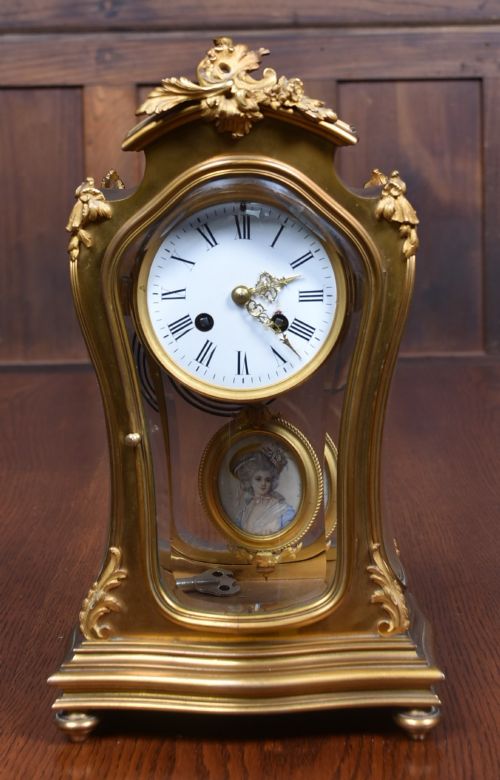


French Porcelain Timepiece
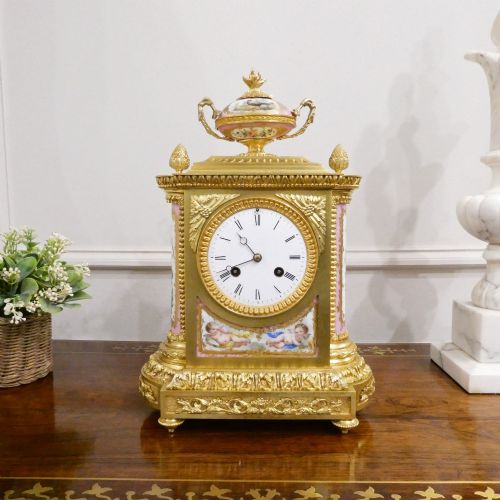
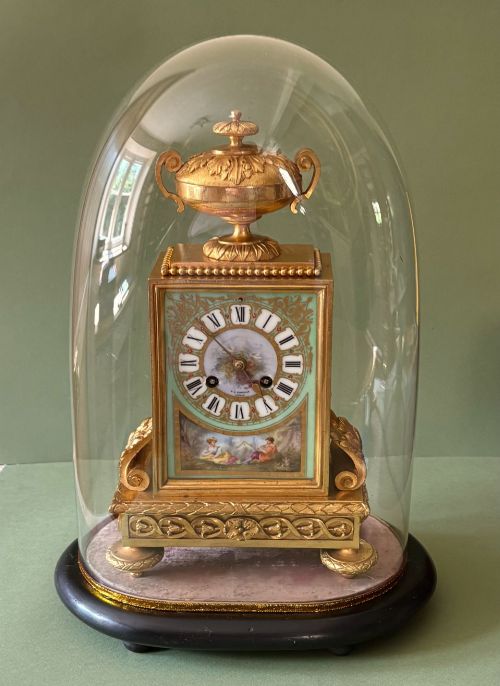
A french porcelain timepiece brings the ornate craft of nineteenth-century salons directly to a mantelpiece, combining intricate ceramic painting with gilt bronze mounts.

French Porcelain Timepiece
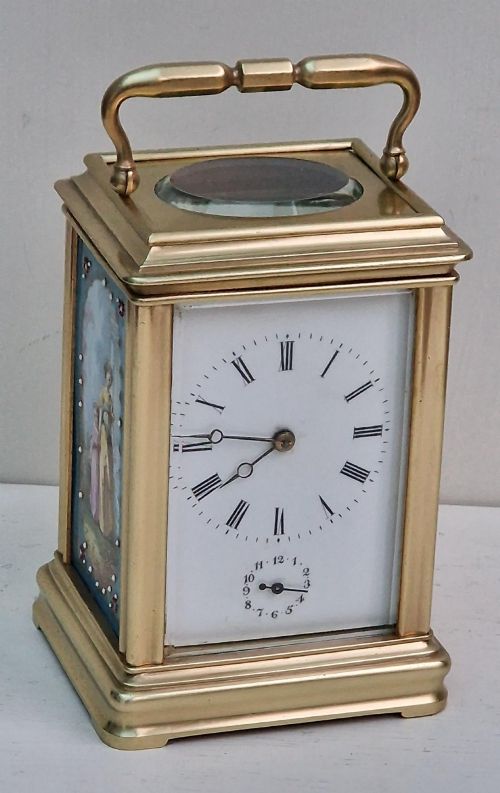
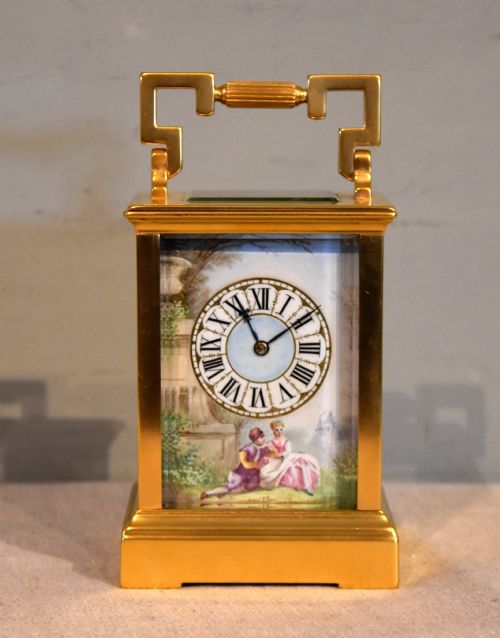
A french porcelain timepiece is a clock designed for domestic display, commonly taking the form of a mantel clock or a smaller carriage clock. These pieces combine glazed or painted ceramic panels with metal housings, most frequently mounted on surfaces in a drawing room or boudoir.
The examples available here sit firmly in the nineteenth century, spanning decades from eighteen-forty to nineteen-hundred. Victorian and revival aesthetics dominate the selection, showing distinct connections to earlier French decorative traditions.
Makers housed movements inside architectural or sculptural cases, often flanked by figures such as putti or cherubs. The ceramic elements frequently feature hand-painted floral motifs or classical scenes set against coloured grounds.
What varies in quality
Quality diverges notably in the crispness of the bronze chasing and the depth of the gilding across the case. Finer pieces exhibit sharp relief work in the foliage and figures, whereas simpler examples rely on flatter, less detailed castings.
The standard of the ceramic painting sets apart the upper tier of objects. Hand-painted miniatures signed by artists or executed with precise brushwork command greater attention than mass-produced transfer-printed panels.
Several clocks enlist cherubs and elephants to hold up time itself.
Jean-Baptiste Delettrez·Japy Frers·Rodier
The French Porcelain Timepiece Glossary
- Ormolu
- A technique of applying finely ground high-carat gold to a bronze object using a mercury amalgam before heat is applied. This creates a durable, warm metallic finish characteristic of nineteenth-century decorative arts.
- Bisque Porcelain
- Unglazed ceramic fired to a matte, porous finish that resembles smooth marble. It is frequently employed for sculptural figures on clock cases.
- Mantel Clock
- A clock designed to stand on the shelf above a fireplace. These domestic timepieces often feature balanced symmetrical designs suitable for central display.
- Carriage Clock
- A portable spring-driven timepiece developed for travel in the nineteenth century. They typically feature glass panels allowing the movement to be viewed from multiple angles.
- Louis XVI Revival
- A design style drawing inspiration from the late eighteenth-century French court. It favours neoclassical symmetry, straight lines, and refined classical motifs over exuberant curves.
French Porcelain Timepiece: Frequently Asked Questions
How do I wind a french porcelain timepiece?
Most clocks in this category utilise a key-wound mechanical movement with spring barrels or weight drives. Insert the matching winding key into the dial apertures and turn gently until resistance is met.
Take care not to over-wind the mainspring, as this can damage the internal gearing. Consult the escapement type before attempting any adjustments to the beat.
Where should I place a mantel clock?
Select a stable, level surface away from direct sunlight and damp environments. Mantelpieces offer a traditional setting, provided the shelf does not experience excessive heat from an active fire.
Ensure the clock rests on a solid foundation so the pendulum or balance wheel maintains an even beat. Wall vibrations can interfere with accurate timekeeping.
How do I distinguish Louis XVI style from Rococo?
Louis XVI revival pieces rely on straight architectural lines, symmetry, and classical restraint. You will often see urns, columns, and rectangular ceramic panels.
Rococo revival designs embrace asymmetry, C-scrolls, and exuberant naturalistic motifs like flowing foliage and cascading flowers. The overall silhouette appears far more fluid and organic.
How do I clean porcelain clock dials?
Dust the exterior surfaces regularly with a soft, dry artist's brush or microfibre cloth. Avoid using commercial liquid cleaners on painted porcelain or gilded metal.
Moisture can seep into hairline cracks in the glaze or degrade fragile enamel numerals. Professional restoration is recommended for deep cleaning.