
Gilt Mantel Clock
When choosing a gilt mantel clock, you are selecting an ornate timekeeper that brings nineteenth-century metallic lustre and classical presence to a room.
Gilt Mantel Clock
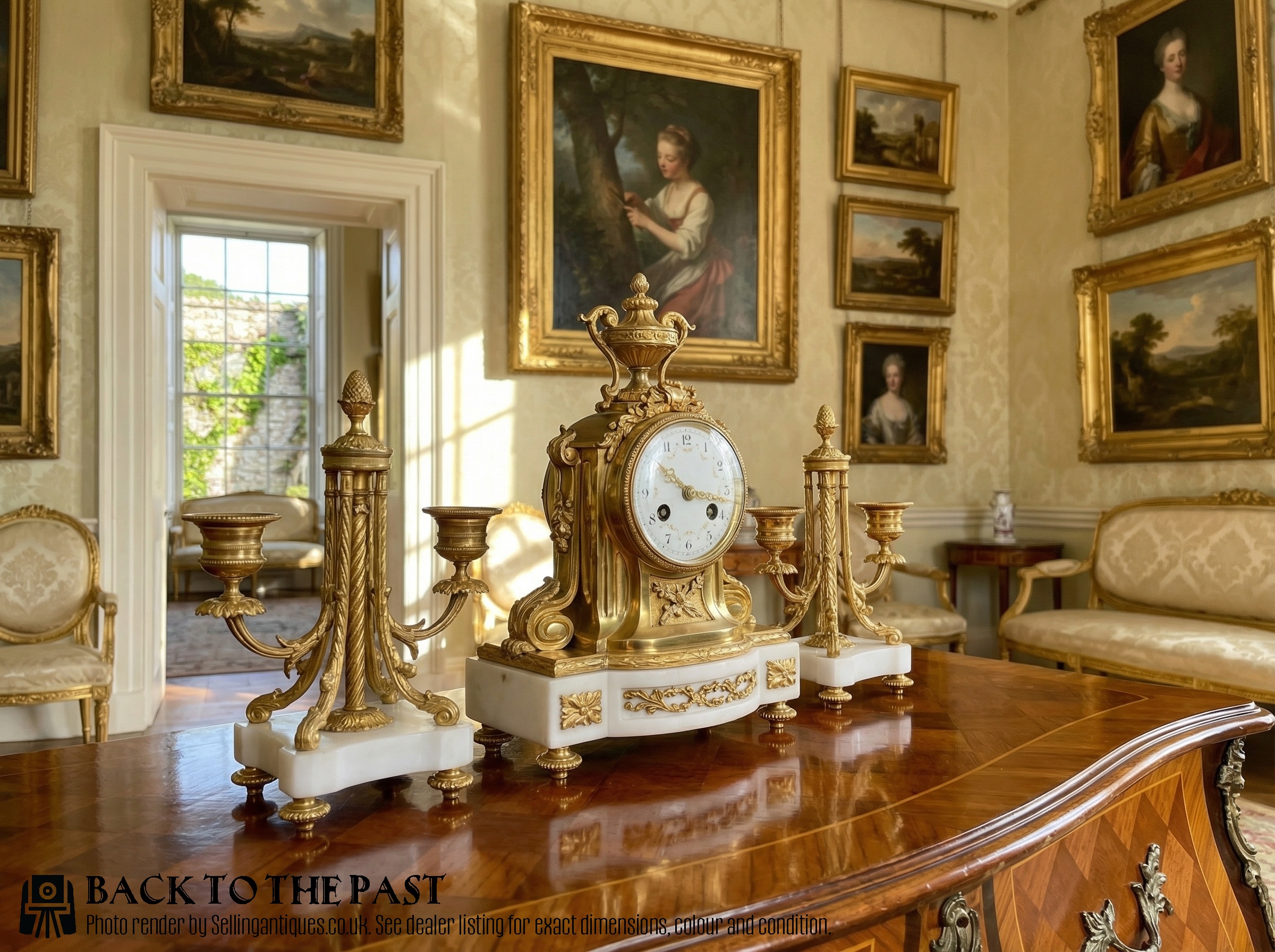
A gilt mantel clock is a decorative timepiece designed for display on a shelf, pier table, or fireplace surround, often originating from French and English workshops during the nineteenth century. These objects combine timekeeping mechanics with sculptural or architectural casings in styles spanning French Empire, Rococo Revival, Louis XVI, and Victorian tastes.
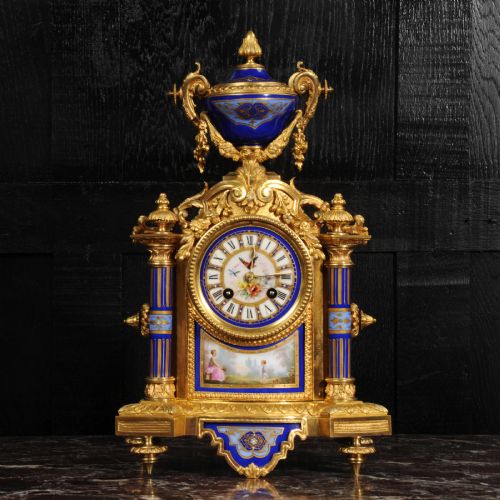
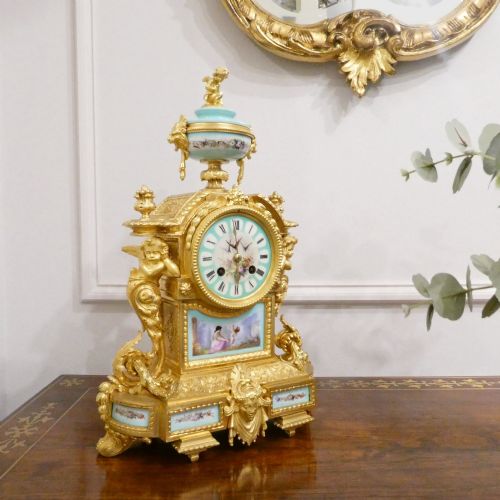
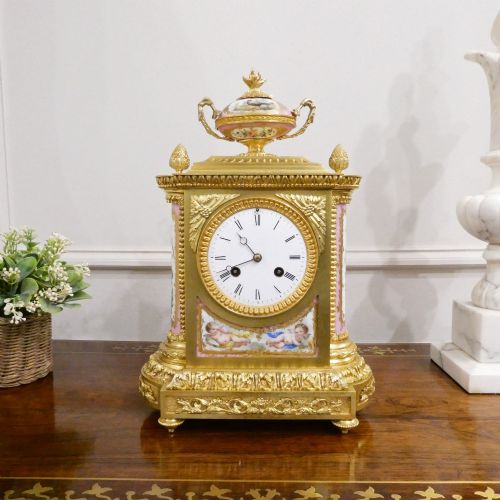
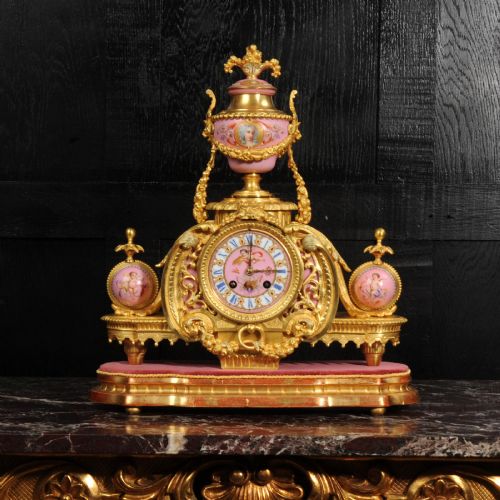
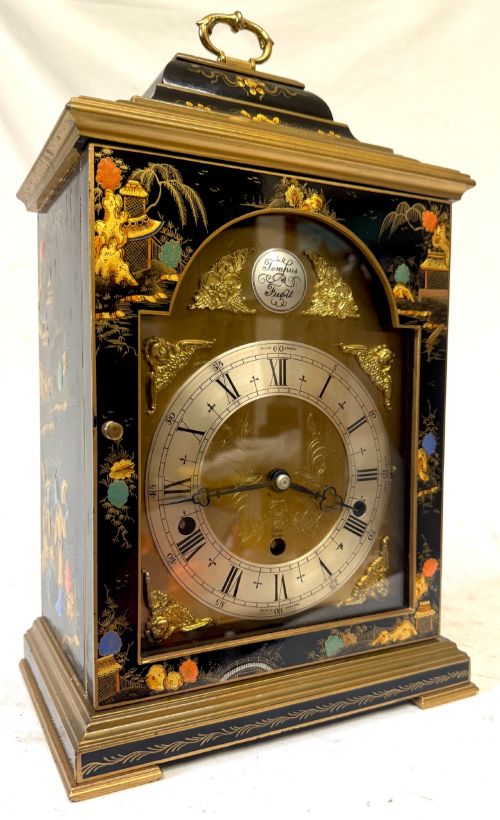
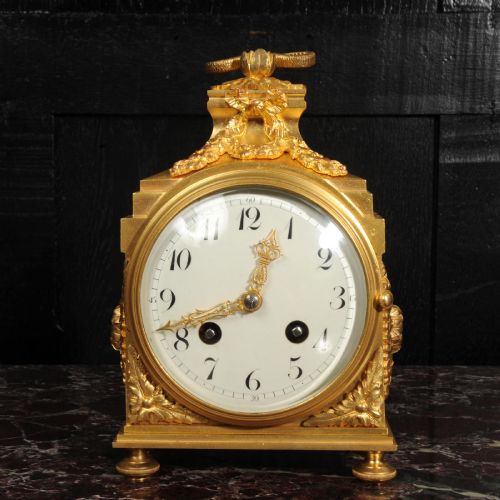
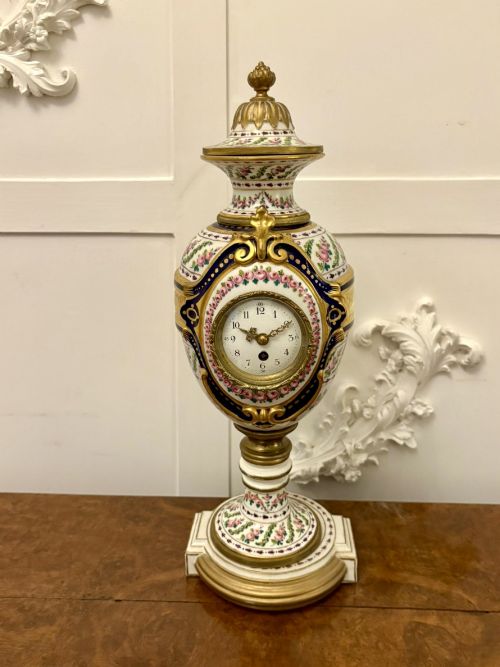
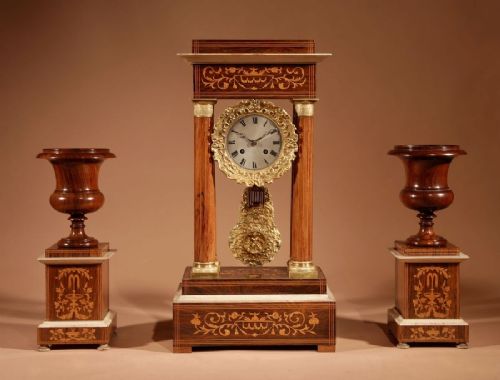
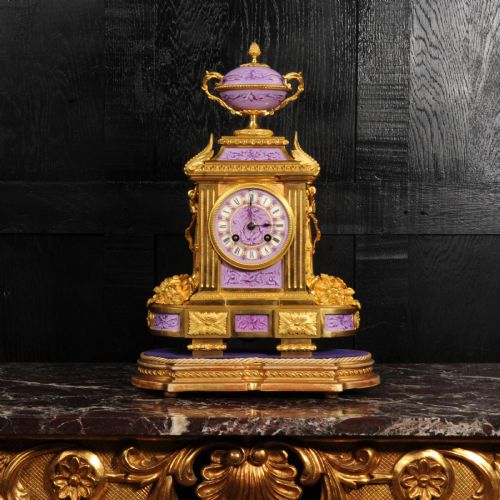
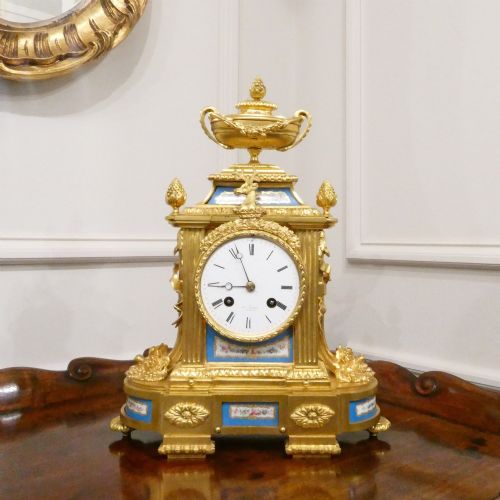
The version most commonly met on this page is the nineteenth-century French mantel clock cast in gilt bronze or ormolu, frequently paired with hand-painted porcelain panels or white marble bases. Many examples incorporate figural motifs, architectural columns, or matching garnitures consisting of side urns and candelabra.
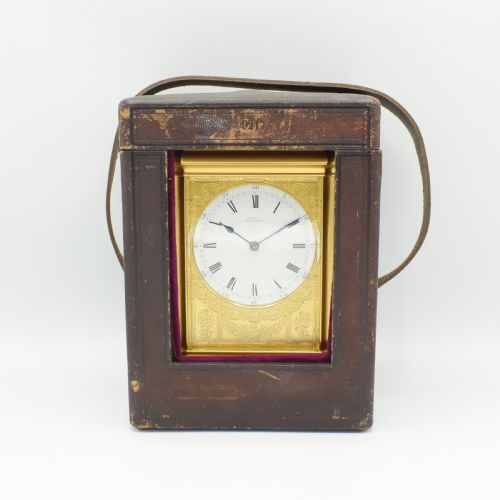
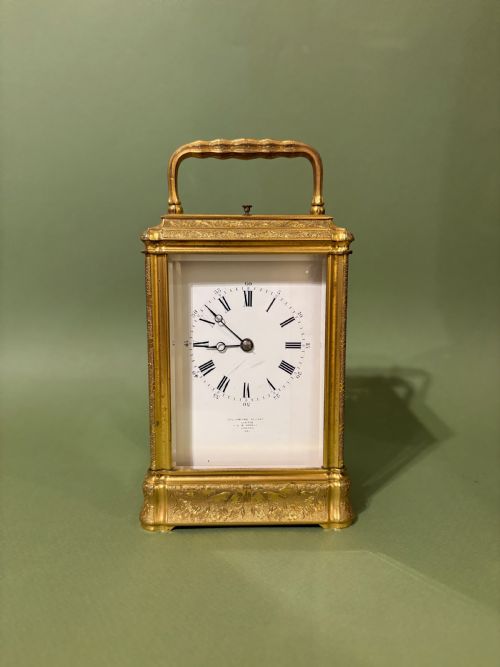
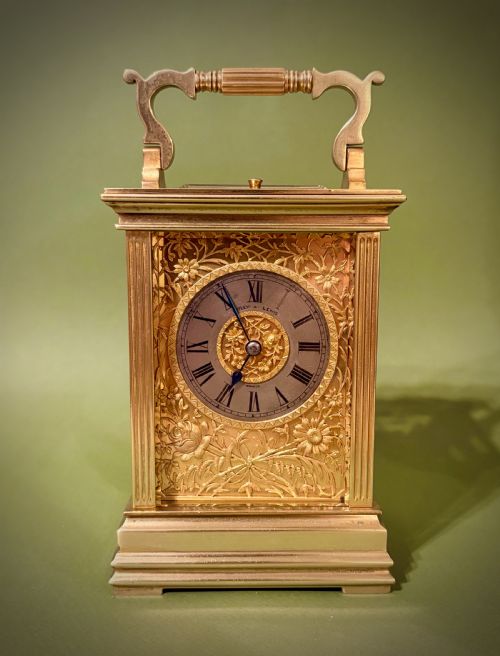
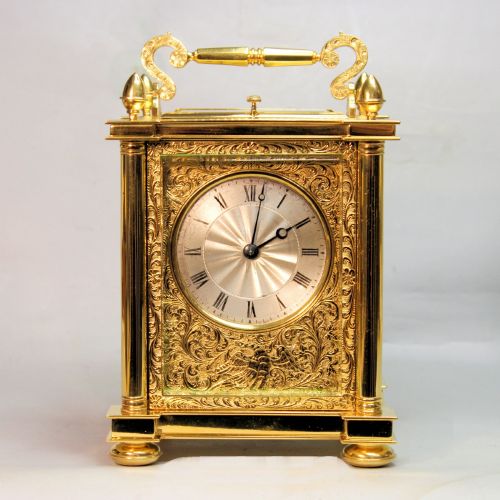
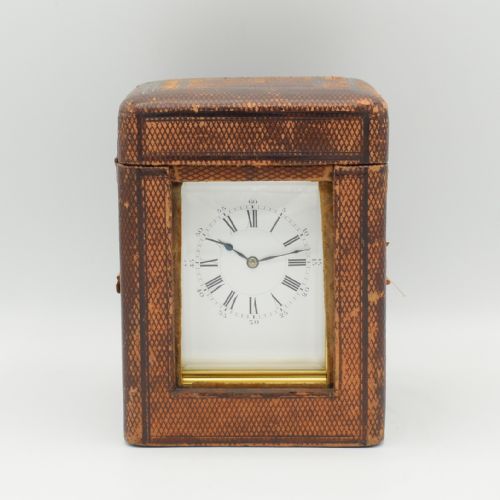
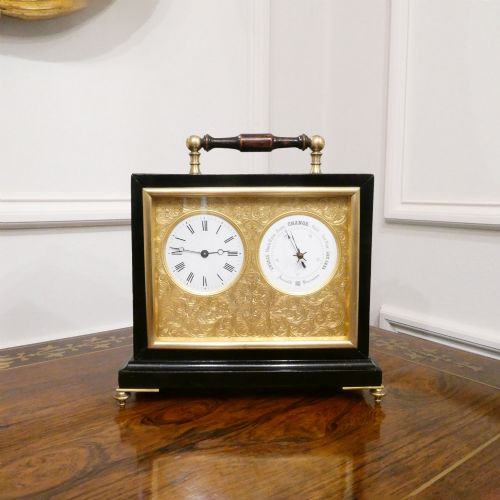
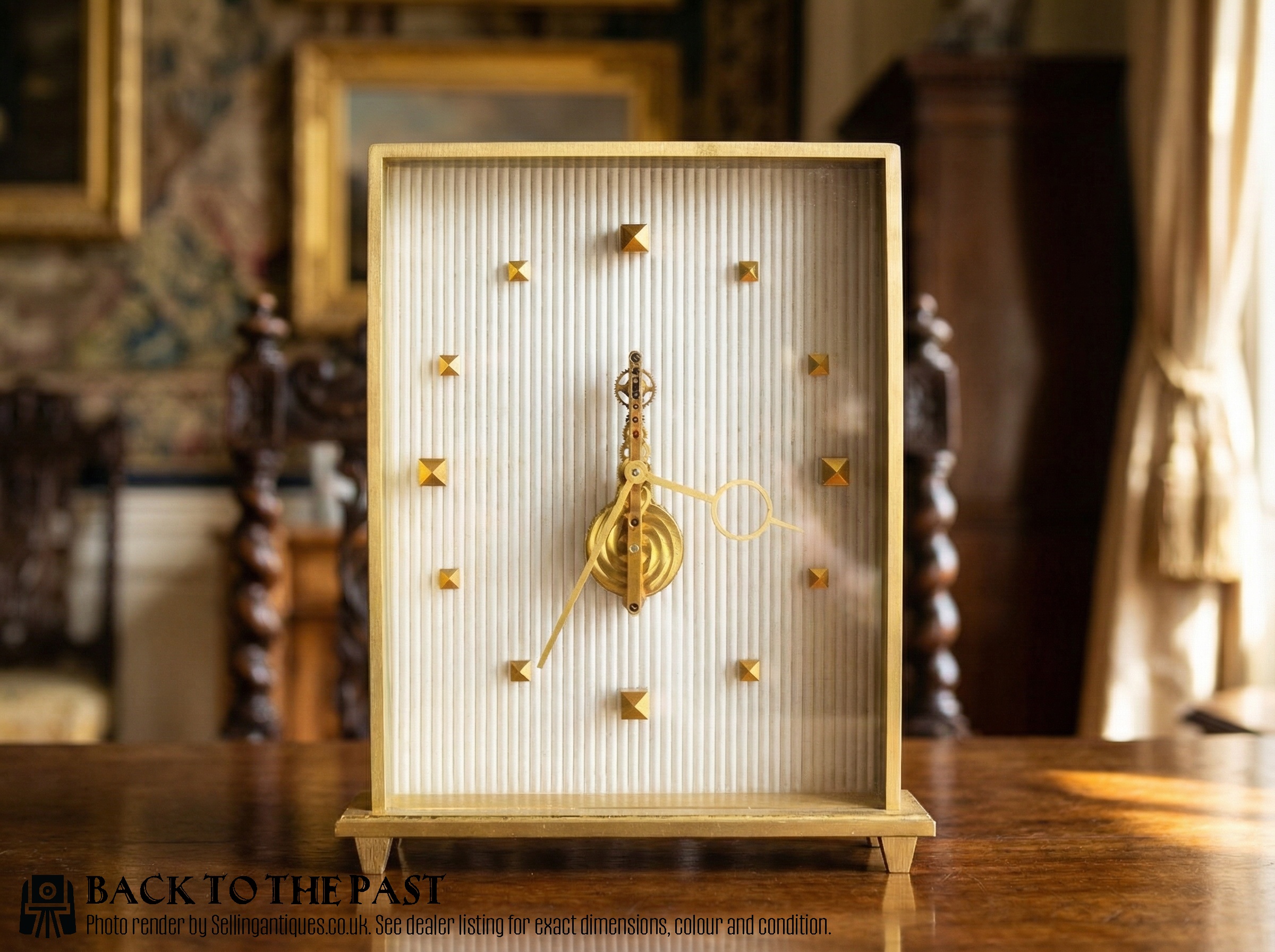
Beyond standard mantel clocks, related forms appear in the listings including four-glass brass cases, crystal regulators, portico clocks, and carriage clocks. These variations reflect the diverse domestic requirements of the period, from monumental drawing-room pieces to portable travel timepieces.
How They Were Made
Cases were predominantly formed from cast bronze, brass, or ormolu, frequently utilising mercury gilding or electroplating to achieve a durable metallic sheen. These metal housings were often combined with structural elements of white marble, black marble, or green onyx.
Dials and decorative accents commonly featured fired enamel on copper alongside hand-painted Sèvres-style porcelain plaques depicting landscapes or figures. Specialised movements by makers such as Japy Freres, Samuel Marti, and Achille Brocot drove the mechanical escapements housed within these elaborate frames.
Some nineteenth-century clocks feature playful putto finials or spaniel dogs keeping watch over the ticking escapement.
What Varies in Quality
Quality in a gilt mantel clock rests upon the crispness of the bronze casting and the depth of the subsequent gilding, where sharp, hand-chased details distinguish superior sculptural housings from softer, mass-produced alternatives. The integration of high-grade components, such as signed movements and intact porcelain panels, elevates an example significantly.
Proportion and architectural harmony also dictate distinction, separating simple housed movements from fully resolved architectural porticos or figural allegories complete with matching garnitures.
Henri Jacot·Achille Brocot·Japy Freres·Henry Marc·Samuel Marti·Richard et Cie·Vincenti·Siffel and Cartier·Charles Hour·Leroy
The Gilt Mantel Clock Glossary
- Ormolu
- Finely chopped gold-mercury amalgam applied to a bronze base, creating a rich golden surface characteristic of nineteenth-century French pieces. This technique required immense skill to ensure even adhesion and durability.
- Garniture
- A set comprising a central clock flanked by matching decorative objects like urns or candelabra. These matched suites were designed to create a balanced display on a mantelpiece.
- Four Glass Clock
- A timepiece encased in four glass panels allowing a clear view of the mechanical movement inside. They typically feature brass frames and mercury pendulums.
- Champlevé Enamel
- A technique where troughs are carved into the metal surface and filled with vitreous enamel before firing. This adds vibrant colour and pattern directly onto the bronze or brass housing.
- Pendule d'Officier
- A portable military-style timepiece with a gilt bronze case and carrying handle. These functional objects bridge the gap between carriage clocks and larger mantel models.
Gilt Mantel Clock: Frequently Asked Questions
How do I wind my clock?
Most mechanical mantel clocks require a key inserted into the winding arbors on the dial face. Turn the key gently until resistance is met, taking care not to overwind the mainspring.
Keep the original winding key with the clock where possible, as modern replacements can damage the delicate square arbors inside the movement.
Are these clocks suitable for daily use?
These timepieces function reliably when properly serviced and set up on a stable, level surface. Many historical movements require professional adjustment to keep accurate time.
Positioning the clock away from direct sunlight and drafts helps preserve fragile enamel dials and delicate exterior gilding over years of use.
How do I identify the period?
Dating relies on stylistic clues, maker stamps on the backplate, and the combination of materials like marble, bronze, and porcelain. Neo-classical elements suggest Louis XVI revival styles, while heavy architectural black marble often points toward later Victorian production.
Signatures or movement stamps from known makers can help narrow down the decade of manufacture.