

Gilt Inlaid Table
When you search for a gilt inlaid table, you uncover a sophisticated surface crafted to catch the candlelight.
Gilt Inlaid Table
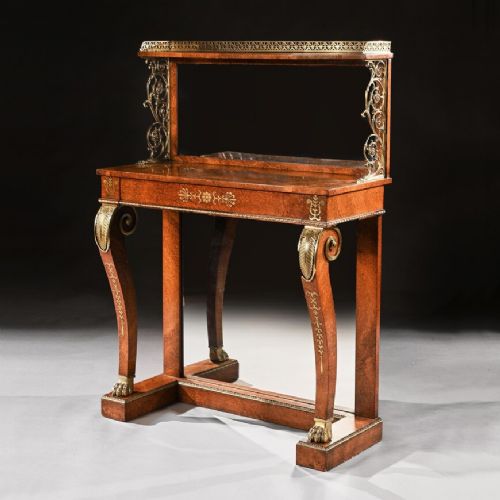
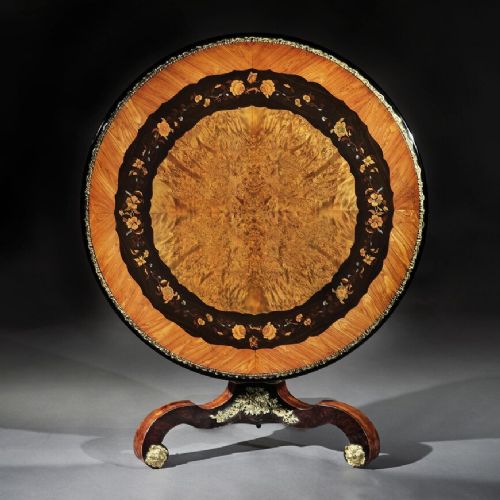
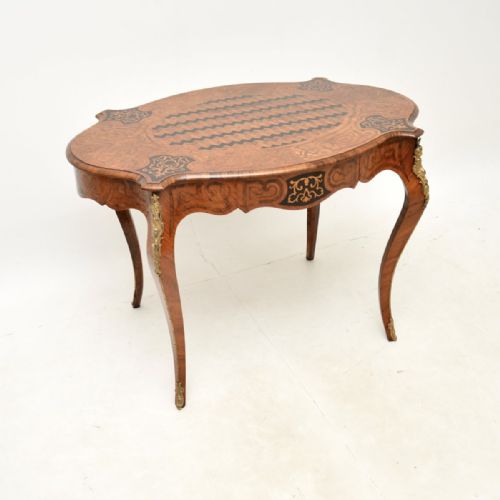
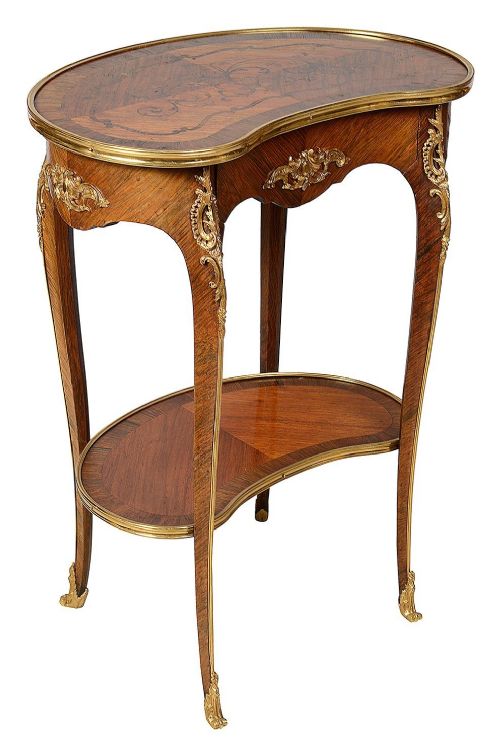
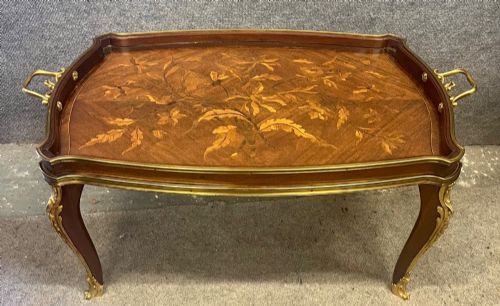
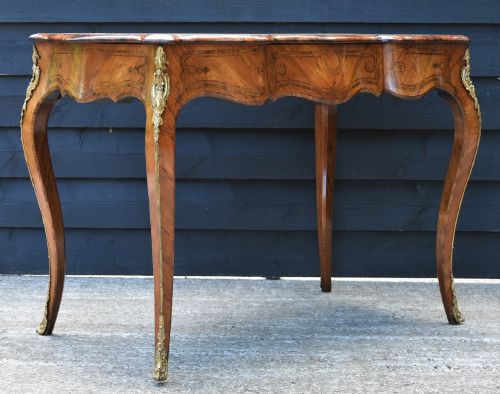
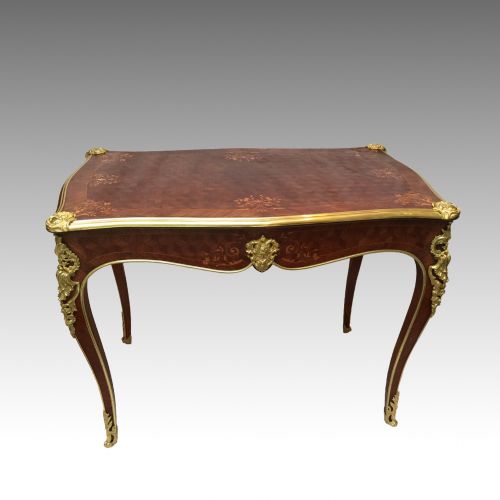
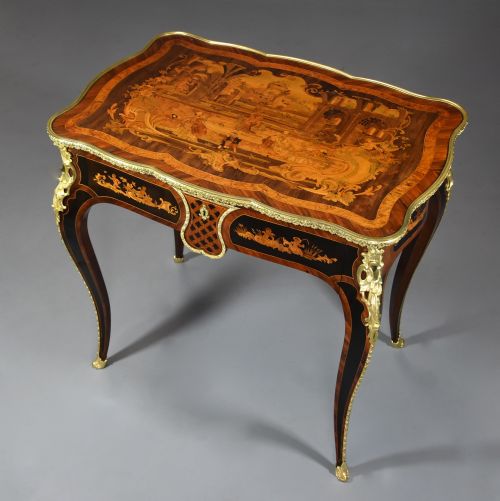
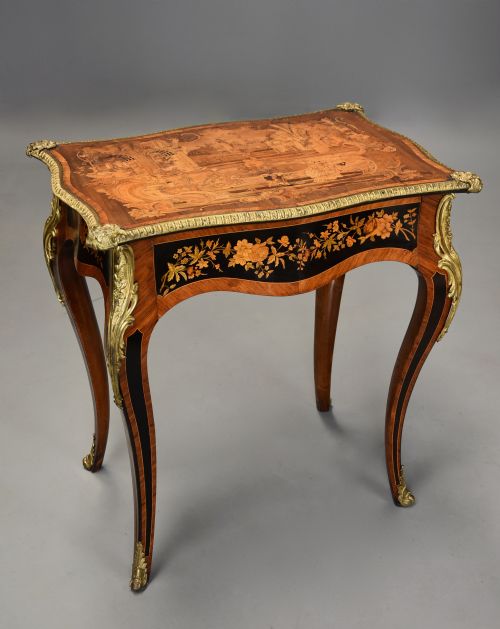
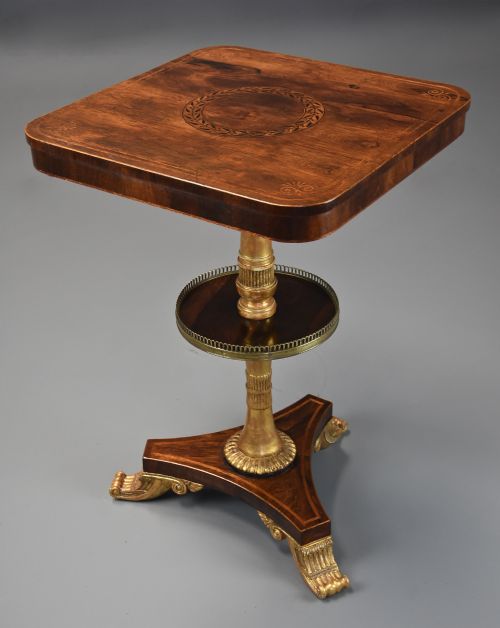
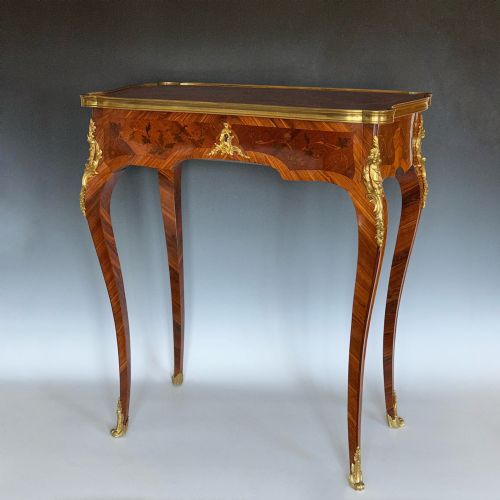
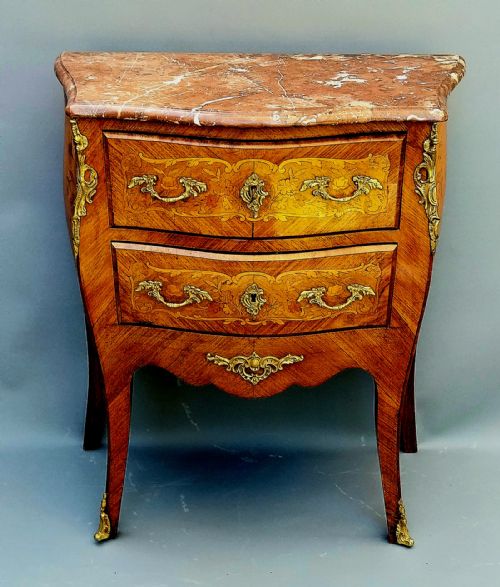
A gilt inlaid table combines finely figured timbers with contrasting metal stringing and gilt bronze mounts, serving as a decorative surface in a principal room.
Centre tables, writing desks, and occasional tables dominate the selection, heavily influenced by French revival styles of the nineteenth century.
Most examples originate from the Victorian era and the Napoleon III period, reflecting a distinct preference for elaborate marquetry and parquetry.
How they were made
Craftsmen utilised dense exotic hardwoods such as kingwood, rosewood, walnut, and ebonised wood as the primary foundation for intricate surface patterns.
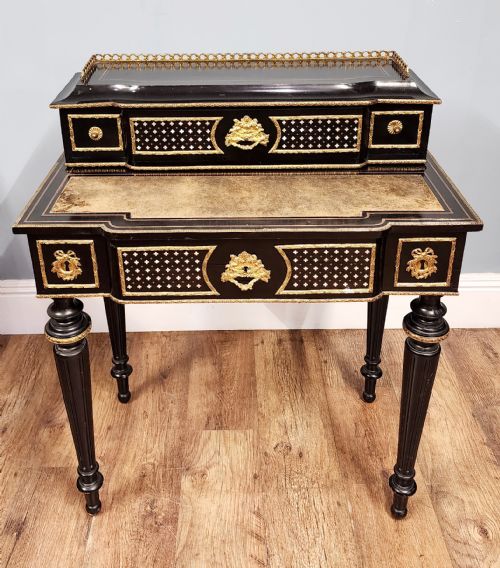
Brass, ormolu, and gilt bronze provide the metallic inlay and structural mounts that define the aesthetic of these tables.
Listings feature extensive use of kingwood, rosewood, and walnut paired with ormolu mounts.
What varies in quality
The precision of the marquetry cutter and the depth of the gilt bronze chasing set superior examples apart from standard workshop production.
The choice of underlying timber, from simple mahogany to highly figured amboyna and burr walnut, dictates the standing of the piece.
Edward Holmes Baldock·Maison Millet·Samuel Marti·Gillows
The Gilt Inlaid Table Glossary
- Ormolu
- Gilded bronze used for decorative mounts and furniture trim. This technique became widely utilised in French cabinet making during the eighteenth and nineteenth centuries.
- Marquetry
- The art of applying pieces of veneer to a structure to form decorative patterns. Craftsmen cut various woods and metals together to fit snugly into the prepared ground.
- Parquetry
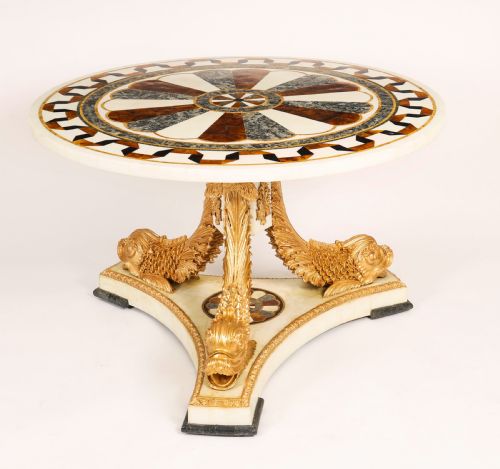
- Geometric mosaic woodwork used for floors and tabletops. It relies on symmetrical repeating shapes rather than pictorial scenes.
- Bonheur-du-jour
- A light ladies writing desk featuring a small cabinet or set of shelves on top. This form emerged in France during the mid-eighteenth century and remained popular through the nineteenth.
- Pier table
- A small table designed to sit against a wall beneath a mirror or window. These pieces often feature elaborate gilt mounts to complement surrounding interior architecture.
Gilt Inlaid Table: Frequently Asked Questions
Where did they place a gilt inlaid table?
These tables stood in drawing rooms, salons, and entrance halls where their reflective metal surfaces caught the light. Centre tables occupied the middle of the room as freestanding decorative statements.
Smaller occasional and side tables rested against walls or beside seating furniture. Their refined appearance suited formal entertaining spaces.
How do I identify nineteenth century pieces?
Nineteenth century examples typically display revival styles such as Louis XV or Napoleon III alongside rich timber veneers. The construction methods combine traditional hand-cut joinery with cast ormolu mounts.
Examining the underside and drawer linings reveals the transition from hand tools to early mechanisation. The presence of specific maker stamps can also confirm the date and origin.
What is the difference between marquetry and parquetry?
Marquetry uses varied veneers to create pictorial compositions such as floral sprays or architectural scenes. It requires considerable skill to shade and fit each individual element together.
Parquetry constructs geometric and repeating patterns using cubes, triangles, or squares. Both techniques often incorporate metal stringing to enhance the overall design.
How should I care for a wood and ormolu table?
Maintain a stable indoor environment away from direct sunlight and strong heat sources to protect the delicate veneer and timber. Gentle dusting with a dry cloth prevents the accumulation of grit.
Avoid commercial polishes containing silicone, which can penetrate aged French polish finishes. Professional conservation ensures the gilt bronze and marquetry remain secure.