
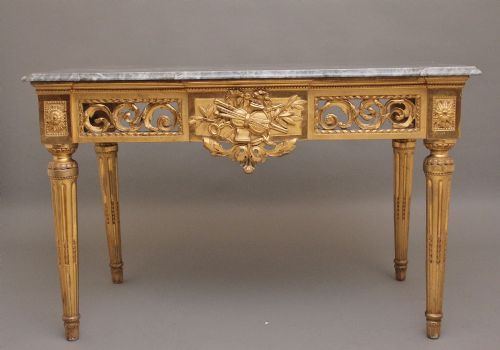
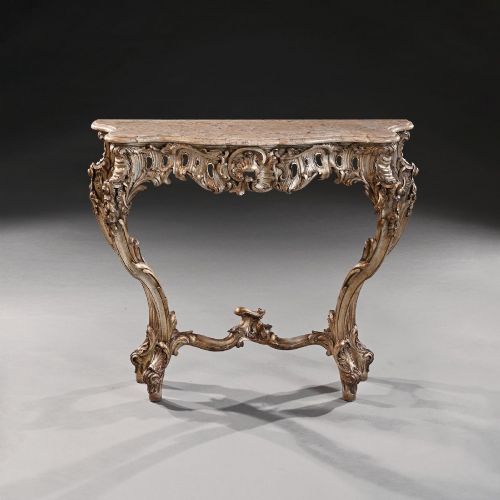
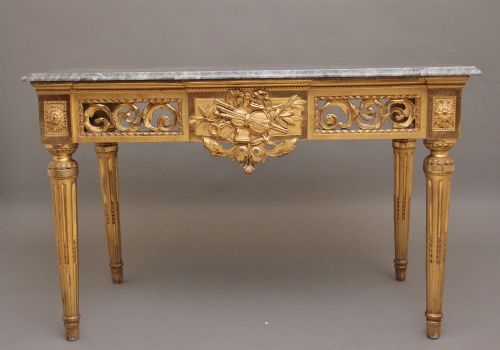
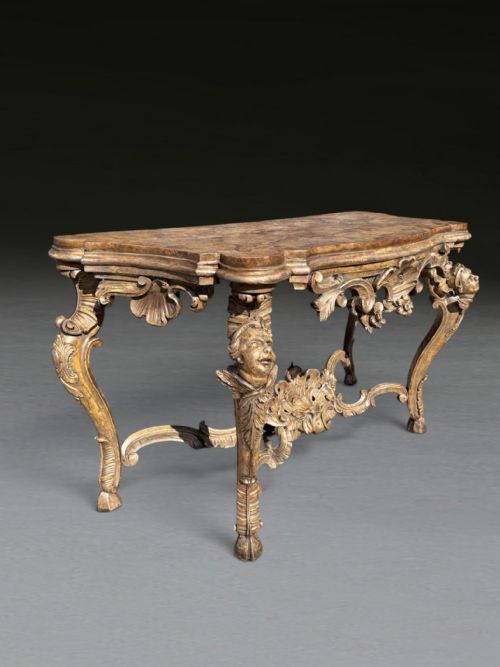
Gilt Hall Table
These pieces combine gilded surfaces and stone tops to anchor an entrance with architectural presence.
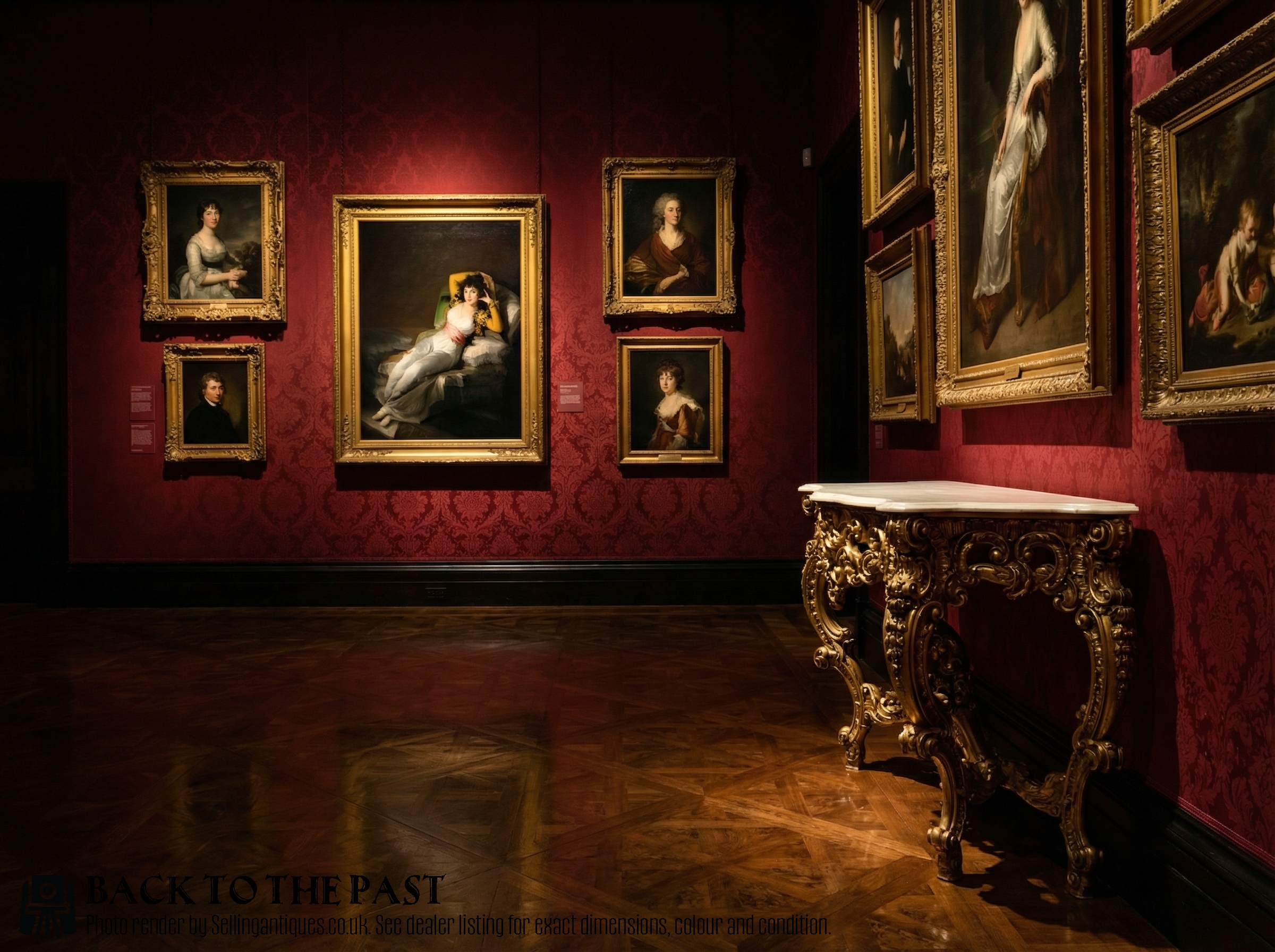
Gilt Hall Table
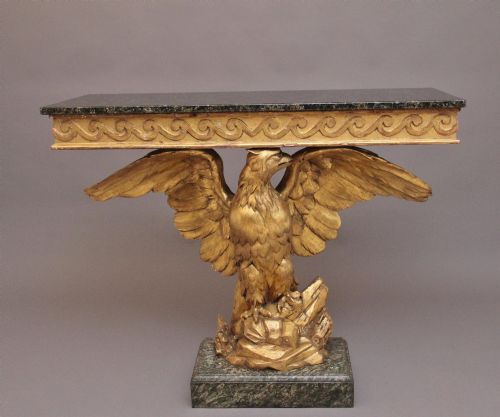
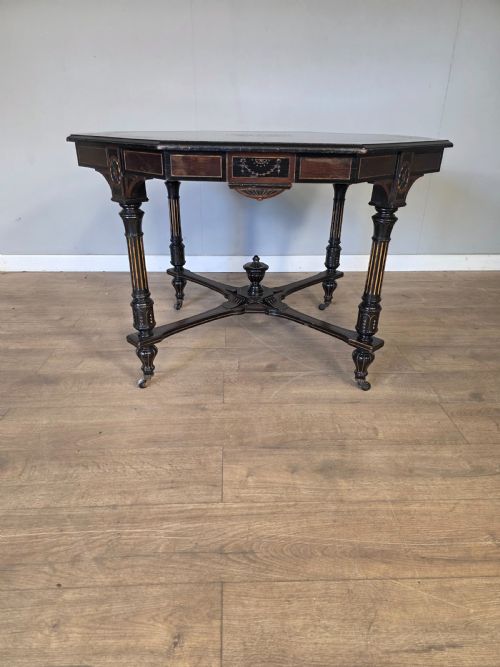
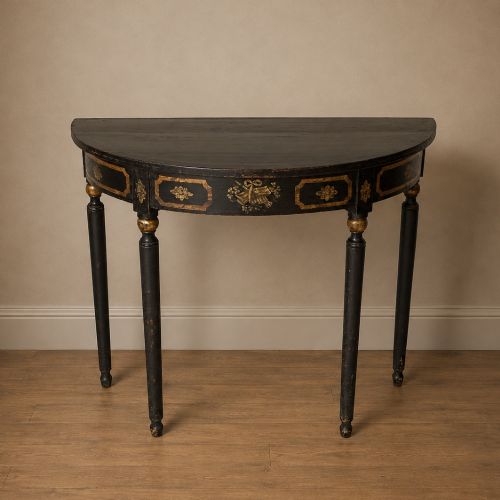
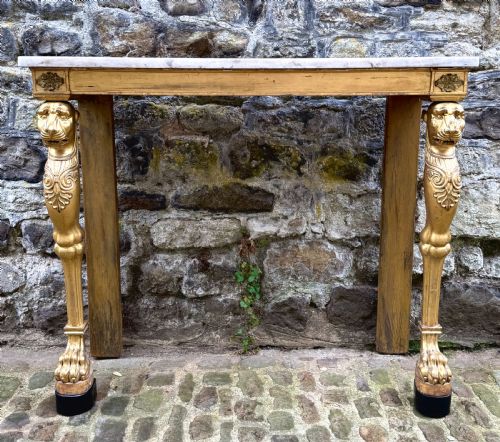
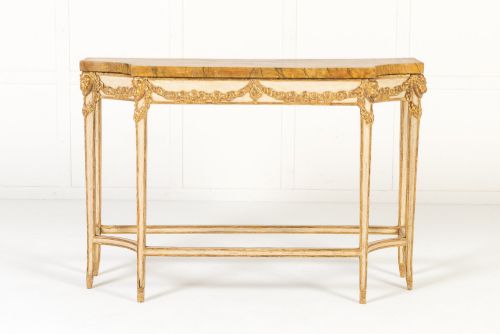
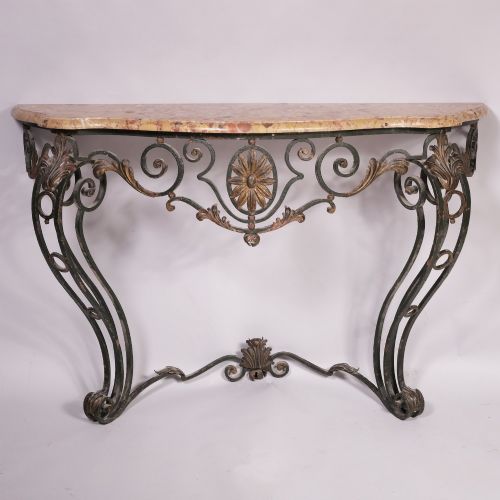
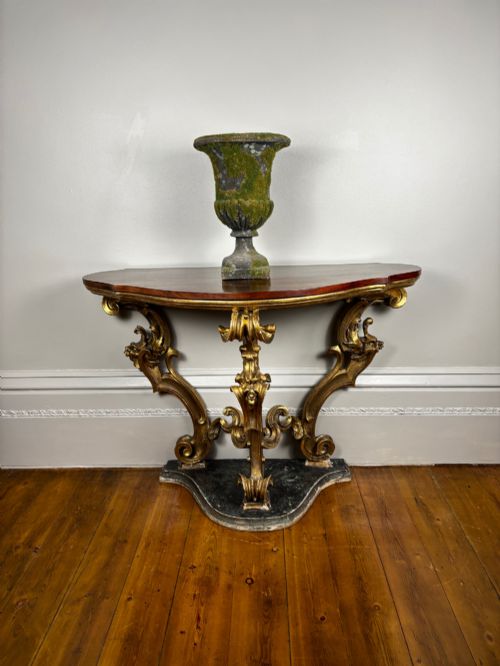
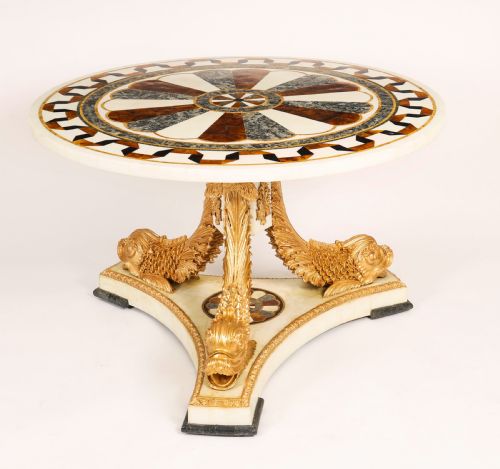
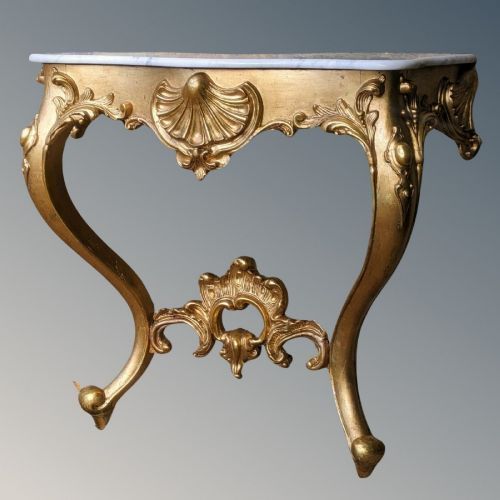
A gilt hall table serves as a statement piece in an entranceway, taking the form of a console, pier table, or side table designed to stand against a wall. The pieces recorded here span the eighteenth, nineteenth, and early twentieth centuries, drawing on neoclassical, Regency, and rococo styles.
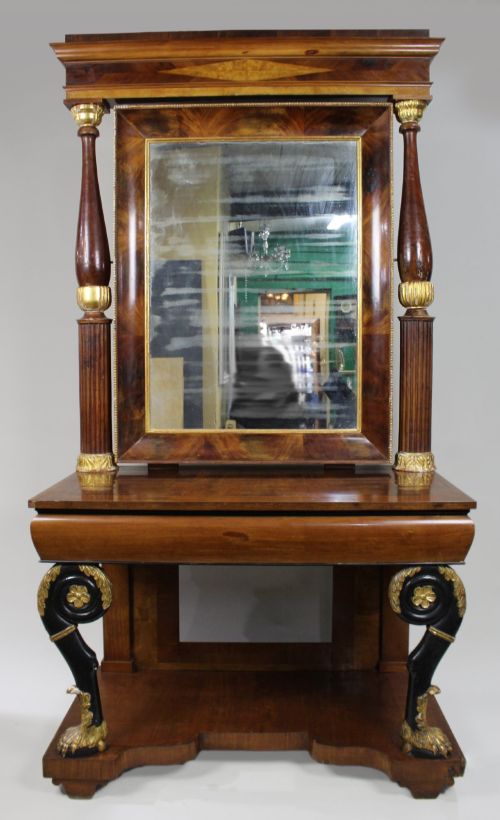
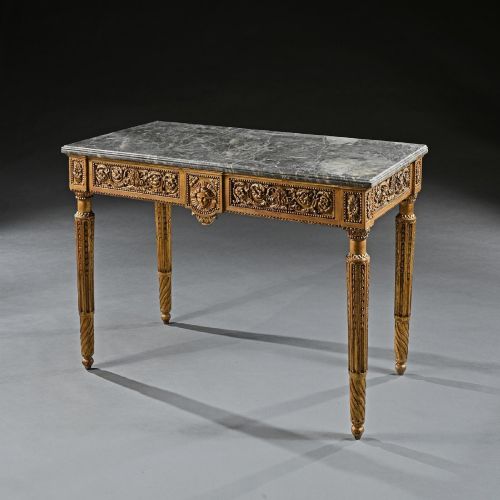
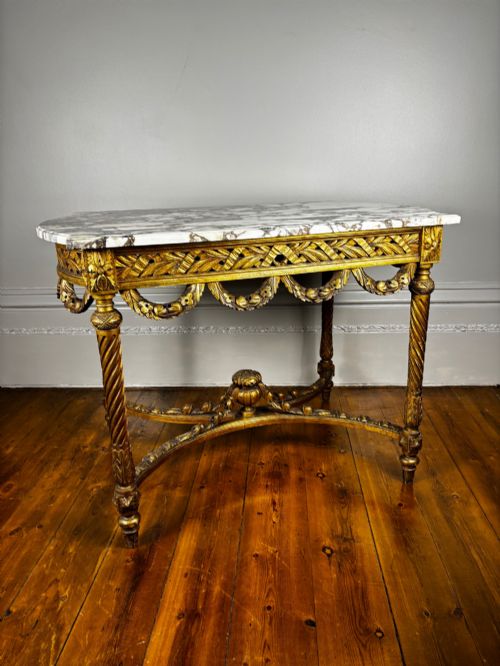
Console tables dominate the selection, frequently paired with matching wall mirrors or topped with shaped marble slabs. Examples range from Italian carved giltwood creations to French painted and parcel-gilt designs.
Makers and workshops across Italy, France, and England produced these items using hardwoods like mahogany, walnut, and rosewood, applying gold leaf, gesso, or paint to achieve an ornate finish.
Materials and construction
Carved wood forms the structural carcass of these tables, utilising timber substrates such as mahogany, walnut, kingwood, and pine. Artisans applied gesso as a smooth preparation layer directly onto the wood before laying down gold leaf or silver gilt.
Surface ornamentation relies heavily on parcel-gilt details, paintwork, and hand-carving in neoclassical and rococo motifs. Heavy stone slabs, including marble and breccia, sit atop the wooden bases to provide a durable and cool-toned surface.
Some tables come fitted with hidden depths designed strictly to make grand entrances look even more impressive to arriving guests.
Distinctions in quality
The refinement of the carving separates standard examples from exceptional ones, particularly in the depth and sharpness of floral swags, scrolls, and figural supports. Hand-applied gold leaf demonstrates superior longevity and lustre compared to plain metallic paint or later secondary gilding.
The choice and thickness of the inset stone top also dictate grade, with matched Italian marble or figured rouge and carrara slabs marking out superior commissions from simpler painted wooden tops.
The Gilt Hall Table Glossary
- Console table
- A table supported by wall brackets or console legs, designed to stand flush against a wall. These items rarely stand independently without wall fixation.
- Giltwood
- Timber that has been coated with thin sheets of gold leaf over a prepared gesso ground. This technique creates a luminous metallic finish.
- Gesso
- A plaster-like mixture applied to wood to create a smooth surface for gilding or painting. It allows carvers to crisp up fine decorative details.
- Parcel-gilt
- A decorative treatment where only specific carved elements or raised details are gilded, leaving the underlying wood or paint exposed. This contrasts textures across the furniture.
- Demi-lune
- A half-moon shape characteristic of tables built to fit tightly against entrance walls. This curved profile saves floor space in narrow hallways.
Gilt Hall Table: Frequently Asked Questions
How do I style a gilt hall table?
Position the table flat against a primary hallway wall, allowing the stone top and gilded frame to catch natural light from nearby doors or windows.
Keep surface objects minimal to let the carved woodwork and marble figuring remain the visual focus of the entrance.
Were these tables made for hallways originally?
Many examples functioned as pier tables or console tables placed between windows in formal reception rooms rather than narrow corridors.
Their shallow depths and decorative front legs made them equally suited for grand entrance spaces and domestic hallways over the centuries.
How do I identify a nineteenth-century piece?
Look for construction traits typical of the period, such as mahogany or walnut framing beneath the gesso and hand-beaten gold leaf application.
Stylistic revivals during the Victorian era often borrowed heavily from earlier French rococo and Italian neoclassical vocabulary.
How do I care for the gilded surface?
Dust the carved woodwork gently with a dry, soft feather duster or an untreated microfiber cloth to protect the delicate gold leaf layer.
Avoid liquid cleaners, chemical polishes, and excessive moisture, which can lift the underlying gesso and damage the metallic finish.