
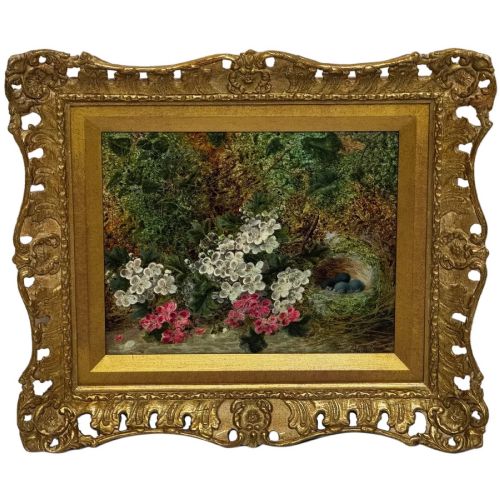
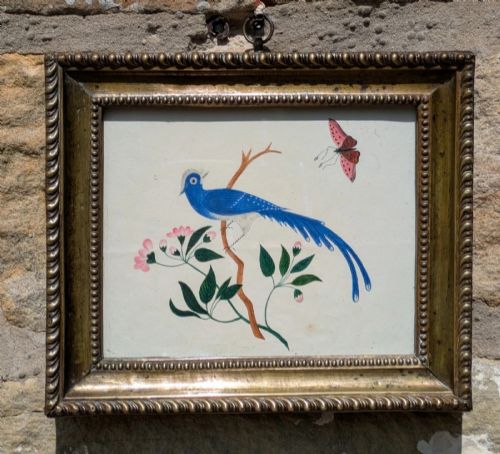
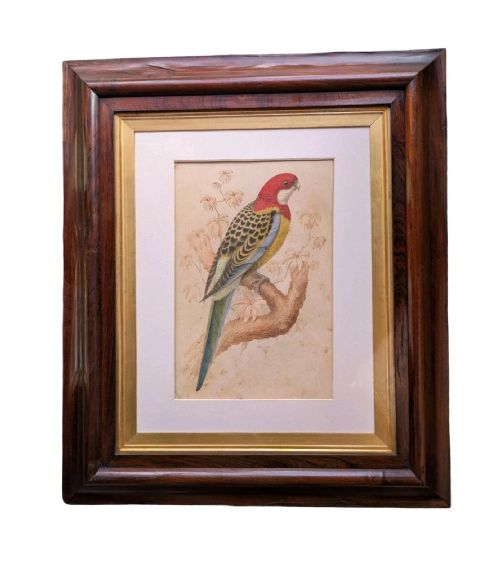
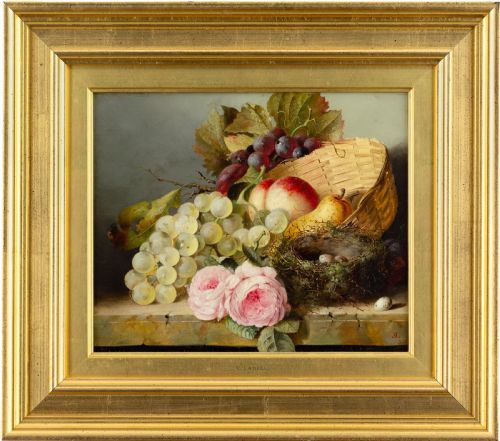




Gilt Framed Bird Picture
A gilt framed bird picture brings the detail of natural history and decorative art directly onto the wall.
Gilt Framed Bird Picture
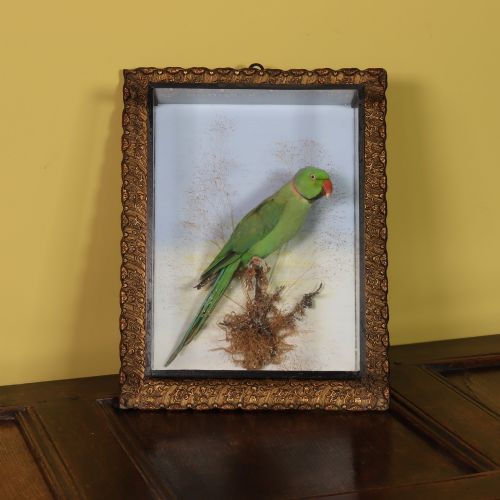
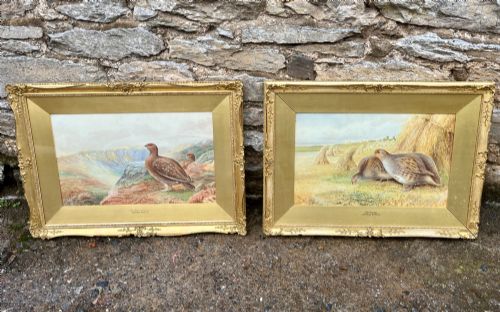
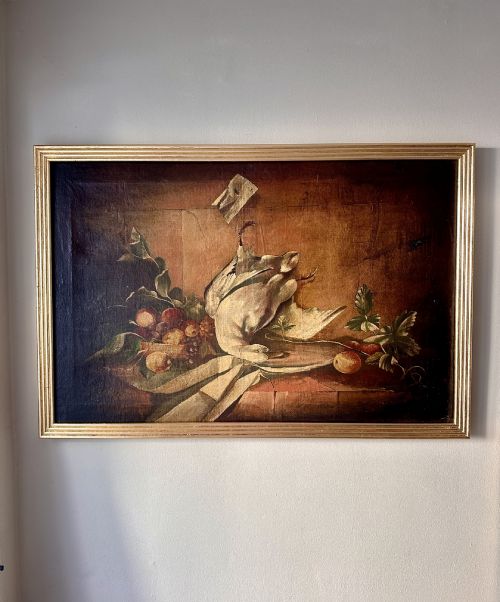
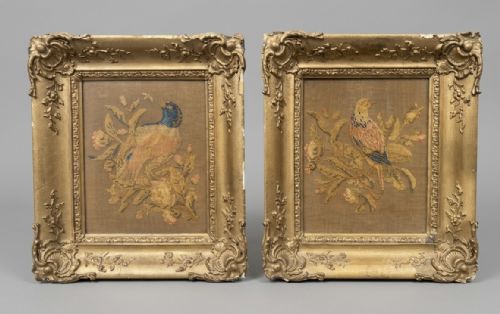
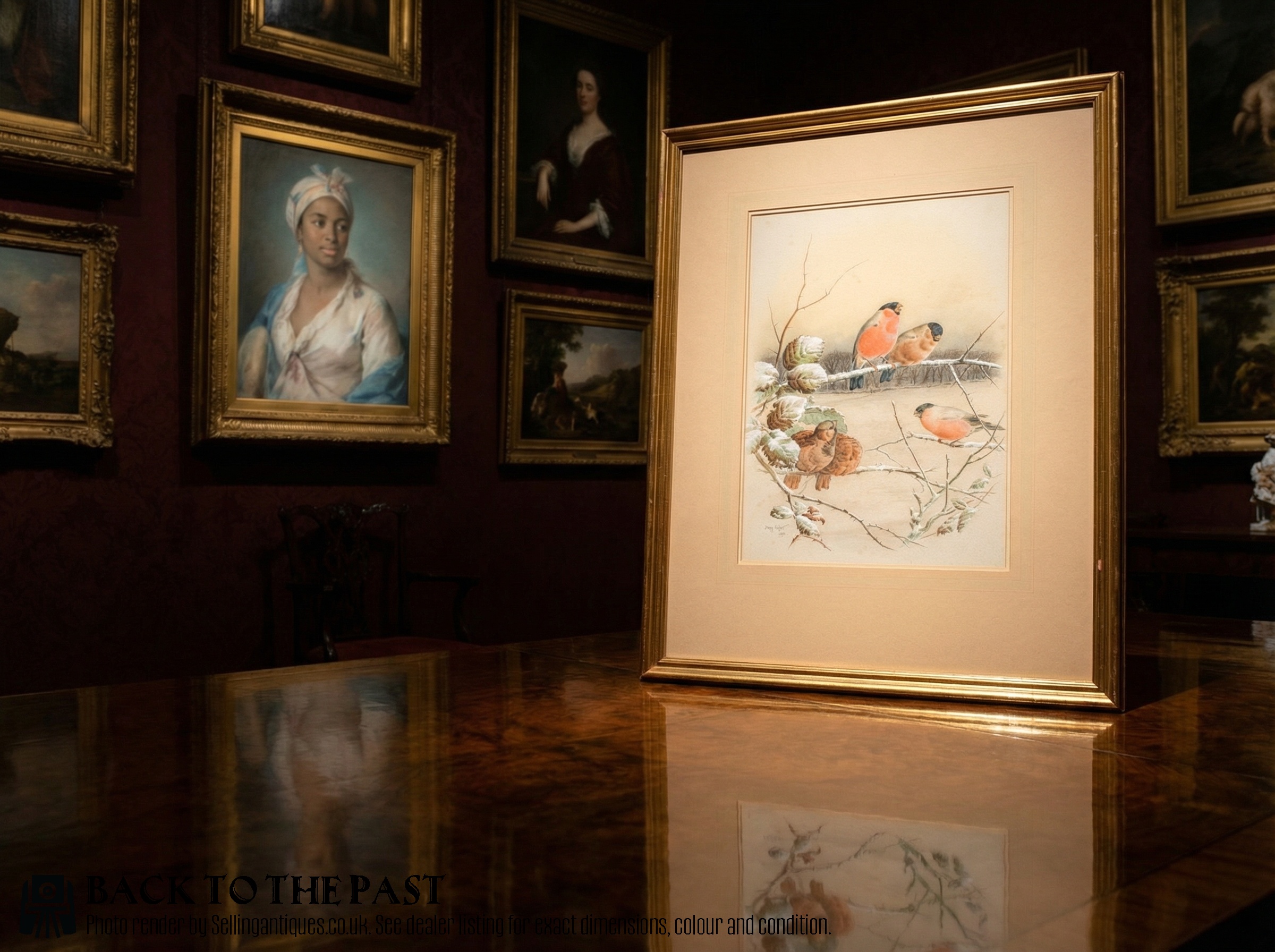
A gilt framed bird picture encompasses various artistic mediums depicting avian subjects, housed within gold-toned or gilded surrounds. These pieces range from delicate watercolours and oil paintings to coloured lithographs, engravings, embroideries, and three-dimensional taxidermy cases.
The selections span multiple periods, with nineteenth-century examples appearing frequently alongside Regency and Edwardian pieces. Buyers encounter both British and continental schools, capturing subjects from exotic parrots and game birds to local finches and waterfowl.
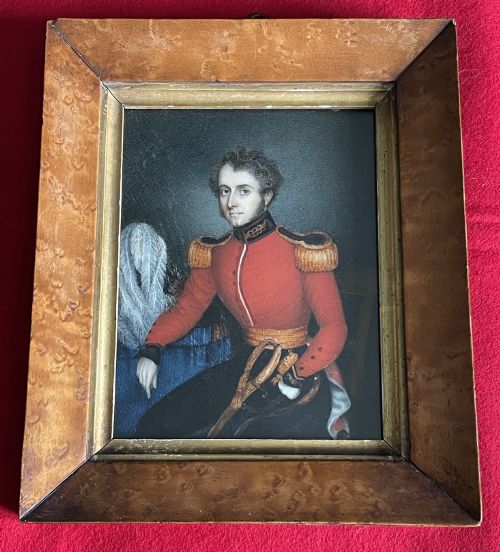
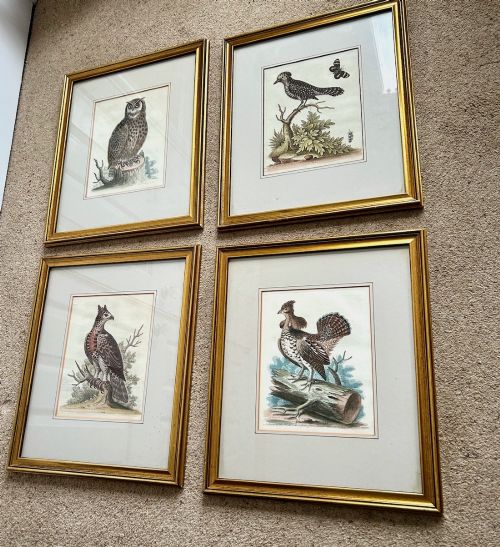
Forms vary from intimate miniature paintings and single prints to pairs and sets of four or eight. Whether searching for a vibrant watercolour or a detailed scientific engraving, the common thread is the combination of avian iconography and gilded framing.
Materials and Technique
The physical construction relies on traditional framing materials such as wood, glass, paper, and gold leaf or giltwood. Artists applied watercolours, oils, or pastels onto paper, canvas, silk, or board, while printmakers utilised lithography, mezzotint, and engraving techniques.
Makers shaped wooden mouldings and applied layers of gold leaf or gilt to create the characteristic reflective borders that protect and elevate the artwork. In taxidermy cases, glass fronts enclose prepared specimens set against naturalistic backgrounds within wooden frames.
Listings feature works from the eighteenth, nineteenth, and twentieth centuries, utilising materials like gold leaf, paper, glass, and watercolour.
Assessing Quality
Quality rests upon the execution of the artwork and the craftsmanship of the frame. Skilled brushwork in oil paintings and watercolours, or precise hand-colouring on early engravings and lithographs, distinguishes finer examples from standard decorative prints.
The integrity and depth of the gilding on the wood frame play a significant role. Original gold leaf applied over gesso ages with a warm patina, whereas later or lesser replacements lack the crisp detail of period mouldings.
Oliver Clare·Edward Ladell·William Bazeley And Sons·George Rankin·R Hurst·George Edwards·Harry Bright·Eloise Harriet Stannard·William Swainson·Rev B Morris
The Gilt Framed Bird Picture Glossary
- Lithograph
- A print made from a design drawn on a limestone or metal plate. This planographic process allowed for fine detail in early bird illustrations.
- Giltwood
- Wood that has been coated with gold leaf or a gold-coloured finish. It provides the reflective border typical of these decorative frames.
- Mezzotint
- A printmaking process of the intaglio family where the surface is roughened to achieve tonal gradations. It creates soft shadows suited to pictorial scenes.
- Micromosaic
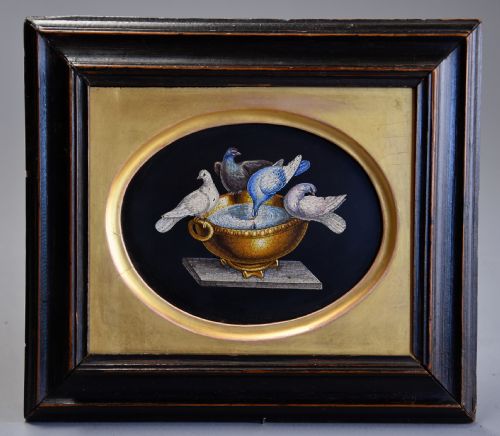
- A picture formed by assembling tiny glass tesserae into a detailed design. These plaques appeared in decorative frames during the nineteenth century.
- Taxidermy case
- A three-dimensional display enclosing a preserved specimen within glass and wood. These enclosures protected delicate feathers from dust and damage.
Gilt Framed Bird Picture: Frequently Asked Questions
How do I hang a heavy gilt framed bird picture safely?
Use picture wire or brass fixings rated for the weight of the wood and glass. Ensure the wall anchor secures directly into a stud or uses proper cavity fixings.
Check that the framing joints and hanging rings remain stable before mounting the piece at eye level.
What lighting protects these watercolours and prints?
Position pieces away from direct sunlight to prevent the fading of watercolours and coloured lithographs. Indirect ambient light preserves the integrity of paper and pigments.
Utilise low-heat LED bulbs if artificial picture lights are installed above the frame.
How should I clean the glass and gilt frame?
Dust the gilt wood gently with a dry, soft brush to remove surface particles without disturbing the gold leaf. Avoid harsh chemical cleaners that strip the metallic finish.
Apply glass cleaner to a cloth rather than directly onto the glass to prevent moisture seeping behind the frame rabbet.
Can I display these pictures in a hallway?
Hallways experience temperature fluctuations that can affect paper and wood over time. Stable interior environments help maintain the condition of antique frames and art.
Ensure high-traffic corridors will not cause accidental bumps against protruding mouldings or taxidermy cases.