
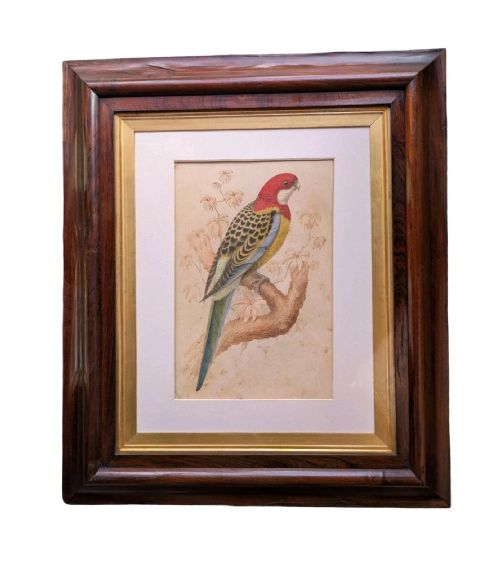
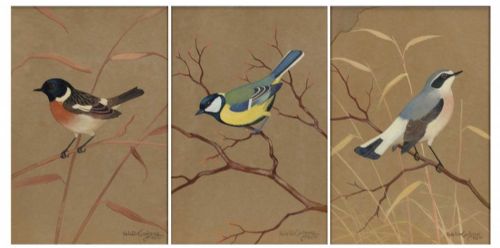


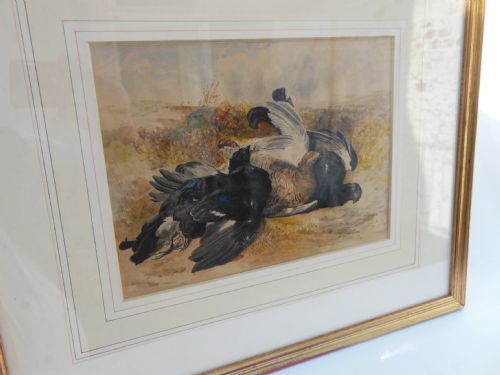
Ornithological Watercolour Study
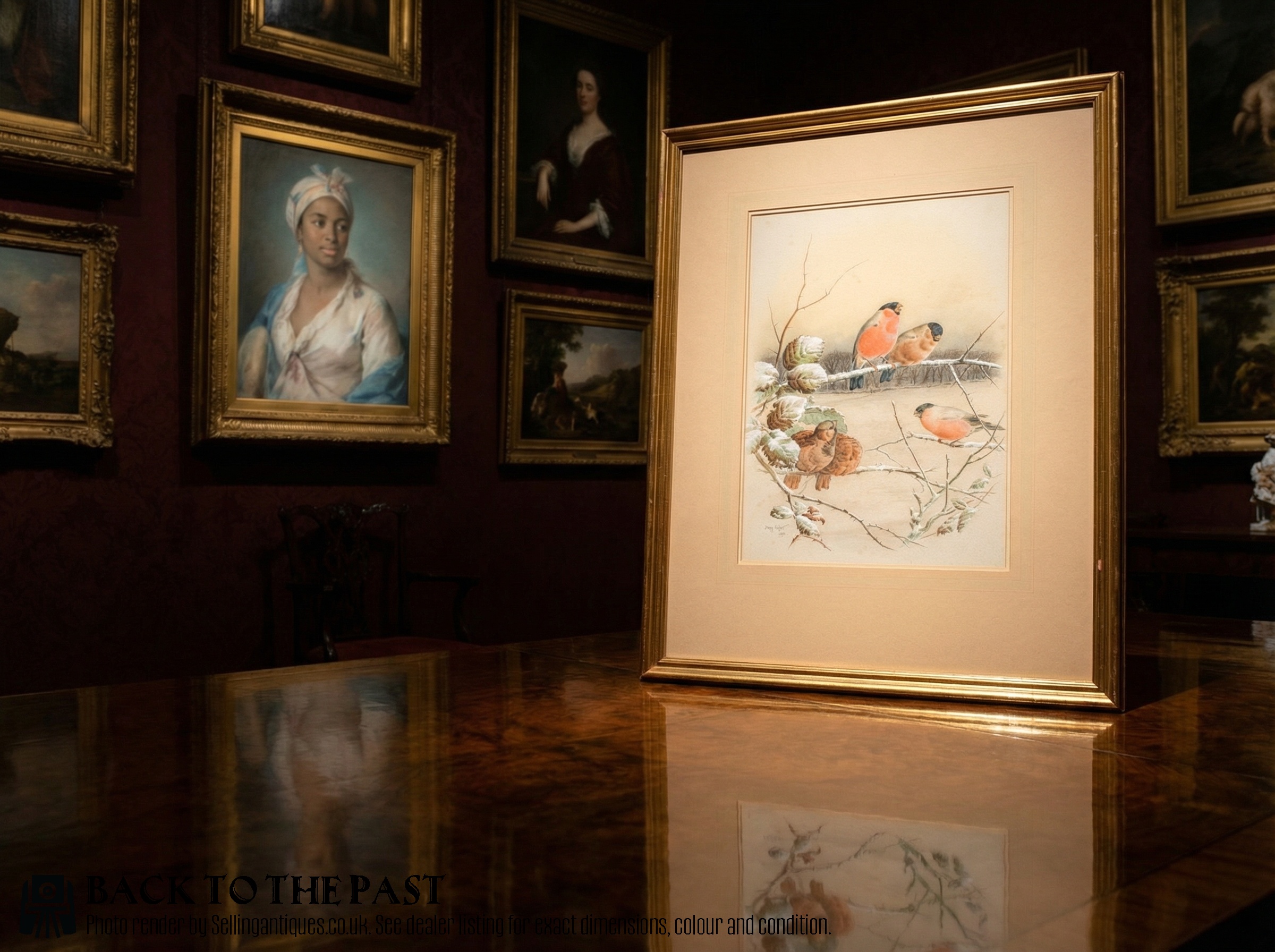
These ornithological watercolour study pieces bring feathered specimens directly into rooms, capturing fine detail and colour through careful pigment work on paper.
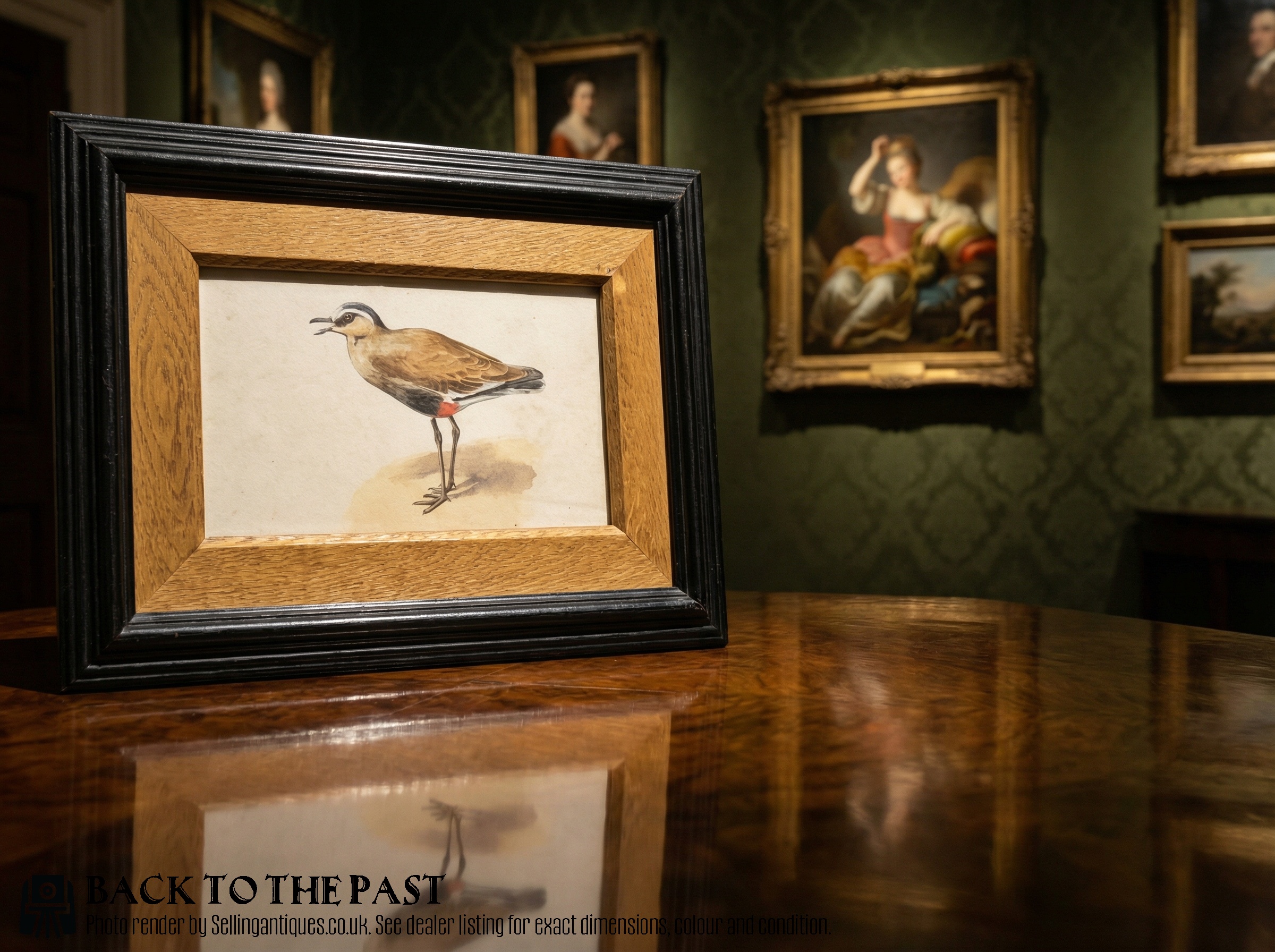
Ornithological Watercolour Study
An ornithological watercolour study records birds with precise observation, ranging from single subjects to grouped garden species.
Buyers browsing this selection frequently encounter Victorian natural history watercolours alongside mid-century British art interpretations.
Works on paper span from the nineteenth century into the twentieth century, often framed behind glass in wood or gilt mounts.
Materials and technique
Artists applied watercolour and gouache directly onto paper sheets to render feather textures and natural markings.
Finished paintings received framing protection using wood, ebonised surrounds, and deep giltwood mounts.
Common framing materials include wood, glass, ebonised timber, and gilt mounts.
Factors influencing quality
Draftsmanship precision and anatomical accuracy distinguish skilled natural history illustrations from simpler decorative sketches.
The vibrancy of the original pigments and the preservation state of the paper determine the visual impact of each study.
R. Hurst·Ralston Gudgeon·M Simpson·William Andrews Nesfield·Harry Bright·Arthur Wardle·Paul-Louis Barruel·Donald Watson
The Ornithological Watercolour Study Glossary
- Gouache
- An opaque watercolour paint that provides heavier coverage and brighter highlights than transparent washes. It is frequently applied to accentuate feather details.
- Mount
- A cardboard frame placed inside the glazing to separate the artwork from the glass. Deep giltwood versions enhance Victorian framing.
- Ebonised
- Wood treated to imitate ebony wood, producing a dark, uniform finish. This treatment appears frequently on nineteenth-century picture frames.
- Natural history illustration
- Scientific or artistic depiction of animals and plants. These studies balance aesthetic merit with precise biological observation.
Ornithological Watercolour Study: Frequently Asked Questions
How should these watercolours be hung?
Keep works out of direct sunlight to prevent the watercolour pigments from fading over time.
Group smaller framed studies together on a wall to create a balanced natural history display.
Are these works original paintings?
Every listed piece is a hand-painted watercolour on paper rather than a mechanical print.
Brushstrokes and pigment texture remain visible upon close inspection under the glass.
How do I identify Victorian pieces?
Victorian watercolours often feature detailed ornithological subjects accompanied by heavy ebonised frames and gilt mounts.
Signatures and paper characteristics also help align pieces with nineteenth-century production methods.
What subjects appear most frequently?
Parrots, finches, jays, lapwings, and game birds represent the primary avian subjects found in these studies.
Artists frequently depicted birds perched among natural foliage or blossom branches.