


19th Century Ornithology Art
19th century ornithology art captures avian life through period hand coloured prints and delicate watercolour paintings.
19th Century Ornithology Art
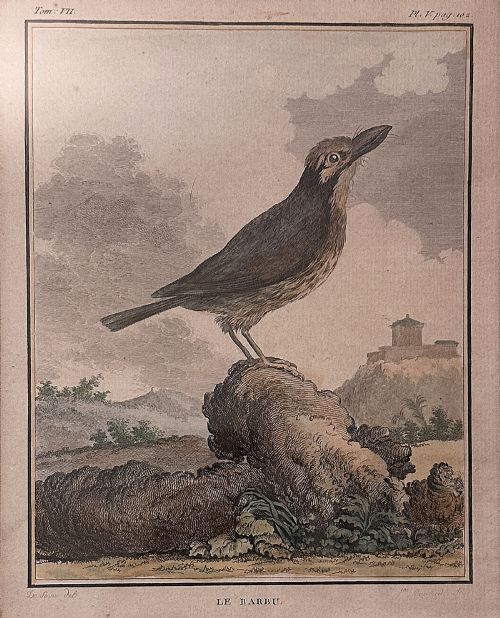
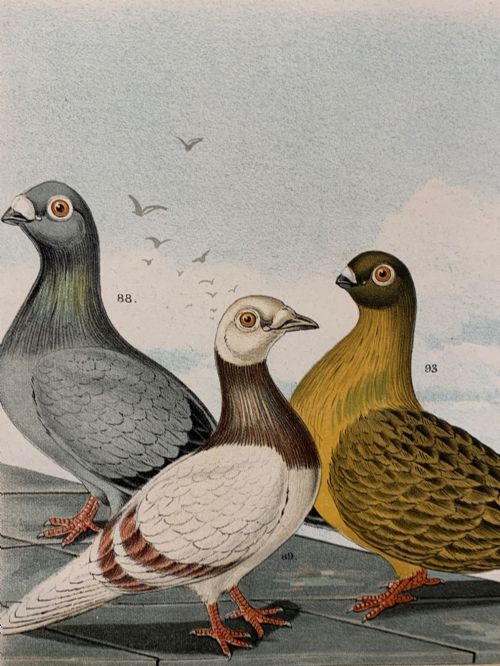
When you search for 19th century ornithology art, you encounter framed paintings, prints, lithographs, and engravings depicting birds. These works record natural history interest across the nineteenth century and into later periods.
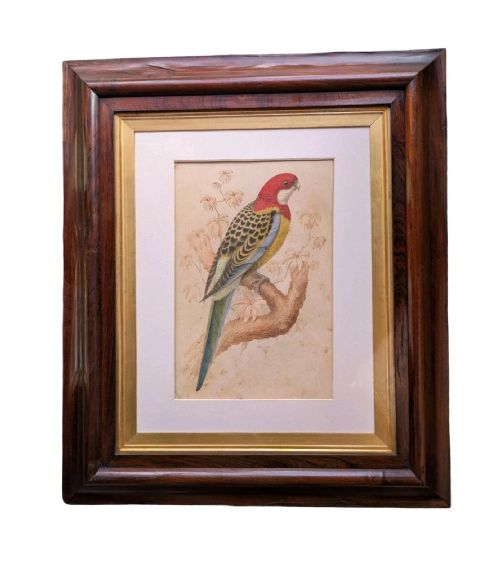
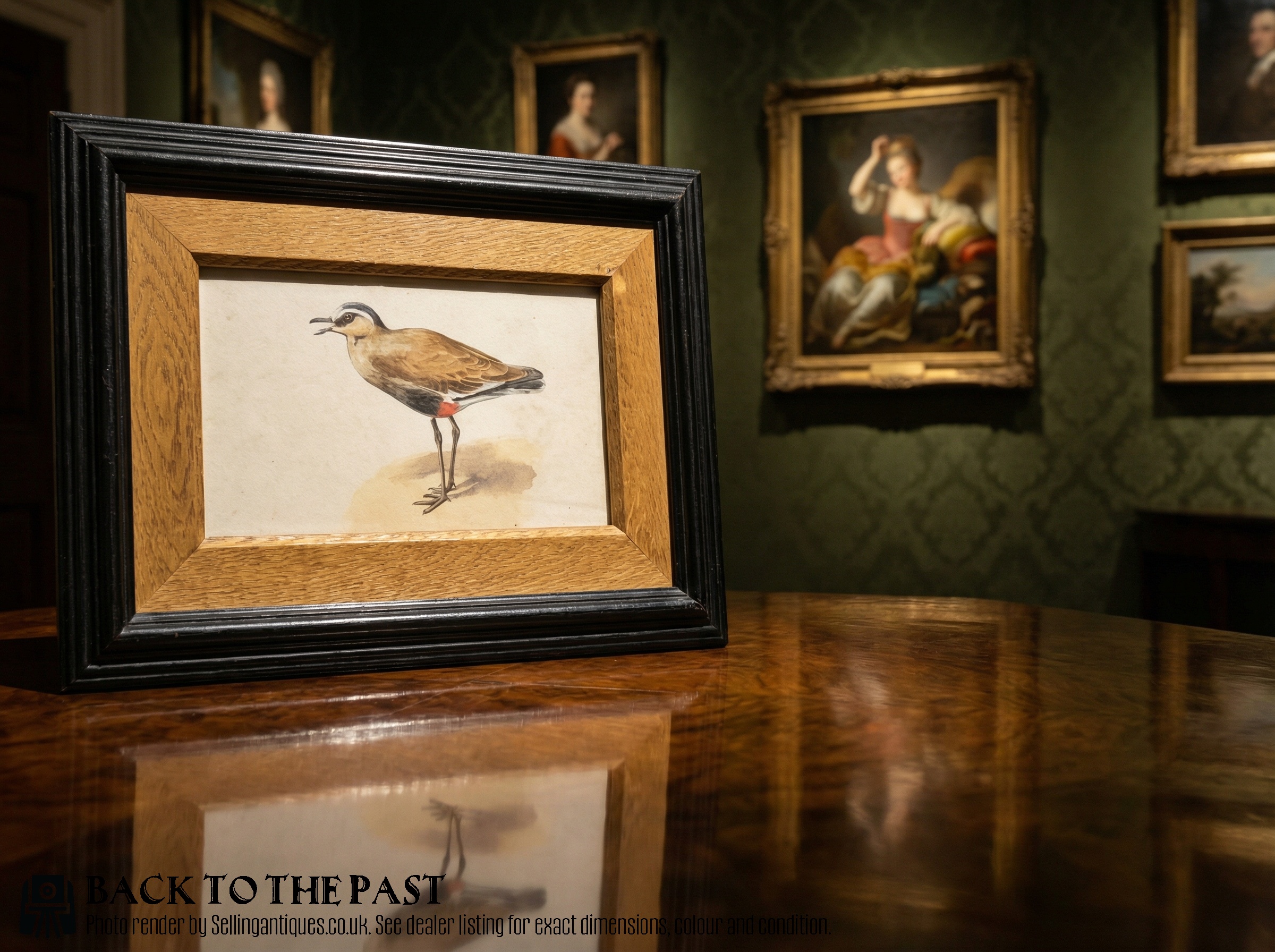
You are most likely to meet hand coloured lithographs and watercolour on paper, often set within wood or ebonised frames with gilt mounts. Subjects range from individual parrots and pigeons to sets of tropical birds and water fowl.
The material evidence spans paper, glass, wood, and gold leaf, styled through Victorian naturalism and natural history. Individual artists and publishers like William Swainson and Edward Lear produced these detailed studies.
How these works were made
Artists and illustrators applied ink and watercolour directly to paper, or prepared detailed engravings and lithographs for manual tinting. Skilled hands added pigment to printed outlines to achieve lifelike plumage colours.
Finished plates and paintings received framing in wood, frequently enhanced with gold leaf, gilt, or deep giltwood mounts behind protective glass. This framing method preserved the paper surfaces from environmental damage over generations.
Mother Faux’s Macaw peers out from Farnley Hall, immortalised in watercolour by William Andrews Nesfield.
What varies in quality
Quality rests in the precision of the initial drawing and the sensitivity of the hand colouring applied to the feathers and forms. Finer examples capture anatomical accuracy alongside subtle tonal shifts in the pigments.
The integrity of the mounting and framing materials also distinguishes the pieces, with period ebonised wood and original gold leaf mounts offering greater historical cohesion than later replacements.
William Andrews Nesfield·William Swainson·Edward Lear·Rev B Morris·R Hurst
The 19th Century Ornithology Art Glossary
- Lithograph
- A print made from a planographic surface, typically a stone or metal plate, where the image is applied with a greasy medium. Hand colouring was frequently added afterwards.
- Engraving
- An image produced by cutting lines into a metal plate with a sharp tool, which then held ink for transfer to paper under pressure. These lines created crisp outlines for subsequent tinting.
- Watercolour
- A paint consisting of pigment suspended in a water soluble vehicle, applied to paper to achieve translucent colour effects. It formed the medium for original studies and preparatory works.
- Gold Leaf
- Gold beaten into extremely thin sheets, utilised for gilding frames and mounts to highlight the artwork within. It provides a reflective border suited to Victorian display.
- Ebonised
- Wood treated to resemble ebony, achieving a dark, polished black finish popular in nineteenth century framing. It contrasts sharply with the bright pigments of bird illustrations.
19th Century Ornithology Art: Frequently Asked Questions
Are these works original period pieces?
The selection includes nineteenth century watercolours, engravings, and lithographs produced during the eras recorded in the evidence. Materials such as paper, ink, and gold leaf align with period production standards.
Publishers and artists of the time created these plates for natural history publications and individual framing. Examining the paper and framing helps identify the age of each item.
How should I display framed bird art?
Keep works out of direct sunlight to prevent the watercolours and hand applied tints from fading on the paper. Wall placement should avoid damp areas to protect the wood frames and gold leaf.
Glass fronts protect the delicate ink and pigment surfaces from dust and atmospheric moisture. Stable indoor temperatures preserve both the artwork and its historical mount.
What subjects appear in these prints?
Depictions include parrots, pigeons, water fowl, macaws, and tragopans drawn from ornithological studies. Naturalists and artists recorded specific bird breeds with detailed attention to plumage.
Sets often group tropical birds or waterfowl together, reflecting Victorian scientific collecting habits. Individual paintings focus closely on single specimens by named artists.
How do I identify different print techniques?
Engravings show fine, crisp lines pressed into the paper surface where the inked plate met the sheet. Lithographs display smoother tonal transitions without the indented lines characteristic of intaglio printing.
Hand colouring sits visibly on top of the printed or drawn lines with varied brushwork. Watercolours lack a printed matrix entirely, showing direct pigment application to the paper.