


Victorian Bird Engravings
Victorian bird engravings bring historic ornithological study to your walls, offering detailed hand-coloured plates that capture nineteenth-century natural history.
Victorian Bird Engravings
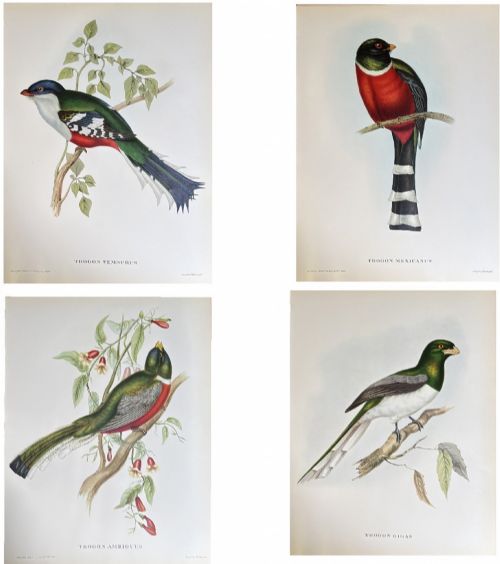
Victorian bird engravings present detailed studies of avian life, often produced as plates for nineteenth-century natural history publications. These works range from framed prints of ducks to sets of ornithological studies by named naturalists.
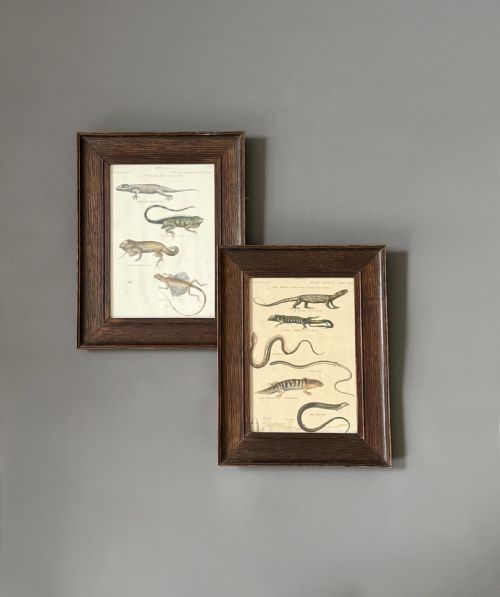
Buyers encountering this phrase find framed prints and wall art alongside broader natural history subjects such as reptile engravings and tropical bird prints. The material spans paper housed behind glass within wooden frames, sometimes accented with gilt and brass fittings.
The selection includes nineteenth-century plates alongside later printings, reflecting a sustained interest in natural history illustration. Pieces vary from single framed examples to sets of four, six, or eight plates.
Materials and production methods
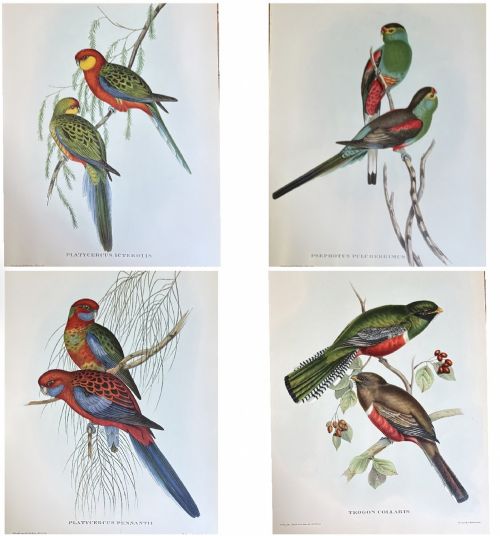
These works are printed on paper using ink plates, frequently finished with hand-applied colour to highlight plumage and botanical details. The resulting sheets are mounted on board or cloth supports for presentation.
Framing materials commonly incorporate wood, glass, gilt finishes, and brass hardware to protect and display the delicate paper surfaces. Many examples retain their original framing context from the nineteenth century or later periods.
Among the feathered subjects, ducks make a distinct appearance alongside tropical birds and reptiles.
Assessing quality in natural history prints
Quality rests primarily on the precision of the initial engraving and the skill of the hand-colouring applied to the paper surface. Finer plates exhibit sharper line definition and more nuanced watercolour washes that remain vibrant.
The condition of the paper and the integrity of the original framing elements, such as wood moulding and glass, influence the overall character of the piece. Complete sets preserved together command distinct attention compared to dispersed individual plates.
John Hancock·William Swainson·Edward Lear
The Victorian Bird Engravings Glossary
- Engraving
- A printmaking technique where an image is incised into a metal plate, holding ink to transfer fine lines onto paper. This method allows for exceptional detail in scientific illustration.
- Hand-coloured
- A process where watercolour or tint is applied by hand to a printed plate after the initial impression. This adds lifelike hues to botanical and ornithological subjects.
- Ornithological
- Pertaining to the scientific study and depiction of birds. Such works served both scientific reference and decorative purposes in nineteenth-century interiors.
- Plate
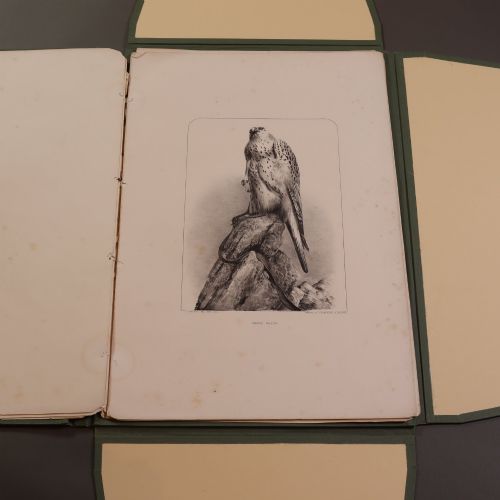
- An individual illustrated page within a bound volume or portfolio, often removed later for framing. Plates typically feature a caption identifying the subject.
Victorian Bird Engravings: Frequently Asked Questions
What are Victorian bird engravings?
These are printed illustrations of avian subjects produced during the nineteenth century, typically originating from scientific folios and natural history books.
Many were subsequently hand-coloured and framed as wall art for domestic display.
How were these prints originally published?
Publishers issued them within large natural history volumes or subscription folios dedicated to ornithology and zoology.
Owners often had individual plates removed and framed to decorate studies and libraries.
How do I care for framed paper prints?
Keep them away from direct sunlight to prevent the hand-applied watercolours from fading over time.
Maintain stable indoor humidity levels to protect the antique paper and wooden frames.
Are these prints hand-coloured?
Many nineteenth-century natural history plates received careful applications of watercolour by hand after the initial ink printing.
This technique brought scientific illustrations to life with realistic plumage colours.