


Victorian Ornithological Art
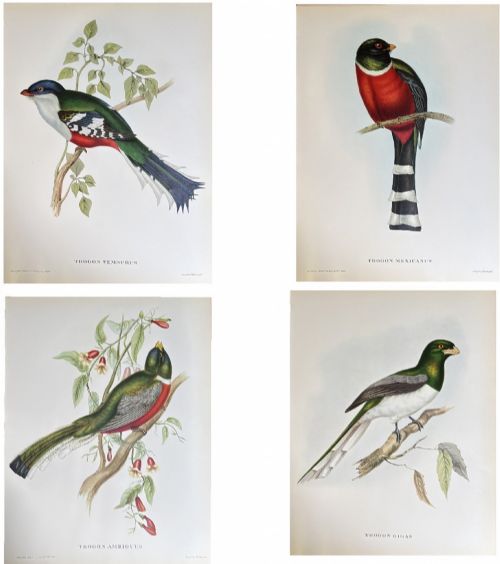
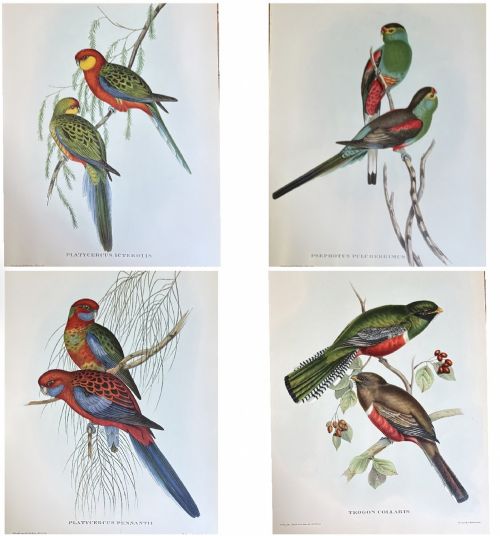
These pieces of Victorian ornithological art capture natural history with precise detail, bringing feathered specimens to life on paper through hand-coloured prints and delicate watercolours.
Victorian Ornithological Art
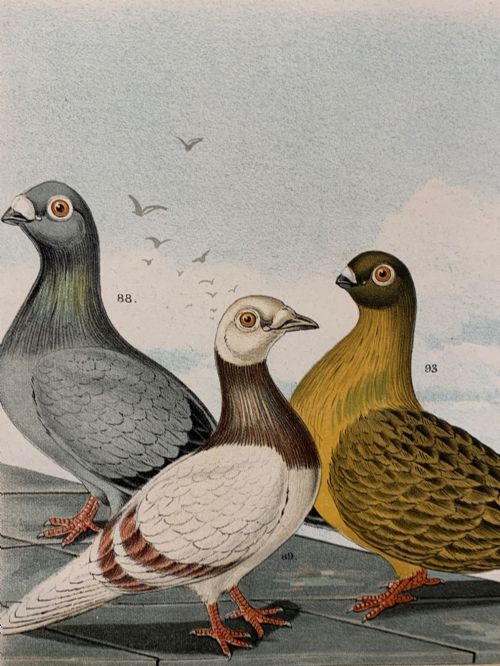
When someone searches for Victorian ornithological art, they are looking at framed prints, engravings, and original watercolours that document bird species from the nineteenth century. The examples met on this page range from hand-coloured lithographs of pigeon breeds and water fowl to detailed paintings of parrots, finches, and game birds.
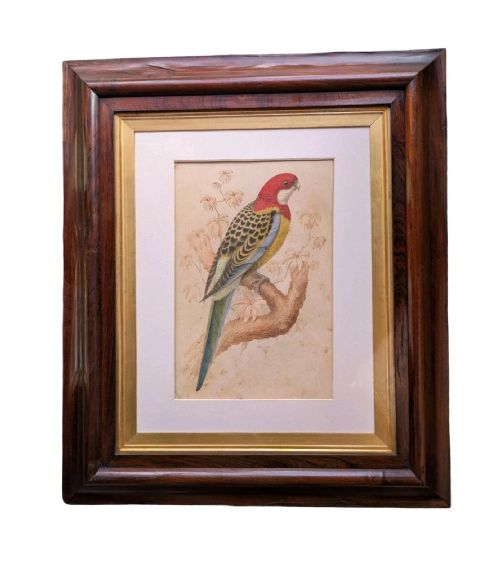
These works appear in various formats, including sets of tropical bird prints, individual framed watercolours in ebonised frames with deep giltwood mounts, and larger ornithological studies. The output spans the Victorian period alongside later twentieth-century iterations reproducing nineteenth-century subjects.
Materials and technique
The foundation of these works relies on paper combined with ink, watercolour paint, and occasionally gold leaf or gilt detailing. Artists and printers utilised lithography and engraving techniques to establish the initial lines before applying watercolour by hand to render the plumage.
Framing often involves wood, with pieces housed behind glass to protect the delicate media. Ebonised finishes and gilt mounts frequently complete the presentation of nineteenth-century watercolours and engravings.
Listings feature paper, glass, wood, ink, gilt, gold leaf, and watercolour paint across nineteenth-century and twentieth-century items.
Judging quality
The distinction between tiers rests upon the precision of the draughtsmanship and the vibrancy of the hand-colouring applied to the paper. Original watercolours by named artists demonstrate a higher degree of individual observation than mass-produced prints.
The integrity of the framing materials, such as period ebonised wood and deep giltwood mounts, contributes to the overall standing of a piece. Preservation of the paper free from heavy fading or discolouration elevates the standing of the work.
R. Hurst·William Andrews Nesfield·Harry Bright·Thomas Blinks·Arthur Wardle·William Swainson·Edward Lear
The Victorian Ornithological Art Glossary
- Lithograph
- A print made from a stone or metal plate on which an image has been drawn with an oil-based substance. This technique allowed for accurate reproduction of detailed bird illustrations.
- Engraving
- A print produced by cutting lines into a metal plate which then hold ink for transfer to paper. This method created crisp outlines suitable for subsequent hand-colouring.
- Watercolour
- A paint consisting of pigment suspended in a water-based solution, applied to paper to achieve translucent colour washes. It was the primary medium for original bird studies.
- Ebonised frame
- Wood finished to resemble ebony, providing a dark, contrasting border around the artwork. These frames are typical of the period.
- Giltwood mount
- A decorative framing element covered in gold leaf or gilt, adding depth and a reflective border to the picture.
Victorian Ornithological Art: Frequently Asked Questions
Are these bird prints original or reproductions?
The selection includes original nineteenth-century watercolours alongside period lithographs and engravings created during the Victorian era. Later twentieth-century print sets reproducing earlier nineteenth-century works also appear in the listings.
Examining the paper stock, ink application, and framing helps determine whether a piece is a contemporary nineteenth-century printing or a later production.
How should I display antique bird art?
These works require placement away from direct sunlight to prevent the watercolour pigments and hand-colouring from fading on the paper. Maintaining stable indoor humidity protects both the paper and the wooden frames.
Grouping sets of prints together on a wall maintains the visual coherence intended by natural history collections of the period.
What subjects are common in this art?
Common subjects include tropical birds, game birds such as ducks and black game, and native British species like blue tits and finches. Detailed studies of specific breeds, including pigeons and exotic macaws, also feature prominently.
Artists focused on anatomical accuracy, capturing the distinct plumage and posture of each avian subject.
How do I identify a Victorian watercolour?
Victorian watercolours often exhibit fine brushwork on period paper stock, sometimes accompanied by the signature of the artist or contemporary inscriptions. The framing materials, including ebonised wood and gilt mounts, typically align with nineteenth-century framing practices.
Comparing the style to documented works by artists from the period aids in confirmation.