
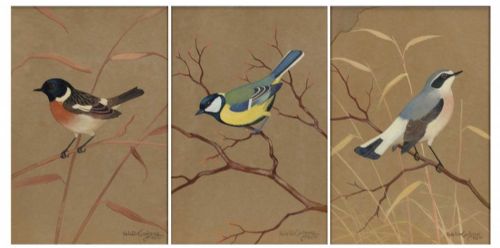
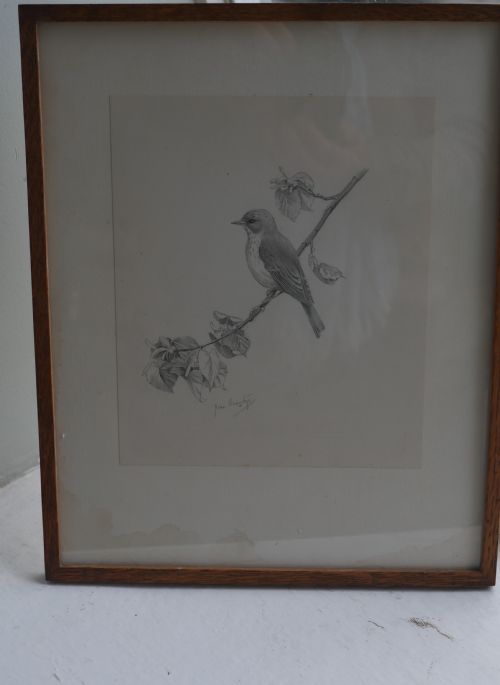


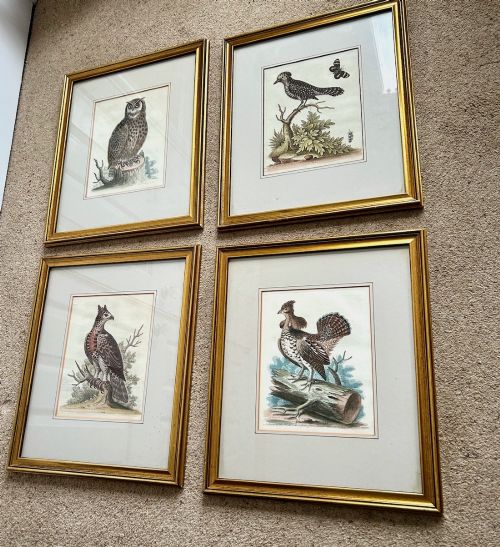


Framed Bird Prints
Framed bird prints bring natural history illustration onto the wall, offering detailed studies of plumage and posture preserved behind glass.
Framed Bird Prints
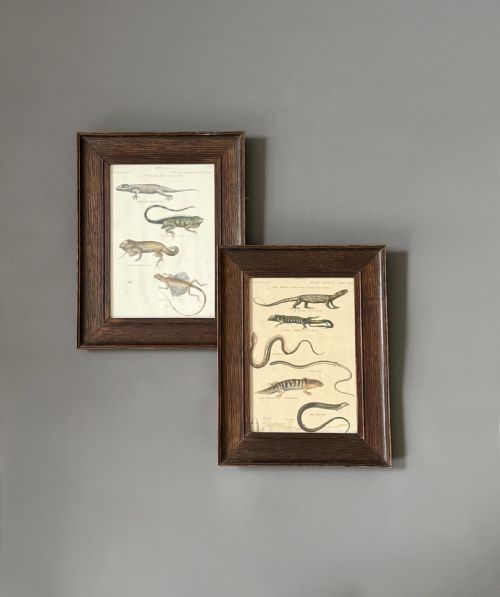
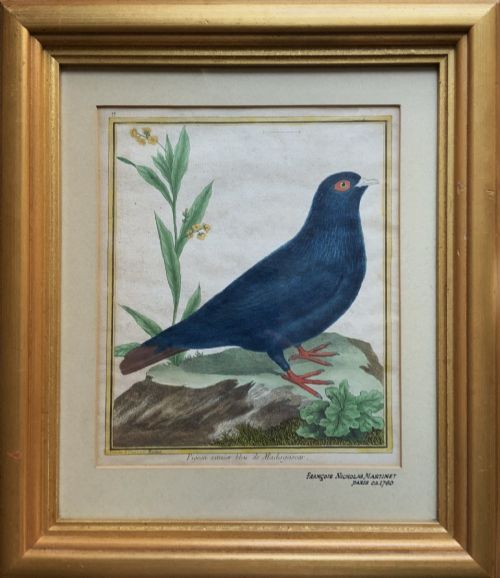
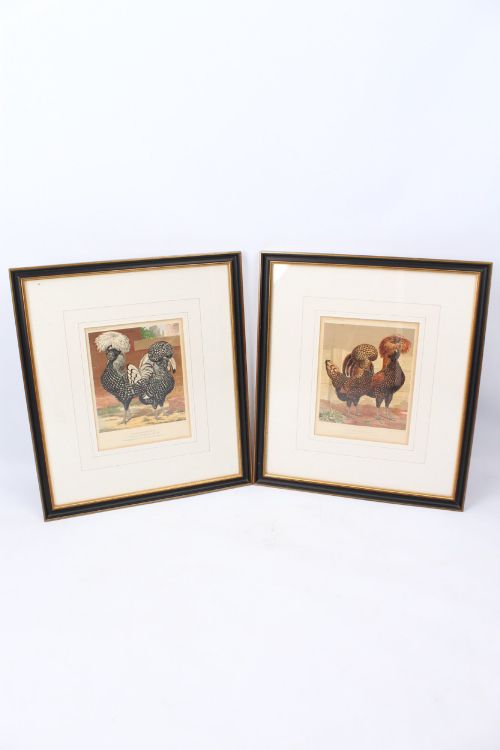
These works span centuries of natural history illustration, taking the form of engravings, lithographs, and original watercolours depicting everything from British garden birds to exotic tropical species.
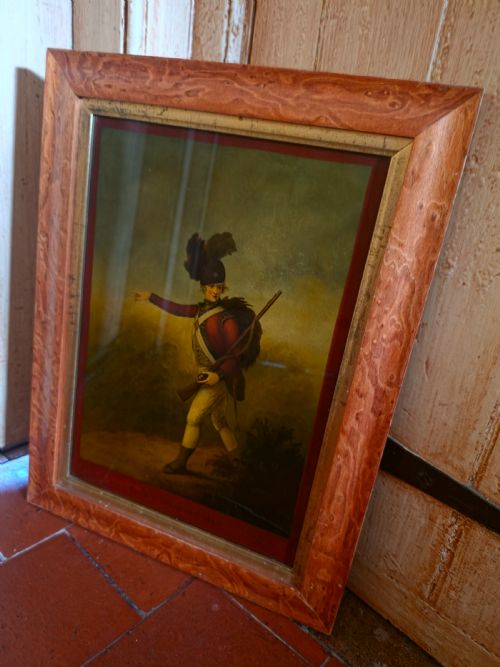
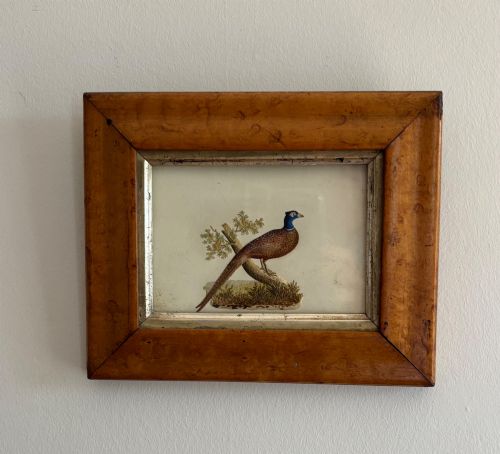
The most common examples encountered here are 19th-century hand-coloured engravings and Victorian ornithological studies, often found mounted and displayed in period wooden frames.
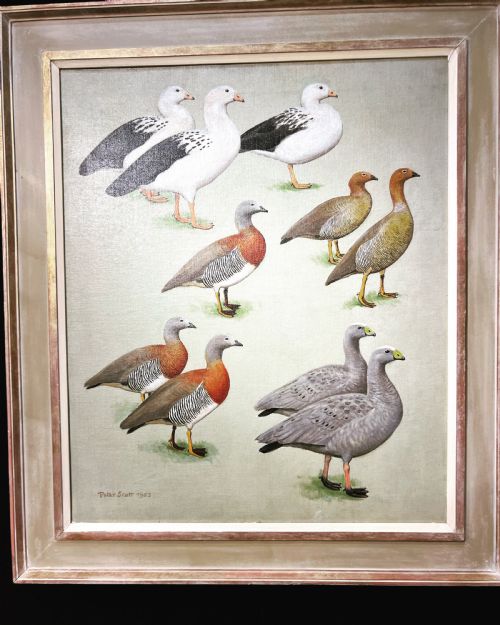
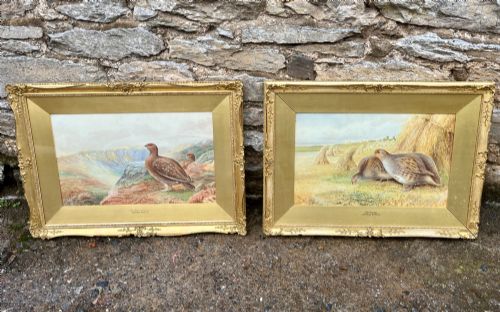
Compositions range from single scientific studies of a solitary specimen to decorative sets of four or six plates produced for domestic display.
Materials and construction
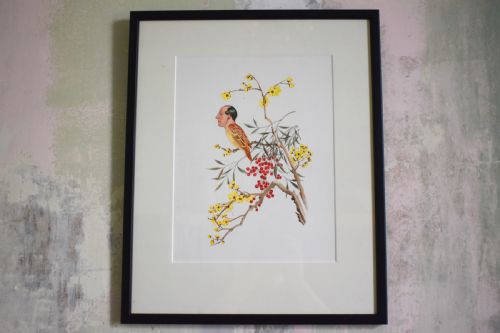
Paper forms the primary medium, carrying copperplate engravings, lithographic ink, or watercolour pigment applied by hand.
Framing relies on traditional timbers such as maple, ebonised wood, and gilt wood, frequently incorporating glass protection and gold leaf details.
Listings feature paper, glass, wood, watercolour, gold leaf, and maple across various 18th, 19th, and 20th-century styles.
Assessing quality and execution
Quality rests heavily on the precision of the initial engraving or the handling of the watercolour brush, alongside the vibrancy of any hand-applied pigment.
The integrity of the framing materials, such as figured maple grain or period gilt mounts, contributes significantly to the overall standing of the piece.
François-Nicolas Martinet·George Edwards·Samuel Dixon·William Swainson·Edward Lear·Charles F. Tunnicliffe·Ralston Gudgeon·George Rankin·Arthur Wardle·Robin Hill·William Bird·John Sherrin·M Simpson·Paul-Louis Barruel·Alken·R Lauritsch
The Framed Bird Prints Glossary
- Engraving
- A printmaking technique where an artist cuts lines into a metal plate to hold ink. The resulting impression yields sharp, precise details ideal for scientific illustration.
- Lithography
- A planographic printing method based on the repulsion of oil and water. It allowed publishers to produce multi-coloured natural history plates in larger quantities.
- Hand-coloured
- A monochrome print enhanced with watercolour applied by hand after printing. This process brought botanical and ornithological plates closer to the hues of live specimens.
- Ornithological study
- A focused graphical representation of a bird species for scientific or decorative purposes. These studies prioritise anatomical accuracy alongside aesthetic presentation.
- Maple frame
- A wooden enclosure characterised by its distinctive bird's-eye or striped grain pattern. It remains a characteristic housing for prints of the 19th century.
Framed Bird Prints: Frequently Asked Questions
How do I date an old bird print?
Dating relies on paper characteristics, printing techniques like early engraving versus later lithography, and any associated publishing details or artist signatures.
Frame styles and mounting materials also provide reliable chronological clues, as ebonised and maple frames shifted in popularity across the Georgian, Victorian, and Edwardian eras.
Are these prints hand-coloured?
Many 18th and 19th-century plates received careful applications of watercolour by hand after the initial impression was pulled from the plate.
Close inspection under magnification reveals the subtle brushstrokes and variations in pigment density that distinguish manual tinting from mechanical colour printing.
How should I display framed prints?
Display these works away from direct sunlight to prevent the fading of delicate watercolours and tinted paper stocks over time.
Maintaining stable indoor humidity levels also protects the wooden frames and keeps the paper from warping inside the glazed enclosure.
What is the difference between an engraving and a lithograph?
An engraving involves incising lines into a hard metal plate, resulting in crisp, linear definitions under magnification.
Lithography uses a flat stone or metal surface treated to accept ink where desired, producing softer tonal gradations and smoother areas of colour.