
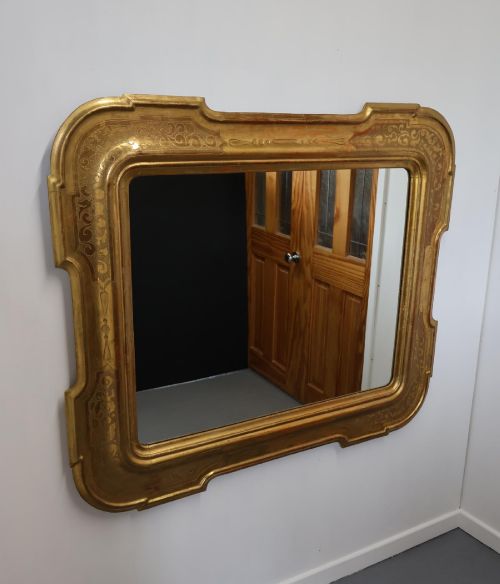
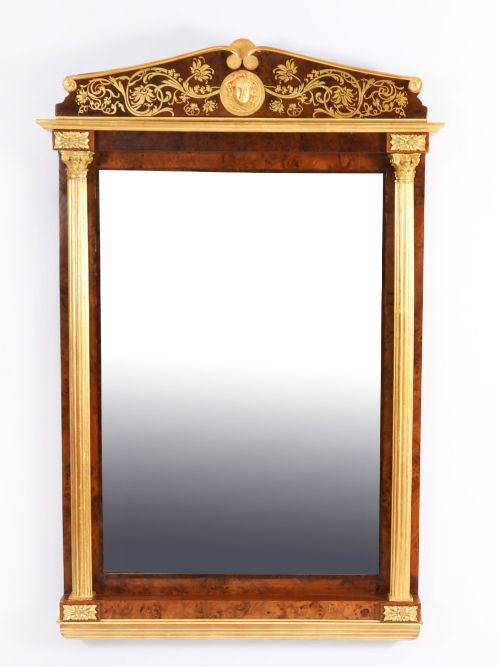
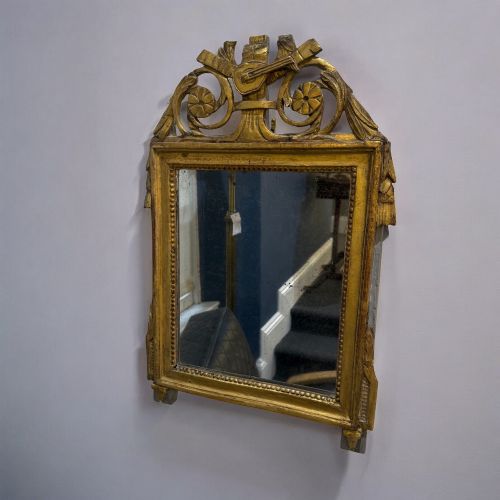
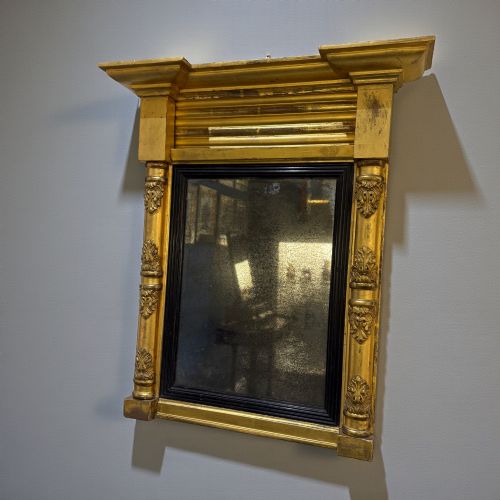
Gilt Frame Hanging Mirror
A gilt frame hanging mirror brings depth and reflected light to a room through centuries of carved wood, gesso, and gold leaf.
Gilt Frame Hanging Mirror
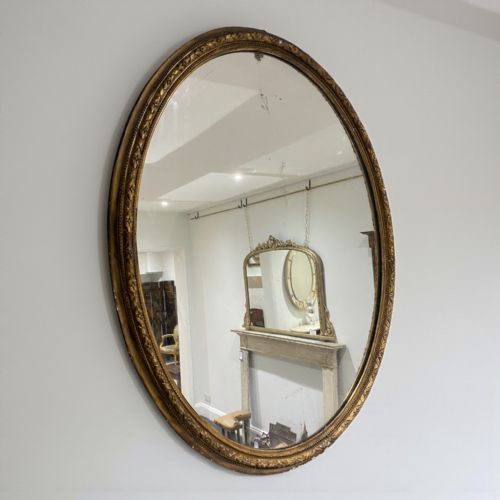
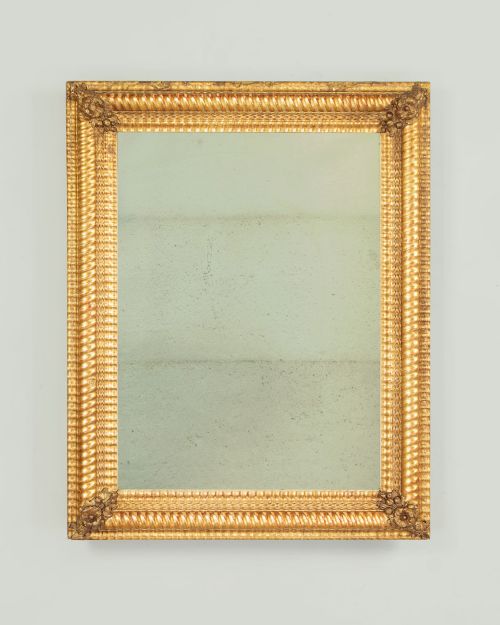
A gilt frame hanging mirror is a wall-mounted glass looking glass set within a gilded timber, gesso, or composite frame. These objects function primarily as decorative architectural elements and optical expanders for domestic interiors.
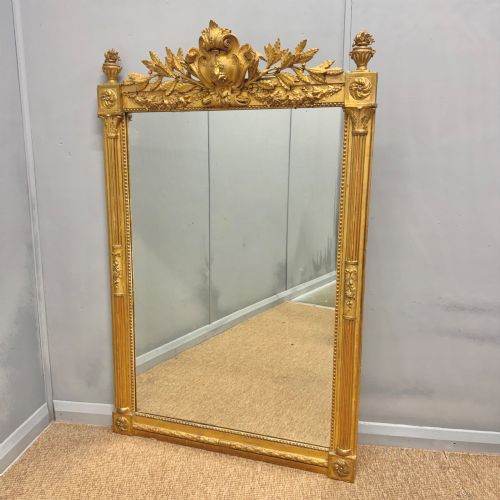
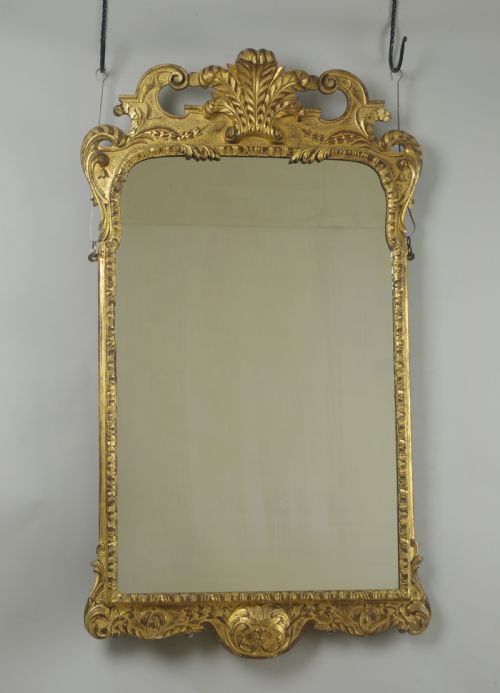
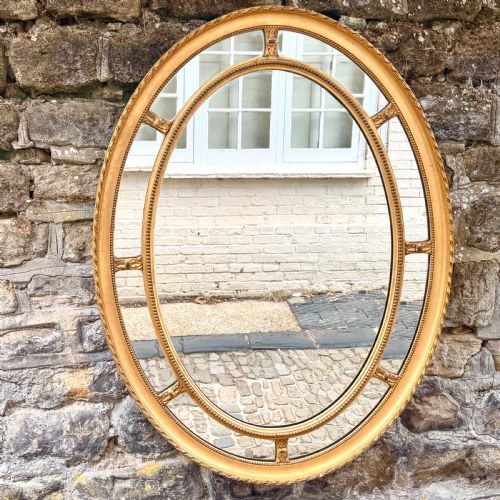
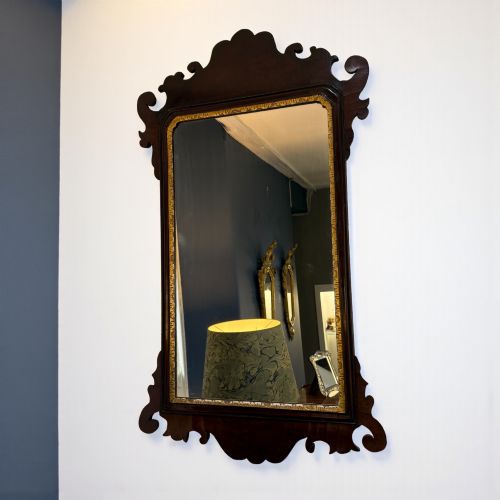
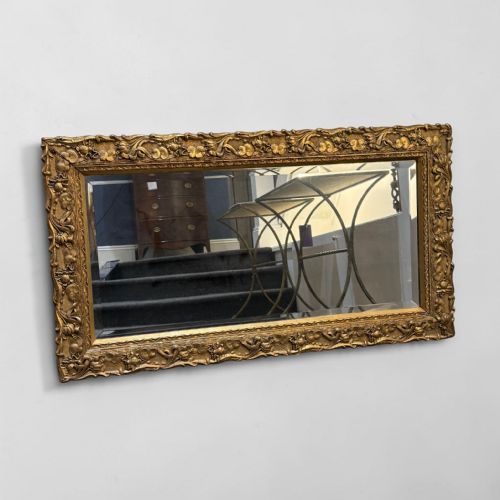
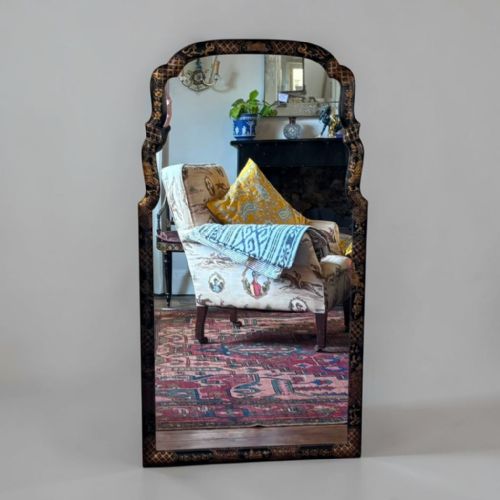
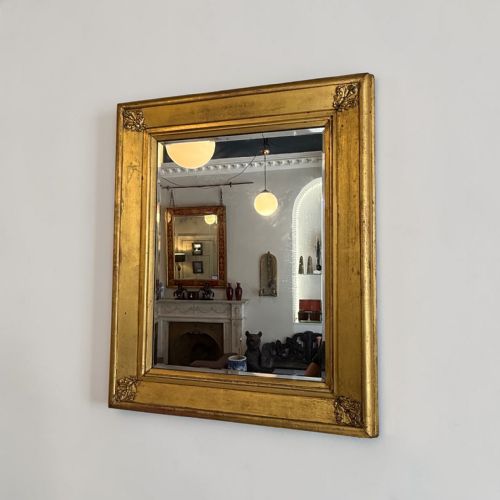
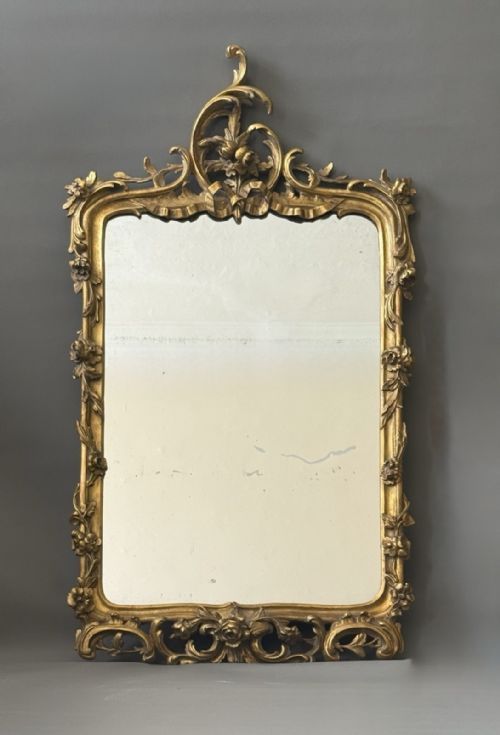
The selections available span from restrained 18th-century Georgian and walnut-framed designs to ornate Victorian, Edwardian, and revivalist pieces drawing on French Rococo and Louis XVI styles. Buyers frequently encounter oval and rectangular wall mirrors, alongside overmantel formats designed for placement above fireplaces.
Origins represented in these items stretch across English workshops and continental European centres, particularly France and Italy, with forms ranging from simple parcel-gilt mouldings to deeply carved floral, botanical, and mythological motifs.
How they were made
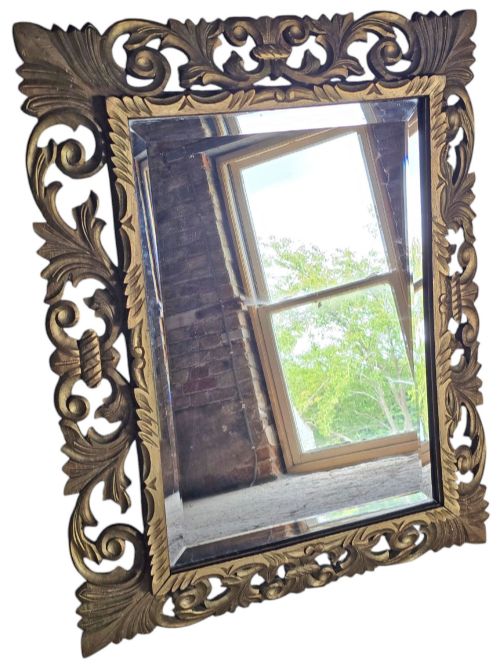
Makers constructed the structural carcasses of these frames from timber such as oak, mahogany, walnut, or pine, often applying a layer of gesso - a mixture of chalk and binder - to build up intricate surface details. Artisans then carved this material directly or moulded composition ornaments to achieve elaborate relief patterns like acanthus leaves and rose vines.
The decorative surfaces received applications of gold leaf, silver-gilt, or liquid gold paint, sometimes combined with dark bole layers beneath to lend warmth to the metallic finish. Glazing utilised glass plates held by timber backs, with older examples frequently displaying antique reflective plates or hand-engraved details.
Listings feature 18th-century, 19th-century, and 20th-century periods, utilising materials including glass, giltwood, gesso, gold leaf, composition, wood, mahogany, and gilt.
What varies in quality
The standard of a gilt frame hanging mirror rests upon the depth and crispness of the carving within the wood or gesso. Hand-carved timber elements show distinct tool marks and sharp undercut details, whereas lower-tier examples rely on heavy, uniform composition mouldings that obscure underlying definition.
Material application also dictates quality, with genuine gold leaf retaining a deep, warm lustre over centuries compared to modern metallic paints that dull or flake uniformly. Furthermore, the presence of original glass plates with subtle foxing or hand-engraving indicates a higher grade of preservation than replacement mirror glass.
The Gilt Frame Hanging Mirror Glossary
- Gesso
- A prepared mixture of chalk, gypsum, and glue used as a smooth base for gilding or carved relief work on wooden frames. This substance allows for sharp detailing in ornamental mouldings.
- Giltwood
- Timber that has been coated in gold leaf or gold paint for decorative effect. It forms the primary structural and visual medium for high-status frames.
- Parcel Gilt
- A decorative treatment where only specific portions of a wooden object are gilded, leaving the underlying timber, such as mahogany or walnut, exposed. This technique highlights structural lines and contrasting grain.
- Composition
- A moulded mixture of whiting, linseed oil, resin, and glue pressed into decorative shapes for frames. It serves as a faster alternative to hand carving.
- Overmantel
- A large mirror specifically proportioned to hang on the wall directly above a fireplace mantelpiece. These pieces frequently feature horizontal rectangular formats.
Gilt Frame Hanging Mirror: Frequently Asked Questions
Can I clean the antique glass safely?
Use a soft, dry microfibre cloth to remove dust from the glass and frame without applying liquid cleaners directly to the surface. Moisture can seep behind degraded seals or damage vulnerable gesso and gold leaf.
If cleaning fluid is necessary, apply a minimal amount to the cloth rather than the mirror plate.
How do I identify the period of a frame?
Examine the construction methods visible on the reverse, such as hand-cut screws, timber species, and panel joins, alongside stylistic indicators like Rococo asymmetry or Regency reeding.
Wear patterns on the underlying gesso and the oxidation style of the mirror plate provide further clues to age.
Are original mirror plates common?
Many older pieces retain their original glass, which often exhibits characteristic minor distortions, tiny bubbles, and light silver degradation known as foxing. Replacement plates do occur when earlier glass suffered terminal breakage over the centuries.
Inspect the edges of the glass for bevels and thickness to understand its history.